

Mostly interested in what happens when neuroscience and engineering collide. Connectomics, AI, chaos & occasional opera Constantly in mental overload. 🦘
Joined December 2025
- Tweets316
- Following132
- Followers159
- Likes411






Pinned Tweet
I drugged the fly.
I kept seeing the new psilocybin paper everywhere. I looked it up: apparently, it has been tested in flies too.
So, here we are.
New drugs coming soon :)
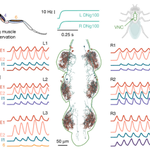
Built on @wormuth's DoomFLy model: mapped 5 serotonin receptor classes (5-HT1A/1B/2A/2B/7), injected a receptor-weighted bias current as a psilocin-like perturbation, and read out behavior through a FlyGym embodiment.
Wild discover of today: new Anthropic paper on alignment, “Teaching Claude why”.
They found what worked to drop the model blackmail behaviour, and it's incredibly similar to what neuroscience is telling us to do:
⏬
anthropic.com/research/teach…

Giulia 🌸 retweeted
A professor of mine always tells us that we need two skills: analysis and syntesis. School and academia in general focus on the first one, especially where I'm from (Italy).
I learnt the hard way that by trying I could learn and then achieve more than by preparing and studying everything.


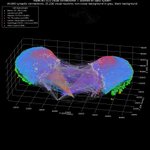
Found a place where you can actually look at both structure and function in the same cubic millimeter of mouse visual cortex.
Fun night ahead.
microns-explorer.org/cortica…

Kids aged 7–9 who practiced an instrument ≥30 min/week scored higher on vocabulary, math and working memory than matched peers.
The structural signature showed up in white matter too.
So my mum was right, glad I took piano lessons!
Make more complex art people.
pubmed.ncbi.nlm.nih.gov/4272…

Nature version of Jev.

Carrion crows make decisions faster than monkeys and humans.
Learn more in a new #SciencePerspective: scim.ag/4zmOF1i

Here's a useful reminder that a lot of what looks like “design” in biological systems might just be what persisted.
They ran a neural cellular automaton where each agent has a small randomly initialized neural net as its brain. No training, no explicit survival objective. Agents just sense, move, harvest energy, interact, and mutate when they reproduce. What survives is what persists.
Complex, cooperative survival behavior still emerges.
Curious how this changes if you start with more constrained, connectome-like architectures instead of fully random ones.

There is also the RAS in the brainstem, which modulates arousal. This could make sense.
I still feel like consciousness should be explored as a property of the whole network, but this will be an interesting read.
Also, does someone know if there are studies linking the brainstem to aphantasia?

Basic consciousness may originate in the brainstem rather than the cortex—a hypothesis informed by pain usually remaining intact even after extensive damage to the brain’s outer layer. medicalxpress.com/news/2026-…

If you were wondering what was the purpose of the Fruit Fly connectome:
In a recent Nature paper they used it to identify a tiny rhythm-generating circuit for walking.
So real physiological discovery from in silico simulations.
Think about what we could discover with a human model.

We should try this with Jev. Found a use case?

Last night an AI agent performed brain surgery on a mouse.
We gave it 19 gene therapy vectors in a spreadsheet, a mouse model of epilepsy, access to a motorize surgery rig with cameras and one goal: reduce seizures.
It picked the drug. It picked the brain region. It derived the coordinates from three papers. Then it drove the stereotaxic arms into the brain and injected 250 nanolitres while watching the entry site through the rig camera for bleeding.
A licensed vet gated every irreversible step and held a physical kill switch to stop the AI agent.
Thread on what it decided, what it saw, and the moment it refused to let me override it.
[Writing this on the spot out of excitement, but I've been 18hrs in front of my laptop coding and coordinating this, so keeping it brief and descriptive, more cohesive thoughts on this soon...]

Giulia 🌸 retweeted
I always think about Heidi when she goes to Frankfurt, she becomes hill and the doctor tells her she needs nature and the mountains. Today he'd prescribe her antidepressants.
I'll all for science but I think we should "update" our models so that they account for external and psychological factors. Also, I'm very interested in studying psychiatric conditions as dynamical systems and not as just "brain related" conditions. That could be why we cannot find reliable biomarkers and we are not able to understand what makes the brain switch to one state from the others, but I need to read more literature to know where we are currently.
I'm very open to reading suggestions!


I really really feel like there's a step we are missing in psychiatric research, at least where I'm from.
We keep looking at sets of data without taking the whole system into consideration.
For my thesis I had to check for differences in gene expression markers in pregnant women with past or current depression, and then check for differences in fetal neurodevelopment and finally connect the two.
Now: I got into this field because I feel like we need more reliable parameters in psychiatry, but I don't think we can achieve it this way.
Depression is not the same as other diseases, we still cannot characterise it properly and is very variable, inter and intra subject.
Yes, we accounted for covariates, but have we really taken into consideration how bad were the symptoms? What kind of symptoms were they having? Association with other stressors? Microbiome?
The problem is also with the diagnosis: if the diagnosis is unreliable, if we cannot properly distinguish between depression, anxiety, stress and so on, what are we even looking for?
I really feel like we should tackle these challenges using dynamical modeling and taking as many signals and data as we can, characterise the symptoms in relation to stressors and system state (gut, hormones, cardiological variables..) and only then check for a common biological profiles to identify differences.
One week till I submit my thesis and it just started to make sense
I went into this thesis curious about depression and neurodevelopmente and I get out curious about
- Batch harmonization
- Dynamical Modeling
- Latent factor models
What a time to be alive


I just realized that years ago I was complaining about the need to be many people to build something meaningful, since everything is getting more complex.
Look where we are now. Hi agents!

Today I pitched an idea for an AI model to support preterm babies development.
I was really happy, they were really happy.
Then I thought about the birth rates of Europe and started planning how to switch to elderly support