
Prof en (neuro) psychologie clinique à l'Université Laval
Québec, QC, Canada
Joined June 2012
- Tweets144
- Following97
- Followers35
- Likes240


Simon Beaulieu-Bonneau retweeted
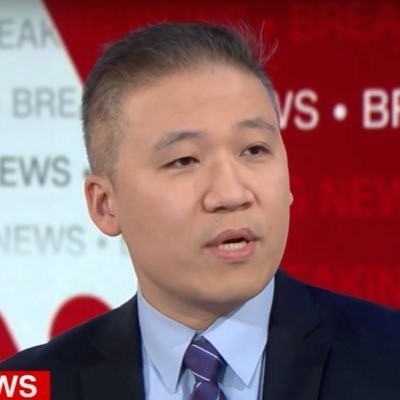
BREAKING—22 States sue to block Trump WH cuts to NIH research grants.

Simon Beaulieu-Bonneau retweeted

LOTR: THE TWO TOWERS was released 22 years ago this week. The second entry in Peter Jackson's fantasy trilogy and acclaimed as one of the great movie sequels, the story of how it was made is as epic as the film. So it begins…
1/46


Simon Beaulieu-Bonneau retweeted

New study has released personality profiles of 263 occupations.
Short thread of the occupations that are the most extreme with respect to each of the five personality dimension (I will mention only occupations with a sample of at least 100).

Simon Beaulieu-Bonneau retweeted

I think some of the birthrate decline can be attributed to two forces happening everywhere: increasing complexity, and decreasing hardship. Life is too complex and too 'good.' I'll try to explain

Simon Beaulieu-Bonneau retweeted
PULP FICTION was released 30 years ago this week. A cultural phenomenon on its release, and the movie that catapulted the career of writer-director Quentin Tarantino, the tale of how it came to be is the Big Kahuna Burger of making-of stories….
1/67


Simon Beaulieu-Bonneau retweeted

1/3 - Cette sortie du PM est exceptionnellement "cheap"!
Avec beaucoup d'égards, ce qui "fait mal aux enfants" est moins la grève actuelle que les raisons qui poussent les travailleur-es du secteur public à la faire...
#polqc #frontcommun #servicespublics

Le premier ministre du Québec demande aux syndicats de lever la grève pour une reprise de l’école. En échange, il promet notamment de « bonifier » les salaires proposés dans les négociations #polqc
Very exciting news: I will be presenting at the upcoming INS conference in New York in February! Thank you to the Association québécoise des neuropsychologues who collaborated with us on this survey! #INS2024inNYC

11
349


Simon Beaulieu-Bonneau retweeted

Le savais-tu ? Environ une personne sur cinq vivant au Canada est en situation de handicap. Ce chiffre peut sembler élevé, mais la réalité est que de nombreux handicaps sont invisibles.
#LaSciencedAbord #InvisibleDisabilitiesWeek
1/5

ALT Rappel : Tous les handicaps ne sont pas visibles
Simon Beaulieu-Bonneau retweeted
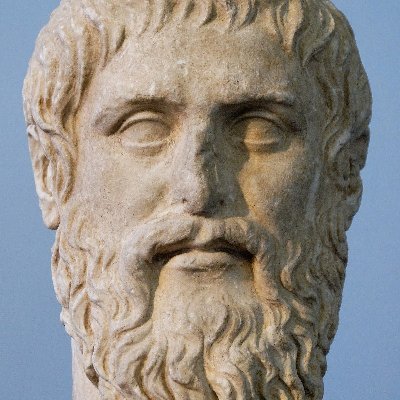
This is the Château Frontenac in Quebec, towering more than 130 metres above the city streets below and inspired by the castles of Medieval France.
But style alone isn't what makes it so impressive.
Architecture isn't just about what you build — it's also about where you build.
There's no single way to design a beautiful building or city, but there is one surefire way to make an individual building or whole town more interesting. And that is by designing it around the local environment: a river, valley, rockface, forest, or some other prominent feature.
Venice is built on one hundred islands in a shallow lagoon and Mont Saint-Michel on a tidal island. Regardless of the style or age of their architecture, it is partly their location and how they have adapted that makes them innately *interesting* to us.
For most of history it wasn't an aesthetic choice to build in "interesting" locations, but a necessity. Bagnoregio in Italy, Constantine in Algeria, Castellfollit de la Roca in Spain, Ganvie in Benin, Al Hajarayn in Yemen, Petra in Jordan... the list goes on. All of these towns were built out of necessity, whether defensive, because it was the only source of water, the only available land for construction, in the interests of seclusion, or proximity to the coast.
People say modern architecture is boring, and that may well be true, but this is at least in part because it is usually used to build cities of repetitive, identical structures in incredibly uninteresting locations. Being boring, in such circumstances, is hard to avoid.
So why does adapting buildings and cities to the local environment make them interesting?
Too much of one thing — of anything — is boring. This rule applies to everything: food, music, films... as humans we are inherently drawn to variation, variation being a law of nature. For the natural world is endlessly changeful, filled with minutely differing details and subtle shifts in shape, size, colour, and texture. The canopy of a tree, the ocean, a meadow, the clouds, the tides, the weather — we are accustomed to delight in variation and become bored by monotony.
Whereas a city of identical buildings — regardless of their style — laid out in a uniform pattern will become monotonous, a building or town shaped by local geography engages our natural, inescapable aesthetic preference for that which is varying, unexpected, and different. Up to a point it doesn't even matter what style of architecture you use in such locations; the location itself means that even the most boring buildings can't prevent it from being a fascinating place. Yanjin in China, built along a narrow river gorge and thus known as the world’s narrowest city, is a perfect example of that.
Architecture is about solving problems, but when the conditions that shape our solution are the same, the result will also be the same. And so the beauty of architecture and urban design according to local environmental conditions is that the world itself is a treasury of endless variation. No two places, even within the same region, are identical; every river, hill, forest, plain, and coastline is different. Which means that every time we adapt architecture to the idiosyncrasies of local geography we create something necessarily unique — because the conditions of the problem are unique.
All of this is why fantasy and science fiction films usually depict settlements in unusual locations, adapted to striking geographical features. It is, simply, much more interesting, atmospheric, and characterful. Why not apply the same thinking to real life?
It won't solve all the problems of urban design and there are times when it may not be possible, but when we build according to the laws of nature — of variation — by choosing interesting locations and adapting to the environment, the world becomes a much more interesting place.
Which brings us back to the Château Frontenac. It wasn't constructed on a fifty metre-tall hill overlooking Quebec out of defensive necessity; this is a hotel built in 1893. The decision about its location was purely aesthetic. And, over a century later, it seems hard to argue that they didn't make a good choice...

Article publié! Étude sur une école de conduite adaptée (partenariat avec le @CIUSSS_CN, financement de @societeinclusiv)
Published! Study on adapted driving school (partnership with the @CIUSSS_CN, funding by @societeinclusiv)
tandfonline.com/doi/full/10.…

Simon Beaulieu-Bonneau retweeted

Nouveau exposé de position vise à encourager nos dirigeants à modifier les politiques de santé désuètes en reconnaissant officiellement les traumatismes craniocérébraux modérés à graves comme une maladie chronique
ow.ly/e3yN50PftBA

Simon Beaulieu-Bonneau retweeted
New position paper encourages government leaders to change outdated healthcare policies by officially recognizing moderate to severe TBI as a chronic disease.
ow.ly/UJ2t50Pftsh

Avis aux professionnels de la santé travaillant en réadaptation, incluant mes collègues psychologues/neuropsychologues: je vous invite à partager à cette importante étude sur la téléréadaptation! teapaw.org/DahliaKairy/status/166…

Nous sommes ravis de vous présenter notre SONDAGE sur la #téléréadaptation / #soinsvirtuels pour les professionals de la réadaptation au Canada! ! Cliquer le lien ci-dessous et partager dans vos réseaux! redcap.link/Sondage_Clinicie…
1
38
Published! Please find our article on the use of smartphones and tablets after acquired brain injury to support cognition here. Proud of our 5-star team of students and researchers! #rehabilitation #TBI #stroke tandfonline.com/doi/full/10.…


Excellent résumé de la situation par @FQPPU. Merci au @spul_e pour jouer le rôle de leader dans cette mobilisation, et aux étudiant.e.s, collègues d'autres universités et personnalités politiques qui nous appuient. teapaw.org/FQPPU/status/163687467…

(1/...) Rupture des négociations à l'@universitelaval!
Constatant que les négociations étaient dans l'impasse, le conciliateur nommé par Québec suspend celles-ci jusqu'au 24 mars prochain. Mais qui a causé cette impasse?
