

Be where new ideas take off 🚀 💫 Official account for Space Florida
Exploration Park, FL
Joined February 2009
- Tweets6.3K
- Following1.9K
- Followers13.6K
- Likes2.3K




LIFTOFF! The winning pieces from our 2025 Space Art Contest launched aboard a @SpaceX Falcon 9 rocket today from Cape Canaveral Space Force Station. Their incredible achievement is a reminder that the future of Florida’s aerospace industry starts with the next generation of dreamers, creators and innovators.


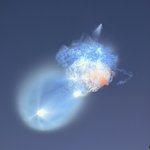
Did you catch the jellyfish cloud from this morning’s @SpaceX launch? A beautiful way to start the day. 🪼🚀

Florida is home to the world’s most important spaceport, and our partner @Seagate_Space is exploring how launching from the sea could add to it. @FloridaTrend’s profile of CEO Michael Anderson shares more about the company’s offshore launch platform design and its plans for the next two years. In June, Space Florida approved funding to help Seagate Space develop a prototype platform with Tampa Ship at Port Tampa Bay.
floridatrend.com/nextgen/202…

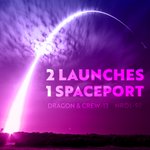
One day. Two launches. One record-setting ride to orbit. 🚀
Last week, Crew-13 launched from Cape Canaveral and reached the International Space Station in under 8 hours, making it the fastest launch-to-docking by a U.S. spacecraft in station history.
Hours later, Falcon Heavy launched from Kennedy Space Center carrying the NROL-97 national security mission.
All from the world's most important spaceport.

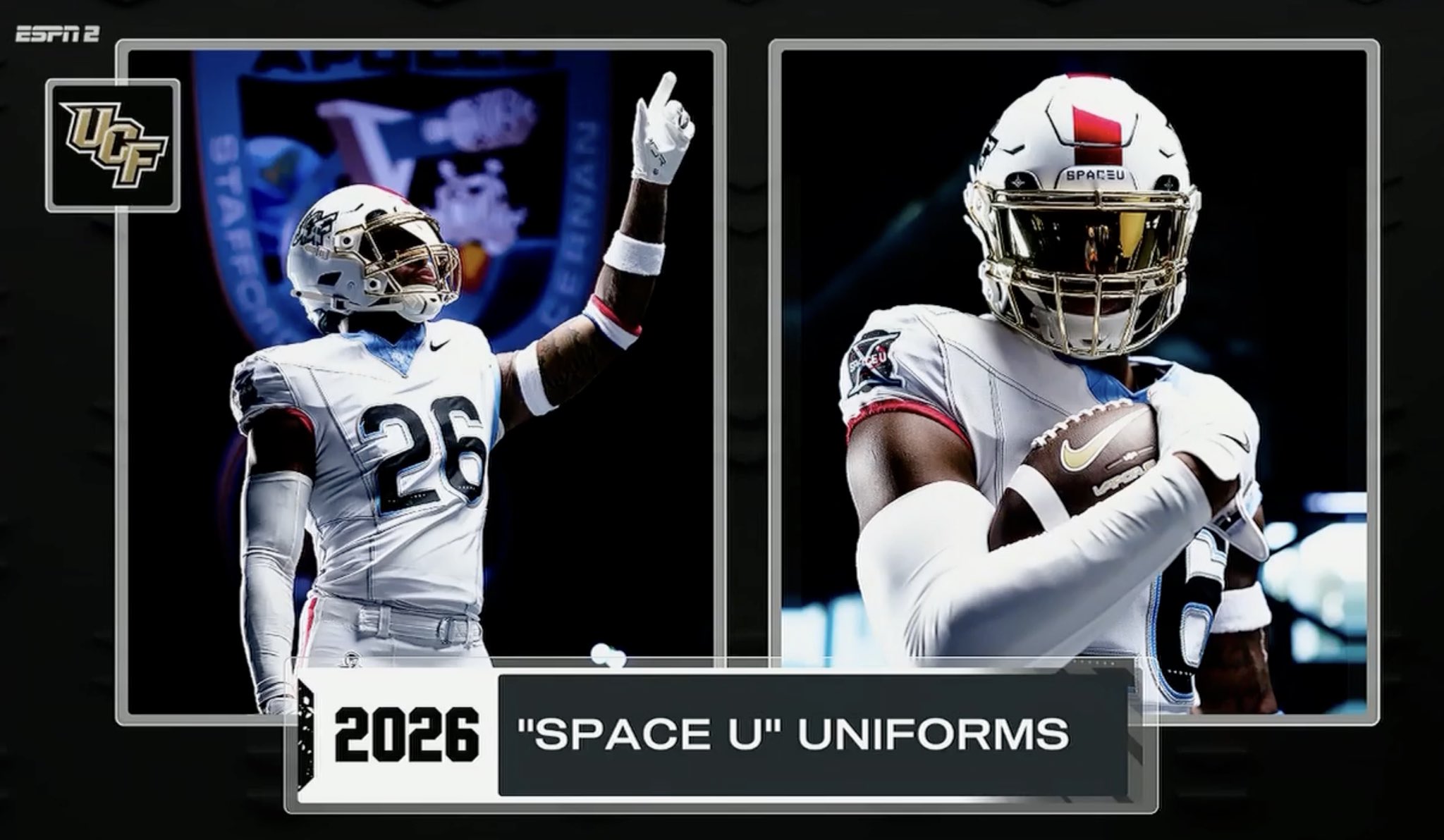
Really no comparison #spaceu 🚀 🍊


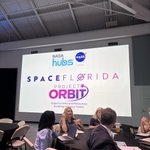
Today, we officially kicked off Project ORBIT, a statewide initiative designed to strengthen Florida’s aerospace workforce and connect talent to the careers of tomorrow.
As one of just seven organizations nationwide selected by NASA as an Aerospace Skilled Technical Workforce Hub, Space Florida is bringing together education, workforce and industry partners to build stronger pathways from career exploration to training, internships and apprenticeships.

Today Space Florida and the @spacegovuk launched a joint call for proposals to support collaborative R&D projects between Florida and UK space companies. 🚀🇺🇸🇬🇧
As the first funding opportunity under our new Space Florida-UK partnership, the call will provide up to $200,000 from Space Florida and £150,000 from UKSA to help companies advance emerging technologies, strengthen cross-border partnerships and create new commercial opportunities.
Learn more about the funding opportunity and application process here: spaceflorida.gov/uk-space-ag…
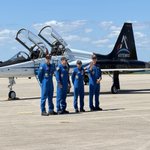
It was great to welcome NASA’s SpaceX Crew-13 to Space Florida’s Launch and Landing Facility ahead of this week’s mission. And it's especially exciting to see Floridian Luke Delaney piloting the journey!

🚀 Applications close this Sunday, September 27 for the Space Florida x @seraphim_space Investor Readiness Program.
Designed for Florida-based Pre-Seed to Series A space and space-enabled startups, the program helps founders become investor-ready through hands-on support, expert guidance, and access to a global network.
📍 Two in-person weeks in Orlando
💻 Primarily virtual
🚫 No equity taken
Apply here: florida.seraphim.vc/
Space Florida retweeted

He's right — space isn't a "someday" priority, it's already central to national security, science, and the economy, and we need a pipeline of talent ready for it.
If we're serious about building this academy, it should be in Florida: the heart of America's launch industry, home to the workforce and infrastructure already driving our space future.
Let's make it happen. 🚀🇺🇸

Back at it again with a long one, but can't help myself on the Space Academy topic.
Interesting to read some of the policy experts who have taken skeptical, and in some cases negative, public positions on the need for a United States Space Academy. People are certainly entitled to their opinions. There are also those who believe we should not build a single spaceship or invest in technological progress until we solve every problem on Earth. That is simply not how you build a better future for our children.
I suspect, for some, the objection has more to do with the politics than the merits. So let me address a few of the common concerns and offer some rationale.
Global dependence on space is increasing at an astronomical rate. Weather forecasting, disaster response, precision navigation, communications, agriculture, national security and scientific discovery all depend on capabilities in orbit. Connecting the disconnected and expanding access to knowledge is itself foundational to solving many of the world's problems. The data we will be taking in, whether from Earth observation or instruments like Roman, will answer questions we do not even know to ask today.
And there is no going back from the trajectory we are on. A decade ago, the FAA was overseeing barely more than a dozen commercial space launches per year. Today, nearly a dozen U.S. companies are operating or developing orbital launch systems, chasing economic opportunity measured in the trillions. But the upside is far greater than economics. Think about what we stand to learn scientifically, what technologies will have to be pioneered to explore out there, and how many of those breakthroughs will make life better back here.
Our new national space transportation policy calls for the United States to support more than 1,000 launches annually by 2030. Some already believe that is off by an order of magnitude.
America will certainly establish a permanent outpost on another world in the years ahead, and we are not alone in our ambitions. That outpost will become NASA's proving ground for where we go next. Mars. And then we continue on. It is our destiny to harness more of the energy of our star, unlock more of the energy potential in matter, and venture farther outward, in the same spirit as the explorers of centuries past who discovered the New World.
And we have no idea how quickly that timeline could accelerate in a world transformed by artificial superintelligence, robotics, quantum technologies and additive manufacturing. All of it is unfolding in the context of a great power competition where falling behind could materially affect our way of life and the trajectory of civilizations.
I do know the future will require a bright new generation educated and prepared for this environment. Many will serve in inherently governmental roles. They will need specialized education in disciplines that barely exist today, including nuclear power and propulsion for space applications, before having the opportunity to continue careers across government or the private sector.
If you understand the increasingly important and contested environment above us, then a Space Academy is as timely and necessary today as the Space Force has already proven to be.
So what are the objections? It blurs the line between peaceful applications in space and the military.
This may be the weakest argument I have seen. NASA's history began with astronauts flying to space on ballistic missiles. Several Space Shuttle missions were, and remain, classified. NASA Aeronautics flies repurposed U-2 spy planes for high-altitude research and F-15s for high-speed research. Breakthroughs pioneered through NASA aeronautics have benefited civil aviation and national security alike.
The U.S. Merchant Marine Academy, under the Department of Transportation, graduates students who go into industry, government and the military. Some have even become astronauts. Three of the four Artemis II astronauts came from the military, as have many NASA astronauts throughout our history, and some have continued serving in uniform after their NASA careers.
NASA's mission is as peaceful as it is patriotic. We explore for the benefit of all humankind, but we go there under our flag. That mission would be impossible without the Guardians standing watch over the domain as we venture outward. There is no contradiction in giving future civil, commercial and national security space leaders a common educational foundation, especially when our adversaries draw no such distinction themselves.
What about the cost? Congressional leaders and Governors from both parties have been reaching out and assembling potential funding packages.
It is interesting, I face questions during congressional hearings over whether we are investing enough in STEM education. We can absorb billions of dollars in canceled programs from mismanagement. But investing in the education of the next generation, in a domain increasingly central to our scientific, economic and national security future, is somehow uneconomical?
We should look past the politics on this one.
Go back to 1963, when the world was captivated by the possibilities of space, and remember another iconic JFK speech. He reminded us that we all treasure our children's future. Fittingly, he delivered those words at a university commencement.
It is time for another great American academy. A United States Space Academy worthy of the extraordinary adventure ahead.
Twenty-five years ago today, our nation was forever changed.
Today, Space Florida remembers those we lost, honors the first responders and heroes who answered the call, and stands with the families and communities who continue to carry their memory.

Strong partnerships are essential for keeping Florida and America dominant in space! We appreciate your leadership, Director! 🚀 💫

The work of @SpaceFlorida along with @SLDelta45 and @NASAKennedy is ensuring the Cape leads the world for commercial space development. A great partnership for Florida and the nation! 🇺🇸🚀💪🏻
Thank you to everyone who joined today's Space Florida Board of Directors meeting. A special thanks to @FloridaAtlantic and FAU President Adam Hasner for hosting us, and to Representatives @ChipLaMarca and @RepSkidmore for being with us. Grateful for these partnerships as we continue building Florida's aerospace economy.


The next generation of American space leadership should be built where America launches. 🚀
Florida has the entire ecosystem needed to make it happen. We're proud to stand with @SenAshleyMoody yesterday and all leaders across the state in making the case for Florida.

Great crowd yesterday @SpaceFlorida where leaders in aerospace education, industry and research gathered to support our push to bring the Space Academy to Florida!


Thank you, Senator!!! We appreciate your leadership! 🚀

It was great to attend the @NSCFL September luncheon in Cape Canaveral, where Rob Long, President & CEO of @SpaceFlorida, shared an informative presentation on the current state of aerospace economic development in Florida.
Thank you to NSCFL for a great event and to Rob for the valuable insights into Florida's growing aerospace industry #Aerospace #Florida #Space #STEM


Twenty years of Space Florida represents a lot of launches, projects, investments, milestones, and big ideas.
But none of it happens without people.
To our Board of Directors, Florida’s legislative leaders, industry partners, and every member of the Space Florida team who has been part of this journey, thank you.
You’ve helped shape two decades of Florida aerospace, and we’re excited about where we go from here.
