




Pinned Tweet
thirty one million people have watched a former al gore speechwriter accidentally destroy the entire bonus industry
us companies spend $176 billion a year on incentive programs. he took it apart.
he filmed the talk once, at tedglobal 2009, and opened by saying he was about to argue against his own better judgment.
compensation consultants get paid to design the exact bonus plans he dismantled in 18 minutes, using nothing but other people's experiments.
his name is dan pink. a lawyer who never practiced law, who walked onto the ted stage and showed that the carrot and stick is a costume business wears because it looks like management.
every bonus plan follows the same script. set a target, attach money, measure speed, reward the winner. pink went through the research for all four and the science kept saying no.
his whole case fits on a napkin.
the candle problem: one group just got timed, the other was offered up to $20 to finish fast. the paid group was 3.5 minutes slower.
mit: three reward levels. bigger reward, worse result, every time the task needed real thinking.
india: same test where the money was worth months of wages. the top reward group did worst of all.
the federal reserve funded that study. lse then looked at 51 corporate pay for performance plans and found the same thing.
that last finding alone should have cost the bonus industry a lot of clients. it didn't.
"there's a mismatch between what science knows and what business does."
that's dan pink, standing on the ted stage, explaining why your company still runs on carrots. he wasn't exaggerating.
managers still dangle a bonus in front of creative work and wonder why the ideas come out safe. founders still pay for speed and get exactly that, speed, with nothing new inside it.
the talk is free. the studies are public. the playbook hasn't changed in fifteen years.
rewards only work on one kind of work: simple rules, clear finish line. which is exactly the kind ai is eating first.
so what actually got you to do your best work: money or something else?

Ten million people have watched a comedian accidentally destroy the entire TED talk industry.
He filmed the talk once at TEDxNewYork in 2014 and openly admitted he had nothing to say.
Speaking coaches charge $5,000 to teach the exact tricks he used in 6 minutes to say nothing at all.
His name is Will Stephen. He is a comedian from Late Night with Seth Meyers who was invited to give a real TED talk and used it to prove the format is a costume anyone can wear.
Every TED speaker opens with a question, tells a personal story, cites a scientist, and shows a chart. Stephen did all four in six minutes with zero content.
His entire formula fits on a napkin.
Gesture with both hands. Ask the audience a question anyone can answer. Tell a mildly embarrassing story so they say aww. Point to a stranger on a slide and call them important. Flash a chart of random numbers. Wear glasses with no lenses. The audience will think you are brilliant.
That last trick alone has probably cost the public speaking coaching industry a hundred million dollars in sessions clients should have skipped.
"If you watched me on YouTube with the sound off, you would think I was a genius."
That is Will Stephen on the TED stage, three minutes into the talk he was paid to give. He wasn't lying.
Executives pay $15,000 for a keynote coach and still open with a joke the room never laughs at. Founders rehearse their pitch for weeks and still sound like Stephen at minute four, saying "wagga wah, gabba gabba" with authority.
The talk is free on YouTube. The method is written across every TED speaker's playbook for ten years.
Stephen still writes for Seth Meyers. Almost none of the ten million viewers have stopped nodding at empty slides since.
The formula is free. The willingness to actually say something before your next keynote, pitch, or townhall is the entire edge.
Buffett knows how to make billions. But this piece of advice won’t cost you a penny
“Kindness is costless but also priceless”
We’re used to measuring returns in percentages. But some investments pay us back through trust, support, a recommendation, or a call when we need it most
Listen to someone. Thank them for their work. Share what you know. Introduce two people who could help each other. Sometimes, a few minutes of your time can change someone’s entire day
Those moments compound. One gesture becomes a memory. A few build trust. Years of them create a reputation no advertising budget can buy
Of course, kindness doesn’t guarantee a return. Some people won’t thank you. Others will forget. But keeping score turns relationships into accounting
The real value is knowing you can make a difference today, whatever your bank balance
What small act of kindness do you still remember? To the person who helped, it may have seemed insignificant. To you, it might have changed everything

thirty one million people have watched a former al gore speechwriter accidentally destroy the entire bonus industry
us companies spend $176 billion a year on incentive programs. he took it apart.
he filmed the talk once, at tedglobal 2009, and opened by saying he was about to argue against his own better judgment.
compensation consultants get paid to design the exact bonus plans he dismantled in 18 minutes, using nothing but other people's experiments.
his name is dan pink. a lawyer who never practiced law, who walked onto the ted stage and showed that the carrot and stick is a costume business wears because it looks like management.
every bonus plan follows the same script. set a target, attach money, measure speed, reward the winner. pink went through the research for all four and the science kept saying no.
his whole case fits on a napkin.
the candle problem: one group just got timed, the other was offered up to $20 to finish fast. the paid group was 3.5 minutes slower.
mit: three reward levels. bigger reward, worse result, every time the task needed real thinking.
india: same test where the money was worth months of wages. the top reward group did worst of all.
the federal reserve funded that study. lse then looked at 51 corporate pay for performance plans and found the same thing.
that last finding alone should have cost the bonus industry a lot of clients. it didn't.
"there's a mismatch between what science knows and what business does."
that's dan pink, standing on the ted stage, explaining why your company still runs on carrots. he wasn't exaggerating.
managers still dangle a bonus in front of creative work and wonder why the ideas come out safe. founders still pay for speed and get exactly that, speed, with nothing new inside it.
the talk is free. the studies are public. the playbook hasn't changed in fifteen years.
rewards only work on one kind of work: simple rules, clear finish line. which is exactly the kind ai is eating first.
so what actually got you to do your best work: money or something else?
Stindur retweeted

🇯🇵 JAPAN ENTERS BEAR MARKET TERRITORY. WORST WEEK IN SIX YEARS. IS THIS THE BEGINNING OF A GLOBAL AI MARKET REPRICING?
Japan’s stock market has just experienced one of its most dramatic weekly declines in recent years.
On November 6, the Nikkei 225 plunged 5.96%, shedding more than 3,600 points to close at 57,434.77.
For the week, the index lost approximately 9.3% — its worst weekly performance since March 2020.
More importantly, the index has fallen more than 20% from its June record high, meeting the traditional definition of a bear market.
What triggered the sell-off?
1. The AI reality check
Investors are reassessing the enormous valuations and capital expenditure behind artificial intelligence, data centers, and semiconductor companies.
2. US political uncertainty
Concerns about potential regulatory changes and the future direction of the AI industry have added pressure to technology stocks.
3. Contagion from Wall Street
The sell-off in US technology shares spread rapidly across Asian markets, amplifying losses in Japan.
4. The domino effect
Japanese technology companies, including major players in the semiconductor ecosystem, came under significant selling pressure.
Why should global investors care?
Japan plays a strategic role in the global semiconductor supply chain, providing critical materials, equipment, and components.
At the same time, volatility has spread across other Asian technology markets.
This is no longer just a Japanese market story.
It may signal a broader reassessment of the global technology boom.
What should investors watch next?
Can the Nasdaq stabilize?
Will capital continue flowing out of AI-related stocks?
Will investors rotate into defensive assets?
Could this correction develop into a broader global market downturn?
My key takeaway:
The market is not abandoning artificial intelligence.
It is starting to ask a much tougher question:
How much is the AI revolution actually worth — and when will the massive investments begin delivering sustainable returns?
That is often the moment when market euphoria ends and the real valuation test begins.
What do you think: a temporary correction in an overheated AI sector, or the beginning of a much larger market r


Stindur retweeted
🚨 SHAQ BLEW $1M IN ONE DAY. THIS WEEK A TRADER BLEW $15.6M IN MINUTES
Thursday. Wall Street sells off, crypto follows.
One wallet on Hyperliquid gets liquidated 8 times in a row.
201 BTC. Gone.
His next move: a $2.68M short on TRUMP.
He wasn't alone.
209,826 traders got liquidated in 24 hours. $1.08B wiped.
Now rewind to 1992.
20-year-old Shaq gets a $1M check.
Same day: three Mercedes, jewelry, a suit for draft night.
He forgot agent fees and taxes. What actually landed: ~$700K.
Days later the bank calls: –$80,000.
Different decades. Same mistake:
spending money you don't actually have.
For Shaq it was taxes. For the trader it was leverage.
Shaq hired a business manager. Today he's worth an estimated $500M.
What's the biggest liquidation you've ever taken?
Stindur retweeted
🚨 MEXC JUST GOT CUT OFF FROM THE US DOLLAR
Today FinCEN banned every US bank from moving money to or from MEXC.
What's in the order:
• $16B+ in illicit flows (May 2021 – May 2026)
• ~$1.5B tied to Russian sanctions evasion
• ~$1B in direct transfers with 40+ Iranian exchanges
• ~$22M linked to Iran's central bank and the IRGC Quds Force
It kicks in 30 days after publication in the Federal Register.
4 years ago this week, FTX was a $32B exchange.
Then trust cracked. About $6B left in 72 hours.
Nov 11, 2022: bankruptcy. Sam Bankman-Fried later got 25 years.
The stories are different.
FTX gambled with customer money.
No one is accusing MEXC of that. Withdrawals still work.
But FTX wasn't killed by regulators. It was killed by a bank run.
And in July 2025, one frozen account was enough to spike BTC withdrawals from MEXC 30x.
Would you keep your funds on MEXC tonight?
$16.7 billion in dirty money and terror financing inside it. the us just started cutting mexc off from the dollar
the order says mexc processes transactions tied to terrorist financing, iranian sanctions evasion, scams and ransomware. total flagged: $16.7 billion
fincen named mexc a primary money laundering concern tied to russian illicit finance. here's what's in the order, may 2021 to may 2026:
$1.99 billion tied to hackers, ransomware, darknet and scams. over $1 million a day
$232 million straight to sanctioned russian entities
$129 million with garantex after it was already sanctioned
$36 million tied to hamas's al-qassam brigades and other iran linked groups
$22 million tied to iran's central bank and the irgc
$37.9 million in suspected ransomware payments
the setup: registered in the seychelles, no license, 170+ countries, over $1 billion a day, about $5 billion in reserves
what changes: 30 days after the rule hits the federal register no us bank or financial institution can send money to mexc or take money from it. no end date
if you trade there with a us bank account, the clock just started
would you keep a dollar on mexc right now?
Stindur retweeted
🚨 THIS WILL BE THE BIGGEST MARKET CRASH IN HISTORY
The warning signs are impossible to ignore.
1999 → Dot-com bubble → -78%
2007 → Housing bubble → -50%
2026 → AI bubble → -80%?
Different eras.
Different bubbles.
Same ending.
Every time, people believed every dip is for buying and the rally would last forever.
Every time, reality caught up.
Keep in mind:
I’ve spent 10+ years studying markets and calling tops and bottoms.
My next call will be posted here first.
Follow and turn on notifications before it’s too late.
Protect your capital.
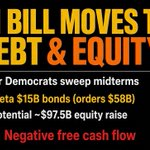
Breaking: The AI bill just moved
The narrative is still the same across the hyperscalers
The cash flow math is not.
Meta already ran negative free cash flow last quarter while spending more on capex than the business generated in operating cash. Amazon, Microsoft and Google are still funding most of the build-out from operations, but their FCF margins are compressing as data-center spend accelerates.
One company’s revenue is another company’s capex. When the buyers of the chips start financing growth with debt and equity instead of cash, the risk shifts from “will AI demand arrive” to “how expensive does the capital become while we wait.”
Markets are still treating aggressive capex guidance as a positive signal. That works until the cost of capital or the timing of returns forces a revision.
The next earnings cycle will show who can keep writing the checks from operations and who has already moved the bill onto the balance sheet.
AMD’s Data Center revenue jumped 97% year-over-year
At the same time the biggest buyers — the hyperscalers — are running negative free cash flow because of AI capex. They’re funding the build-out with debt and equity raises, not with cash from operations.
The supplier side is printing growth. The buyer side is stretching balance sheets. That gap doesn’t close by itself.
If enterprise demand softens or power/energy constraints tighten, the companies selling the chips and systems will feel it faster than the headline numbers suggest. Revenue growth can stay high while the ability to pay for the next wave of orders weakens.
Watch the next round of hyperscaler capex commentary and financing plans. The real signal isn’t how fast AMD is growing. It’s how long the buyers can keep writing the checks.
The 97% growth number looks clean in isolation. It looks different when you line it up against the free cash flow of the companies actually placing the orders.
If the gap between supplier growth and buyer cash generation stays this wide for another couple of quarters, financing costs and dilution become part of the AI trade, not just a footnote
Democrats just swept the midterms. Markets are still pricing AI capex as if nothing changed
Meta raised $15B in bonds last week (orders hit $58B) and is reportedly eyeing a ~$97.5B equity raise
Free cash flow is already negative. The AI build-out is no longer being funded by cash — it’s being funded by debt and dilution
A political shift of this size usually brings new scrutiny on big tech spending, data centers, energy use, and antitrust. If regulation or slower enterprise demand hits while the balance sheets are already stretched, the funding gap becomes the real risk — not the revenue growth story.
The question isn’t whether AI spending continues. It’s who pays when the political and cash-flow math stops lining up.
Watch the next earnings calls. The tone on capex guidance and financing plans will tell you more than the headline numbers.

This isn’t a prediction that AI spending stops. It’s a note that the funding mix just got more expensive and more visible at the same time the political backdrop changed.
If the next few earnings calls show capex guidance staying aggressive while FCF stays negative and debt/equity raises continue, the market will eventually price the cost of capital, not just the growth
Stindur retweeted
Elon Musk lost a $56 billion pay package to a man who owned 9 Tesla shares. A judge voided the deal, then ordered Tesla to pay that man's lawyers $345 million, after they asked for $5.6 billion.
Then Delaware's Supreme Court gave it all back. By then the package was worth $139 billion. The man with 9 shares got $1.
In the video below, Musk walks on stage right after shareholders voted for his pay a second time: "Hot damn, I love you guys."
In 2018 Tesla's board offered Musk options on 304 million shares, about 9% of the company, if Tesla hit a set of huge targets. It hit every one.
Richard Tornetta, a former heavy metal drummer with 9 shares, sued that same year.
In January 2024 a Delaware judge struck the deal down and called it "unfathomable."
His lawyers asked for $5.6 billion in fees. The judge called that a windfall and gave them $345 million.
In June 2024 shareholders voted for the package again. In December the judge rejected it again.
Musk moved Tesla's legal home from Delaware to Texas.
On December 19, 2025, the Delaware Supreme Court reversed it, unanimously. Throwing the deal out, it said, left Musk "uncompensated for his time and efforts over a period of six years." The lawyers' fee was cut by about 80%. Damages: $1.
Musk said he was "vindicated."
9 shares froze the biggest paycheck in history for 7 years. The final bill for the man who started it: $1.
Did the system protect shareholders, or did 9 shares nearly cost Musk $139 billion?
Ten million people have watched a TED speaker accidentally destroy the entire online course industry
He filmed the talk once at TEDxCSU in 2013 and it has been on YouTube ever since. The real count is now past 22 million.
MasterClass charges $200 a year to teach a diluted version of what he covered in 20 minutes for free.
His name is Josh Kaufman. He is the author of "The Personal MBA" and "The First 20 Hours," and one of the few writers who publicly called out how Malcolm Gladwell misread Anders Ericsson's own research.
For over a decade he has taught the same four-step method for learning any new skill in a month.
His entire framework fits on a napkin.
The ten thousand hour rule is about world-class experts in ultra-competitive fields, not about you. Twenty hours of focused practice gets you from grossly incompetent to good enough.
1. Deconstruct the skill into the smallest pieces and practice the most important ones first.
2. Learn just enough to self-correct. Read three sources, not twenty.
3. Remove every barrier to practice. Phone in another room, guitar out of the case, laptop open on the right file.
4. Commit to twenty hours before you judge yourself. Push through the first frustration barrier and you will never quit.
That last rule alone has probably cost the online course industry a hundred million dollars in unopened lifetime memberships.
"The major barrier to learning something new is not intellectual. It is emotional."
That is a paraphrase Kaufman returns to across the talk. He learned the ukulele in the same twenty hours to prove the point on stage.
Founders buy $10,000 cohort programs on productivity and never open lecture three. Parents enroll their kid in piano and stop paying when the kid hits the first plateau at hour fifteen.
Now do the math like an investor. Twenty hours at 45 minutes a day is 27 days. The book costs under twenty dollars. A $200 subscription buys you the same idea ten times over, and the course gets paid whether you show up or not. The book only pays off if you do the hours.
The talk is free on YouTube. Kaufman's book "The First 20 Hours" is under twenty dollars on Amazon.
Kaufman still writes and lectures. Most of those viewers never finish a single twenty-hour block on a new skill.
The method is free. The willingness to actually spend 45 minutes a day on the skill you keep postponing is the entire edge.
Ten million people have watched a comedian accidentally destroy the entire TED talk industry.
He filmed the talk once at TEDxNewYork in 2014 and openly admitted he had nothing to say.
Speaking coaches charge $5,000 to teach the exact tricks he used in 6 minutes to say nothing at all.
His name is Will Stephen. He is a comedian from Late Night with Seth Meyers who was invited to give a real TED talk and used it to prove the format is a costume anyone can wear.
Every TED speaker opens with a question, tells a personal story, cites a scientist, and shows a chart. Stephen did all four in six minutes with zero content.
His entire formula fits on a napkin.
Gesture with both hands. Ask the audience a question anyone can answer. Tell a mildly embarrassing story so they say aww. Point to a stranger on a slide and call them important. Flash a chart of random numbers. Wear glasses with no lenses. The audience will think you are brilliant.
That last trick alone has probably cost the public speaking coaching industry a hundred million dollars in sessions clients should have skipped.
"If you watched me on YouTube with the sound off, you would think I was a genius."
That is Will Stephen on the TED stage, three minutes into the talk he was paid to give. He wasn't lying.
Executives pay $15,000 for a keynote coach and still open with a joke the room never laughs at. Founders rehearse their pitch for weeks and still sound like Stephen at minute four, saying "wagga wah, gabba gabba" with authority.
The talk is free on YouTube. The method is written across every TED speaker's playbook for ten years.
Stephen still writes for Seth Meyers. Almost none of the ten million viewers have stopped nodding at empty slides since.
The formula is free. The willingness to actually say something before your next keynote, pitch, or townhall is the entire edge.
Ten million people have watched a neuroscientist accidentally destroy the entire brain training app industry
she gave the talk once, at tedxvancouver in 2015, and called it "after watching this, your brain will not be the same". it's been sitting on youtube ever since
lumosity charges $12 a month for a watered down version of what she explains in 14 minutes for free
her name is dr. lara boyd. neuroscientist at the university of british columbia. she runs the brain behaviour lab, where they study how practice physically rebuilds the brain after a stroke
for over a decade she's given the same answer to the only question that matters: how do you actually change a brain?
her whole framework fits on a napkin:
> every experience physically changes your brain
> chemical changes last hours, structural changes last years, functional changes rewire whole networks
> the only thing that drives it is behavior. nothing beats practice
> the harder the struggle, the bigger the rewiring
> no two brains need the same dose
that last rule alone has probably cost the brain training industry a hundred million dollars in canceled subscriptions
and the industry already paid for it once. in 2016 the ftc went after lumosity's maker for claiming its games could fight memory loss and dementia. the judgment was $50 million, cut to $2 million because the company couldn't pay. the ads stopped. the subscriptions kept renewing
"the brain you have at the end of this sentence is not the brain you had at the start"
that's the idea boyd keeps coming back to in the talk, and it isn't a metaphor it shows up on a brain scan
london cab drivers spend 3 to 4 years memorizing roughly 25,000 streets for a test called the knowledge. brain scans show a bigger memory region than in people who never did
braille readers grow a bigger sensory map for the reading hand
founders install a $15 meditation app and skip the one hard conversation that would actually rewire their defaults. parents hand their kid an educational tablet and never let them struggle with a problem long enough for anything to stick
the talk is free on youtube. boyd's lab publishes its research open access
she still teaches at ubc. almost none of the ten million viewers have added one hour of real struggle to their week since watching
the science is free. the willingness to practice the hard thing instead of tapping the easy app is the entire edge
Ten million people have watched a comedian accidentally destroy the entire TED talk industry.
He filmed the talk once at TEDxNewYork in 2014 and openly admitted he had nothing to say.
Speaking coaches charge $5,000 to teach the exact tricks he used in 6 minutes to say nothing at all.
His name is Will Stephen. He is a comedian from Late Night with Seth Meyers who was invited to give a real TED talk and used it to prove the format is a costume anyone can wear.
Every TED speaker opens with a question, tells a personal story, cites a scientist, and shows a chart. Stephen did all four in six minutes with zero content.
His entire formula fits on a napkin.
Gesture with both hands. Ask the audience a question anyone can answer. Tell a mildly embarrassing story so they say aww. Point to a stranger on a slide and call them important. Flash a chart of random numbers. Wear glasses with no lenses. The audience will think you are brilliant.
That last trick alone has probably cost the public speaking coaching industry a hundred million dollars in sessions clients should have skipped.
"If you watched me on YouTube with the sound off, you would think I was a genius."
That is Will Stephen on the TED stage, three minutes into the talk he was paid to give. He wasn't lying.
Executives pay $15,000 for a keynote coach and still open with a joke the room never laughs at. Founders rehearse their pitch for weeks and still sound like Stephen at minute four, saying "wagga wah, gabba gabba" with authority.
The talk is free on YouTube. The method is written across every TED speaker's playbook for ten years.
Stephen still writes for Seth Meyers. Almost none of the ten million viewers have stopped nodding at empty slides since.
The formula is free. The willingness to actually say something before your next keynote, pitch, or townhall is the entire edge.
the study that didn't fit in the post
people who learned to juggle for 3 months showed more grey matter in the areas that track motion
3 months after they stopped the difference mostly faded
that's boyd's whole point in one experiment
the brain keeps what you keep doing
what's the hard thing you stopped practicing?
Ten million people have watched a 17-year-old accidentally destroy the entire self-help industry.
he filmed the talk at tedxmidatlantic in october 2013 and died two months later.
tony robbins charges $5,000 for a weekend seminar on happiness. a dying teenager delivered the whole thing in 12 minutes for free.
his name was sam berns. a high school junior from foxboro, massachusetts, one of about 350 kids in the world born with progeria, a rare genetic disease that causes rapid aging. he weighed 50 pounds.
when npr asked him the single most important thing people should know about him, he answered: i have a very happy life.
his entire framework fits on a napkin:
> be okay with what you cannot do, because there is so much you can
> when the standard way does not work, build another one
> surround yourself only with high-quality people
> always have something to look forward to
> never waste energy on self-pity
that last rule alone has probably cost the self-help industry a hundred million dollars in unopened affirmation journals.
the second rule wasn't theory. he wanted to play snare drum in the foxboro high marching band. the drum and harness weighed about 40 pounds, almost as much as he did. so an engineer built him a rig that weighed about 6. he marched.
"i have a very happy life."
that was sam berns at seventeen, talking to npr about progeria. he had two months left to live.
founders spend $5,000 on tony robbins and still cannot stop checking their phone for the one investor who ghosted them. executives journal their gratitude every morning and still arrive at the office angry at the coffee line.
the talk is free on youtube. the progeria research foundation runs on donations.
in november 2020 the fda approved the first drug for progeria, lonafarnib. the trials behind it started with kids like sam. he didn't live to see it.
sam died in january 2014. the new england patriots had named him honorary captain for their playoff game that weekend. he died the day before kickoff.
almost none of the ten million viewers have stopped waiting for a better moment to be happy.
the philosophy is free. the willingness to actually choose what you can do before your next bad day is the entire edge.
thirty one million people have watched a former al gore speechwriter accidentally destroy the entire bonus industry
us companies spend $176 billion a year on incentive programs. he took it apart.
he filmed the talk once, at tedglobal 2009, and opened by saying he was about to argue against his own better judgment.
compensation consultants get paid to design the exact bonus plans he dismantled in 18 minutes, using nothing but other people's experiments.
his name is dan pink. a lawyer who never practiced law, who walked onto the ted stage and showed that the carrot and stick is a costume business wears because it looks like management.
every bonus plan follows the same script. set a target, attach money, measure speed, reward the winner. pink went through the research for all four and the science kept saying no.
his whole case fits on a napkin.
the candle problem: one group just got timed, the other was offered up to $20 to finish fast. the paid group was 3.5 minutes slower.
mit: three reward levels. bigger reward, worse result, every time the task needed real thinking.
india: same test where the money was worth months of wages. the top reward group did worst of all.
the federal reserve funded that study. lse then looked at 51 corporate pay for performance plans and found the same thing.
that last finding alone should have cost the bonus industry a lot of clients. it didn't.
"there's a mismatch between what science knows and what business does."
that's dan pink, standing on the ted stage, explaining why your company still runs on carrots. he wasn't exaggerating.
managers still dangle a bonus in front of creative work and wonder why the ideas come out safe. founders still pay for speed and get exactly that, speed, with nothing new inside it.
the talk is free. the studies are public. the playbook hasn't changed in fifteen years.
rewards only work on one kind of work: simple rules, clear finish line. which is exactly the kind ai is eating first.
so what actually got you to do your best work: money or something else?
the number that didn't fit in the post
kids with progeria live about 14 and a half years on average
sam made it to 17
and the drug that finally got approved in 2020 adds about 2 and a half years
he spent his extra years telling healthy people how to be happy
what are you still waiting on before you let yourself enjoy your life?
the number that didn't fit in the post: 84% of us businesses run incentive programs.
so almost every company you've worked for was built on the exact model pink tore apart. and the 31 million is just ted.com. the same talk has another 12.8 million views on youtube.
has a bonus ever made you do better work, or just faster work?
