

Physician-Scientist |Cancer prevention,Precision Oncology & Genomics |Board Dir. @ICGA_india | Founder @CHIPfoundation| Fmr.Dir. @icmr_nicpr & WHOIARC @GKH_SLT
🇮🇳
Joined February 2011
- Tweets7.2K
- Following745
- Followers2.8K
- Likes3.8K





May the festival of lights illuminate your life with good health, peace, and endless happiness.
Happy Diwali to you and your family

🪔 Happy Diwali from CHIP Foundation!
This Diwali, light up lives with awareness, not smoke. Choose wellness, clean air and preventive health.
Choose prevention. Celebrate health!
Wishing everyone a safe, healthy and joyful Diwali!
#HappyDiwali #Diwali2026 #PreventiveHealth

Affordability of cancer medicines is of utmost importance.

Advances in oncology have improved treatment options, but their benefits remain out of reach for many patients who cannot afford to complete the prescribed course. This is despite the recent decision to cap trade margins on 137 identified non-scheduled anti-cancer medicines, providing some relief, writes Afshan Yasmeen.
@AfshanYasmeen
thehindu.com/news/national/k…


Thursday musing 4/4: Cancer survivorship starts at the time of the initial diagnosis.
Survivors need holistic support for health, career preservation, and mental well-being from day one. Let's move beyond mere survival to thriving. @chipfoundation
#BeyondSurvival #CancerSurvivorship
🤖 Made with AI

Humbled to contribute to the chapter on ‘The global burden of liver cancer: patterns, inequities, and precision opportunities.’ In our latest book, “Precision Oncology in Liver Cancer: Genomics, Infection, and the Exposome in African and Global Contexts”
Liver cancer continues to be a significant global health challenge, particularly in resource-constrained regions like Africa. Understanding the intricate interplay between genomics, infectious diseases, environmental exposures, and cancer biology is essential to advancing cancer prevention, early detection, diagnosis, and treatment.
This underscores the imperative to translate scientific breakthroughs into equitable cancer prevention, diagnosis, and treatment, especially for historically marginalized populations.
Thanks to my co-authors and Editor @mazozozetzt .

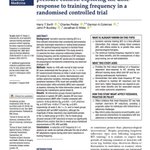
Wall sits, done regularly, has been found to decrease systolic blood pressure in a recent RCT.
Reduction Amounts: Studies in the British Journal of Sports Medicine and recent clinical trials show that an isometric wall-sit routine can drop resting systolic blood pressure by an average of about 8 to 13.7 mmHg, depending on the frequency of training.
Recommended Routine: A standard effective protocol involves holding a wall sit for 2 minutes, resting for 2 minutes, and repeating this sequence 4 times per session (totaling about 8 minutes of work), performed 3 times a week.
Maintenance: Even scaling back to 1 or 2 sessions per week can help maintain lower blood pressure levels, though a full 3-times-weekly schedule yields the largest reduction. Completely stopping the routine causes blood pressure to return to baseline control levels.
Why It Works?
Wall sits are a form of isometric exercise (contracting muscles without joint movement). When you hold the position, the tensed leg muscles temporarily restrict blood flow. When you stand up and release the muscle contraction, a surge of blood rushes back in, which helps improve blood vessel elasticity and overall vascular function over time.
Elementary, my dear Watson?

Research Alert: Cervical cancer is almost entirely preventable, yet deaths are forecast to rise by nearly 40% by 2050. nature.com/articles/s41591-0…

Tuesday musings: Affordable, accessible, and equitable cancer treatment for all should be a right, not a privilege.


Medical breakthroughs are rarely linear! Baby steps can often lead to major achievements, but all in good time.
'Moderna shares plunged after details from a closely guarded mRNA-based cancer-vaccine study were shared on social media, raising concerns that the treatment might not be as effective as initially hoped.'
The INTerpath-001 trial (1,137 high-risk melanoma patients) found the personalized vaccine (intismeran) plus Keytruda reduced recurrence/death risk by 42% and distant metastasis/death by 38% at ~2 years versus Keytruda alone—positive but short of Wall Street's heightened expectations from August Phase 2 data.
The episode shows biotech volatility from hype cycles: early announcements drove massive gains, but the full data release (after an embargo breach) triggered a "sell the news" reaction, reminding us that cancer vaccine development advances in incremental steps.
doximity.com/articles/e3644c…

Ravi Mehrotra, MD retweeted

A bespoke vaccine that is tailored to target an individual's unique skin cancer reduced rates of recurrence or death in a late-stage trial, making an approval expected newscientist.com/article/259…

Thank you for the encouraging updates. @agingroy
Liver and gallbladder cancers, in particular, have historically been associated with some of the least favourable outcomes.

Five cancer trial readouts from ESMO 2026 stand out this week, ranked by how much they cut the risk of death.
Each one went head-to-head with today's standard in its own patients, so treat each row as its own story.
1) Divarasib, a daily pill for lung cancer with the KRAS G12C gene change, after earlier treatment. It cut the risk of death by 44% versus sotorasib or adagrasib, the two pills already approved for it. Median survival was about 18 months versus 12. Phase 3 trial, 338 patients.
2) Durvalumab plus enfortumab vedotin around bladder removal, for bladder cancer in the muscle wall in people who cannot or will not have cisplatin chemo. It cut the risk of death by 42% versus surgery with usual care. At two years, 78% were alive versus 69%. Phase 3 trial, 462 patients in this comparison.
3) Osimertinib (Tagrisso) plus savolitinib, two pills, for EGFR lung cancer that kept growing on osimertinib because of a second gene, MET. It cut the risk of death by 32% versus chemo. Median survival was about 18 months versus 13. Phase 3 trial, 338 patients.
4) Sacituzumab tirumotecan (sac-TMT), an antibody that delivers a chemo drug into cancer cells, for womb lining (endometrial) cancer that kept growing after platinum chemo and an immunotherapy. It cut the risk of death by 32% versus chemo. Median survival was 19 months versus 12. Phase 3 trial, 776 patients.
5) Ivonescimab plus chemo as first treatment for advanced bile duct or gallbladder cancer. It cut the risk of death by 25% versus durvalumab plus the same chemo, today's standard. Median survival was about 15 months versus 12. Phase 3 trial, 682 patients, run in China.
Big picture: two of the biggest lung wins only work when tumor testing finds the gene they target. In lung cancer, ask whether the tumor was tested for KRAS and MET.

2/4: Tuesday Thoughts: Early detection is important
and saves lives.
Whether it’s routine screenings, listening to your body, or checking in on your mental health, catching things early makes all the difference.
Don't put off what you can check today until tomorrow.
What’s one healthy habit you’re prioritizing this week?
#TuesdayThoughts #HealthFirst #Wellness #EarlyDetection

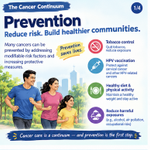
1/4 Monday musings: While changing lifestyle choices can be challenging, focusing on the "low-hanging fruits" of cancer prevention makes a massive impact. From tobacco control and HPV vaccination to maintaining a healthy diet and reducing harmful exposures, prevention truly is the first step. @chipfoundation
What lifestyle change do you think is the hardest to adopt, but worth the effort?
#CancerPrevention #PublicHealth #HealthyLifestyle #PreventionSavesLives
