







Pinned Tweet
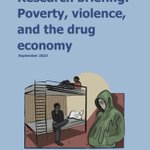
Great to see the recent @rvv_study being discussed at today’s #FMQs. The research was funded by @ScotGovJustice and carried out by @SusanABatchelor and @caitlingormley @TheSCCJR @UofGSPS @UofGlasgow. Access the report and briefings here: gov.scot/isbn/9781835212127 @UofGGovRel

You can hear the full episode here: gla.ac.uk/schools/socialpoli…
Illustration by harrygrove.com

ALT Illustration of two men with their arms around each other and the caption: See the Violence, See the Person, We See You. By harrygrove.com
You can find out more about the Repeat Violence research, funded by @ScotGovJustice, here: gov.scot/publications/repeat… @TheSCCJR @UofGSPS @UofGSocSci
The @UofGSPS #RecoveringCommunity podcast was made by the talented @freyahel. She did an amazing job of editing our conversation into a coherent narrative, that really did justice to the wonderful work of @JimThom61540525 @SimonCommScot and the @rvv_study. Thank you @freyahel!
Thanks to @AcademicDiary for inviting @caitlingormley and I to discuss the @rvv_study and to @JimThom61540525 for sharing his pioneering work with @SimonCommScot and @penumbra_scot supporting people experiencing homelessness in Glasgow. #SeeTheViolence #SeeThePerson #WeSeeYou

In episode 4 of #RecoveringCommunity @AcademicDiary meets @SusanABatchelor & Dr Cailin Gormley, & visits the Simon Community Scotland; a charity providing information, advice, support and accommodation to people experiencing, or at risk of, homelessness.
#GlasgowUni #Glasgow
Susan Batchelor retweeted

Working w yp who have been involved in violence, they are not doing it for likes, they are not doing it bcos song lyrics, they are not doing it because they do not fear the consequences. Their lives are full of fear. Immediate fear, fear for their future, fear deep inside them.
Susan Batchelor retweeted
If we want to stop young people becoming victims of violence we need to look at the causes of that violence.
Susan Batchelor retweeted
It is easier to punish than look at the complex and multifaceted issues that are contributing to these behaviours. Addressing needs is not in lieu of taking responsibility or making amends but we need to acknowledge that often the causes lie outwith young peoples control
Susan Batchelor retweeted
🧵 it is unbelievably upsetting to see yp be victims of such violence, and similarly to think about the suffering yp must be experiencing to be involved in such violence. That is telling us ALL they are in need- of connection, support, that something is going wrong…

Story on Dr @SusanABatchelor and Dr @fgillo10 @TheSCCJR giving evidence to @ScotParl Committee about youth violence, safety and belonging in 🏴
Young people affected by violence have told researchers they want safe spaces re-instated in their communities.
dailyrecord.co.uk/news/scott…

Susan Batchelor retweeted

Story on Dr @SusanABatchelor and Dr @fgillo10 @TheSCCJR giving evidence to @ScotParl Committee about youth violence, safety and belonging in 🏴
Young people affected by violence have told researchers they want safe spaces re-instated in their communities.
dailyrecord.co.uk/news/scott…


Looking forward to participating in Saturday’s @ESRC Festival of Social Science event with @caitlingormley and @rvv_study. It’s open to everyone and there’s no cost to attend. More information on the @UofGlasgow events here: festivalofsocialscience.com/…

We will be sharing findings from the Repeat Violence study at this weekend’s #ESRCFestival of Social Science @UofGlasgow. Details available here: festivalofsocialscience.com/… Please come along and say hello! @UofGSocSci @UofGSPS @UofGSociology @TheSCCJR

Susan Batchelor retweeted

📍SCCJR's Annual Lecture will take place on Thurs 7 Dec at the @UniStrathclyde
This is an in-person event with limited places so please don't miss out bit.ly/46DV61m
Another organisation working to support people with experience of repeat violence is @SimonCommScot, whose We See You group provided feedback on the
@rvv_study key findings as part of our stakeholder engagement process.
@JimThom61540525, coordinator at the We See You project, also supported @rvv_study by contributing to a forthcoming Recovering Community podcast focusing on repeat violence experienced by men living in temporary accommodation in Glasgow city centre (presented by @AcademicDiary)

@JimThom61540525 & the We See You group @SimonCommScot are also currently working with @penumbra_scot to develop an anti-violence campaign and peer-to-peer support for men with lived & living experience of victimisation, drug use & homelessness in Glasgow city. Watch this space!
For those of you who missed it, here's the link to today's discussion of the @rvv_study at FMQs.

Very grateful for @HumzaYousaf comments on the @rvv_study report at today's #FMQs: 'It is really important that we act upon what this excellent report is telling us.' @TheSCCJR @UofGGovRel @UofGSocSci gov.scot/publications/repeat…
Susan Batchelor retweeted

📢New research from @TheSCCJR shows repeat victims of violence do not report to the police, even in cases involving serious injury and hospitalisation.
Read more on the #SocSciHub: tinyurl.com/yhujprta.

ALT A person Clenching their fist with a blurry wall behind them
One example of the kind of project working to support people with experience of repeat violence is @siscorecovery, who provided feedback on the @rvv_study key findings as part of our stakeholder engagement process.

Check out the @STVNews at 6pm tonight.
The team at Sisco offer valuable insight into repeat violence and the impact on both the victim and perpetrator.
Information is key to changing public perception.


Thanks to @pauline4glasgow for asking a question based on the @rvv_study at today's FMQs, highlighting the link between repeat violence and poverty - as well as the crucial support provided by community-based organisations led by people with lived experience.
Grassroots support services were valued by @rvv_study participants for their community connections and holistic response. Smaller, locally based organisations were also seen to offer more individualised support, with an emphasis on building longer-term relationships of trust.
Lived experience was also valued by @rvv_study participants. Similar social and cultural backgrounds gave workers credibility, alongside the skills to engage people who are distrustful of formal sources of support. Peer mentors were also important role models for recovery.