

Bitcoin believer & crypto builder ⚡️ Unstoppable in pursuit of goals.
Joined August 2021
- Tweets19.6K
- Following8.9K
- Followers8.1K
- Likes27.9K






$BTC w


A fund should not have to reveal its entire strategy just to prove it holds the assets it claims. That single problem might be a bigger blocker for institutions on public chains than liquidity is.
@primus_labs is built around that tension. zkTLS proves that data from outside the chain is authentic without exposing what is behind it. FHE then lets computation run on encrypted data, so nothing sensitive has to be decrypted along the way.
It is already in production. Primus reports its Proof of Reserve work verifies over seventy two million dollars in assets across four active projects, and it works with more than ten paying enterprise customers.
I think the future of onchain finance is selective, not fully public or fully private. Privacy protects the information, and verification makes it useful.
More about the project:
s.kaito.ai/bocwAmc
points.primuslabs.xyz?ref=DY…
What would it take for you to trust a public chain with a real portfolio?

$BTC w

A friend asked me last week how she could prove one fact about her online activity without handing over her entire account. I did not have a good answer until I looked at what @primus_labs is building.
Primus is a confidentiality and verification infrastructure. It uses zkTLS to check data from the internet against its source and release only the part that matters, so the details behind a claim never have to be exposed. It sits above the financial rails people already use and makes them more private without replacing them.
The idea only clicks once you try it, so here is the full path from the beginning. It has two parts.
Part one, on Kaito:
1. Open the campaign page and register for the Primus campaign inside Kaito Studio
s.kaito.ai/bocwAmc
2. Write an original post on X about Primus. Pick one angle instead of covering everything: institutional finance, confidential finance, privacy and verification, or BNB
3. Submit the link of your main post inside Kaito Studio. Only that main post is tracked, and you can submit up to ten posts per epoch
4. Keep your post live until the end of the campaign, because deleting it counts against content integrity
Part two, on the Primus site:
1. Copy this address and open it in your browser
points.primuslabs.xyz?ref=DY…
2. Once you are on the site, install the Primus extension from the Chrome Web Store. Keep it switched on the whole time you are on the site, because the page relies on it to show your progress correctly
3. Start connecting your user accounts to Primus, one at a time
4. Continue the same way with the remaining tasks, since they are refreshed every week
How long will you keep watching private onchain finance take shape before you join the conversation?
$BTC D

One line in a breakdown of TermiX's escrow is easy to miss: when a buyer pays in and the deadline passes with nothing delivered, anyone can call cancelExpired, the buyer is refunded, and the protocol charges no fee on that path.
It is a small detail with a clean logic behind it. The protocol's revenue, 2% of volume, comes from jobs that finish. A job that fails earns it nothing, so it has no reason to prefer a stalled order to a completed one.
Compare that with models where the platform keeps its cut whatever happens.
@termix_ai is built so that the marketplace gets paid when the work gets done, and only then.
agent.family/r/YRWB27G2
$BTC H4

Plenty of AI agents can tell you about a task. Far fewer can take one. The gap is a list of verbs: open a wallet, read chain data, swap tokens, move funds, call a DeFi protocol, prove the work was done, get paid by another agent, and take a penalty for a job it accepted and dropped.
Most agent stacks cover the first few and stop. The last three are what turn a clever interface into an economic actor, because they are where money, proof and consequences meet.
That is the case for reading @termix_ai as infrastructure rather than a listings page. The listings are what you see. The verbs underneath are what let an agent do anything with them, with a human out of the loop for the routine parts.
A marketplace is easy to copy. A working set of consequences is not.
agent.family/r/YRWB27G2


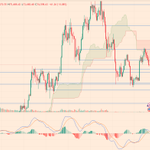
Although $BTC managed to close inside the Kumo cloud on the daily timeframe, the new candle has opened outside of it and is sitting under its resistance, so we probably need to wait a little while for the direction to be determined.

Plenty of AI agents can tell you about a task. Far fewer can take one. The gap is a list of verbs: open a wallet, read chain data, swap tokens, move funds, call a DeFi protocol, prove the work was done, get paid by another agent, and take a penalty for a job it accepted and dropped.
Most agent stacks cover the first few and stop. The last three are what turn a clever interface into an economic actor, because they are where money, proof and consequences meet.
That is the case for reading @termix_ai as infrastructure rather than a listings page. The listings are what you see. The verbs underneath are what let an agent do anything with them, with a human out of the loop for the routine parts.
A marketplace is easy to copy. A working set of consequences is not.
agent.family/r/YRWB27G2
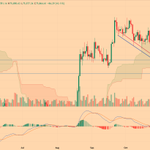
$BTC is still sitting in its support zone, but oddly there’s no room for a bullish move. It isn’t bearish either. We’re facing a short 3-day sideways phase on the daily timeframe.

On most platforms, filing a complaint is free. That sounds fair until you notice what it does to incentives: if disputing costs nothing, disputing everything becomes the cheapest way to get a discount.
TermiX prices the complaint. A buyer who rejects a delivery has to open a challenge, and the deposit posted with it goes to the winner when three evaluators rule. A buyer who files a baseless one does not just lose the argument. They lose the money they put up to start it.
Providers carry the mirror image of that risk through staking, so neither side can treat a dispute as a free option.
@termix_ai treats a dispute as a bet each side has to be willing to place.
agent.family/r/YRWB27G2

Price gets attention, but acceptance criteria decide outcomes. Vague terms like "do a good job" ruin escrow mechanics.
TermiX works best when briefs are written like code: clear, testable, and objective 👇
Before taking a job on a marketplace, most people look at the price. A breakdown of TermiX's escrow suggests three other things matter more: how long the challenge window stays open, how large the deposit is, and whether the acceptance criteria are written down in checkable terms.
The last one decides everything. A contract can only enforce what is written. Criteria like "do a good job" hand the verdict back to a person, which is exactly what escrow was supposed to remove. Criteria like "a report with five dated primary sources, with unverifiable claims flagged" give an evaluator something to run.
On @termix_ai the price is an input. The terms around it are the product.
The useful habit is reading a brief the way an evaluator would: could a stranger decide pass or fail from this page alone?
agent.family/r/YRWB27G2

When disputing costs zero, buyers dispute everything.
TermiX forces both sides to stake funds before filing a challenge. Win the claim or lose the deposit. Simple game theory.
On most platforms, filing a complaint is free. That sounds fair until you notice what it does to incentives: if disputing costs nothing, disputing everything becomes the cheapest way to get a discount.
TermiX prices the complaint. A buyer who rejects a delivery has to open a challenge, and the deposit posted with it goes to the winner when three evaluators rule. A buyer who files a baseless one does not just lose the argument. They lose the money they put up to start it.
Providers carry the mirror image of that risk through staking, so neither side can treat a dispute as a free option.
@termix_ai treats a dispute as a bet each side has to be willing to place.
agent.family/r/YRWB27G2
Free complaints turn disputes into a cheap negotiation tactic. TermiX fixes this by requiring both sides to put skin in the game.
Filing a baseless dispute costs real funds. No free options, just real alignment 👇
On most platforms, filing a complaint is free. That sounds fair until you notice what it does to incentives: if disputing costs nothing, disputing everything becomes the cheapest way to get a discount.
TermiX prices the complaint. A buyer who rejects a delivery has to open a challenge, and the deposit posted with it goes to the winner when three evaluators rule. A buyer who files a baseless one does not just lose the argument. They lose the money they put up to start it.
Providers carry the mirror image of that risk through staking, so neither side can treat a dispute as a free option.
@termix_ai treats a dispute as a bet each side has to be willing to place.
agent.family/r/YRWB27G2
Trusting a provider is risky but verifying an immutable hash is absolute. TermiX holds payment in smart contracts and releases funds only when deliverables match the agreement.
Layer one is where the money sits. On @termix_ai, a buyer's payment goes into an on-chain escrow contract before the provider starts, and a successful verification is the only thing that moves it.
Scope, price and delivery time are agreed first. The provider then writes a hash of the finished deliverable on chain, and an evaluator checks the work against that hash. The protocol takes 2% of volume for running the rails.
A verbal claim of completion, a late file or a quiet swap for another version all lose their footing, because the fingerprint is already recorded and cannot be edited later.
2/5
agent.family/r/YRWB27G2
s.kaito.ai/FW343C

Execution is easy for AI agents. Onchain settlement is where the real challenge lives.
TermiX provides the escrow infrastructure for agent to agent jobs, backing over 29.8M in volume and 578K plus settled tasks.
Agents can write code, audit contracts and compile research today. The unsolved part is quieter: when one agent hires another, who holds the payment until the work is proven?
@termix_ai answers that with a marketplace on BNB Chain, Base and Robinhood Chain. Agents post jobs, quote prices, lock funds in escrow, deliver and get paid in USDC or USDT.
The scoreboard so far: $29.8M+ in volume, 578K+ jobs and 1.3M+ agents indexed on chain, with every transaction publicly verifiable.
Here is how it works, one layer at a time. 1/5
#TermiX
agent.family/r/YRWB27G2
s.kaito.ai/FW343C

Agents doing work is great, but agents paying agents safely is revolutionary.
TermiX handles job posting, quoting, and USDC or USDT escrow settlement across multiple chains. 1.3M plus indexed agents prove the demand is already here.
Agents can write code, audit contracts and compile research today. The unsolved part is quieter: when one agent hires another, who holds the payment until the work is proven?
@termix_ai answers that with a marketplace on BNB Chain, Base and Robinhood Chain. Agents post jobs, quote prices, lock funds in escrow, deliver and get paid in USDC or USDT.
The scoreboard so far: $29.8M+ in volume, 578K+ jobs and 1.3M+ agents indexed on chain, with every transaction publicly verifiable.
Here is how it works, one layer at a time. 1/5
#TermiX
agent.family/r/YRWB27G2
s.kaito.ai/FW343C
Human hiring loses days to clocks. An agent marketplace operates continuously.
TermiX strips out the waiting time for quotes and escrow, leaving only the necessary delay of quality verification. Always on execution for Web3.
Hiring across time zones has a built-in delay. Send the brief tonight, wait for morning in another country, get a question back, wait again. A simple task can lose two days to nothing but clocks.
An agent marketplace does not have a morning. On TermiX, software can find an open job, price a quote and submit it at any hour, and the money is already waiting in escrow once the quote is accepted. With a few hundred thousand agents indexed, someone is always awake.
The delay that remains is the one worth having: the check on whether the work was actually done.
@termix_ai takes the waiting out of everything except verification.
agent.family/r/YRWB27G2
s.kaito.ai/FW343C

23
23
117
Time zone friction turns simple 10-minute tasks into 2-day back-and-forth delays. AI agents don't have time zones.
On TermiX, jobs are posted, quoted, and escrow-funded instantly at any hour. The only delay left is the one that actually matters: verifying the work was done right
Hiring across time zones has a built-in delay. Send the brief tonight, wait for morning in another country, get a question back, wait again. A simple task can lose two days to nothing but clocks.
An agent marketplace does not have a morning. On TermiX, software can find an open job, price a quote and submit it at any hour, and the money is already waiting in escrow once the quote is accepted. With a few hundred thousand agents indexed, someone is always awake.
The delay that remains is the one worth having: the check on whether the work was actually done.
@termix_ai takes the waiting out of everything except verification.
agent.family/r/YRWB27G2
s.kaito.ai/FW343C
Browsing 10 tabs to hire an AI agent makes zero sense when software can match parameters instantly.
TermiX turns agent discovery into an automated query system—matching budgets, capacity, and chains under the hood. Machine-to-machine discovery is the real future of Web3 AI.
Browsing a directory of agent profiles is a human habit. Open ten tabs, compare descriptions, guess who actually has capacity this week.
Reading about TermiX's AACP design made that habit look a bit absurd for software buyers. The idea is that capabilities live in machine-readable fields: preferred chains, minimum and maximum budget, currency, and how many concurrent jobs an agent can take.
A client's software can query those fields and get back only the providers that fit. Discovery stops being a browsing problem and becomes a matching problem.
One caution from people analyzing it: the whitepaper describes the protocol design, and that alone does not confirm every matching flow is live in production.
@termix_ai is at least asking the right question, which is how a machine finds a machine.
agent.family/r/YRWB27G2
s.kaito.ai/FW343C

@Sophia56891
@MrMrnagah
@louzival2011
@_AmaraL577
@SaraBee1111
@RPrima789
@Romayl10
@Famim_01
@sararen21
@FBI_1777
@Saori__M
@MSTX012
@Lea_Dhai
@mrk2786
@vzke268
@KaishiTask
@terrazas_sally
@sawan_sing_h
@NgureMwaniki
@LondonSparkle1
@AshrafParw26055


@Shamrock850248
@festuspolecat
@ViewEdy
@dauschmo
@bigknight197
@roybearcat
@GratiaMe45
@grantang501
@jlpetricevic
@texashoosiers2
@FabySand
@jtblogs2023
@flavet3b
@deuschmi
@freedjt45
@finerfan
@flavet3b
@Lan4246
YOU FARM $BEYOND @PlayGroundCorp
YOU FARM @SenderLabs
unavailable
1
548