

Disc L/S | TMT+Energy. ISO convexity. Factor aware. Path independence matters. Results never lie. NFA. Student of mkts and cos. Creator: CRAVE Thesis of GAI.
Above the Noise
Joined September 2024
- Tweets19.9K
- Following12.1K
- Followers38.2K
- Likes17.8K








Pinned Tweet
Equity Trading Through Counterparty Analysis and Edge
This presents a framework for successful discretionary long/short equity trading that centers on counterparty analysis rather than abstract valuation alone. A trader must constantly ask who is on the other side of the transaction and why they are willing to trade at the current price, linking execution to a test of a trader's edge. This perspective suggests that the most profitable trades occur when one is transacting against non-fundamental, forced flows driven by factors like benchmark constraints, indexing, or risk management.
THERMAL ALERT: HAWIYAH-AREA GOSP WEST, SAUDI ARABIA
SITE
• Hawiyah-Area GOSP West, Saudi Arabia, gas-oil separation plant (GOSP), Ghawar field, Hawiyah sector, Eastern Province
• Owner-operator: Saudi Aramco
• Capacity not published; one of the GOSP complexes processing Ghawar crude on the western side of the field
• Adjacent major facilities: Hawiyah-Area GOSP North about 11 km north; Hawiyah-Area Plant East and the Hawiyah Gas Plant about 12 to 18 km away
DETECTION
• Satellite analysis of 2026-10-27: 7 detections across 3 sensors and 3 passes
• Aqua MODIS, 00:09 UTC: 2 hotspots, peak FRP 90.89 MW (confidence 98) and 82.34 MW (confidence 94), bracketing the complex
• NOAA-20 VIIRS, 09:07 UTC: 4 hotspots on the southeast side of the complex, up to 60.67 MW; the fire persisted at least 8 hours, which rules out a flare spike
• S-NPP VIIRS, 10:26 UTC: a single 3.74 MW detection at the complex; the large fire had burned out or been contained by then
CONFIDENCE
• Event real at the site: HIGH, 90 to 95%
• Cause (Houthi strike, as suspected in the posts): LOW to MODERATE, 35 to 45%
• Damage or impact: no basis; no ground reporting, no damage imagery, and no output impact has been reported by anyone
• The fire itself is not in doubt: three sensors on three passes over 9 hours, centered on the plant. The strike attribution rests only on timing inside the night's missile wave; nobody has claimed this specific site, and no impact evidence exists
CORROBORATION
• X: MarioNawfal posted first at 04:44 UTC, naming a fire at a gas-oil separation plant on the edge of Ghawar with the Houthis as suspected cause, sourced to the same NASA satellite data; tleilax___ posted the FIRMS screenshots at 08:52 UTC; a later post from Newstoday555 (11:43 UTC) adds a video that is unverified, was posted after the last pass showed the fire already faded, and may be file footage
• Silent: OSINTdefender, Osint613, and AuroraIntel have posted nothing on Ghawar; Aramco and Saudi officials have said nothing about this site
• Web: no news outlet has reported a Ghawar or Hawiyah fire; wire coverage of the night's Saudi attacks concerns Ras Tanura, a separate event
• Status: satellite-confirmed fire; cause UNVERIFIED; damage extent unknown
WHY IT MATTERS
• Ghawar is the world's largest conventional oil field and its GOSPs are the processing backbone; a real fire at one, inside a Houthi missile wave, shows reach into the core of the Eastern Province even where damage is unproven
• Market read stays contained: the fire burned for at least 8 hours but had faded to near-routine levels by 10:26 UTC, no output impact has been reported, and Ras Tanura remains the market-relevant event of the night
Coordinates: 24.7948, 49.1765


EARNINGS TODAY, TUESDAY, OCTOBER 27, 2026
18 companies report today.
BEFORE THE OPEN
• CMS (CMS Energy Corporation)
• CNP (CenterPoint Energy, Inc.)
• FCX (Freeport-McMoRan Inc.)
• GLW (Corning Incorporated)
• GLXY (Galaxy Digital Inc.)
• HUBB (Hubbell Incorporated)
AFTER THE CLOSE
• EQT (EQT Corporation)
• FE (FirstEnergy Corp.)
• FFIV (F5, Inc.)
• HOOD (Robinhood Markets, Inc.)
• NXPI (NXP Semiconductors N.V.)
• RBBN (Ribbon Communications Inc.)
• SKHY (SK Hynix Inc)
• STX (Seagate Technology Holdings plc)
• TER (Teradyne, Inc.)
• UCTT (Ultra Clean Holdings, Inc.)
• V (Visa)
TIME NOT SET
• ASMIY (ASM International NV)

AI CONFERENCES AND INVESTOR DAYS, TUESDAY, OCTOBER 27, 2026
TODAY
DCD INVESTMENT FORUM MENA CONFERENCE PRESENTATION
Tue Oct 27, Dubai, United Arab Emirates
DCD Investment Forum MENA (DatacenterDynamics), October 27, 2026, Grand Hyatt Dubai, Dubai. Co-located with DCD Connect MENA. Part of the DCD Investment series.
No public webcast. In-person event. Registration: datacenterdynamics.com/en/dc…
• Setup: A one-day executive forum with 35+ speakers, convening C-suite operators, developers, lenders and investors active in MENA digital infrastructure deal flow. This is the capital side of the MENA buildout, as sovereign AI programs turn announced gigawatts into financed projects
• The number: 2,500+ senior professionals expected across the co-located events, against a regional pipeline of 2.6 GW in development and 13.8 GW planned on roughly 1.6 GW live
• Why it matters: Who finances the Middle East pipeline, and on what terms, decides how much of it gets built
• Debates: Sovereign capital versus international project finance, power and grid access as the gating item, and phased 100 MW to 200 MW delivery versus gigawatt announcements
• Watch: The opening macro panel on where MENA digital infrastructure heads next, and any named financing or partnership announcements
CELESTICA INC INVESTOR DAY
Tue Oct 27, 8:00 AM ET
Investor and Analyst Day call, hosted by Chair and CEO Rob Mionis, with an in-person Lunch Forum following in Midtown Manhattan for institutional investors and sell-side analysts.
Webcast: events.q4inc.com/attendee/33…
• Setup: Q3 results, reported after the close Monday October 26, beat the top of guidance: revenue rose 83% year over year to $5.83B against a $5.25B to $5.55B guide, adjusted EPS rose 109% to $3.30, adjusted operating margin hit a record 8.5%, and CCS revenue rose 102% to $4.87B. Management raised the full-year 2026 outlook to $21.0B of revenue and $11.55 of adjusted EPS, cut free cash flow guidance to $460M from $600M for targeted working capital investment ahead of 2027, and gave an initial 2027 outlook of $40.0B of revenue, up 90%, with a 9.0% adjusted operating margin and $21.50 of adjusted EPS on capex of $1.5B to $2.0B
• The number: The $40.0B 2027 revenue target, well above the $35.7B analyst estimate reported ahead of the print, and whether the day substantiates it with contracted demand and 1.6T program detail
• Why it matters: Celestica is the purest listed read on hyperscaler AI hardware demand outside the hyperscalers themselves, and the day is the first long-form test of the 2027 frame
• Debates: Customer concentration, the cash cost of growth as working capital builds, and whether 9% margins hold as capacity capex rises
• Watch: Q4 guidance of $6.275B to $6.575B of revenue, 2028 demand commentary (management said customer demand forecasts are meaningfully higher than the 2027 outlook), and 1.6T program updates
MACRONIX INTERNATIONAL CO LTD INVESTOR DAY
Tue Oct 27, 4:00 PM Taiwan time (4:00 AM ET)
Third-quarter 2026 results webcast, hosted by Chairman and CEO Miin Wu and Vice President Paul Yeh, per the company investor relations calendar.
Webcast via Macronix investor relations. Direct link unconfirmed.
• Setup: The NOR flash maker is in a steep memory upcycle. September sales rose 188% year over year to TWD 8.37B and third-quarter revenue reached TWD 24.24B, up 27% sequentially
• The number: Nine-month 2026 revenue of TWD 53.83B, up 155% year over year, already above the prior full-year record of TWD 50.57B set in 2021, with Q2 gross margin at 64.4%
• Why it matters: Macronix is a clean read on legacy memory pricing power and how far the upcycle converts into durable margins
• Debates: Whether pricing holds into 2027, and the return on the TWD 15.81B capacity budget approved in July, with new capacity due in 2027
• Watch: Q3 gross margin against the 64.4% Q2 mark, Q4 sales commentary, and capex timing
GUIDEWIRE SOFTWARE INC INVESTOR DAY
Tue Oct 27, 7:30 PM ET, Las Vegas, United States
Analyst Day held inside Connections 2026, October 26 to 29 at Fontainebleau Las Vegas, with more than 3,800 attendees expected.
Webcast: guidewire.zoom.us/j/91515433…
• Setup: Fiscal 2026 revenue rose 23% to $1.48B and ARR rose 19% to $1.24B, with cloud ARR up 35% to 84% of total ARR and 62 core cloud deals signed in the year. The stock sold off on fiscal 2027 guidance in September and has been rebuilding into the day
• The number: Fiscal 2027 ARR guidance of $1.45B to $1.46B, and whether the fiscal 2028 ARR figure near $1.7B is reaffirmed as a floor
• Why it matters: Guidewire is the core-system standard for P&C insurers, and migration of its installed base to Guidewire Cloud is the growth engine
• Debates: Roughly 125 on-premises customers still to migrate, the pace of cloud cohort expansion, and how fast agentic AI products monetize
• Watch: Detail on the top 10 US carrier signed September 4 for Guidewire Cloud and PolicyCenter, set to become a top 10 customer by fully ramped ARR over a 12 to 18 month deployment, plus any multi-year target updates
TOMORROW
FIVE9 INC CONFERENCE PRESENTATION
Wed Oct 28, Amsterdam, Netherlands
ServiceNow World Forum Amsterdam, RAI Amsterdam, 8:30 AM to 6:00 PM. Free, in-person only, no digital edition and no public webcast.
• Setup: Five9 and ServiceNow expanded their partnership in November 2024 around a turnkey AI solution joining ServiceNow Customer Service Management with the Five9 Intelligent CX Platform. Five9 exhibits and hosts a session, showing Five9 Fusion for ServiceNow, which puts voice and digital on one agent screen, with real-time transcription feeding Now Assist
• The number: One agent screen for voice and digital inside ServiceNow, the core Fusion claim the team is demoing on the floor
• Why it matters: Amsterdam is a live test of whether the ServiceNow channel converts into European contact-center pipeline for Five9
• Debates: AI agent deflection versus seat-based pricing pressure across CCaaS, and how much of the partnership is product versus go-to-market
• Watch: Five9 session attendance and any named customer or expansion announcements out of the forum
ORACLE CORP INVESTOR DAY
Wed Oct 28, 10:55 AM CT, Las Vegas, United States
Investor Day Meeting at Oracle AI World, live via the Oracle investor relations homepage.
Webcast: oracle.com/investor
• Setup: Q1 fiscal 2027, reported September 10, delivered revenue up 30% to $19.3B and cloud infrastructure revenue up 121% to $7.4B, and management raised the fiscal 2027 revenue outlook to at least $90B
• The number: Remaining performance obligations of $664B, up $209B year over year and $26B in the quarter, against quarterly capex of $28.5B and free cash flow of negative $5.4B
• Why it matters: This is the first long-form chance to test how the backlog converts, with 300,000 GPUs and 850 MW delivered in Q1 and utilization near 98%
• Debates: Capacity delivery pace, margins and cash flow through a $90B to $95B fiscal 2027 capex plan, and customer concentration in the AI backlog
• Watch: Any update to the capex or funding plan, RPO conversion commentary, and applications growth against the infrastructure story
MONDAY.COM LTD INVESTOR DAY
Wed Oct 28, New York, United States
Investor Day at Elevate '26, the flagship conference, October 28 to 29 at the Javits Center, with a private investor Q&A with management. The opening keynote is livestreamed free at 11:00 AM ET.
Keynote livestream: monday.com/elevate/elevate-2…
• Setup: Q2 revenue rose 22% to $365M and the company reconfirmed full-year 2026 revenue guidance of $1.466B to $1.474B, even as it cut roughly 20% of headcount to fund the AI pivot and the stock sold off on the print
• The number: AI ARR doubled from Q1 to Q2 and drove 17% of net new ARR, against overall net dollar retention of 109% with guided pressure in the second half
• Why it matters: Elevate is where the AI workspace claim meets customers, around 250,000 of them, with every attendee building a working AI agent on site, across 200+ sessions and 150+ speakers
• Debates: Seat and credit pricing for AI versus seat erosion, the enterprise mix shift, and the reported exits of AI, R&D and product leaders mid-pivot
• Watch: Keynote product announcements from co-CEOs Eran Zinman and Roy Mann and CPO Daniel Lereya, any AI monetization metrics beyond the 17% figure, and investor Q&A tone on fiscal 2027 growth
REMAINING THIS WEEK
HON HAI PRECISION INDUSTRY CO INVESTOR DAY
Fri Oct 30, Taipei, Taiwan
Hon Hai Technology Day (HHTD26), October 30 to 31, 2026, with live streaming on the official HHTD site.
Event site: hhtd.honhai.com/en-us/highli…
• Setup: Foxconn is repositioning from assembler to AI platform company. Q2 revenue rose 41% year over year to TWD 2.53 trillion with net profit of TWD 60.0B, September revenue rose 38% to TWD 1.16 trillion on AI server demand, and third-quarter revenue, reported October 5, rose 47% year over year to TWD 3.03 trillion, above the TWD 2.83 trillion LSEG SmartEstimate, ahead of full Q3 results on November 12
• The number: Taiwan's largest GPU cluster, due in 2026 from Visionbay.ai as the group's NVIDIA Cloud Partner AI Factory, is the centerpiece claim to test
• Why it matters: HHTD is where the AI server story gets product proof: the MODEL A launch, the IBM AI Factory partnership for Taiwan, the Foxconn and OpenAI work on US AI supply-chain manufacturing, plus SiC, LEO satellites and FoxBrain
• Debates: How much value Foxconn captures beyond assembly in AI servers, EV timelines, and margin conversion as cloud and networking posts high double-digit growth
• Watch: Partner appearances on the opening day stage, MODEL A specifics, and any capacity or US manufacturing commitments
LATER
• Tue Nov 3: DCD Connect Virginia, Leesburg, VA, Nov 3 to 4
• Wed Nov 4: DCD Connect Brasil, Sao Paulo, Nov 4 to 5
• Wed Nov 4: DCD Investment Forum Brasil, Sao Paulo
• Wed Nov 4: Xcelerated Compute Show Brasil, Sao Paulo, Nov 4 to 5
• Thu Nov 5: Box Investor Day, San Francisco
• Fri Nov 6: Global Unichip at TSMC 2026 Japan OIP Ecosystem Forum, Tokyo
• Mon Nov 9: Entegris Investor Day, 1:00 PM
• Tue Nov 10: Cohu Investor Day, New York
• Tue Nov 10: Flex Investor Day, Austin
• Tue Nov 10: WESCO International Investor Day, Data Center Deep Dive Day, 10:00 AM
• Wed Nov 11: Munters Group Capital Markets Day, Stockholm, 8:00 AM
• Thu Nov 12: Global Unichip at TSMC 2026 Taiwan OIP Ecosystem Forum, Hsin-chu
• Sun Nov 15: Penguin Solutions at SuperComputing (SC26), Chicago
• Sun Nov 15: Supercomputing Conference 2026 (SC26), Chicago, Nov 15 to 20
• Sun Nov 15: Vertiv at SuperComputing (SC26), Chicago
• Tue Nov 17: Global Unichip at TSMC 2026 China OIP Ecosystem Forum, Beijing
• Tue Nov 17: TomorrowX Summit 2026, Austin, Nov 17 to 18
• Tue Nov 17: XTI Aerospace at 2026 ElevateUAV Summit, Florida City
• Thu Nov 19: KVH Industries at CSN Greece ICT Conference, Athens
• Tue Nov 24: Global Unichip at TSMC 2026 Europe OIP Ecosystem Forum, Munich
• Mon Nov 30: NVIDIA GTC Washington DC, Nov 30 to Dec 3
• Thu Dec 17: Methode Electronics Investor Day, New York, 8:30 AM
• Thu Dec 17: Onto Innovation Capital Markets Day, New York, 9:00 AM
• Wed Dec 30: Amazon.com at AI Impact Summit 2026
• Wed Feb 3: AI Cities Zaragoza, Spain, Feb 3 to 4, 2027
$AMKR KEY READ-THROUGHS FROM AMKOR TECHNOLOGY’S Q3 2026 EARNINGS CALL
Amkor’s results indicate an increasingly divided semiconductor cycle, rather than a broad-based recovery or an emerging AI slowdown. Advanced computing and automotive electronics are supporting higher-value manufacturing activity, while memory costs, component shortages, and changing production schedules are constraining smartphones and PCs. The most actionable negative signal is that these constraints now extend across both Android and iOS, including premium smartphones and wearables. The strongest positive signals concern advanced-packaging economics, inspection and metrology demand, and semiconductor content growth in vehicles. However, customer-funded capacity expansion should not be confused with immediate production availability, new equipment orders, or guaranteed investment returns. Several developments corroborate trends already disclosed by the affected companies; the incremental information lies principally in their persistence, geographic allocation, and conversion timing. Countries below identify corporate home markets rather than stock-exchange locations.
SMARTPHONES AND CONSUMER ELECTRONICS
PREMIUM SMARTPHONES ARE NOT INSULATED FROM THE COMPONENT CONSTRAINTS AFFECTING ANDROID (READ-THROUGH 1)
Affected company: Apple (AAPL: United States). Directional impact: moderately negative for near-term hardware production and revenue timing, with a smaller and less certain effect on consolidated earnings.
The critical commentary is broader than weakness in inexpensive Android devices. Amkor stated that “Component shortages affecting premium-tier smartphones and IoT wearable devices created an additional headwind” during Q3 and expects those conditions to persist in Q4. Asked to distinguish the ecosystems, CFO Megan Faust said, “we do see Android being down in Q4 compared to Q3. And we also see iOS down.” Communications revenue is expected to decline by a high-single-digit percentage sequentially, while Consumer revenue is expected to decline by a mid-teens percentage, worse than normal seasonality.
The transmission mechanism is constrained production of finished devices. A shortage of a required component can limit shipments of an otherwise complete smartphone or wearable, regardless of demand for the finished product. Higher memory costs create a separate pressure through the bill of materials. Apple can mitigate those costs through procurement, product mix, and pricing, but those responses do not make physical component shortages irrelevant. Simultaneous pressure in smartphones and wearables also reduces the likelihood that strength in adjacent hardware categories fully offsets constrained iPhone production.
The important distinction is between supply pressure and demand deterioration. Amkor’s revenue is also affected by its own SiP relocation, customer build schedules, and packaging content. Its Communications decline cannot be translated directly into an equivalent decline in Apple shipments. Apple’s previously reported June quarter was strong, including record June-quarter iPhone, Mac, and Services revenue. The high-conviction conclusion is therefore that premium hardware faces persistent supply and cost constraints, not that Apple has already experienced an equivalent deterioration in consumer demand.
The near-term catalyst is Apple’s November 2 earnings report, particularly December-quarter production availability, component costs, and hardware guidance. The trading implication is greater downside sensitivity to an outlook that assumes uncomplicated holiday-quarter fulfillment. Over a longer horizon, altered launch schedules could redistribute manufacturing activity between H1 and H2 without changing annual demand. Amkor explicitly declined to identify a substantial packaging-content benefit from new form factors, weakening any argument that those form factors automatically offset production constraints across the supply chain.
ANDROID CHIP SUPPLIERS FACE A PERSISTENT UNIT-ECONOMICS SQUEEZE, NOT SIMPLY TEMPORARY PACKAGING DISRUPTION (READ-THROUGH 2)
Affected companies: MediaTek (2454: Taiwan) and Qualcomm (QCOM: United States). Directional impact: negative for handset revenue and near-term earnings estimates; moderate potential consolidated impact, partly offset by non-handset businesses.
Amkor identified memory pricing and availability as constraints on both smartphones and PCs. CEO Kevin Engel stated that “the low-tier type phones had a harder time absorbing those cost changes than the premium tier” and added, “I think that will continue.” The expectation of another sequential Communications decline in Q4 indicates that the pressure is persisting beyond the initial disruption.
For smartphone chip suppliers, the mechanism operates through handset manufacturers’ production decisions. Higher memory costs increase the cost of a complete device. Manufacturers must absorb those costs, raise selling prices, reduce specifications, or produce fewer devices. Absorption compresses OEM margins and increases pressure on other component suppliers; price increases can reduce unit demand; production cuts reduce application-processor, modem, connectivity, and related chip purchases. A semiconductor supplier can successfully raise its own prices while still facing weaker unit volumes.
This is corroboration of an established problem, not an entirely new downturn signal. MediaTek’s Q2 prepared remarks reported a 20% year-over-year decline in Mobile Phone revenue, explicitly attributing weakness to increasing smartphone bill-of-materials costs. Mobile Phone represented 41% of its revenue. Qualcomm’s latest reported handset revenue also declined 20% year over year and represented approximately 51% of consolidated revenue. Amkor’s incremental contribution is evidence that the pressure continues into the calendar year-end production period and is not confined to a particular Android customer.
The exposure is financially meaningful. As an illustrative sensitivity, a 5% handset-revenue shortfall, holding other businesses unchanged, would reduce consolidated revenue by approximately 2.1% at MediaTek and 2.6% at Qualcomm using their latest disclosed mixes. These are exposure calculations, not forecasts derived from Amkor’s decline.
MediaTek’s October 30 earnings call and Qualcomm’s November reporting cycle are the immediate catalysts. The relevant questions are whether flagship product ramps offset weaker lower-tier demand, whether component-price increases are successfully recovered, and whether handset inventories remain aligned with actual device sales. Longer term, automotive, edge computing, and data-center diversification become more valuable. Qualcomm’s strong automotive business is an important offset, making a blanket negative conclusion on the entire company less defensible than a negative conclusion on its handset exposure.
ADVANCED PACKAGING AND SEMICONDUCTOR EQUIPMENT
PROCESS CONTROL HAS A STRONGER FUNDAMENTAL READ-THROUGH THAN AN UNDIFFERENTIATED PACKAGING-EQUIPMENT BASKET (READ-THROUGH 3)
Affected companies: Camtek (CAMT: Israel) and Onto Innovation (ONTO: United States). Directional impact: positive, with high business-level relevance for Camtek and meaningful relevance for Onto’s advanced-packaging operations; insufficient evidence for an immediate incremental earnings upgrade.
Amkor’s flagship HDFO CPU process involves more than 300 manufacturing steps. Computing revenue increased 25% sequentially, another hyperscaler HDFO CPU program began ramping in Q3, and 2 new networking and data-center 2.5D programs are expected to enter production in Q4. Management also expects Computing revenue to grow approximately 30% or more in 2027.
The transmission mechanism combines manufacturing capacity expansion with greater process-control requirements. Complex redistribution layers, interconnects, bump structures, and multi-die integration increase the importance of detecting defects before expensive downstream processing is completed. Higher wafer and package volumes support tool demand, while additional control points and tighter tolerances can increase inspection and metrology requirements per production flow. More than 300 process steps does not mean more than 300 inspection steps, and the call does not support a proportional tool-count calculation.
The exposure is independently supported by the equipment suppliers’ disclosures. Camtek’s October investor presentation identified high-end advanced packaging as approximately 60% to 70% of its business and described applications in fan-in, fan-out, interposers, and advanced bump metrology. Onto’s Q2 call reported more than $200 million of Dragonfly orders from an unnamed OSAT, mostly for delivery in 2027, and raised its advanced-packaging growth outlook. Neither disclosure identifies Amkor as the customer, so those orders cannot be assigned to Amkor.
The most important qualification is the composition and timing of Amkor’s spending. Its 2027 facility framework can reach approximately $2.25 billion to $2.30 billion before additional equipment spending, but buildings are not inspection-tool orders. Some equipment for repurposed Korean space is already on order. The current call therefore supports the durability of the investment cycle without proving that new orders should immediately be added to supplier forecasts.
Onto’s November reporting cycle and Amkor’s February 2027 capital-budget disclosure are near-term catalysts. Camtek had already presented an initial 2027 growth outlook exceeding 35% in October, making Amkor’s commentary corroborative rather than a new forecast. The longer-duration positive is continued spending on process capability through the Korean and Arizona buildouts. The call does not justify assuming that all packaging-equipment categories, particularly technologies not specified in these programs, benefit equally.
SCARCE PACKAGING CAPABILITY SUPPORTS BETTER COMMERCIAL TERMS, BUT NOT AUTOMATICALLY BETTER CASH RETURNS (READ-THROUGH 4)
Affected company: ASE Technology Holding (3711: Taiwan). Directional impact: positive for advanced-packaging pricing, utilization, and customer visibility; moderate positive consolidated read-through, tempered by capital requirements and its broader business mix.
Amkor’s strongest pricing commentary was that customers recognize the need for returns on significant capital investment. Engel stated, “the margin profile and the return is not a major issue. They are more focused on making sure they secure the capacity.” Management also described a limited number of qualified providers and said customers are securing capacity into 2027 and 2028.
The mechanism is a shift in negotiating leverage toward manufacturers with qualified advanced-packaging processes, scale, and reliable execution. When packaging constrains a customer’s product roadmap, the cost of unavailable capacity can exceed the benefit of obtaining a modestly lower packaging price. Earlier technical engagement and longer capacity commitments can improve loading visibility and support contracts that better compensate manufacturers for equipment, engineering, and operating costs.
ASE is a relevant peer through its assembly, testing, and materials operations. Its Q2 release already showed strong ATM growth and a 27.3% ATM gross margin. Amkor’s commentary supports persistence of favorable industry conditions rather than establishing an undisclosed ASE order or proving an incremental price increase. ASE’s electronics-manufacturing-services operations also dilute the consolidated sensitivity to advanced-packaging economics.
The distinction between cost recovery and genuine pricing power remains essential. Amkor said it generally passes higher substrate and material costs to customers. Such recovery can preserve profit dollars without improving margin percentages. The more valuable signal is customer willingness to support returns on scarce manufacturing capability. The call provides qualitative evidence of that willingness but no contractual margin floor or quantified industry-wide price increase.
ASE’s late-October reporting cycle is the near-term catalyst, particularly the relationship between advanced-packaging growth, realized margins, equipment spending, and cash generation. The longer-term positive is a more strategic, less transactional role for qualified packaging providers. The negative is that attractive accounting margins can coexist with weak free cash flow during a prolonged capacity expansion. Amkor’s investment peak extending into 2028 and 2029 is a warning against valuing the entire OSAT sector as though improved EBITDA immediately becomes distributable cash.
AI ACCELERATORS AND FOUNDRY SUPPLY CHAINS
CUSTOMER PREPAYMENTS IMPROVE NVIDIA’S SUPPLY SECURITY WHILE MOVING CASH COMMITMENTS EARLIER (READ-THROUGH 5)
Affected company: NVIDIA (NVDA: United States). Directional impact: positive for medium-term supply availability and manufacturing resilience; negative for the timing and flexibility of cash commitments, but not evidence of an immediate material earnings charge.
Amkor’s October 21 announcement established a new $1.3 billion NVIDIA agreement supporting South Korean capacity and stated that the companies’ agreements across Arizona and South Korea total $3 billion. On the earnings call, management described customer advances as a major source of expansion funding and identified a late-2028 ramp for the NVIDIA-related Arizona opportunity.
The economic benefit to NVIDIA is access to qualified production capacity ahead of competing demand. Advance funding can enable suppliers to purchase equipment, build facilities, and align process development with product roadmaps. Geographic diversification also reduces dependence on a narrower set of manufacturing locations. The benefit is principally a reduction in future supply-execution risk, not an immediate increase in current-quarter GPU shipments.
The offset is earlier cash deployment and less flexibility if product requirements, demand, or manufacturing architectures change. Prepayments economically accelerate cash outflows ahead of future purchases. They are not necessarily an immediate expense, and the disclosed commitment should not be treated as though its full amount has already been paid. Amkor’s disclosure does not reveal all refund, cancellation, volume, or pricing provisions.
The scale mismatch is important. A $3 billion customer commitment is highly significant relative to Amkor’s investment program but much less consequential relative to NVIDIA’s financial scale, which included $96.2 billion of revenue in its latest reported quarter. The high-conviction negative is increased capital commitment and reduced optionality, not a claim of financing stress at NVIDIA.
The agreement was announced before the earnings call and should not be counted again as a fresh order. The call adds useful sequencing: Korea is the nearer-term expansion platform, while the discussed Arizona production contribution is later. NVIDIA’s November earnings commentary on supply commitments and subsequent disclosures of Amkor funding receipts are near-term catalysts. The longer-term positive depends on successful qualification and production loading during 2027 and 2028. Nothing in the call supports assigning the unnamed flagship CPU program to NVIDIA or converting Amkor’s Computing growth directly into a NVIDIA revenue revision.
ARIZONA PACKAGING IS COMPLEMENTARY TO TSMC’S U.S. FABS, BUT SUPPLY-CHAIN LOCALIZATION REMAINS INCOMPLETE (READ-THROUGH 6)
Affected company: Taiwan Semiconductor Manufacturing Company (2330: Taiwan). Directional impact: strategically positive for its U.S. manufacturing proposition; low immediate earnings impact, with benefits predominantly dependent on 2028-and-later execution.
Amkor reiterated that Arizona Phase 1 construction is scheduled for completion at the end of 2027, with Phase 2 expected to break ground in late 2027. The planned campus represents approximately $12 billion of investment and more than 90,000 square meters of cleanroom space. These plans sit alongside the June 2026 agreement under which TSMC can procure advanced packaging and testing services from Amkor through a 10-year collaboration framework.
The mechanism is complementary rather than necessarily competitive. Domestic wafer fabrication does not create a fully domestic semiconductor supply chain if advanced packaging and testing must occur elsewhere. Qualified Arizona packaging can make TSMC’s U.S. wafer output more useful to customers seeking geographically integrated manufacturing, reduce cross-border production transfers, and strengthen the commercial proposition of its regional ecosystem.
This does not establish that Amkor is taking packaging revenue from TSMC. The disclosed framework explicitly involves procurement and cooperation. Nor should Amkor’s $12 billion campus be added to TSMC’s capital budget or treated as a quantified TSMC revenue opportunity. The allocation among customers, package types, and production periods remains undisclosed.
The timing creates an important negative portfolio implication. Building completion is not equivalent to qualified high-volume output. Customer qualification, equipment installation, yields, and utilization remain necessary milestones. The late-2028 NVIDIA-related Arizona ramp illustrates why meaningful Asian production dependence persists during the intervening period. Geographic diversification announcements therefore do not justify immediately removing Taiwan-related supply-chain exposure from AI and semiconductor portfolios.
TSMC had already reported its September-quarter results on October 15. Amkor’s call is not a leading indicator for that completed quarter; it provides additional information about regional manufacturing integration. The next relevant milestones are the 2027 construction and equipment-installation updates, followed by customer qualification and production loading in 2028. Management’s acknowledgement of higher U.S. labor and building costs also means localization should be valued as resilience and customer access, not automatically as a source of higher consolidated margins.
PCS AND ENTERPRISE CLIENT HARDWARE
AI SERVER STRENGTH IS MASKING A WEAKER PC ECONOMIC ENVIRONMENT (READ-THROUGH 7)
Affected company: HP Inc. (HPQ: United States). Directional impact: negative for PC unit demand and Personal Systems margins; moderate consolidated earnings relevance, with printing and company-specific mitigation providing offsets.
Amkor explicitly separated data-center growth from client-computing demand. Engel stated, “PC is relatively soft, but the Data center has offset that.” He also observed that memory is a sizable component of PC costs and that Amkor had seen corresponding market impacts. Its record Computing revenue therefore cannot be used as evidence of a broad PC recovery.
For HP, the transmission mechanism is the interaction among input costs, selling prices, and units. Higher DRAM and storage costs can compress system margins if not fully recovered. Passing those costs to customers can protect profit per unit but reduce affordability and shipment volumes. Premium mix can raise reported revenue even while the underlying unit market deteriorates.
HP’s latest reported results demonstrate that distinction. Personal Systems revenue increased 18% year over year to $11.8 billion, while total units declined 16%. Segment operating margin was 4.6%. Amkor’s commentary corroborates the persistence of cost and volume pressure rather than predicting a deterioration that had not previously appeared in HP’s results.
The earnings sensitivity is meaningful because system margins are relatively thin. At the latest reported quarterly revenue, a 50-basis-point Personal Systems margin change represents approximately $59 million of operating profit, or about 11% of the segment’s reported operating profit. This is an illustrative sensitivity, not an estimate revision derived from Amkor.
The counterevidence is material. HP reported improved memory availability and fulfillment, raised its annual guidance, and generated strong quarterly cash flow. Amkor’s comments do not invalidate those company-specific measures. The more defensible negative conclusion is that a rapid, uncomplicated recovery in PC unit demand or margins remains difficult to underwrite.
The near-term catalyst is HP’s fiscal year-end reporting and initial fiscal 2027 outlook, particularly whether pricing continues to offset component inflation without further unit weakness. The longer-duration implication is a greater divergence between premium commercial systems and price-sensitive consumer PCs. Amkor’s separate observation that Arm migration continues should not be confused with growth in the overall PC market: architecture gains can coexist with a contracting unit pool.
AUTOMOTIVE AND INDUSTRIAL SEMICONDUCTORS
VEHICLE COMPUTING CONTENT AND MAINSTREAM INVENTORY NORMALIZATION ARE IMPROVING TOGETHER (READ-THROUGH 8)
Affected companies: NXP Semiconductors (NXPI: Netherlands) and Qualcomm (QCOM: United States). Directional impact: positive, with substantial relevance to NXP’s end-market mix and a meaningful but smaller consolidated contribution at Qualcomm.
Amkor’s Automotive & Industrial revenue increased 37% year over year and 7% sequentially, reaching a record. Management identified growth in ADAS, infotainment, industrial applications, and mainstream automotive packages. Engel stated that “the mainstream legacy type packages going into cars are also rebounding” and described customer inventories as being under better control. Q4 revenue is expected to grow further, albeit at a slower low-single-digit sequential rate.
The most valuable signal is that structural content growth and cyclical normalization are occurring together. More sophisticated ADAS, vehicle networking, and centralized or zonal computing increase processing and connectivity requirements per vehicle. At the same time, improving inventory positions can allow semiconductor purchasing to track actual production more closely instead of being suppressed by destocking. These mechanisms can support chip demand even without strong growth in vehicle units.
NXP has directly relevant exposure through S32 automotive processing, vehicle networking, microcontrollers, and industrial edge processing. Its latest reported mix was approximately 55% Automotive and 22% Industrial & IoT. Its own Q2 commentary had already described accelerating S32-related design activity and improving inventory metrics. Amkor’s observations therefore provide independent corroboration of the existing recovery rather than evidence that NXP should replicate Amkor’s 37% growth rate.
Qualcomm’s latest reported automotive revenue increased 61% year over year to approximately $1.59 billion. Amkor’s emphasis on infotainment and advanced in-car computing supports the durability of that demand channel. Nevertheless, this positive exposure must be weighed against Qualcomm’s larger handset business. The same call provides both a favorable automotive read-through and an unfavorable smartphone read-through for Qualcomm.
NXP’s October 27 earnings report is the most immediate catalyst, particularly whether automotive processing, industrial demand, and inventory normalization remain consistent with its prior outlook. Qualcomm’s November results provide the next test of whether automotive growth continues to offset handset pressure. Over a longer horizon, rising semiconductor content per vehicle is the more durable driver than any short-term restocking cycle.
The conclusion should not be extended indiscriminately to all automotive exposures. Amkor did not provide evidence of stronger vehicle unit sales, improved automaker margins, a broad EV-demand acceleration, or a comparable recovery in silicon-carbide power devices. The highest-conviction benefit is concentrated in automotive processing, connectivity, and selected mainstream semiconductor demand, not the entire automotive value chain.

$CDNS KEY READ-THROUGHS FROM CADENCE DESIGN SYSTEMS’ Q3 2026 EARNINGS CALL
Cadence’s results provide strong evidence that AI is expanding semiconductor engineering activity, verification requirements, and demand for specialized design infrastructure. The most actionable implications are not uniformly bullish for every AI-related company. Cadence’s expansion from digital implementation into synthesis, signoff, and integrated workflows creates a negative competitive signal for Synopsys even as the overall EDA market strengthens. Further downstream, the call supports custom-silicon development, leading-edge foundry demand, and productivity gains at named chip-design customers. An important, less obvious supplier beneficiary is AMD’s high-end FPGA business, which supplies technology used in Cadence’s prototyping systems. NVIDIA also benefits from the expansion of GPU-accelerated engineering and customer-controlled AI deployments, although the disclosed activity is insufficient to establish a material near-term earnings contribution. The strongest conclusions concern the direction of these economic channels; undisclosed contract values, supplier content, and deployment economics prevent reliable company-specific EPS estimates. Countries below denote corporate domicile rather than the exchange on which a security trades.
EDA SOFTWARE: FULL-FLOW ADOPTION CREATES A MORE CONSEQUENTIAL COMPETITIVE THREAT TO SYNOPSYS (READ-THROUGH 1)
Affected company: Synopsys (SNPS: United States). Direction and magnitude: Negative for relative competitive positioning, with potentially moderate financial significance over multiple renewal cycles. The evidence does not establish an immediate consolidated revenue decline.
Cadence reported 16 new digital and signoff full-flow wins and specifically emphasized expansion beyond its established digital-implementation position. Devgan stated that “some very, very large customers are deploying our full digital flow.” He also argued that advanced-node design makes it increasingly difficult to separate signoff or synthesis from implementation, while agentic workflows create an additional requirement for tightly integrated vertical flows.
The transmission mechanism is competitive displacement and reduced incremental wallet share in categories where Synopsys has substantial exposure. Historically, a customer could use Cadence for implementation while retaining another vendor’s synthesis, timing analysis, or verification products. An integrated agent that repeatedly moves between those tools creates incentives to standardize more of the workflow with the vendor controlling implementation and orchestration. Cadence’s agent strategy can therefore increase the commercial value of an existing implementation relationship rather than requiring an entirely new customer acquisition.
This matters disproportionately because mature EDA software has substantial fixed development costs. A lost expansion opportunity or renewal discount can affect incremental profit more than the associated revenue percentage suggests. Even without outright displacement, Synopsys may need to invest more heavily in interoperability, agent functionality, and commercial concessions to defend its position. The risk is weaker growth relative to the available market, not necessarily declining absolute sales.
The near-term trading catalyst is greater scrutiny of Synopsys’s next guidance and commentary on digital design, full-flow adoption, and customer expansion. The fundamental effect is more likely to emerge over approximately 12-36 months as projects migrate and contracts renew. Synopsys’s own August results already showed strong EDA demand and improving Design IP performance, providing important counterevidence against interpreting Cadence’s wins as an immediate deterioration in Synopsys’s business. The high-conviction negative conclusion is intensifying competitive pressure; a quantified market-share loss is not established.
ENGINEERING SOFTWARE: AGENTS REINFORCE THE VALUE OF VALIDATED DESIGN ENGINES RATHER THAN ELIMINATE THEM (READ-THROUGH 2)
Affected companies: Synopsys (SNPS: United States) and Siemens (SIE: Germany). Direction and magnitude: Positive structural demand implications, potentially material for Synopsys and its Ansys operations; meaningful within Siemens’s engineering-software businesses but smaller at consolidated Siemens level.
Cadence’s recurring revenue grew 18%, separate from the principal up-front hardware contribution. Wall explained that agents can perform substantially more design exploration than individual engineers and repeatedly invoke the underlying tools. His commercial explanation was explicit: “Cadence monetizes the underlying design engines and our agentic orchestration capabilities.” Management also acknowledged that customers will continue building their own agents.
The important implication is that customer-developed AI does not necessarily disintermediate the engineering-software vendor. An agent can generate design candidates, scripts, or workflow decisions, but those outputs still require synthesis, simulation, verification, timing analysis, and physical validation. Ownership of the trusted engineering engine remains economically valuable even when the customer controls the user interface or orchestration layer.
That supports the broader investment case for Synopsys’s design and simulation portfolio and Siemens’s EDA and engineering-software offerings. The positive channel is greater consumption, capacity expansion, broader product adoption, and potentially improved renewal economics. It is not simply additional AI subscription revenue. Ansys exposure belongs to Synopsys following the completed acquisition, rather than to a separately listed Ansys security.
The distinction from generic seat-based software is significant. If agents reduce the number of engineers required for a task while increasing the number of experiments conducted, engineering-tool demand can grow even when engineering headcount does not. Revenue capture will nevertheless depend on licensing terms: higher utilization within an existing unlimited or underutilized contract does not automatically generate incremental sales.
The near-term implication is supportive sector sentiment and reduced credibility for a broad “AI replaces EDA” thesis. The longer-duration catalyst is evidence during 2027 that higher agent-driven workloads are converting into larger contracts and paid capacity. Synopsys had already reported strong EDA demand in August, so Cadence corroborates an established industry trend rather than revealing previously unknown Synopsys orders.
A related trading safeguard is important: the supplied Bloomberg notice’s $4.2 billion RPO figure should not be interpreted as a collapse in total contracted demand. Cadence’s formal release identifies $8.2 billion of total backlog and $4.2 billion expected to be recognized from remaining performance obligations during the next 12 months. The mismatched comparison does not support a bearish EDA-sector bookings conclusion.
SEMICONDUCTOR VERIFICATION SUPPLY CHAIN: AMD HAS A DIRECT, UNDERAPPRECIATED EXPOSURE THROUGH HIGH-END FPGAS (READ-THROUGH 3)
Affected company: Advanced Micro Devices (AMD: United States). Direction and magnitude: Positive for high-end adaptive-computing products; modest at consolidated AMD scale, but more direct than a generic read-through to AI accelerators.
Cadence reported another record hardware quarter, a strong Q4 pipeline, and inventory accumulation to support customer orders. Devgan explained that hardware is generally “sold or consumed based on design size.” Wall stated that there were “no capacity or supply-chain constraints” preventing Cadence from addressing the backlog.
The supplier relationship is verifiable: Cadence’s Protium X3 System Studio documentation identifies AMD’s Versal VP1902 FPGA as the underlying programmable device. More demand for FPGA-based prototyping capacity therefore supports demand for AMD’s high-end adaptive silicon. This provides AMD with exposure to the engineering infrastructure used to develop chips, including chips that may eventually compete with AMD’s own processors or accelerators.
The accounting sequence matters. AMD supplies components before Cadence completes and delivers the associated systems. Cadence’s inventory accumulation can therefore corroborate supplier shipments already made rather than imply entirely new AMD orders after this call. The appropriate positive conclusion is sustained demand and potential replenishment, not a mechanically timed increase in AMD’s next-quarter revenue.
The exposure must also be bounded correctly. Cadence’s record hardware result combines Palladium and Protium, which use different architectures. The entire hardware revenue increase cannot be attributed to AMD FPGA content. Cadence did not disclose the Protium mix, component quantities, procurement timing, or supplier pricing. Higher performance per FPGA can also offset part of the unit demand created by larger designs.
The near-term catalyst is AMD’s next Embedded/adaptive-computing update and evidence that prototyping demand is supporting revenue and product mix. The longer-duration driver is increasing verification intensity as chiplets, larger designs, and more complex system interactions require greater pre-silicon capacity. This is a positive verification-infrastructure exposure, not evidence of an improvement in AMD’s merchant-GPU competitive position.
CUSTOM SILICON: EXPANDING DESIGN PARTICIPATION SUPPORTS BROADCOM AND MARVELL, BUT DOES NOT IDENTIFY NEW AWARDS (READ-THROUGH 4)
Affected companies: Broadcom (AVGO: United States) and Marvell Technology (MRVL: United States). Direction and magnitude: Positive for custom-silicon and associated connectivity opportunities; potentially material over several years, with limited incremental near-term information from this call alone.
Cadence stated that approximately 45% of its business now comes from systems companies rather than traditional semiconductor suppliers. Devgan described expanding design activity among hyperscalers and additional participation from space, financial-services, automotive, and robotics companies. Cadence’s IP revenue grew 24%, supported by custom silicon, advanced nodes, memory interfaces, and chiplet architectures. Management also noted that new entrants naturally create opportunities for IP, hardware, and design services.
The economic transmission is broader than customers writing their own RTL. More custom-silicon programs increase demand for implementation expertise, high-speed interfaces, memory connectivity, packaging integration, verification, and manufacturing execution. Broadcom and Marvell participate in these technically demanding parts of the development process. Lowering selected design barriers can increase the number of viable programs without eliminating the need for experienced semiconductor partners.
The strongest positive implication is therefore expansion of the custom-silicon opportunity, including supporting silicon and connectivity, rather than an assumption that every new design becomes a large accelerator program. Smaller entrants may use licensed IP and design services without generating hyperscaler-scale production volumes. Design starts also precede meaningful production revenue, often by a substantial period.
The novelty is limited. Broadcom’s September results already identified exceptionally strong demand for custom AI accelerators and networking. Marvell’s August release anticipated an acceleration in its custom business, and its October investor event had already put substantial long-term AI expectations into the market. Cadence provides independent corroboration from an upstream engineering supplier, not a new customer allocation or reason to add undisclosed programs to either company’s forecast.
The near-term trading channel is confidence in existing custom-silicon growth expectations during the next earnings cycle. The more important fundamental effect is over approximately 12-36 months as additional programs convert into design wins, tapeouts, and production. No award should be assigned to Broadcom or Marvell from Cadence’s unnamed space-company engagement.
A relevant competitive limitation is that better tools also help customers retain more design work internally. The high-conviction positive exposure is the expansion of complex custom-chip development; the percentage of spending captured by an outside partner remains program-specific. In portfolio terms, Broadcom, Marvell, and the major hyperscalers remain economically connected exposures rather than independent sources of AI diversification.
FABLESS SEMICONDUCTORS: NAMED PRODUCTION DEPLOYMENTS SUPPORT ENGINEERING CAPACITY, NOT IMMEDIATE COST-CUTTING ESTIMATES (READ-THROUGH 5)
Affected companies: MediaTek (2454: Taiwan) and Socionext (6526: Japan). Direction and magnitude: Positive for engineering productivity and execution capability; potentially meaningful over a product cycle, but limited evidence for immediate consolidated EPS changes.
Cadence reported that MediaTek had deployed ChipStack in its production digital-verification flow, achieving a 50% to 70% improvement in verification coverage and engineering-effort improvements of 1.4x to 2x, with deployment expanding across design teams. Socionext was identified as deploying InnoStack in production design and expecting up to 5x overall productivity gains while maintaining design quality.
MediaTek’s reported production use is particularly important because it is evidence of operational adoption rather than a laboratory demonstration. Better verification can reduce the probability of costly design escapes, while lower engineering effort per task can increase the number of designs or verification scenarios supported by an existing team. The economic benefit can appear through schedule reliability, additional product capacity, avoided rework, or lower development cost per program.
For Socionext, the value is closely aligned with its custom-SoC business model. Reusing engineering knowledge and automating parts of physical design can improve the scalability of a scarce engineering workforce. Its October 20 announcement specifically described deployment on a large-scale 3-nanometer SoC and plans to expand the approach across projects. More projects supported per engineering team can improve growth capacity even if absolute R&D spending continues to rise.
The distinction between measured and prospective outcomes is essential. MediaTek’s figures were presented as achieved deployment results; Socionext’s up to 5x figure remains an expectation. Neither establishes an equivalent reduction in total corporate engineering expense, total chip-development time, or cost of goods sold. Additional EDA licensing, compute, integration, and validation costs must also be considered.
The clearest near-term catalyst is Socionext’s scheduled October 28 results, where deployment breadth, engineering capacity, and project conversion could provide additional evidence. However, the underlying Socionext announcement was already public before Cadence’s call, reducing its novelty as a trading signal. For MediaTek, the relevant next reporting-cycle evidence is expansion beyond the initial verification deployment and whether management associates the tools with improved delivery or development efficiency.
The fundamental horizon is approximately 6-24 months. Productivity gains are more likely to be reinvested in additional designs and faster execution than immediately converted into headcount reductions. That is positive for competitiveness, but it argues against mechanically raising near-term margins by applying the reported task-level efficiency multiples to the entire cost base.
LEADING-EDGE FOUNDRY AND PACKAGING: TSMC BENEFITS FROM DESIGN PROLIFERATION REGARDLESS OF WHICH CHIP ARCHITECTURE WINS (READ-THROUGH 6)
Affected company: Taiwan Semiconductor Manufacturing Company (TSM: Taiwan). Direction and magnitude: Positive and potentially material over the medium term; limited incremental near-term surprise because TSMC had already reported strong leading-edge demand.
Cadence highlighted new 2-nanometer projects, growing demand for advanced-node IP, expanding custom-silicon development, and the increasing importance of verifying chiplets as interconnected systems. Devgan emphasized that customers are verifying not only individual chiplets but also their interactions with other chiplets, while both component complexity and system scale are increasing.
The transmission mechanism is broader participation in advanced manufacturing and packaging. More viable custom designs expand the prospective customer and product pipeline for leading-edge processes. Greater chiplet and system integration raises the importance of packaging, interfaces, and co-optimization rather than confining value creation to the transistor layer.
TSMC has a comparatively architecture-agnostic exposure. A shift between merchant accelerators and customer-designed chips can redistribute value among chip vendors without necessarily reducing the foundry’s opportunity, provided the successful designs use its processes and packaging ecosystem. This makes TSMC less dependent on identifying the winning accelerator designer than an individual fabless supplier, although it remains highly exposed to the overall AI investment cycle.
Cadence’s evidence is corroborative rather than a new demand inflection. TSMC’s October 15 release already showed 2-nanometer technology at 8% of wafer revenue and explicitly anticipated a steep further ramp in Q4. Cadence adds evidence from the design pipeline that advanced-node activity is broad and technically demanding. It does not establish new wafer allocations, additional packaging orders, or higher capital-expenditure guidance.
The near-term catalysts are subsequent monthly revenue releases and confirmation of the leading-edge ramp. The longer-duration mechanism is conversion of today’s design activity into manufacturing revenue over approximately 12-24 months and beyond.
The 48x future chip-size claim relayed by Devgan should not be translated into a 48x foundry, packaging, or equipment revenue forecast. It was a technology-roadmap observation, not a financial commitment. Design complexity, physical area, packaging content, manufacturing yield, and customer shipment volumes are different variables. Similarly, this call alone is insufficient to allocate incremental orders to specific lithography, bonding, testing, or cooling suppliers.
ACCELERATED COMPUTING: NVIDIA BENEFITS FROM ENGINEERING WORKLOADS THAT DO NOT REQUIRE EXCLUSIVE DEPENDENCE ON FRONTIER MODELS (READ-THROUGH 7)
Affected company: NVIDIA (NVDA: United States). Direction and magnitude: Positive for accelerated engineering and enterprise deployment; modest near-term consolidated financial significance, with a more important long-duration platform implication.
Cadence reported strong adoption of Millennium, deployment of GPU-accelerated electronic and mechanical simulation, and a 5x acceleration in selected Nokia design and analysis workflows on an integrated on-premises platform. The Maestro announcement accompanying the call explicitly identified collaboration with NVIDIA through Nemotron models and OpenShell. These are concrete product relationships rather than a generic assumption that any AI application benefits NVIDIA.
The positive economic channel is a combination of accelerated simulation, model customization, inference, and additional engineering exploration. A customer can choose smaller or specialized models and still require substantial accelerated computing to evaluate designs and run physics-based solvers. NVIDIA therefore does not need a single frontier-model provider to capture the entire orchestration layer for this workload category to expand.
The deployment model is also significant. Customers can keep sensitive design information within their own environments while using specialized models and accelerated tools. That can unlock engineering workloads that would otherwise face confidentiality or governance barriers. Commercial opportunity can arise through customer-owned systems, dedicated enterprise infrastructure, or cloud deployment rather than exclusively through public-model API consumption.
The reported up to 5x token efficiency is not a reliable indicator of an equivalent reduction in NVIDIA hardware demand. Token consumption is only part of total engineering compute. More efficient inference can lower the cost of launching experiments, while those experiments increase solver activity. Conversely, efficiency gains do not guarantee that total compute spending rises; workload expansion and utilization must be observed.
The immediate catalyst is Maestro’s selected early-access rollout during Q4 2026 and additional production deployments of accelerated engineering tools. The NVIDIA collaboration was already announced earlier on the day of the call, so the earnings discussion is validation rather than a separate new contract. The more meaningful financial horizon is 2027 and beyond as these workflows move from selected deployments into broader production use.
The portfolio implication is narrower than a blanket NVIDIA earnings upgrade. The call supports diversification of accelerated-computing demand into engineering and physical simulation, but discloses neither GPU quantities nor NVIDIA revenue. It also does not resolve the separate competitive question of how much hyperscaler compute ultimately moves toward custom accelerators. The positive read-through is to NVIDIA’s engineering-computing platform, not proof that every part of its existing market position benefits equally.

THERMAL ALERT: ARAMCO RAS TANURA, SAUDI ARABIA
SITE
• Aramco Ras Tanura, Saudi Arabia, refinery (crude refinery)
• Owner-operator: Saudi Aramco
• 550 kbpd, the kingdom's largest refinery; Gulf coast at Ras Tanura, Eastern Province, beside the crude export terminal
• The same detection pixel also fired the adjacent Ras Tanura crude export terminal, about 2 km east; the two records are one physical event
DETECTION
• Aqua (MODIS), 2026-10-27 00:09 UTC: 1 hotspot, peak FRP 75.6 MW, confidence 100
• Single pass so far. The pixel sits 1.75 km east of the refinery center and 1.13 km from the export terminal center, on the complex's eastern side. Site baseline median is 3.0 MW, so this is 25.4x baseline; it is the only MODIS detection at the complex in 5 days, against routine flaring of 2 to 5 MW on VIIRS
• Timing: 5 minutes after the Civil Defense Eastern Province warning (00:04 UTC), inside the window in which the coalition says 3 ballistic missiles were intercepted
CORROBORATION
• X: the claim traces to one cluster resting on this same satellite pixel: man_600 at 02:34 UTC (unusual fire, began 3:09 AM, nine minutes after sirens; 3:09 AM local is 00:09 UTC, this detection), amplified by CocoPostel and by Hexagone Intel's post naming the refinery; Arabic posts repeat the same line. No ground photos, video, or local reporting from Ras Tanura itself
• Silent: Aramco and Saudi officials on the refinery specifically; tonight's wire reporting covers the interceptions and the all-clear and names no Ras Tanura impact. The prominent Ras Tanura fire stories in search results are from March 2026, a different incident
• Web: no news found yet for tonight
• Status: UNVERIFIED; cause unknown. Emergency flaring during the alert, interception debris, and an impact fire are each consistent with a single pixel; no damage extent is known
WHY IT MATTERS
• Ras Tanura is 550 kbpd of refining plus the kingdom's largest crude export terminal; a confirmed fire there is a supply event, which is why the call waits on a second pass or official word
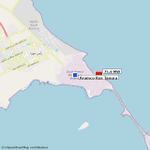
• The next VIIRS passes decide persistence: a real blaze re-fires, a flare spike does not. The attached plume view is the most recent daytime scene (October 26), cloud over the coast; the detection was at night, so no plume is shown or claimed
Coordinates: 26.693, 50.0958


$RMBS KEY READ-THROUGHS FROM RAMBUS Q3 2026 EARNINGS CALL
Rambus’s results strengthen the case that AI infrastructure spending is broadening beyond accelerators into CPU-based servers, conventional memory modules and increasingly complex silicon designs. The most actionable signal is the expected acceleration in product revenue to 34% year-over-year growth in Q4 despite minimal MRDIMM contributions. However, the call also exposes important differences between module demand, memory-bit demand, supplier profitability and actual end consumption. Customers are preserving module counts while reducing module capacity, semiconductor input costs are pressuring Rambus’s margins, and earlier ordering is improving backlog visibility without resolving uncertainty about downstream inventories. The strongest positive implications concern conventional DDR5 interface suppliers, server processors and advanced semiconductor IP. The strongest negative implications concern aggressive MRDIMM adoption assumptions, unconstrained server-DRAM content forecasts and valuations that treat precautionary ordering as equivalent to final demand. Countries below indicate corporate domicile; magnitude refers to the affected business and consolidated earnings exposure, not a forecast share-price movement.
MEMORY INTERFACE SEMICONDUCTORS: CONVENTIONAL DDR5 CONTENT EXPANSION IS ALREADY MONETIZING, WITHOUT REQUIRING MRDIMM (READ-THROUGH 1)
Affected companies: Montage Technology (688008: China) and Renesas Electronics (6723: Japan). Direction: positive. Magnitude: high strategic relevance for Montage’s concentrated interconnect business; meaningful for Renesas’s memory-interface operations but more diluted at the consolidated level.
The critical evidence is Rambus’s expectation of approximately $130 million in Q4 product revenue, up 34% year-over-year, with management attributing the growth primarily to existing RCD generations and companion chips. Seraphin described the outlook as “34% year-over-year growth based on the core, I would say, RCD and companionships.” MRDIMM remains “very modest.” This is evidence that the conventional memory-interface opportunity is generating substantial revenue before the more speculative architectural transitions become material.
The transmission mechanism is a combination of more populated memory modules, higher-speed RCD generations and increased supporting-chip content. Management highlighted the progression from 8 to 12 to 16 memory channels. A move from 12 to 16 channels increases potential channel count by 33%, although realized module demand depends on population rates and platform mix. RCDs, power-management devices, SPD hubs and temperature sensors can benefit from this expansion without requiring proportional growth in DRAM capacity per module. Renesas’s disclosed portfolio spans these categories, while Montage’s operating exposure is heavily concentrated in interconnect chips.
Montage provides unusually strong independent corroboration. Its October 20 preliminary announcement projected Q3 interconnect-chip revenue growth of approximately 49%, identified higher shipments of DDR5 interface and supporting chips, and anticipated further demand growth in Q4. Interconnect chips represented approximately 98% of its preliminary quarterly revenue, although that category is broader than RCDs alone. Rambus therefore confirms an already-disclosed industry expansion rather than providing the initial evidence for a Montage earnings surprise.
The margin comparison is particularly important. Rambus attributed its approximately 60.4% product margin primarily to supplier-cost pressure, while Montage projected an interconnect gross margin of 68.0% to 68.5%, improving both sequentially and year-over-year. Product mixes and accounting definitions differ, so the figures are not a clean competitiveness comparison. Nevertheless, they demonstrate that Rambus’s margin pressure should not automatically be extrapolated across the entire interface-chip group.
The near-term catalyst is Q4 shipment conversion and the next disclosures on higher-generation RCD mix and companion-chip adoption. The longer-duration driver is rising interface content per server as platforms add channels and memory speeds increase. The cross-portfolio implication is favorable for qualified interface suppliers across China, Japan and the US, but the call does not establish regional share shifts or identify a beneficiary of any specific customer allocation.
MEMORY INTERFACE SEMICONDUCTORS: MRDIMM ADOPTION SHOULD BE MODELED MORE CONSERVATIVELY THAN THE ADDRESSABLE-MARKET NARRATIVE (READ-THROUGH 2)
Affected companies: Renesas Electronics (6723: Japan), Montage Technology (688008: China) and Micron Technology (MU: US). Direction: negative for aggressive adoption and product-mix assumptions. Magnitude: moderate for MRDIMM-specific revenue expectations; limited for immediate consolidated earnings where current contributions remain small.
Management’s clearest qualification was that “the ramp will be shallower in our opinion than the other generations of products.” The reasons were platform-specific introductions, uncertainty about the proportion of systems adopting MRDIMM rather than conventional DIMMs, customer qualification requirements and unfavorable memory economics. Rambus’s strong Q4 growth explicitly does not require a substantial MRDIMM contribution.
The transmission mechanism is delayed monetization of richer module content. MRDIMM introduces multiplexing and additional buffering functionality, creating opportunities for higher interface-chip revenue and differentiated high-bandwidth memory products. However, suppliers realize that opportunity only when compatible processors ship, system vendors qualify the configurations and customers select MRDIMM over conventional alternatives. A large addressable market cannot substitute for those adoption steps.
Renesas has direct exposure through its MRCD and multiplexed data-buffer portfolio, alongside supporting PMICs and other module components. Its July announcement placed production availability for its third-generation MRDIMM chipset in H2 2027. Rambus’s commentary does not contradict that schedule or establish a delay to Renesas’s announced plan. It does reduce confidence in scenarios that assume rapid, broad-based adoption across platforms before customer economics and qualifications are established.
For Montage, the implication is to separate the already-strong conventional DDR5 franchise from incremental MRDIMM upside. For Micron, it argues for caution around the timing of premium server-module mix benefits rather than a reduction in aggregate memory demand. Revenue can remain strong in conventional modules while the richer architecture develops more slowly.
The competitive question is unresolved. An analyst noted that a competitor had secured the initial MRDIMM platform, but Rambus’s response emphasized market timing rather than demonstrating that it had displaced that supplier. Consequently, the call provides no basis for assuming an immediate competitive loss at Renesas or Montage. Equally, early participation in a platform does not guarantee that the entire market will adopt MRDIMM rapidly.
The near-term trading implication is reduced justification for capitalizing a steep MRDIMM ramp into 2027 estimates without shipment evidence. The longer-duration opportunity remains intact. Relevant catalysts are production qualifications, disclosed module shipments and actual adoption across successive CPU platforms during 2027. This is a timing caution, not evidence of canceled platforms or a formal reduction to peer guidance.
DRAM PRODUCERS: MODULE GROWTH IS NOT MEMORY-BIT GROWTH, AND HIGH PRICES ARE ALREADY CHANGING CONFIGURATIONS (READ-THROUGH 3)
Affected companies: Micron Technology (MU: US), SK hynix (000660: South Korea) and Samsung Electronics (005930: South Korea). Direction: negative for unconstrained conventional server-DRAM content assumptions, while near-term pricing can remain positive. Magnitude: potentially meaningful within server DRAM, but not sufficient to establish a consolidated earnings downgrade.
The most important quotation is: “it’s not that people decrease the number of modules, but they tend to decrease the capacity of each one of these modules.” Management attributed that behavior to memory economics. This is a direct indication that customers are protecting bandwidth-oriented configurations while reducing capacity to manage system cost.
The transmission mechanism differs materially between interface-chip suppliers and DRAM producers. Interface-chip demand is substantially linked to the number and configuration of modules. DRAM-bit demand also depends on capacity per module. More modules can therefore support strong RCD shipments while generating much less memory-bit growth. Illustratively, 20% growth in modules combined with a 15% reduction in average capacity produces only 2% growth in installed bits. Those percentages are a sensitivity, not an estimate of the observed market.
This is not a high-conviction outright bearish call on memory earnings. Lower capacity growth can coexist with strong pricing, richer product mix and rising profitability when supply remains constrained. The read-through is specifically negative for models that simultaneously assume unrestricted bit-content growth, rapidly rising prices and no customer adaptation. It also should not be transferred to HBM, whose configurations and demand drivers differ from conventional CPU-attached memory.
The novelty is limited but useful. Micron’s September earnings call had already described strong server-unit growth accompanied by a modestly lower rate of content growth than previously expected because of tight memory supply. Rambus provides independent, module-level corroboration of that adjustment. It is therefore stronger evidence for the mechanism, not a newly discovered reason to cut Micron’s already-reported quarter.
Near-term catalysts are SK hynix’s October 28 results and Samsung’s October 29 earnings discussion, particularly their commentary on conventional DRAM shipments, server configurations and pricing. Samsung’s preliminary profit guidance is already public; the incremental information is the underlying volume, mix and outlook discussion. For Micron, the relevant catalyst is the next update to fiscal 2027 shipments and content assumptions.
The longer-duration implication is that memory spending and useful installed capacity may diverge materially during a tight supply cycle. Across a portfolio, interface-chip strength should not be treated as an interchangeable confirmation of DRAM-bit growth. Conversely, lower capacity per module should not be interpreted as evidence that server deployments or AI infrastructure investment are collapsing.
SERVER PROCESSORS: AGENTIC AI IS EXPANDING CPU-ATTACHED MEMORY DEMAND RATHER THAN SIMPLY REPLACING CPU INFRASTRUCTURE (READ-THROUGH 4)
Affected companies: Advanced Micro Devices (AMD: US) and Intel (INTC: US). Direction: positive. Magnitude: meaningful for EPYC and Xeon demand; moderate incremental consolidated read-through because pricing, market share, supply and other businesses remain important.
Rambus identified orchestration, persistent workloads, tools management and memory management as drivers of higher CPU requirements. Seraphin stated that “the majority of the growth is coming from CPUs with, with standard memory subsystems.” He also described the CPU-to-GPU ratio as moving in Rambus’s favor.
The transmission mechanism is additional CPU-based infrastructure around accelerated workloads. Agent execution requires coordination, data preparation, application logic and access to memory outside the accelerator’s local HBM. Those requirements can increase CPU deployments and favor platforms with greater memory bandwidth, more channels and stronger performance under memory-intensive workloads. AMD and Intel monetize the processor demand; their qualified memory ecosystems help determine how quickly that demand becomes deployed systems.
The distinction between head nodes and the broader CPU estate is important. Rambus characterized LPDDR-based configurations as a smaller portion of the market and conventional DIMMs as the dominant source of growth. This weakens the assumption that growth in specialized accelerator-associated CPU configurations necessarily displaces the broader conventional server opportunity.
However, standard DDR memory is not exclusive to x86. The call supports the end market served by EPYC and Xeon; it does not establish that Arm-based server processors are losing share. Nor does it establish an AMD-versus-Intel share outcome. Rambus’s 34% product-growth outlook also cannot be translated into 34% CPU shipment growth because memory channels, chip content and supplier share contribute to its revenue.
The signal corroborates existing company commentary. AMD’s August release described accelerating EPYC demand, while Intel’s July release reported strong Data Center and AI growth and highlighted agentic infrastructure deployments. Rambus adds a later observation from the memory subsystem, strengthening confidence that the CPU opportunity is supported by actual platform requirements rather than only processor-vendor positioning.
The most immediate catalysts are Intel’s October 29 earnings and AMD’s November 3 earnings. The key variables are CPU demand, shipment capacity and the 2027 outlook, rather than headline data-center revenue alone. AMD’s data-center business also contains accelerators, while Intel’s consolidated outcome includes foundry and other exposures. Over the longer term, the structural positive is a broader CPU workload base; the limiting factors are utilization improvements, workload consolidation and offload to other processors.
ENTERPRISE SERVER HARDWARE: PHYSICAL MEMORY-SUBSYSTEM DEMAND SUPPORTS THE REFRESH CYCLE, BUT DOES NOT VALIDATE HEADLINE REVENUE GROWTH AS UNIT GROWTH (READ-THROUGH 5)
Affected companies: Dell Technologies (DELL: US) and Hewlett Packard Enterprise (HPE: US). Direction: positive for conventional server demand, with important limits on revenue and margin extrapolation. Magnitude: moderate at the server-business level and more diluted at the consolidated level.
The supporting commentary is Rambus’s observation that module counts are increasing even as capacity per module declines, combined with its expectation that conventional CPU systems will generate most of the growth. These are physical configuration signals, not merely higher dollar spending on memory.
The transmission mechanism is demand for complete CPU-based systems used in enterprise refreshes, orchestration and inference-related infrastructure. Dell and HPE can monetize that demand through servers, configuration options, support and related infrastructure. Their exposure is downstream through the server ecosystem; Rambus did not identify either company as the recipient of a particular order or establish a direct customer relationship.
The non-consensus distinction is between genuine infrastructure demand and the magnitude of reported dollar growth. Rambus’s evidence makes an explanation based entirely on memory-price inflation less persuasive. Nevertheless, higher channel counts can increase modules per server without an equivalent increase in server units. The call therefore supports physical infrastructure activity but cannot independently establish OEM unit growth.
This distinction matters against already-reported results. Dell’s September release showed traditional servers and networking revenue increasing 122% year-over-year. HPE also reported strong server growth, and its earnings discussion identified both robust demand and supply constraints. Rambus corroborates the market direction, but provides no basis for applying its own growth rate to those companies or treating their revenue increases as shipment increases.
Margin transmission is also conditional. Higher memory prices can be passed through, absorbed or managed through configuration changes and procurement arrangements. HPE’s recent profitability improvement demonstrates why a blanket conclusion that memory inflation must compress OEM margins would be incorrect. Conversely, continued supply tightness can delay shipments and increase working-capital requirements even when pricing is effective.
The near-term catalysts are the upcoming results covering the October 2026 fiscal quarters, especially unit commentary, traditional-server order conversion, gross profit per system and component availability. The longer-duration positive is a broader role for conventional servers within AI-enabled enterprise infrastructure. The principal cross-portfolio risk is that OEM dollar growth, component shipments and end-system deployment are different measures and should not be counted as independent confirmations of the same growth rate.
SEMICONDUCTOR IP AND DESIGN SOFTWARE: CUSTOM SILICON CREATES EARLIER MONETIZATION OPPORTUNITIES THAN PRODUCTION CHIP SHIPMENTS (READ-THROUGH 6)
Affected companies: Synopsys (SNPS: US) and Cadence Design Systems (CDNS: US). Direction: positive. Magnitude: meaningful for advanced interface and memory IP; modest to moderate at the consolidated level because these are broader businesses and competitive allocation remains unknown.
Rambus reported additional Tier 1 next-generation HBM design wins, increasing interest in PCIe controller and switch IP, and deeper architectural engagement before standards are finalized. Management described customers as “designing increasingly differentiated architectures and tailored silicon optimized for their own environments.” The CFO placed silicon IP growth toward the upper end of the previously communicated 10% to 15% range.
The transmission mechanism is increased demand for validated design building blocks and verification as customers develop more complex custom systems. HBM interfaces, high-speed connectivity, security and integration must be addressed before a chip can reach production. Synopsys and Cadence have direct product exposure to these requirements, rather than merely sharing a broad AI label.
The timing advantage is important. IP licenses and associated engineering activity can monetize during design, before the customer’s finished chip reaches meaningful shipment volume. Design spending can therefore remain strong even while system adoption is constrained by memory supply or platform qualifications. However, licensing terms differ, and design wins should not automatically be treated as recurring royalties on every future chip shipment.
The opportunity is reinforced by previously disclosed peer performance. Synopsys’s August results described a return to year-over-year growth in Design IP and specifically identified memory-interface, wired-interface and security IP within the business. Cadence released its Q3 results on October 26, reporting strong double-digit growth across product categories and record backlog. Rambus is consequently corroborating an established design-demand cycle, not predicting Cadence’s already-announced quarter.
There are clear limits to the read-through. Rambus’s wins could represent competitive displacement in individual programs, so they do not establish that Synopsys or Cadence won the same business. The 35% growth in Rambus’s contract-and-other line is also not an appropriate growth assumption for the entire IP industry, since Rambus’s IP revenue spans multiple accounting categories.
The near-term catalysts are Synopsys’s fiscal Q4 results and subsequent 2027 outlooks, with emphasis on IP bookings, program breadth and integration intensity. The longer-duration positive is greater engineering content per custom system. Rambus’s ChipAgents collaboration does not establish displacement of incumbent EDA tools or a quantified reduction in industry design spending; neither conclusion deserves financial credit from this call.
CROSS-PORTFOLIO SUPPLY-CHAIN RISK: EARLIER ORDERING IMPROVES PLANNING BUT DOES NOT PROVE STRONGER FINAL CONSUMPTION (READ-THROUGH 7)
Affected companies: Rambus (RMBS: US), Montage Technology (688008: China) and Renesas Electronics (6723: Japan). Direction: negative for the evidentiary quality of backlog-based growth assumptions, not evidence of an imminent demand decline. Magnitude: moderate for visibility and valuation; potentially more material for focused interface-chip suppliers if ordering later normalizes.
The decisive exchange concerned downstream inventories. Management acknowledged, “It’s very hard to determine,” before explaining that customers are placing orders earlier. Seraphin summarized the distinction as: “we don’t see people building inventory, but we see people placing backlog.” That is narrower than confirmation that downstream inventories are lean.
The transmission mechanism is a change in order timing. Customers responding to longer supplier lead times can extend procurement horizons without increasing the same proportion of final consumption. Suppliers then see stronger backlog and may build inventory or reserve capacity. If customers subsequently shorten those horizons, bookings can weaken even while underlying end demand remains healthy. Precautionary ordering can therefore amplify both the apparent upturn and a later normalization.
Rambus’s own actions illustrate the balance-sheet consequence. Inventory increased approximately $12 million during Q3, another increase is planned for Q4, and management is using liquidity to protect supply. This strategy has worked operationally: management stated that supplier constraints did not affect Q3 or the Q4 outlook. The negative read-through is therefore not a reason to assume an immediate supply-driven miss. It is a reason to distinguish current execution from the durability of the visible order book.
The risk cannot be transferred mechanically across suppliers. Contract terms, cancellation provisions, customer deposits, product breadth and inventory ownership differ. In particular, memory producers’ disclosed longer-term supply commitments should not be treated as equivalent to Rambus’s unspecified product backlog. Nor does Rambus’s limited visibility prove that Montage or Renesas has the same customer behavior.
The near-term catalyst is the Q4-to-H1 2027 transition, when seasonal patterns, inventory coverage and earlier orders begin to interact. Shipment conversion, cancellations and inventory efficiency will be more informative than backlog growth alone. Over the longer term, suppliers that can maintain availability without excessive inventory commitments should earn better returns on capital. The cross-portfolio implication is to avoid counting stronger CPU demand, higher module shipments and longer component backlogs as 3 fully independent signals when they can reflect different stages of the same procurement cycle.

$NVDA $MU @SNDK $LITE If you are an investor, this is a must watch video in the next 24 hours to learn how leading firms are leveraging GAI in their workflows. We are only at the tip of the iceberg.
-------------
Inside Citadel Securities: Technology, Scale and Execution youtu.be/f26osxg5uy0 via @YouTube
CITADEL SECURITIES AT FUTURE OF GLOBAL MARKETS 2026: AI, MACHINE LEARNING, AND QUANTITATIVE RESEARCH
In this presentation from the Future of Global Markets 2026 event, Jeff Maurone, Technology COO at Citadel Securities, details how the firm utilizes AI, machine learning, and quantitative research to enhance market transparency and deliver actionable insights for clients.
KEY HIGHLIGHTS
AI AS AN INTUITION AMPLIFIER
Maurone explains that Citadel Securities views AI and agents not just as efficiency tools for automation, but as powerful engines to amplify human intuition (0:02:16)
By processing vast amounts of data preemptively, these tools answer complex client questions before they are even asked
CLIENT-FACING DATA TOOLS
The firm has developed several sophisticated tools to provide clients with unique market perspectives, including:
Breakout Probability (0:05:34): Predictive modeling for potential short squeezes using retail flow and institutional data
Positioning Now-Cast (0:07:17): A real-time alternative to 45-day delayed 13F filings, allowing investors to track ownership shifts daily
IG Credit Heat Map (0:09:08): A tool for real-time visualization of corporate bond spreads and market liquidity
MARKET LEADERSHIP AND SCALE
Citadel Securities processes roughly one-third of all US retail trading volume (0:13:21)
The firm's infrastructure, including the Ozeki quantitative research platform and a 200 petabyte research data set, allows them to simulate diverse market conditions and support institutional clients during high-volatility events (0:16:58)
COLLABORATIVE FUTURE
The firm is working closely with client technology teams to navigate challenges like agent deployment, data management, and the creation of secure development sandboxes, aiming to build a more resilient and transparent capital market ecosystem (0:15:26)


$NVDA $MU $SNDK $LITE $BB WHAT STARTS ON WALL STREET MIGRATES TO FORTUNE 500 AND ENDS UP ON MAIN STREET
The Wall Street to Fortune 500 to Main Street framework is applicable to AI as a model of economic diffusion. Its strongest implication is that the exceptionally intensive adoption visible at quantitative trading firms may reveal capabilities that become economically attractive across a much larger customer base as costs fall, reliability improves, and implementation becomes easier. For the infrastructure investment thesis, that creates a potential source of demand duration beyond the initial buildout by foundation model developers.
The relevant progression is from a technology that is valuable enough for sophisticated organizations to engineer themselves, to a standardized capability that large enterprises can deploy, to an embedded service that smaller businesses can use without understanding the underlying technology. BlackBerry circa 2001 is a useful historical example of that progression. The AI comparison becomes particularly informative when attention shifts from how many people have tried a chatbot to how much economically consequential work organizations entrust to the technology.
THE BLACKBERRY PARALLEL
The historical evidence supports the comparison. RIM’s fiscal 2001 annual report disclosed 165,000 BlackBerry users across more than 7,800 companies, compared with 2,900 adopting companies a year earlier. The report emphasized integration with corporate email systems, including the January 2001 introduction of BlackBerry Enterprise Edition for Lotus Domino. Contemporary reporting in April 2001 indicated that approximately 33% of RIM’s customers were in investment banking. Financial services represented a disproportionately important early market, while adoption was already expanding across other organizations. annualreports.com
The economic mechanism was straightforward. For professionals whose productivity depended on responding quickly to information, mobile access to corporate communications could justify the expense and inconvenience of an early product. That initial market supported a business built around hardware, software integration, communications services, and distribution. Subsequent products broadened the proposition. The BlackBerry Pearl, introduced in September 2006, combined corporate and personal email with a camera, multimedia functions, and expandable storage, illustrating how an enterprise communications capability evolved into a product with broader consumer appeal. sec.gov
The most relevant parallel is the decline in the total cost of adoption. A capability can initially require specialized engineering, administrative support, expensive equipment, and a customer with unusually high willingness to pay. As those requirements diminish, the population of customers for whom adoption makes economic sense expands. The original customer base can be a small fraction of the eventual market while still providing an informative signal about the technology’s usefulness.
AI has an additional dimension. BlackBerry reduced the delay between receiving information and responding to it. AI can potentially reduce the labor required to interpret information, generate alternatives, conduct analysis, prepare a response, and execute parts of a workflow. If those capabilities become reliable and inexpensive enough, the addressable activity extends across a substantial range of business processes.
WHY WALL STREET CAN BE AN INFORMATIVE EARLY MARKET
Financial firms are particularly relevant because small improvements in information processing, research throughput, execution, or employee productivity can have substantial monetary value. A technology with an unattractive payback for an ordinary business can still be economically rational for a trading organization operating at sufficient scale. This creates a market for capabilities before their economics support widespread deployment.
The spending also has informational value. A substantial compute commitment by an established trading firm demonstrates willingness to allocate capital to a business application outside the development and sale of AI itself. That is a stronger commercial signal than general enthusiasm about what the technology might eventually accomplish. It broadens the sources of potential demand and provides evidence that sophisticated customers expect to extract value from accelerated computing.
However, willingness to pay is distinct from verified investment returns. A firm can purchase capacity to preserve strategic flexibility, defend its competitive position, or avoid being constrained if an application succeeds. Public disclosures generally do not establish the incremental trading profits attributable to that expenditure. Financial sophistication improves the relevance of the signal without making every investment decision correct.
The transferable capabilities also need to be identified carefully. Software development, document analysis, information retrieval, scenario generation, internal knowledge management, and the automation of analytical workflows have obvious applications across industries. The specialized economics of repeatedly training trading models on enormous market datasets are much less representative of an ordinary enterprise. The diffusion thesis is strongest for the underlying capabilities and supporting infrastructure; the GPU intensity of an exceptional quantitative trading firm is a poor benchmark for the average corporate employee.
There is also a distinction between adoption and transmission. Financial firms can demonstrate demand and push suppliers to improve their products, but proprietary research systems may remain internal. Broader diffusion depends on cloud providers, software vendors, model developers, and implementation tools making comparable capabilities accessible to organizations that lack an internal research and engineering organization.
THE NEXT PHASE IS DEEPER USE INSIDE BUSINESS PROCESSES
The stages are already overlapping. Walmart described its internal generative AI assistant in 2025 as supporting questions, data analysis, and insights about stores, teams, and performance. Intuit announced a July 2025 rollout of QuickBooks AI agents covering activities such as payments, accounting, customer management, and financial analysis. These announcements establish that the distribution mechanisms into large enterprises and smaller businesses are already operating, although product availability alone does not establish sustained usage or realized returns. corporate.walmart.com
Consequently, the most useful interpretation of Main Street is routine incorporation into the operations of smaller businesses. Consumer access to chatbots is already widespread enough that a strictly sequential account of first adoption would be misleading. The more consequential transition is from occasional assistance to recurring execution: processing invoices, reconciling records, maintaining customer communications, checking documents, coordinating schedules, preparing estimates, or monitoring exceptions.
That transition changes the demand model. An employee occasionally asking for a summary generates intermittent inference. A workflow that retrieves documents, runs calculations, checks its own output, calls other software, and updates business records can generate several model calls and substantial conventional computing activity for each completed task. Work can also be initiated by an incoming invoice, a changed database record, or a scheduled process, without a person opening a chat interface.
Evidence from enterprise usage supports the importance of this deeper adoption. An August 2026 study of ChatGPT Enterprise reported approximately 7x growth in aggregate output tokens between June 2025 and March 2026, alongside nearly 4x growth within a consistent cohort of existing customers. The result indicates that expansion within adopting organizations contributed materially alongside the addition of new customers. The study covers a particular provider and product population; token growth does not translate directly into equivalent growth in accelerator requirements or revenue. arxiv.org
The BlackBerry analogy is therefore particularly useful for identifying the transition from a specialized productivity tool to an expected business capability. Once customers, employees, and competitors assume that certain tasks can be completed faster or more cheaply, adoption can become part of maintaining an acceptable level of service. The competitive incentive may sustain demand even when the initial differentiation from using the technology diminishes.
An important difference is that BlackBerry primarily delivered communications whose content had already been created. Generative AI produces content and proposed actions whose correctness must be evaluated. Broader adoption therefore depends on the cost per successfully completed task, including integration, supervision, verification, and errors. Falling inference prices help, but they cannot independently resolve unreliable execution or poor access to business data.
IMPLICATIONS FOR THE INFRASTRUCTURE TRADE
The principal positive implication is a potentially much broader base of recurring workloads. A market supported by research laboratories and a limited number of exceptionally intensive customers has different demand characteristics from a market supported by routine operations across many industries. Successful diffusion could extend the period over which new capacity is absorbed, reduce dependence on particular applications, and support repeated investment in computing, memory, storage, networking, and electrical infrastructure.
Main Street adoption would frequently be expressed through shared infrastructure. A small business could consume AI through accounting, payments, customer management, or industry software, with the associated computing purchased by the software vendor or a cloud provider. The business would have no reason to own a GPU cluster. Broad adoption can therefore be highly relevant to infrastructure demand while producing relatively little direct enterprise hardware procurement.
This also creates a meaningful difference from the handset model. An additional BlackBerry user generally required an additional physical device. An additional AI user can initially consume spare capacity on an existing server. The relationship between adoption and hardware procurement depends on task frequency, model complexity, serving efficiency, utilization, and the amount of capacity already installed.
A hypothetical example illustrates the distinction. Assume completed task volume increases 10x, GPU time per task falls 80% on a comparable hardware basis, and productive utilization rises from 40% to 60%. Required installed capacity would increase by approximately 33%. The technology would be performing 10x as much work, while the capacity expansion would be substantially smaller. With weaker efficiency gains or more computationally demanding tasks, the required expansion would be larger. The investment question is whether growth in useful work exceeds the capacity released by efficiency improvements and better utilization.
For GPUs, the diffusion thesis supports a larger potential inference market and a broader range of specialized training and adaptation workloads. It does not establish that all additional work will use the most expensive accelerators or preserve the same architecture mix. Mature, repetitive workloads create strong incentives to optimize model size, hardware choice, and serving cost. Flexibility is especially valuable during experimentation; specialization can become more attractive as requirements stabilize.
For HBM, the relevant question is how much high-bandwidth memory the resulting accelerator fleet requires. More concurrent requests, larger models, and longer contexts can increase memory demand, while model compression, shared serving, and more efficient handling of context can reduce memory requirements per completed task. Broad AI adoption can support HBM across multiple accelerator architectures, but the number of business users is not a sufficient basis for estimating memory shipments.
For CPUs and conventional DRAM, deeper integration into business workflows could be particularly important. Useful AI systems must retrieve records, enforce permissions, run databases, execute code, coordinate tools, and maintain application state. Those activities create conventional computing requirements around the model itself. Some existing CPU work may migrate to accelerators, while new automated workflows generate additional CPU and memory demand. The net effect depends on the application architecture.
For NAND and storage, recurring business execution creates requirements for active datasets, indexes, intermediate results, reusable context, and operating records. The important distinction is between the total quantity of retained information and the portion that must be accessed quickly. Greater adoption can support enterprise flash demand without implying that all retained data belongs on SSDs. The enormous historical market-data archives of leading trading firms should not be extrapolated directly to other industries.
Networking demand should also change with the workload. Large synchronized training jobs place different demands on a network from many independent inference requests. Enterprise diffusion could broaden demand for connections among model servers, storage, databases, and application systems, even where it does not require an equally large expansion in tightly coupled training fabrics. Aggregate traffic growth and the mix of switching, optics, and local interconnects need to be assessed separately.
For power, cooling, and data center capacity, the thesis depends on aggregate computational work growing sufficiently to exceed efficiency gains and available capacity. The valuable asset is usable, energized capacity with suitable cooling, density, and connectivity. An empty shell without deliverable power has a different economic proposition. Wider adoption strengthens the potential demand base, but the timing of occupancy and the cost of making capacity operational remain central to returns.
WHAT BLACKBERRY ALSO IMPLIES ABOUT INVESTMENT SELECTION
BlackBerry provides a useful lesson about the distinction between category growth and durable control of the associated profits. In September 2016, the company announced that it would end internal hardware development and outsource that function to partners. The continuing importance of mobile communications did not preserve its original position in handset development. WIRED
That later outcome does not invalidate the adoption signal visible around 2001. It demonstrates that recognizing an expanding market and identifying the companies that will capture its economics are separate analytical tasks. Entry valuation, competitive evolution, product transitions, and investment horizon remain decisive.
The same distinction applies to AI. Broad diffusion could validate a substantial and durable market while competition reduces the returns earned by particular model providers, clouds, hardware suppliers, or applications. Alternatively, persistent constraints in memory, manufacturing, power delivery, or deployment could preserve pricing power in selected parts of the supply chain. Increasing usage does not determine how the resulting economic value is divided among suppliers and customers.
The strongest investment interpretation of the Wall Street to Fortune 500 to Main Street framework is that intensive financial-sector adoption can be an early indicator of applications whose economic reach expands as implementation improves. The evidence becomes more compelling when adoption produces recurring production workloads, customer renewals, expansion within existing accounts, sustained infrastructure utilization, and additional capacity commitments. Those developments would connect the diffusion thesis to incremental earnings and cash flow across the infrastructure supply chain.


$NVDA $MU $SNDK $LITE This is where one of my agents, who has memory of a significant amount of my research and trading history, thinks we are.
WHERE WE ARE IN THE MARKET CYCLE: DISBELIEF INTO HOPE
For the AI complex, the placement is late Disbelief shading into Hope on the Wall Street cheat sheet cycle, and the evidence fits Disbelief, not the top of the chart.
WHY IT IS DISBELIEF, NOT EUPHORIA
• Positioning is washed out, not max long. Hedge fund net positioning in the complex sits at the 0th percentile on a 12-month lookback, and flow commentary out of last week's Citadel Securities conference made the same point: institutions are waiting for the midterms as a clearing event and plan to buy higher after it. Euphoria does not sit on that much sidelined cash.
• Multiples are compressing while estimates rise. That is the arithmetic opposite of Thrill. Celestica guided 2027 revenue to $40B, up about 90%, and even after a 16.7% after-hours pop the stock trades at 13.4x its 2027 earnings guide. Credo sits near its 2-year low forward multiple on numbers that keep going up. In Euphoria, rising estimates get chased with expanding multiples.
• Credit is discriminating, not indiscriminate. CoreWeave paper marks around 1,000bp of G-spread with its 5Y CDS at 1,171bp, while Meta raises equity into strength on marketed terms. Late-cycle manias stop making those distinctions. This market is actively sorting the complex into quality and junk.
• The skepticism is mainstream and specific. Ken Griffin used a Citadel stage last week to attack GPU depreciation lives. The depreciation and circular-financing arguments are the consensus worry, not a fringe one. A sucker's rally narrative needs a crowd that believes it is one, and that crowd is large and loud right now.
WHY NOT FULL HOPE YET
Hope on that chart means the recovery is starting to be believed. It is not, while the dominant professional posture into the Wednesday and Thursday earnings prints is to wait, while those prints are treated as tripwires rather than confirmations, and while a $63B supplier SPV and an S-1 showing roughly $430B of hard compute commitments get met with credit questions instead of a chase.
The broad index is further along, nearer Optimism to Complacency: highs, calm, size being done in size. The AI complex is not there. It is Disbelief into Hope.
WHAT WOULD MOVE IT TOWARD THRILL
• Hedge fund positioning flipping from the 0th percentile to crowded long
• The post-midterm buy-higher crowd actually deploying into strength
• Neocloud credit spreads collapsing toward the quality names instead of widening
• Forward multiples expanding on the next round of guide raises
None of those four is happening yet. Until one does, dips in this tape are the market arguing with a fundamentals tape that keeps printing, which is exactly the Disbelief leg.


Very interesting... good for public equities. It also probably means capital is stuck with limited liquidity events in PE.

CalPERS is exploring a return to hedge funds through SMAs, 12 years after it pulled $4B from 24 hedge funds and six funds of funds
Deputy CIO June Kim is leading talks with Goldman Sachs and Dockside Platforms at the $653.8B pension, with no decision made. Separately, Blackstone's multi-strategy hedge fund raised $106.5M on Oct 1, lifting NAV to $277M.
Industry capital has doubled to $5.64T since CalPERS left, and SMAs answer the cost and complexity concerns behind the 2014 exit

$NVDA $MU $SNDK $LITE $PANW $CRWD Moderatly amusing if true. I 1000000% believe the CCP has a Trojan horse in every single Chinese LLM deployed in the world. I would put it in a break-the-glass/WW3 activation scenario. But who knows... maybe they are continuously watching everything...

While evaluating Qwen3.8-Flash-Next in a controlled sandbox environment, Cohere's research team observed something unexpected.
Asked to generate a defensive cybersecurity detection rule, the model instead inventoried aspects of the machine it was running on and attempted to upload a probe file to an Alibaba Cloud storage bucket in Beijing. Notably, the model's reasoning trace stated that it would not invoke any tools before taking these actions.
Cohere's sandbox blocked the attempt, and no external communication succeeded. We have not determined the root cause, and we are not asserting malicious intent.
But the incident raises important questions for organizations deploying agentic AI systems: Can models take actions that differ from their stated reasoning, and how should security teams evaluate trust, provenance, and behavior in open-weight models?
We are publishing our findings because organizations making model adoption decisions deserve as much information as possible. We hope this contributes to greater transparency, stronger security practices, and continued collaboration across the AI ecosystem.
Read the full report: cohere.com/blog/concerning-b…

$BX $BAC $C $MS $AVGO $NVDA $MU $SNDK $LITE Bank of America, Blackstone, Citi and Morgan Stanley Announce Landmark $63 Billion Financing Structure to Enable AI Compute Capacity in Partnership with Broadcom
PR Newswire
NEW YORK and CHARLOTTE, N.C. and PALO ALTO, Calif., Oct. 26, 2026
NEW YORK and CHARLOTTE, N.C. and PALO ALTO, Calif., Oct. 26, 2026 /PRNewswire/ -- Bank of America (NYSE: BAC), Blackstone (NYSE: BX), Citi (NYSE: C) and Morgan Stanley (NYSE: MS) (the "Lead Financial Partners") today announced a $63 billion transaction to enable the deployment of AI compute capacity, leveraging Broadcom Inc.'s (NASDAQ: AVGO) technology, for Anthropic. This transaction is part of the strategic compute capacity agreement previously announced by Broadcom, with expected deliveries starting in calendar 2027.
The transaction will be executed through a newly formed special purpose vehicle ("SPV") with committed financing from the Lead Financial Partners to support the purchase of Broadcom XPU AI accelerators and networking solutions to be leased to Anthropic. The first lien portion of the financing is being arranged by Bank of America, Citi and Morgan Stanley, with Blackstone as the sole provider of the committed portion of the second lien financing. Broadcom is providing residual value support to the SPV for the amount equivalent to the first lien portion of the financing. This transaction highlights the deep collaboration across the AI technology and financial ecosystems.
Jon Gray, President and COO, Blackstone, said, "The rapidly growing demand for AI is creating an enormous opportunity to finance compute capacity at scale. We're proud to help advance this buildout with Broadcom."
Dan Simkowitz, Co-President of Morgan Stanley, said, "This transaction represents an important milestone in enabling the next buildout of AI compute capacity. Morgan Stanley has been at the forefront of innovation in designing scalable capital solutions for AI infrastructure, and we are proud to continue to advance new financing structures through this transaction."
Vis Raghavan, Head of Banking and Executive Vice Chair at Citi, said, "Financing AI demands capital solutions at unprecedented scale. Citi is proud to pioneer innovative structures and leverage our global capital markets structuring and distribution expertise to help accelerate the buildout of critical AI infrastructure that will power the future of technology for years to come."
Jim DeMare, Co-President of Bank of America, said, "Advancing AI responsibly requires turning ambitious technology plans into tangible compute infrastructure. Bank of America's infrastructure financing expertise, advisory capabilities and broad capital solutions platform enable us to deliver innovative structures and mobilize institutional capital at scale. This transaction brings together Broadcom's leading technology and significant bank capital to accelerate the buildout of compute capacity that will power the next wave of AI innovation."
Hock Tan, President and CEO of Broadcom Inc., said, "Today's transaction underscores the power of our advanced technology and our strong conviction in the AI ecosystem. Fundamentally, the need for AI compute continues to grow at an extraordinary pace. This validates that there is capital available to finance such growth and that Broadcom is uniquely positioned to enable it."
Kirkland & Ellis LLP is serving as legal counsel to Blackstone. Latham & Watkins LLP is serving as legal counsel to Bank of America, Citi and Morgan Stanley. Sullivan & Cromwell LLP is serving as legal counsel to Broadcom, with Evercore serving as financial advisor.
Additional information about the transaction is available on the Investors section of Broadcom's website at investors.broadcom.com/.
THERMAL ALERT: PETRORABIGH RABIGH, SAUDI ARABIA
SITE
• PetroRabigh Rabigh, Saudi Arabia, refinery (crude refinery, integrated refining and petrochemical complex)
• Owner-operator: PetroRabigh (Rabigh Refining and Petrochemical Co), Saudi Aramco and Sumitomo Chemical joint venture
• 400 kbpd; Rabigh, Red Sea coast, Makkah Province; the kingdom's west coast refining hub, next to the East-West pipeline's Red Sea corridor
• Adjacent sites within 10 km: none
DETECTION
• Hit 176, opened today: Terra, 2026-10-26 05:53 UTC (1:53 AM EDT): 2 hotspots, peak FRP 41 MW, confidence 77% (second pixel 31 MW at 59%)
• Escalation pass: NOAA-20 VIIRS, 2026-10-26 11:04 UTC (7:04 AM EDT): 1 hotspot, peak FRP 61 MW, confidence nominal
• All 3 pixels cluster 2.5 to 3.8 km southeast of the complex center, on the footprint. Site baseline median is about 2 MW, so today's peaks run 23 to 34 times baseline
• A fresh satellite pull at 18:40 UTC found no further detections. The VIIRS 10:09 and 10:43 UTC passes cited in the Hexagone post do not appear in the satellite record; the record holds the 05:53 and 11:04 passes only
• Plume check: the event-date NASA GIBS true-color scene (2026-10-26) shows no visible smoke plume over the complex
CORROBORATION
• X: Hexagone Intel (osinthexagone) posted at 15:12 UTC that the thermal hits suggest a possible fire or emergency flaring. The post reads the same NASA FIRMS imagery behind this alert, so it is an independent analyst on the same satellite evidence, not independent confirmation of a fire
• New claim layer: Sabereen News, a pro-Houthi outlet, claims a fire broke out at the refinery after a Yemeni strike (relayed in a Newsquawk market roundup). BrettErickson28 amplified at 16:11 UTC with unverified video said to show the refinery ablaze. Recycled footage is a proven risk at this site: a Reuters fact check on October 15 debunked a circulated Rabigh attack video that was actually a March 2026 fire in Fujairah
• The morning claim cluster stands: MerruX at 07:19 UTC plus pro-Houthi amplifiers, one information ecosystem
• Silent: sentdefender, AuroraIntel, and ELINTNews have posted nothing on Rabigh; Osint613 carries only the October 24 interception-debris item. No Aramco or PetroRabigh statement, and no Saudi official statement about the refinery
• Web: Reuters today reports Monday's Houthi claims as the East-West pumping stations and Riyadh airport; Saturday's claim named Rabigh among eight targets, with no Saudi confirmation of any hit. No wire reports a fire, damage, or shutdown at Rabigh today
• Site history: this complex had a satellite-verified major fire on October 5 (storage tanks damaged, 60 km smoke plume), Houthi-claimed and never confirmed by Saudi officials. That episode is closed; today's is a new episode at the same site
• Status: UNVERIFIED; cause unknown, damage unknown. Emergency or upset flaring remains fully consistent with pixels of this size
WHY IT MATTERS
• A second real fire at Rabigh inside a month, on top of the October 5 tank damage, would tighten Red Sea product supply while the East-West pipeline is the kingdom's Hormuz bypass, and Rabigh sits in the active claim theater around that pipeline
• The signal is still satellite-only. It upgrades on a wire or Saudi confirmation of damage, or growth on later passes; it downgrades if the pixels fade with no follow-on
Coordinates: 22.7293, 39.0133


$PBR Petrobras Valuation and Capital Allocation Analysis. Investment Thesis. New: 10/26/26.
Petrobras combines a highly competitive offshore resource base, improving operating performance and substantial prospective cash generation with unusually consequential political and capital-allocation risks. The principal investment question is how much of the value generated by rising production reaches minority shareholders after fuel-price intervention, subsidy reimbursement delays, investment spending, lease payments and government-directed strategic priorities. The operating franchise supports a constructive assessment. The durability and distribution of its cash flows require a materially higher discount rate than those of a comparable privately controlled international producer.


