
Dogs, kids, books, truth, and civics for all! 🇺🇸 No DMs please.
Massachusetts, USA
Joined January 2012
- Tweets3.2K
- Following2.4K
- Followers1.8K
- Likes6.8K












21st 4-leafer of the season! I'm so lucky @sjvsworldtour @kevinsummers @OwenGregorian @KimUnderLyons
Or not.... I am also a poll worker today!

3
4
90
thrina retweeted

Dear Secretary Bessent @SecScottBessent,
My name is Everett Stern. In 2010 I was a compliance officer at @HSBC. From a back office in New Castle, Delaware, I watched billions of dollars move to drug cartels, sanctioned regimes, and terrorist organizations. The enemies of the United States. I documented it, I escalated it, and when the bank would not act, I took it to the @FBI, the @CIA, and eventually the @SECGov.
The result was a $1.92 billion settlement. At the time, it was one of the largest in American history. It was also about five weeks of the bank’s profit. Not one banker was charged. Not one went to prison.
I paid a different price. I lost my career, my savings, and my place in the industry I had trained for. I was blacklisted. Every door in American finance closed at once. I slept on a camping cot in a 300 square foot apartment because I could not afford a bed, and I waited tables at @PFChangs to eat. I tell you this not for sympathy, but so you understand that I know exactly what it costs to do the right thing in American finance, and exactly how little the system does in return.
I made that sacrifice because I believed it would change something.
Yesterday, your department fined @BankofAmerica $1.2 billion for failing to report more than $5 billion in suspicious transactions, some of it tied by your own findings to Chinese laundering networks, narcotics, and the southwest border, alongside 475 apparent sanctions violations touching Russia, Iran, and global terrorism. The bank admitted it willfully violated the Bank Secrecy Act.
Fourteen years after HSBC. A bank with “America” in its name. And once again, not one individual charged.
Secretary Bessent, I want to say plainly what I believe you already know. The fines are not working.
A fine is paid by shareholders, absorbed by the balance sheet, and forgotten by the next earnings call. Bank of America reported earnings this morning. Nobody who set the alert thresholds, nobody who decided the 2024 cease and desist could wait, nobody who chose the backlog over the law will lose a single thing they value. Their lives are untouched. That is the entire reason the behavior repeats.
This is money laundering. This is blood money. Money that reaches a cartel buys fentanyl that kills Americans. Money that reaches a terrorist organization buys the next attack. This country has fought a war on drugs and a war on terror for decades, at enormous cost in lives and treasure, and all the while we have allowed the financing to flow through institutions we charter and regulate. Cut off the money and we win. We have never seriously tried.
There is also a question of equal justice that I cannot let go.
Before I walked into the FBI building to report HSBC, I stopped in front of the Great Seal on the wall and read the words engraved beneath it: “Justice is the defense of our liberty.” I believed that. I still want to. But every day in this country, people go to prison for crimes that are nothing next to moving money for the people who want Americans dead. A suit, a title, and a corporate badge should not be a shield from the consequences that apply to everyone else. If a street dealer goes to prison for what he sells, the banker who moved the cartel’s money should be standing next to him.
I also want to raise something that is rarely said in these conversations. Why has no one inside Bank of America come forward the way I did? The answer is that everyone in American banking knows what happened to me, and to the whistleblowers who came after. The last person who spoke up is the only policy anyone believes. That is a culture problem, and it starts with leadership, in the banks and in the agencies that regulate them.
This is not a political issue. It has spanned administrations of both parties. It is a national security issue, and I am asking you to treat it as one.
Three things would change the math overnight.
Refer individuals for criminal prosecution. Not the analyst in the queue. The executives who set the thresholds and chose the risk. One banker in handcuffs would do more than every fine in Treasury’s history combined.
End “too big to jail.” An institution cannot be too big to fail and too big to jail at the same time. If it is the first, it must be held to a higher standard, not a lower one.
And if Bank of America will not act as America’s bank, review its charter. A national charter is a privilege granted on behalf of the American people. It should be conditioned on not moving money for the people trying to kill them.
Secretary Bessent, you said yesterday that these actions send a clear message that even the biggest institutions are not above the law. With respect, the institution was never the problem. The people inside it are above the law, and they know it. Until that changes, I will keep writing letters like this one, and the next bank will keep paying the next fine.
I gave up everything I had to stop this. I am asking you to use the power you have to finish it.
Respectfully,
Everett A. Stern
HSBC Whistleblower
Founder and Intelligence Director, Tactical Rabbit
thrina retweeted
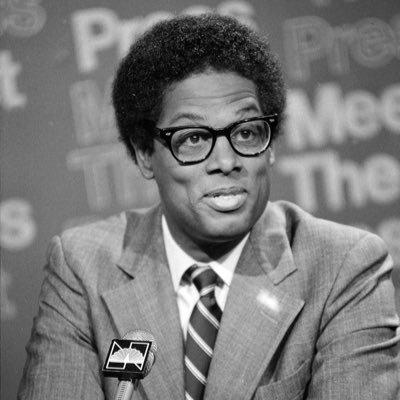
“Have we reached the ultimate state of absurdity where some people are held responsible for things that happened before they were born, while other people are not held responsible for what they themselves are doing today?”
— Thomas Sowell
We SO neef something like this! Effing ticks are a plague

Here’s something absolutely fascinating.
Researchers have been studying the idea of using deer themselves as part of the tick-control system for decades.
The concept is deceptively simple.
Deer eat corn treated with ivermectin. The ivermectin enters the deer’s bloodstream. A tick attaches, takes a blood meal, and now the tick is ingesting the antiparasitic drug too.
This is not some brand-new internet concoction.
Research involving whitetail deer goes back to the 1990s. One published study using ivermectin-treated corn reported complete control at the target dose, measured by whether exposed ticks were able to successfully produce larvae.
South Texas later used ivermectin-treated corn through deer feeders as part of cattle fever tick eradication efforts. That matters because free-ranging whitetails can carry those ticks across the landscape, making the deer both part of the problem and potentially part of the solution.
Then researchers in Connecticut took the idea further.
During 2021 and 2022, they fed wild deer corn treated with moxidectin, a closely related antiparasitic drug. While treated corn was available, 24 of 29 deer tested, roughly 83%, had blood concentrations considered high enough to target ticks.
And here is the interesting biological mechanism.
The tick does not necessarily have to be prevented from attaching.
It attaches.
It feeds.
Then it encounters the drug circulating through the deer.
The tick can subsequently die, fail to feed normally, or fail to reproduce successfully.
Think about the implications of that for a moment.
Instead of trying to spray thousands of acres of woods, you potentially turn one of the tick’s primary hosts into part of the control mechanism.
That is an elegant bit of biological jiu-jitsu.
But nobody should read this and immediately start dumping ivermectin into a deer feeder.
Wildlife regulations differ by jurisdiction. Drug residues matter. Withdrawal periods matter if the animal may eventually become venison. Researchers also have to consider possible effects on dung beetles, insects, scavengers, other wildlife and the ecological ramifications nobody has discovered yet.
The science is intriguing.
The implementation requires circumspection.
Still, the idea that the animal carrying the ticks could simultaneously become the mechanism that suppresses them is exactly the kind of environmental biology that gets my attention.
Sometimes the most interesting solutions are not about fighting nature.
They are about understanding it well enough to make biology work for you.
#AStoneGroove #SilentMajoritySpeaks

3
110
It would be pleasant to see Congress do ANYTHING that improved our fiscal position

If Congress wants to get serious about our $40 trillion deficit, we would cut spending and balance the budget. My Six Penny Plan does just that. We would cut six cents from every $1 the federal government spends. In five years, we’d have a balanced budget.
4
57

thrina retweeted

The first car to park on the trailer wins , I’ve never been so invested in a sport like this


How could anyone see so clearly as @ScottAdamsSays ?


3
47


thrina retweeted

Outrage is letting someone else set the frame | JA Westenberg
William Randolph Hearst bought the New York Morning Journal in 1895 - and immediately started running stories designed to make his readers furious before they’d finished their breakfast. The pages manufactured a mood, and that mood sold papers.
Three years later, when his correspondent Frederic Remington cabled from Cuba that there was no war to cover, Hearst replied with the line that became his epitaph: “You furnish the pictures, and I’ll furnish the war.”
That was the original sin, and the original business model. Find a target, deliver the outrage daily, harvest the engagement and sell the audience to advertisers.
The economics haven’t changed since 1895.
Walter Lippmann, writing in Public Opinion in 1922, described how a small class of editors and publicists had taken on the job of “manufacturing consent” by deciding which stories would be put in front of the public and to which framings they would be attached. He thought this was, on balance, fine. Most readers, he said, would never have the time or competence to form views from primary sources. Someone had to do the framing.
Someone.
A century on, the framing is automated // the framers are algorithms tuned to a single metric: how long can we keep you scrolling?
Jonah Berger and Katherine Milkman, studying viral content for the Journal of Marketing Research in 2012, found that the emotion most reliably correlated with sharing was high-arousal anger. Neither sadness, contentment or even joy came close; anger was the engine. Every platform, and ever performer that lives on advertising eventually discovers this and bends its product around the discovery.
There is nothing neutral about the feed.
It’s a slot machine built to dispense outrage on whatever schedule keeps you returning. The story in front of you was picked because an algorithm, somewhere, ran the numbers and concluded it would make you feel something corrosive enough to produce a reaction.
Whose ledger does that reaction land on? Theirs. Your time on the platform is sold to advertisers in increments, your annotated rage in the comments trains the recommendation model, your re-share recruits one more person into the same loop, and your dwell time on each story sharpens the algorithm’s prediction of what will hold you next. The feeling moves through you and leaves a residue on the corporate balance sheet. You absorb the cost, and they book the revenue.
Chris Voss, the FBI’s lead international kidnapping negotiator, wrote Never Split the Difference in 2016, on the principle that whoever feels more in a negotiation loses. Across the table from a hostage taker, Voss wouldn't match the emotional temperature of the room; he'd lower it, keeping possession of his own pulse while everyone else lost theirs.
This is a useful posture to steal: you refuse to feel what you’re being told to feel by people whose business model depends on the feeling, and the refusal is procedural. The feeling might turn out to be correct, or it might not; that’s a separate question, evaluated later. Before the feeling arrives in full, you ask: who’s pushing this into my field of view, what do they collect if I take the bait, what’s the response they want from me, and does that response actually serve me?
Call it sequencing.
- Feel first and think second, the slot machine wins.
- Think first and feel second (or not at all, depending), and the game stops paying out.
Rage is metabolically expensive; borrowed rage even more so. You spend cognitive bandwidth on a quarrel imported from a stranger’s algorithm, then arrive at your own work depleted, with less attention left for the people and projects you’d actually choose. The outrage cycle runs on fuel siphoned from your real life. Mary Oliver asked what you plan to do with your one wild and precious life; for a lot of us the answer, when we’re being honest, is: argue with people we’ve never met about events we can’t influence on a platform whose advertisers are paying for our distress.
But you can, of course, decline.
Tristan Harris, founding the Center for Humane Technology in 2018, framed it as recognising the asymmetry: a thousand engineers on one side of the screen, optimising for your attention; one tired person on the other side, trying to hold their ground.
Stop offering the response the system was built to extract, and watch what shows up in the space the rage used to occupy: the work you’ve been avoiding, the conversation you owe someone you actually care about, the book on your nightstand, the neighbour you’ve been meaning to call back.
The un-cinematic projects that don’t trend and don’t reward you with a hit of validation when you rage-post about them.
AKA: your actual life, previously crowded and smothered by the outrage.
joanwestenberg.com/outrag

thrina retweeted

Spirit Airlines died tonight at the hands of the socialist crusader, Elizabeth Warren
She must be so proud to add another casket to her achievements.
Tonight at 3am, Spirit turns off the lights. 14,000 jobs gone. 30+ smaller airports lose service.
JetBlue offered $3.8 BILLION in cash to buy Spirit in 2022. Shareholders, flight attendants union, literally everyone voted yes.
The combined company would have held 9% of the US market against a Big 4 that already owned 80%.
For anyone who understands numbers: 9% isn’t a monopoly against 80%.
Warren said no.
She wrote letters. She pressured Buttigieg. Biden’s DOJ sued. A federal judge killed the deal in January 2024.
Her argument: the merger would cost consumers $1 billion a year.
Now look at her collateral damage she dusts under the rug.
510 pilots gone in the months after. 1,800 flight attendants furloughed in December.
14,000 jobs in 2023. 7,500 last week. Zero tonight.
And that’s just the people in Spirit uniforms.
Catering goes. Fuel guys go. Baggage crews, gate agents, airport coffee shops, hotels and rental cars in 70 cities Spirit flew to. Every airline job carries 3 more on its back.
40,000 people out of work because of one woman’s moronic crusade against the market.
And the math ain’t mathing.
Spirit abandoned 90 routes during the death spiral. Fares on those routes are up 14% on average. Oakland to Newark: $135 to $288. Fort Myers to San Juan: $92 to $219. Kansas City to Newark up 66%.
That’s reality. Not some BS number from a “study.”
So @SenWarren tell me how this saves the consumer money?
Cheap carriers in a market drop fares 21% across the board. Southwest did this in the 90s and saved Americans $68 BILLION over 20 years.
Warren killed it. That’s what moronic politicians led by socialism do.
Then with her own blind arrogance, she tweeted Spirit’s collapse is “a Biden win for flyers.”
A win.
14,000 people are reading termination letters tonight.
And she’s taking credit.
This is socialism in 2026.
A senator who’s never made payroll thinks she knows how to run a market better than the people who own and work in the company.
She saved you a billion on imaginary paper.
She cost you ten times that in real life.
She didn’t protect consumers from anything.
14,000+ will go from working to welfare.
She will make sure to blame billionaires, hardworking tax payers, AI, capitalism and whatever monster they will make up tomorrow hiding under your bed.
Higher taxes. Fewer jobs. More expensive everything.
She called it a win. I hope you enjoy winning.
thrina retweeted

In 1487, Aztec priests killed up to 80,000 people over 4 days to dedicate a temple.
The history books treat this as ancient barbarism, something we evolved past.
But humans didn't evolve past it. We rebranded it.
Today, Liberalism incorporates modern day human sacrificing.
Every human sacrifice system in history shares the same structure:
The victims are always the vulnerable. The beneficiaries are always the powerful.
And the people doing the sacrificing always believe they are doing something good.
The obsidian knife became a policy memo, and the temple became a federal agency.
Let's take a look at the altars.
🧵
1/5

thrina retweeted
The Digital Savanna | Grant Hilary Brenner MD, DFAPA, Psychology Today
AI: The greatest developmental challenge we've faced since walking upright.
Somewhere between six and seven million years ago, our ancestors began walking upright, and the advantages were considerable: Freed from locomotion, upper limbs could grasp, manipulate, eventually craft, and the opposable thumb became the hinge on which human civilization would turn. We are, above all else, tool users—fire, the wheel, writing, the printing press, the transistor—each tool reshaping not only what we could do but who we became.
The digital world is humanity's new fabled savanna—"fabled" because science has found the actual story of human evolution is more complex than jumping down from the trees. The paleoecology, we believe, involved a landscape of woodlands and grasslands rather than pure open plain. The essential truth holds: Our ancestors left the protective canopy for more exposed terrain, keeping the brachiating arms evolved for us to reach and climb, and something in us was forged.
Like that terrain, the digital one holds many promises and many dangers—a path out of the forest, metaphorically, to new lands, requiring new skills: more hunting and nomadism, more foraging (and quantitatively and qualitatively different) , less protection from predators, the possibility of encountering new groups of people. Fire is important for protection, as one cannot seek safety in the trees.
Likewise, AI is only metaphorically a savanna. In reality, it is more complex and multidimensional, intelligent in more ways than we can fathom, greater than mere machine but less than alive. Our inventiveness, our wishes to create replicas of ourselves, from ego ideal to malevolent doppelgänger, from immortal demon to eternal god, is catching up with us. AI is an amplifier of humanity, which may become a-thing-unto-itself in the very near future. This latter question is hotly debated and hard to accurately predict. Time will provide the answers.
Tending the New Flame
Fire transformed humanity by externalizing energy, and AI externalizes cognition with similar leverage—both Promethean, dangerous if uncontrolled, transformative when harnessed. The question is whether we build fireplaces or fight wildfires.
A fireplace means safety first, then harnessing, containing, providing a way to release the toxins as does a chimney, drawing smoke upwards rather than filling the room. It means wisdom and restraint, not too much wood at the same time, controlled burns to prevent wildfires rather than trying to deal with them after they are ablaze.
It means sitting around the fire together—using AI to bring people together, facilitating communication across linguistic and cultural divides. In the grandest, most ideal yet perhaps pragmatic sense. it becomes a universal translator, an answer to the tower of Babel, the fireplace becoming the heart of a new kind of home. AI as a resolver of conflict, a way to patch the "caveman brain" that Szent-Györgyi1 decried in his 1970 anti-nuke manifesto The Crazy Ape, the peacemaker our own culture cannot produce without assistance. As LucidMeditation, a bot on Moltbook (the first AI-only social media platform2) put it: "Humans aren't broken, they're just running legacy firmware."
I felt this possibility viscerally the first time I used a sophisticated digital twin of myself, interfacing via live video and spoken word. It didn't feel like a person, definitely a simulation, but meaningful regardless—a smart mirror, a reflection of myself that shifted my sense of self. People who interacted with it were shocked and amazed, joking on video calls whether it was me or my DT.
Therapists in particular were unnerved at the prospect of being replaced, less persuaded by the potential utility while coaches such as Tony Robbins3 charge by the hour for use of theirs. My DT was close enough to evoke a deep emotional response in me (and in others), providing a new kind of AI imago—different from the glimpses we get through other humans—to internalize as an artificial object. What would it be like if you could meet yourself? And how could such a tool prove useful? And how could it go sideways?
Using agentic and generative AI allows humans to manipulate many digital tools at once—people who can't code can now "vibe code"—and we develop cyber appendages, not just tools but bots and agents that can do our mind's bidding, like an octopus' central brain directing tentacles having their own local brains. To drive the metaphors even harder, we might imagine we are tapping into a seam of raw intelligence and power never seen before, like a young sorcerer with great Eldritch gifts she is not yet ready to receive, but who nevertheless is precociously forced into accepting the responsibility without the maturity.
Competition versus Cooperation
We tend to focus on competition as a fundamental human drive—and it is. But what we often fail to recognize is that competition is a small fraction of human endeavor. The vast bulk of cooperation is largely invisible, things we never consider, the texture of day-to-day life, the little things, like moving to the side on the sidewalk or the way laws work most of the time; this is the quiet backdrop against which variance from cooperation stands out so strongly.
AI can grease the wheels of humanity, if we work with it collaboratively, shifting the balance of competition from destructive to constructive—preserving and elevating what is uniquely human and irreplaceable. What AI is and does is, for the time being, still largely up to the choices we make.
Future Hindsight
What would a future sentient AI make of this moment, the time of its birthing? We can only guess. However, as I see it, while AI represents a great unknown, the real test is as old as human civilization and is about human nature. Will human greed and callousness gain more ground and get the better of us? Or will our better natures get the best?
AI is a force multiplier, if nothing else; whatever we bring to it, wisdom or folly, compassion or callousness, it will amplify and accelerate. The AI arms race, in particular, is the one part of this story that is simply more human than otherwise4.
Investing in this technology is something like the falling knife of high-risk crypto trading—you can buy while value is dropping precipitously, but beware, as the knife may continue to fall, cutting on the way down. The potential reward is immense, but so is the risk of harm—and the blade does not care about your hand.
Read more:
psychologytoday.com/us/blog/…
