
Markets, biotech, energy and occasionally questionable theories.
Joined July 2010
- Tweets322
- Following849
- Followers634
- Likes2.3K

Tim retweeted

Mikhail: “Files get submitted on a weekly, monthly basis...but we should not also forget the files that we have open because we don't want to lose these opportunities. So we have a bit of catch up to do.”
Tim retweeted
“We are at a moment where we need to move from an incremental sort of progress to a true transformational effort ... it's moving at a pace that is incredibly fast and we need to be able to catch up with this," Mikhail said, in regards to advancing rare disease solutions.
Tim retweeted

During our 2026 #NORDSummit FDA Rare Disease Regulatory Roundtable, moderator Amy Comstock Rick asked the Directors of #FDA CDER, CBER, and CDRH: Where can patient voices make the most difference?
Center for Devices and Radiological Health (#CDRH): Identifying unmet needs, prototyping #MedicalDevices, involving patients in design of clinical trials to maximize participation and efficacy, gauging product quality once released
Center for Biologics Evaluation and Research (#CBER): Risk-benefit analysis of #GeneTherapy, defining acceptable outcomes and meaningful clinical endpoints
Center for Drug Evaluation and Research (#CDER): Patient-focused drug development meetings help explain which symptoms needs to be treated and which do not

ALT FDA Regulatory Roundtable at the NORD Breakthrough Summit 2026. From left to right, head of the Rare Disease Innovation Hub Amy Comstock Rick (moderator); Michael Davis, MD, PhD, Director, CDER; Michelle E. Tarver, MD, PhD, Director, CDRH; Karim Mikhail, B.Pharm, MSc, Director, CBER.
Tim retweeted
During a #NORDSummit panel on moving "Beyond One Disease at a Time: The Future of Individualized Genetic Therapies," Apriligen CEO @Nicholas_Vita had insightful words for #pharma investors:
"What #healthcare investors should be asking is, how do I generate the best risk-adjusted return? And you can't do it anywhere else the way you can in #RareDisease. And that's the argument we should be making with investors, because when you have the regulators giving you tailwinds that have never existed before, when you have the scientific community coming up with innovation like they never have before."
#Investment #GeneTherapy

ALT Quote from NORD Summit speaker Nicholas Vita, CEO of Apriligen: "What health care investors should be asking is, how do I generate the best risk-adjusted return? And you can't do it anywhere else the way you can in rare disease."
Tim retweeted

$qure $clpt
Bye bye
Warden Capital Q3 2026 Letter
Says no thanks to @mahesh_shenai theory of Uniqure manipulating the data with proof. The same paper also says no thanks to placebo on tfc. Keep up the good work Mr Neurosurgeon with your odd and baseless theories. I guess they manipulated it also?
“However, dropouts progressed faster according to some end points (eFigure 4), which could influence later observations and potentially explain the slightly slower progression observed in some end points, particularly in the cUHDRS score (Figure 4E).”
Warden capital thoughts
And speaking of drags, the biggest weakness this quarter came from Uniqure, which dropped significantly on a bit less clean than ideal 4 year results6. Much ink has been shed on this elsewhere, but my quick view is that the 4 year data is actually quite good in an absolute sense and in my view removes some of the tail risks on the drug approach not working longer term7. The trial did miss statistical significance on its 4 year target indication of cUHDRS, with 44% slowing but did hit statistical significance on the 4 year TFC with 61% slowing (these are two different ways to measure disease progression). The reason for the miss though was not the patients rate of decline accelerating significantly, but instead the natural history comparator looking much better making the slowing look relatively smaller. This appears to be very likely due to the sickest patients dropping out of the natural history control group as it becomes more difficult to travel to the testing centers and take the tests, which makes the natural control group look better than a typical patient pool.8
This isn’t just random speculation, we actually have excellent data to support just this conclusion from Roche’s failed Huntington’s trial. Roche made the data available and several scientists wrote a good paper which showed in detail how the patients who dropped out of the trial were progressing 50% faster than those who stayed, which made the end year readings look artificially better than the full patient pool, because the worst patients dropped out.
Link to the paper is here, but what is really interesting are the supplements which you’ll need to download separately.
So I would say my confidence this drug works is pretty high now. However I do not know what the FDA will do & there is definitely some risk they ask for a phase 3 trial, which isn’t the end of the world but would likely hit the stock price. But on the whole I would lean towards FDA granting approval next year as is with a confirmatory trial. This is for several reasons - the 3 year data is good, which is the basis of their submission (and indeed it got better in the recent release with more patients hitting 3 years), I think the FDA will understand this drop out issue, and most importantly, the FDA seems to prefer TFC as a measure of disease progression anyways, as this is what they are going to require the confirmatory trial’s endpoint would be. It would be strange if the FDA decided TFC is the proper end point, but then didn’t approve when the 4 year TFC was very good. But you never know in bioland!
Original paper
neurology.org/doi/10.1212/WN…
@Christina4HD @laurencurehd @Tim_Corr @peter_mantas
Tim retweeted
$qure $clpt
I think the true question also is, where is this same energy when other drugs get approved with similar or more costs with less benefits?
I don’t see Prasad, Koka or @mahesh_shenai barking up a storm on marginal products. Makes you truly wonder, I haven’t heard @mahesh_shenai go after other drugs, you probably could pull up 10 approvals in the last couple years that would make you shake your head yet all that energy is strictly on one drug. Again, I am not saying they should or shouldn’t be approved, what I am saying is where is that same energy?
You have to truly ask yourself, why is this neurosurgeon spending hours of his day bashing just one program? Huge bias and it’s personal to them. His wife got the axe due to the relationship with Prasad, this is why this guy has such strong opinions on just 1 program in this world.

Do you know what bothers me the most? WHY ARE WE HAVING TO BEG FOR A TREATMENT? Would all this be said and done about a cancer treatment? No - there are so many options there, a whole infrastructure really. But because this is a rare neurodegenerative disease, it's being held to a different standard. Hell, all of you are trying to make the choices for us rather than give us an option of a fighting chance. It's absolutely ridiculous.
Tim retweeted

@mahesh_shenai, Although we have never met, I addressed Dr. Mallika Mundkur at the @FDA's CNPV public meeting, whom I understand is your wife.
After reading nearly 20 of your posts concerning Huntington’s disease (HD) and AMT-130, I have to ask: Are you evaluating the totality of the evidence, or predominantly searching for reasons to discount it?
You repeatedly express hope that you will someday treat Huntington’s disease patients. But how much direct experience have you had with our community? Have you spent meaningful time with symptomatic patients across disease stages, witnessed their progressive neurological decline, or spoken with families about their risk tolerance?
I ask because I have.
HD has devastated three generations of my family. My grandmother died after years of suffering. Her chorea was so severe that she wore padded mittens for nearly four years to prevent her involuntary movements from dislodging her feeding tube.
I was nearly my daughter’s age when my grandmother developed symptoms. Now both my daughter and son are watching their grandfather and aunt experience the same disease. My father is in the middle stages of Huntington’s disease, while my aunt is further along in its devastating progression. As a mother, I live with the painful reality that my children may one day witness this same deterioration in me—or, even more heartbreaking, experience it themselves.
What I witnessed as a little girl, my children are witnessing today. Different generations, the same devastating cycle we are desperately trying to break.
The psychological consequences are equally profound. A fellow Michigander and HD advocate recently lost her father to suicide. Another Michigan chapter board member nearly lost her niece, and several HD friends have lost loved ones to suicide. Suicide risk among people with Huntington’s disease is substantially higher than in the general population.
Why? Imagine caring for someone you love while witnessing years of relentless neurological deterioration, all while knowing you could face the same fate. And even if you escape inheriting the mutation, you may carry the lifelong burden of survivor’s guilt as those you love continue to suffer. This is the profound, multigenerational trauma of Huntington’s disease.
More than 40,000 Americans live with HD, and over 200,000 are at risk. Those figures do not include the countless caregivers and relatives whose lives are also affected.
Your anecdote about a surgeon with another movement disorder reinventing his professional life was particularly revealing. When I read it, I immediately questioned your firsthand understanding of HD.
HD does not afford patients the luxury of simply reinventing their lives. It progressively damages the brain circuits responsible for cognition, judgment, behavior, movement, and independence. Symptoms can worsen over 10–25 years, gradually taking away the ability to work, communicate, maintain relationships, swallow, walk, talk, and care for oneself.
The ability to reinvent one's life requires precisely the neurological capacities HD progressively destroys. HD takes away the ability to meaningfully participate in life altogether.
The 2024 HD Symptoms and Treatment Impact Survey found that nearly three-quarters of respondents would accept treatment risks for five years without progression, while approximately 35% would accept risks for even three years.
Three more years raising children. Five more years working, communicating, remembering, and living independently. More birthdays, graduations, and time with family.
Then consider the economic consequences of inaction. Over 10–25 years, HD families will face neurologists, psychiatrists, hospitalizations, expensive chorea and psychiatric medications, physical and occupational therapy, speech and swallowing therapy, mobility equipment, home modifications, specialized residential care, and eventually around-the-clock assistance.
HD removes two people from the workforce: the patient and the family member who becomes their caregiver. Families lose wages, insurance benefits, retirement savings, and years of financial security. Many conventional care facilities lack the specialized neurological and behavioral resources required for HD, leaving families with limited options.
These costs accumulate across households, employers, Medicare, Medicaid, disability programs, and society.
When evaluating the risks and costs of treatment, why is the cost of inaction so often treated as though it were zero?
If AMT-130 meaningfully preserves independence, the potential economic and societal benefits deserve consideration.
You have described yourself as one of approximately 80 U.S. neurosurgeons with expertise relevant to this procedure. If AMT-130 does not meet your personal threshold for clinical adoption, that is your judgment. But your threshold is not the FDA's regulatory standard, nor should it determine the choices available to every informed patient and qualified physician.
Other neurosurgeons may recognize the broader significance of this investigational gene therapy. If its clinical benefits are confirmed, AMT-130 could help transform how we approach inherited neurodegenerative disorders beyond HD.
Regarding surgical risk, stereotactic neurosurgery has been performed in humans since 1947. Trial experience suggests the procedure has generally been tolerated.
But the question is not whether neurosurgery carries risk. It does. The question is whether those risks are acceptable relative to the potential benefit for patients facing a progressive, fatal disease without an approved disease-modifying treatment.
Your professional risks and our personal risks may look entirely different.
For you, this is a discussion of procedural complications, evidence, and professional responsibility. For us, it is progressive neurological deterioration, dependency, and premature death.
The reported AMT-130 findings, including favorable Total Functional Capacity trajectories compared with external controls, deserve serious consideration. TFC measures employment, financial management, domestic responsibilities, daily living, and care requirements. It measures the independence HD progressively takes away.
Scientific skepticism is essential, but it must be applied symmetrically.
Our community has also been wounded by regulatory rhetoric. @VPrasadMDMPH, your wife’s former boss, recently compared patients pursuing unproven treatments to a drowning person reaching for a blade. Regardless of the intended scientific warning, such language risks reducing informed, deeply personal benefit-risk decisions to acts of desperation, overlooking the devastating consequences patients and families face without treatment.
Our willingness to accept uncertainty is not desperation. It reflects a rational understanding of what HD will otherwise take from us.
Imagine watching someone you love progressively lose the ability to think, communicate, walk, swallow, or even recognize the people they love most. Now imagine living with the knowledge that the same devastating disease could one day affect you, your children, your siblings, or generations of your extended family. This is the reality of Huntington’s disease.
What would a few additional years together mean? What would you do to break the cycle?
I am not asking you to abandon scientific standards. I am asking you to recognize that the consequences of waiting are as real as the risks of treatment.
The absence of treatment is not the absence of risk. It is continued disease progression, escalating dependency, enormous psychological and economic suffering, and irreversible neurological loss.
You may see an investigational neurosurgical procedure that has not met your preferred evidentiary threshold. We see a potential opportunity to preserve the ability to think, communicate, work, love, and remain present in our families' lives.
We are asking for scientific judgment that accounts for the full reality of Huntington’s disease.
P.S. Go Blue! 〽️💙💛
#HuntingtonsDisease
#RareDisease
Tim retweeted

Part of caring for America’s aging population is making sure that more Americans are given the opportunity to grow old.
Under Chairman @SenRickScott’s leadership, the Senate Aging Committee is proud to fight for the tens of millions of Americans living with a rare disease. The FDA’s action is a great step forward to help ⬇️

Tim retweeted
$qure $clpt
Holy shit!!!
3 back to work!!!
Game on boys!!
September 23rd presentation.
Here it is, the full presentation we have all been waiting for from that bearish lady known as Sarah Tabrizi!
Regarding tfc
“Actually at our site and a couple of sites, in the US, we have patients with early disease, early symptomatic disease, I have a IT consultant who gave up work and took medical retirement because he couldn’t manage his job at a high level. He is in this trial and he went back to work. I have never seen anyone with HD go back to work. Actually 2 people in the US have gone back to work, one is a doctor and has gone back to work.”
Regarding tfc, they are improving.
“This isn’t driven by any outlier, regarding chudrs at 3 years, they are all similar.”
The data shows you can slow it but you cannot stop it.
Regarding tfc
“This is the datapoint the FDA loves because it is function.”
“Tox in pre-clinical identified a wide safety margin.”
They anticipate following the patients for “10” years.
Quite a few of the sham developed problems due to the fake surgery.
6 of the 10 were no longer eligible after the one year to cross after the 1 year due to striatum deterioration.
My personal understanding were 2 but who am I to argue with Tabrizi.
Listen to her comments on NFL
“It was safe.” Most AE’s were related due to the very long surgery.
“It is a small number treated.”
She said she saw the data with the additional 3 and the data looks even better. Specifically talking about the 3 year combined.
Placebo can last up to 24 months.
With an external comparator you need at least 3 years.
Effect size likely not 75 percent, it’s more likely to be 50 percent.
Long surgery is a massive challenge. It’s long and boring.
We now know what to target now and how.
Tabrizi is now going after stage 0 patients, age 20.
@peter_mantas @Tim_Corr @DesertDweller93 @Prof_Dollar @biggercapital @laurencurehd @Christina4HD @JRenz0418
youtu.be/6-MywIkkqC8

Tim retweeted
$qure $clpt
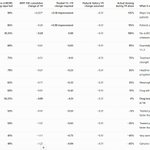
Serious question here, how do we explain the exact starting point track hd tfc 12.2, amt 130 was 12.2 on the high dose starting.
2024 decision modeling analysis using TRACK HD data estimated a 36 month TFC change of −1.989 for the TFC 11–13.
AMT-130 high dose: −0.27 tfc at 36 months, n=15
We can agree this isn't 100% like for like, but the starting TFC is remarkably similar, and the populations are in a comparable early functional range
You have that plus the 2000 study of 575 patients with baseline showing per year 0.97 points loss for tfc 7-13. Check out all the studies below.
Historically, patients with higher baseline TFC have generally shown faster TFC decline than patients with lower baseline TFC.
Uniqure had a loss of 0.37 points at 4 years.
The updated Enroll-HD external control shows −0.94 TFC points at 48 months, while the earlier Enroll-HD control produced approximately −1.24 points. Again, I ask here, are these aggressive or conservative control numbers? Where are all the 2 year, 3 year, 4 year studies in hd showing anything like these numbers?
2024 track hd study
pmc.ncbi.nlm.nih.gov/article…
2000 study
Tfc 7-13
0.97 per year
neurology.org/doi/10.1212/WN…
The CREST-E study of creatine for Huntington disease: A randomized controlled trial
N 278
Starting baseline 10.18
Estimated placebo TFC decline was 0.70 points/year; the trial was designed for up to 48 months but was stopped early, with only 36 participants having ≥4 years of primary outcome data.
pubmed.ncbi.nlm.nih.gov/2870…
dash.harvard.edu/server/api/…
2CARE study
609 participants
Starting baseline 10.9
0.83/year
only 34% of participants had completed 5 years of follow-up at the time of study termination, although 91% had completed at least 1 year of follow-up and 69% had completed 3 years
pmc.ncbi.nlm.nih.gov/article…
@peter_mantas @Tim_Corr @laurencurehd @Christina4HD @JRenz0418 @DesertDweller93

$QURE
Three HD abstracts at ISPOR Europe Nov 8–11, Vienna:
Patients: 60.8% work productivity impairment once diagnosed
Caregivers: 60.5% work impairment, QoL 5.5/10
EU5 ex-payers (independent Precision AQ survey): 60% yes in principle to reimbursing pre-symptomatic gene therapy
ispor.org/heor-resources/pre…
ispor.org/heor-resources/pre…
ispor.org/heor-resources/pre…
$QURE
There is also another interesting presentation at the annual ERN-RND (rare disease conference) October 9-10th
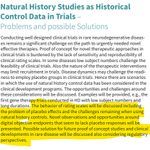
Ralf Reilmann inventor of Q-Motor is giving a presentation titled “Natural History Studies as Historical Control Data in Trials — Problems and possible Solutions.”
ern-rnd.eu/wp-content/upload…

$QURE
Here is another presentation at the upcoming movement disorder conference October 5th.
mdsabstracts.org/abstract/hd…


$qure $clpt per @Tim_Corr
Nice
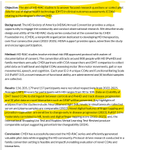
Uniqure just addressed 2 problems today, see unlocked abstracts, what hd patients consider meaningful and why people drop out of trials, might want to read the conclusions of the abstracts.
mdsabstracts.org/abstract/pe…
mdsabstracts.org/abstract/st…
$QURE This is a great post. I’d add that this management team has navigated an incredibly tumultuous year. They had the FDA commissioner go on national TV and publicly accuse the company of something that simply wasn’t true. The head of CBER appeared openly hostile to their regulatory approach.
Meanwhile, they’re trying to deliver the first disease-modifying treatment to a patient population that has never had one. Through all of it, management never once got in the mud. They stayed quiet, kept working, and let the science do the talking.
I'll give them some grace on the 4 year data release.
$qure $clpt
Got some DM’s about whether I think Uniqure will meet the deadline.
I personally think so but I think your guesses are as good as mine. I would assume the FDA is looking at the 4 year data and is talking about what the confirmatory trial is going to look like. This is by far the most likely thing that is going on.
My personal opinion is I think the FDA will say, dose 200 people and track them. I still believe the 4 year data is going to be extremely good. If the FDA has in hand good 4 year data, mri images, q-motor scores, I think you can honestly say all options are on the table here. If something came on health wise that is a whole different discussion, that would change this situation quite a bit, I don’t believe that is what is happening here but at the end of the day that is not impossible.
Will you panic if they miss the deadline and don’t hear from them?
Nah, I am not doing anything until I hear from the company, I don’t care if they miss the deadline and I get smoked near term. I am not selling out because they missed a deadline, you just don’t truly know what discussions are happening behind closed doors. Matt could also be waiting for the FDA to decide what the confirmatory trial is going to look like and wants to be on the call with that information.
If we want to go extreme unlikely scenario but not impossible, Uniqure actually could technically get full approval instead of aa at the end of the day. This sounds like crazy talk especially after the week we just had but hear me out. The bears will laugh me out of the room on this one but that is okay.
I think full approval is a possibility, obviously not a likely one but with all the new things the fda is talking about, you technically could get it. Not to mention all the political stuff and the signal this shows to the rare disease community. You would need the Q-motor data to be good, 4 year data, mri images, nfl. You would need all of those to align. That is a hell of a data package at that point. This is indeed crazy talk but it isn’t 0 percent. All those 4 things are not impossible for Uniqure to have and therefore you can’t put 0 percent probability on that scenario playing out. Uniqure would apply under AA just like FAYUVI did and when decision time comes they technically could grant traditional approval.
I don’t delete posts because if I am wrong I need to eat it, I have been wrong before and I am sure I will be wrong again in the future. A lot of shorts if wrong will just delete their posts and act like it never happened, that is weak, own your opinion and live with it either way. Whether right or wrong, stick to what you believe is happening and own the consequences either way. That is the way.
Tim retweeted
$qure $clpt
Delighted
If Q-motor is good, nfl and 4 year data is good, we got some interesting things on the table…
Market thinks something bad has come up, I don’t think so, might want to invert the situation.

RISE to the Challenge: Statistical Considerations for Rare Disease Clinical Investigations is on September 29th.
fda.gov/news-events/fda-meet…
The FDA has attached a Request for Information and Comments to this meeting.
thefederalregister.org/docum…
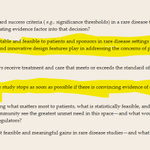
Here is what it is asking for information on. This seems applicable to AMT-130 $QURE
Tim retweeted
$qure $clpt
A lot of funny takes today, if you believe Sarah Tabrizi was talking about the 4 year data I don’t know what to tell you.
If people think something is wrong and are scared Uniqure is going to miss the deadline that I at least could respect. That could be a legitimate and understanding reason for someone to want to sell. Like maybe something bad came up from a safety standpoint and they need to delay the data that can be a fair concern as an investor.
Nothing Tabrizi said in that interview actually was new, do people really think a KOL can make a statement that they believe anyone that takes this drug will have 75 percent slowing past 10 years? Because that is what we are saying with her comment. That is impossible, no KOL can make that statement because they sure as heck don’t know what year 10 looks like. This whole thing is pretty laughable tbh. If you think about it, 40-50 percent super long term with lots of patients as an estimate really isn’t a bearish statement. We can agree, if she says 4 year data would likely be 40-50 percent slowing that is a bearish statement. That isn’t what she said.
“Where do you think the drug will end up?” Tabrizi
She says amt-130 is telling them where they have to target to develop molecules that would be accessible to everyone. That doesn’t sound to me like she thinks amt-130 doesn’t work $qure

$qure $clpt
Per @Tim_Corr
She has already said this, I guess she could be cautious because of the criticism she got last year. We also have to remember she is working on her own new drug now and she is personally looking to treat the entire world.
Factually, she sounded very different to me.
Sung was a completely different animal, at this point I am going with cautious stance from her but I can’t line the 2 comments up. I don’t believe chudrs is 40-50 percent. That doesn’t make any logical sense compared to Sung’s comments and what would be having to happen for it to do 40-50.
hdfoundation.org/hd2026-reca…
Tim retweeted
$qure $clpt
Per @Tim_Corr
She has already said this, I guess she could be cautious because of the criticism she got last year. We also have to remember she is working on her own new drug now and she is personally looking to treat the entire world.
Factually, she sounded very different to me.
Sung was a completely different animal, at this point I am going with cautious stance from her but I can’t line the 2 comments up. I don’t believe chudrs is 40-50 percent. That doesn’t make any logical sense compared to Sung’s comments and what would be having to happen for it to do 40-50.
hdfoundation.org/hd2026-reca…
Tim retweeted
$rare $clpt $qure call today
“The agency recognized our robustness of the package, we asked for AA, during the review they granted standard traditional approval. Gave a very strong label also.
Lifetime costs can exceed 8 million dollars.
Wholesale cost in the US 3.95 million.
Net price they said 2-4 million
We are expecting fairly rapid requests for treatment.
We expect product to be shipped in 30-60 days and people treated. They do not seem concerned about insurance.
Company sounds like the label they feel was extremely generous.
Godspeed to amt 130