




Tod Hynes retweeted

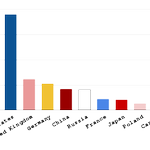
Wow, how many people out there knew that the carbon intensity of World GDP is at the same level is was back in the 1870s?

Tod Hynes retweeted

All CRMs suck.
They turn you into a data entry slave.
+ Leave a meeting: enter data.
+ Get an email: enter data.
+ Text on Slack: enter data.
My friend is building an AI-based CRM that does it for you.
RT & comment “AI” and I’ll DM you early access.
This is an important discussion. Scientists need 95+% certainty to publish and make decisions, while the entire economy operates on much lower certainties all the time. We must move bigger and faster with solutions while balancing risks. Waiting for the perfect will doom us all.

Hey Marty, as you know there is still no scientific consensus on the effects of biomass sinking with for example a large group of researchers calling for moratorium etc. You advanced the science more than anyone on macro algae. The way you described your deployments early on as "research tonnes" made a lot of sense to me. For commercial deployments, I would like to see some more scientific consensus.
Tod Hynes retweeted

The next three months will be decisive for climate change. It's because most climate scientists expect the global average temperature to decrease. If that doesn't happen, that makes it likely that the existing projections are underestimating future warming.
The past year has been in an above-average temperature phase partly because of a natural quasi-periodic climate cycle called the El Nino Southern Oscillation (ENSO). You might also have heard of it as the El Nino-La Nina years.
According to a recent report (June 17) from NOAA, we are just out of the warmer El Nino phase and now in a neutral, intermediate phase, that is expected to turn to the colder La Nina towards the end of the year. Report here: cpc.ncep.noaa.gov/products/a…
One of the consequences of this transition will probably be a very active hurricane season.
That 2023 was so hot on the global average might have been a statistical outlier. My impression is that most climate scientists at the moment think it was. Or maybe it's just what they hope.
Some are worried there is more to it and that the models have gotten something wrong, that the climate sensitivity has been estimated to be too low or that the impact of declining aerosol levels has been underestimated.
The scary truth is that no one really knows.

Tod Hynes retweeted

Altaeros Aerostats can carry a wide variety of payload types, when flying at 1000ft the ST-Flex can provide a 25 mi (40km) coverage radius. If you have specific requirement our team will work with you on a custom payload. Learn more here youtu.be/NcisNkspMJ8?feature…
Tod Hynes retweeted

two ipcc authors wrote a paper for kids that was peer-reviewed by some teenagers and the level of frankness is something a lot of climate scientists could learn from


Oil & gas companies will produce as long as goverments allow them to and somebody buys their product. We need to stop buying their products because governments won't take real action. This is difficult, will take decades, and won't happen fast enough to avoid #ClimateEmergency
This quoted post is unavailable.
It's important to note that you can't look at this chart and say which technology scaled and when it took off. GE wasted $1 billion betting on the wrong line. Efficiency is important, but not the key metric. It's not even cost. It's IRR and how it compares to cost of capital.


Tod Hynes retweeted

We aren’t winning - but because of the media, the public don’t understand, or understand what it means to lose.
Leading climate scientist Prof @KevinClimate
Geological Hydrogen and/or H2 produced underground in FF fields. (Enhanced Geothermal and Nukes will grow elswhere but will be too expensive in this part of the country to be a meaningful wave)

In ERCOT:
wave 1: wind
wave 2: solar
wave 3: storage
What's the 4th wave in this set?
data: ercot.com/gridinfo/resource

ALT Graph showing the installed capacity of wind, solar, and energy storage installed in ERCOT + future capacity with signed interconnection agreements.
Tod Hynes retweeted

In ERCOT:
wave 1: wind
wave 2: solar
wave 3: storage
What's the 4th wave in this set?
data: ercot.com/gridinfo/resource
ALT Graph showing the installed capacity of wind, solar, and energy storage installed in ERCOT + future capacity with signed interconnection agreements.
Tod Hynes retweeted

The annual list recognizes talented young professors teaching in MBA programs. The honorees are chosen based on the quality of their teaching and research. mitsloan.co/3X8KqWY

A 20-year average is a pretty round number. Average is not defined in the Paris Accord. Wouldn't it make more sense to use an average El Niño cycle of 4-5 years?

The fallacy that we've already crossed 1.5C turned up in this @Youtube event I did earlier today: youtube.com/live/T4sMkZKm91g
(some of the bad actors promoting this myth even turn up in the Youtube comment thread)

We shouldn't be worried about years 50 to 1,000+. We'll have the clean energy solutions at scale needed to decarbonize energy & industry as well as plenty of clean energy to reduce atmospheric emissions. The problem is whether we can adapt our civilization over the next 50 years.

...and this will be a small amount of batteries compared to the amount of batteries in EVs. The generating capacity if the U.S. vehicle fleet is 25x the generating capacity of the U.S. grid.

The grid needs a lot of batteries, even if we never built a single wind turbine or solar panel.
Batteries smooth out demand and improve utilization for generators and grid infrastructure.
It's not solar and wind that's driving current battery deployments, it's falling battery costs. The latent demand for batteries is massive.
Cheap, scalable energy storage has been a missing piece in grid design since the beginning. There are countless applications where a battery can lower costs and improve performance.
We are in the very early days of battery deployments. Batteries will be as ubiquitous as transformers.

EXACTLY! This is impressive, and it is a log scale! I've lived through several dramatic cost reductions in the climate and energy space. They are obvious to people in the respective sector and a surprise to everyone else.


With about $2K and 10 hours, I helped put together a tool that can do (in 10 seconds and infinity times) what consultants charge $10K per report. Software and a lot of expertise is/will be essentially free (and this is a good thing).
This quoted post is unavailable.
Supposedly, the original script had the matrix using humans for efficient compute as part of a neural network, but the studios didn't think people would get it... so they changed it to batteries (which makes no sense).


Change 3-unit home zoning limit to 6-units. Problem solved.

Boston city councilors made one thing clear in a hearing Thursday on Mayor Michelle Wu’s property-tax plan: They want to find a way to limit residential-tax hikes that doesn't involve putting more of the tax burden on businesses. bizjournals.com/boston/news/…