

You’re Losing Money on Every International Transfer You Make. We show you exactly what your international payments are really costing you and how to fix it.
Truro, England
Joined March 2017
- Tweets294
- Following2.2K
- Followers59
- Likes2.7K
Tony Redondo retweeted

Despite oil prices slipping back below $100/b, nosebleed refiner margins (aka crack spread) will keep pump prices high, especially for diesel. Also the price refiners usually pay, is not the first futures contract the market watches, but the c.$135 spot rate shown as red below.

Tony Redondo retweeted

THE FIVE TESTS
For weeks I've argued that this party, and this country, needs a proper debate about where we go next. Not a reshuffle. Not a few degrees of course correction. The big, difficult, honest choices we've spent thirty years avoiding.
A few people have asked me what that debate should actually be about. Fair enough. I spent 24 years in the Marines and two in government, and I resigned because I couldn't win the argument I believed in from the inside. So let me make it here, plainly.
This isn't a manifesto, but a set of five tests. Anyone asking to lead our country should be able to look down this list and say yes to all five.
1️⃣ The Frontline Test
Do we give the people on the frontline the kit they need to do the job, and stand by them when the job is done?
I joined the Marines at 18. I've buried friends. So I do take this one personally.
I sat in government and watched us write a defence plan for a world that no longer exists, discussed in rooms I was kept out of. A 100k drone is now sinking warships that cost a billion. That is the reality of the wars being fought right now.
Passing this means 3% of GDP as the floor, not the ceiling. Buying for the next war, not the last. And fixing the Legacy Act so blokes in their seventies aren't back in the dock for what they were cleared of decades ago.
2️⃣ The Next-Generation Test
Are we handing the next generation a better deal than the one we inherited, or a worse one?
I'm a lad from a tough part of Aberdeen. My mum raised five of us through some bleak years. The only reason I got out was because I was given an opportunity. That cannot be said for young people today.
Nearly a million young people, around one in eight, are now outside work, education or training. That isn't their failure. It's ours.
Fixing this means a NEETs and youth unemployment target with a date, the youth guarantee delivered not just announced. Restoring the link between work and a decent life for the under 30s, on housing, wages and opportunity. Skills and apprenticeship numbers that beat the last government, not just match it.
Talent is everywhere in this country. Opportunity isn't. Fix that and you fix half of everything else...
3️⃣ The Trillion-Pound Test
Is the plan to add a trillion pounds to what Britain earns, or to manage the decline more politely?
Here's the lesson I learned from Ukraine and in government, and it never changes. We invent things. Other countries build them. Other countries decide. We're brilliant at the first mile and absent for the next ninety nine.
So set a target and be judged on it. A trillion pounds added to our GDP within a decade. Yes, it's ambitious. We should be ambitious!
Getting there means backing the high tech inventors just as much as the high street traders. Your local coffee shop shouldn't be paying more tax per cappuccino than Starbucks does. So why on earth do they?
It means an industrial strategy worth the name. Things to make and things to sell, in Barrow, in Derby, in every region. Our industrial base is national security, so we should fund it like it.
And it means building the chips and the compute here, not inventing the breakthrough and watching someone else scale it. Data is the new gunpowder.
4️⃣ The 10% Test
Can we make the country work 10% better, instead of only ever asking for 10% more?
I saw this from the inside. We patch the symptom this year, but the bill grows next year, and we end up paying for failure at the most expensive end of every system.
A 10% improvement in outcomes across a handful of our biggest problems, ill health, reoffending, wasted potential, would free up somewhere between £40 and £60 billion a year. We're already paying those costs. We just pay them too late, when they're at their worst.
Passing this means investing early instead of paying far more later, and having the honesty to admit that not every pound we spend today delivers an immediate return.
5️⃣ The Lights-On Test
Does our energy policy keep the lights on, the bills down and factories open, or do we keep chasing a target and hope the rest sorts itself out?
For years we've treated net zero as the only goal, and everything else, your bill, our industry, whether the grid even stays up, as a problem for later. That’s the wrong way around.
Make energy security the goal. Power that people, businesses, and industry can afford, and a grid that stays on when someone tries to switch it off. Do that and net zero follows. Chase the target on its own, and you end up with neither.
Passing this means a serious baseload, nuclear and the North Sea, built in time to matter. Strong countries have cheap, secure energy. Weak countries don't.
None of this is complicated. It's the oldest deal there is. You serve the country, the country stands by you. In uniform, in a hospital, in a classroom, on a building site. Right now that deal is broken, and everyone keeping our country going can feel it.
That broken deal is the real reason for the frustration out there. It's why trust has drained out of politics. And it's why our party that won a landslide is, halfway through the term, already arguing about who leads it.
But changing the person at the top fixes nothing if we don't fix the deal underneath. Swap one leader for another and leave the deal broken, and we'll be right back here in eighteen months, asking the same question all over again.
So I'm not interested in who gets what job. I'm interested in whether we've got the courage to pass these tests.
We've been promised a debate. This is my opening offer to it. And if that debate ever becomes a contest, it should be fought on this ground, not on personalities.
I know where I stand.


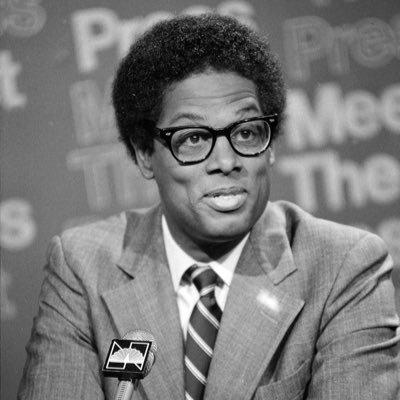


Tony Redondo retweeted

Economic inequality? More like economic envy.
We’re all unequal in our abilities, some things we do well, others badly. That’s not a bug, it’s why society thrives. One person’s strengths cover another’s limits.
The real wealth of nations isn’t money (just an incentive). It’s goods and services that improve lives.
John D. Rockefeller didn’t get rich by “greed,” he slashed kerosene prices so ordinary workers could afford light after dark, adding hundreds of productive hours to millions of lives. Edison, Ford, and countless others did the same. Their fortunes were a fraction of the wealth they created for everyone else.
Yet intellectuals obsess over income stats, rebranding envy as “social justice,” while ignoring differences in productivity. Killing the goose that lays the golden eggs has wrecked economies before. Focus on value created, not money received.
#ThomasSowell

Tony Redondo retweeted

Except it's never been true. Elites controlled the media, elites controlled electoral choices, the law, demographics, education all of it. The version of democracy they allowed us only allows minor alterations to decorations on the facade of a vast impenetrable edifice.

Tony Redondo retweeted

"Socialism is a philosophy of failure, the creed of ignorance, and the gospel of envy. Its inherent virtue is the equal sharing of misery." ~ Winston Churchill
#WinstonChurchill #ConservativeThought

Tony Redondo retweeted

🚨 Thomas Sowell debunks the Great Depression’s most entrenched myth
“There’s this narrative out there that the reason we had mass unemployment in the 1930s was because the market failed. It so happens that for the 12 months following the stock market crash, we never hit double digits of unemployment.”
“Unemployment peaked at 9 percent two months after the crash and started going down. The unemployment rate was down to 6.3 percent when the federal government figured it had to intervene.”
“And that’s when the downward movement reversed and we never saw 6.3 percent again for the next decade. It’s clear as crystal that the disaster came after federal intervention.”
Tony Redondo retweeted

More examples of the Speaker, Lindsay Hoyle, reminding Boris to answer the question put forward to him.
There’s no excuse for allowing Keir Starmer to evade every question time and time again during #PMQs
Tony Redondo retweeted

Freedom can also be lost little by little, by what the Fabians call the doctrine of gradualness. A little more taxation here, a little more government expenditure there, year after year until the people are no longer the masters of the state but its servants.
There are always, it seems, good reasons advanced for the state to have more power. But rarely for the state to divest itself of power.
Each new problem becomes an excuse for more government intervention and less individual responsibility.
Tony Redondo retweeted

Ayn Rand understood something that most economists refuse to acknowledge: the moral case for capitalism isn't about efficiency or outcomes, but about human nature and individual rights. While Chicago School types fumbled around with utilitarian arguments and Keynes pushed his theft-based economics, Rand cut straight to the philosophical core.
Her genius wasn't in economic theory per se, but in recognizing that economics flows from ethics. You cannot have sound economics built on the premise that some humans exist to serve others. The collectivist mindset that birthed central banking, progressive taxation, and the welfare state stems from the same moral rot: the idea that individual achievement is somehow a debt owed to society.
Rand's critics—mostly government-funded academics and their useful idiots—love to attack her fictional characters while ignoring her central insight. Every economic intervention, from price controls to antitrust laws, rests on the premise that productive individuals have no right to the fruits of their labor. Every regulatory agency assumes bureaucrats know better than market participants how to allocate resources.
But here's what drives the statists insane about Rand: she refused to apologize for success. While modern libertarians often accept the Left's moral framework and argue that free markets coincidentally help the poor, Rand said the quiet part out loud. Capitalism is moral because it rewards virtue—rationality, productivity, trade—and punishes vice.
The Austrian School provides the economic framework, but Rand provided the moral foundation that makes resistance to state power philosophically coherent. Without that moral clarity, you end up with compromise, pragmatism, and eventually the acceptance of "necessary" government interventions that metastasize into the bloated surveillance states we inhabit today.

Tony Redondo retweeted

Rugby and telly megastar (his words) @davidflatman reckons @BathRugby will win the Prem again this season and that @Ben_spencer9 is "simply brilliant" in an interview with @TonyRedondo5 of Cosmos Currency Exchange.

🗣️ “I wouldn’t be shocked with four wins this Autumn.”
🏴 David Flatman weighs in on ‘mega’ England back-row option and predicts ‘dripping’ Prem winners
planetrugby.com/news/david-f…
