

Blogger, writer, editor, retired proposal expert, birder, kayaker, grandmother.
Joined November 2012
- Tweets17.8K
- Following38
- Followers337
- Likes26.4K


Isabel Gibson retweeted

I’ve always said that the Liberal Party’s superpower is shamelessness. Its ability to reframe failures or weaknesses into successes or strengths is impressive gaslighting.
Last year’s deficit is down relative to forecasts in large part because planned spending was ultimately $14B lower. The government didn’t revisit this spending. It just didn’t disburse it on schedule and much has been shifted into subsequent years.
We know that’s the case because spending in the current fiscal year is set to rise by $44B—or 9%—and the deficit is set to jump to more than $60B—or 60%.
The government, in other words, is aiming to take credit for fiscal restraint for monies it couldn’t get out the door and still intends to spend.

Canada’s 2025–26 financial results came in stronger than projected.
The $39.3B deficit was $27.5B lower than forecasted, supported by higher revenues and lower-than-expected program expenses.

ALT Budget 2026 Annual Financial Report 2025–26 infographic highlighting a $39.3 billion federal deficit, $27.5 billion lower than projected in the Spring Economic Update, and 3.0% growth in federal revenues from 2024–25, a $15.5 billion increase. A red maple leaf and Parliament appear on the right.
Isabel Gibson retweeted

Reminder that Canada under the Harper government *did* raise the OAS eligibility age.
Had Trudeau not reversed this courageous reform, we would be spending $11 billion less on OAS by 2029, according to the PBO.
When OAS was created in 1952, the benefit began at age 70. Life expectancy was 68, and the ratio of workers to retirees was 8 to 1.
Eligibility is now at 65, with life expectancy at 81, and the ratio of workers to retirees down to 3 to 1.
The current system represents a massive, unjust intergenerational transfer of wealth which is obviously unsustainable.

Isabel Gibson retweeted

I wear a poppy for the men and women who defended our country
I wear a poppy for those men and women who still serve today
I wear a poppy for those who served our country and sacrificed everything
And I wear it for my great uncle Chuck who died in WW2
#Remember

Isabel Gibson retweeted
Reminder that in Pierre Trudeau's last term in office (1980-1984) he almost cut immigration levels IN HALF, from 143,000 PR admissions to 88,000.
That's because Canada was going through a recession, and it made no sense to add large numbers of new people into the Canadian labour market when people were struggling to find work.
Now that young people are struggling to find work, wages are lagging behind inflation, there is huge excess demand over supply in our health care system, and public support for immigration is waning, what does the Liberal government do?
Massively increase immigration levels.
This is one of the worst public policy decisions in modern Canadian history. And unlike most bad policies, it is effectively irreversible.


Isabel Gibson retweeted

70 years ago, in November 1956, the UN created its first peacekeeping force during the Suez Crisis, an idea proposed by Canada’s Lester B. Pearson. We honour the Canadians who served in peacekeeping missions, and their families. #NeverAlone #LestWeForget
Il y a 70 ans, en novembre 1956, l’ONU créait sa première force de maintien de la paix lors de la crise de Suez, sur une proposition du Canadien Lester B. Pearson. Nous honorons les Canadien·ne·s qui ont servi dans des missions de maintien de la paix ainsi que leurs familles. #Jamaisseul #Jamaisseule #NoublionsJamais

Isabel Gibson retweeted

We spend an insane amount of money on OAS, sending welfare cheques to retired millionaires. We could cut OAS, boost GIS to seniors actually experiencing poverty, and still save tens of billions of dollars.


Isabel Gibson retweeted

Tinkering again with Cavafy, new Ithaka (following the rhythm of the original and translating line-by-line) ending:
Ithaka gave you this: the lovely journey.
Without her you would never have set out,
and she has nothing more to give you now.
And if you find her poor, she’s not deceived you:
you’ll have become so wise, and seen so much,
that you will know by now what Ithakas mean.


Isabel Gibson retweeted

My sons friend is missing, anyone in the Grande Prairie area keep your eyes open.
He may have a guitar with him.

Isabel Gibson retweeted
During Veterans’ Week, from November 5 to 11, we recognize and honour the service and resilience of Canada’s veterans. Their dedication to our country has helped shape the freedoms we enjoy today.
Their legacy lives on through the values they defended and the generations they inspired. It also lives on in the connections they build with one another. 93% of veteran graduates surveyed three months after their program with us reported socializing with one another. To learn more about our programs, contact us at [email protected].
#neveralone #RemembranceWeek
Pendant la Semaine des vétérans, du 5 au 11 novembre, nous reconnaissons et honorons le service et la résilience des vétéran·e·s du Canada. Leur dévouement envers notre pays a contribué à façonner les libertés dont nous jouissons aujourd’hui.
Leur héritage se perpétue à travers les valeurs défendues et les générations inspirées. Il vit aussi dans les liens qui se tissent entre vétéran·e·s. 93% des vétéran·e·s diplômé·e·s interrogé·e·s trois mois après leur formation avec nous ont déclaré socialiser avec d’autres participant·e·s.
Pour en savoir plus sur nos programmes, écrivez-nous à [email protected].
#jamaisseul #jamaisseule #souvenir

Isabel Gibson retweeted

When Louis St Laurent started providing federal funds to universities, Duplessis refused the funds as an unconstitutional intrusion on provincial jurisdiction. A young Pierre Trudeau agreed, writing at the time that “if a government has at its disposal such a surplus of funds that it can undertake to support a part of the common good that does not lie within its jurisdiction, one may suspect that this government controls more than its share of taxation.”
Now a separatist premier is asking for more federal funding within provincial jurisdiction. The cynicism is something.

When the fathers of confederation delineated the division of powers, figures like Alexander Galt envisioned the provinces exercising full autonomy in their exclusive jurisdiction.
They’d be surprised (and disappointed) by how easily provincial premiers have acquiesced to federal intrusion via the spending power. The idea that a separatist premier would demand more federal funding and in turn necessarily greater federal control over his health policy decisions just takes it to an absurd extreme.
The biggest threat to a federalism of watertight compartments is still centralizing federal politicians like Justin Trudeau. But the second biggest (and comparatively underrated) threat is provincial politicians who won’t selfishly protect their own exclusivity.

Isabel Gibson retweeted

"She's probably not gonna throw it that hard." - Brad Gushue
"Hold my broom." - Rachel Homan (probably)
📺: Sportsnet watch.sportsnet.ca (🍁) | ESPN+ watch.espn.com (🇺🇸) | Rock Channel watch.rockchannel.com / DAZN DAZN.com (🌎)



Isabel Gibson retweeted

Richard is raising an economic question Canadians should have been asking years ago: Who benefits from mass immigration, who bears the costs, and what incentives are we creating?
Economics teaches us to look beyond political intentions and examine actual consequences.
When governments rapidly expand the labour supply without corresponding investment in housing, infrastructure and productive capital, the costs and benefits are not distributed equally.
Employers gain access to a larger pool of workers. Property owners benefit from stronger housing demand. Meanwhile, young Canadians, renters and lower-income workers face greater competition for jobs and housing.
That doesn’t mean immigration is inherently harmful. Skilled immigrants, entrepreneurs and productive workers contribute enormously to Canada. The issue is the scale, composition and economic capacity to absorb newcomers.
We spent years celebrating GDP growth while neglecting GDP per capita.
A bigger economy means very little if the average Canadian isn’t becoming more prosperous.
There is another problem economists have warned about for generations: incentives.
When employers can consistently access inexpensive labour, some have less incentive to increase wages, invest in equipment, train employees or improve productivity.
Cheap labour can become a substitute for innovation.
And when governments rely on population growth to generate economic activity, they can postpone the difficult structural reforms required to improve living standards.
The consequences fall disproportionately on those with the least bargaining power.
The Bank of Canada’s research supports concerns about the changing composition of temporary immigration and its effect on aggregate wages. Its housing research also identifies the pressure rapid population growth places on an already constrained housing market.
This is where I believe Canadian immigration policy went badly wrong.
We confused population growth with economic progress, labour availability with productivity, and rising aggregate GDP with rising prosperity.
Now we’re discussing increasing immigration again before demonstrating that we’ve corrected the underlying problems.
My position is straightforward:
Immigration should serve Canada’s long-term economic interests, respect our capacity to accommodate newcomers and improve living standards for the people already here, including earlier immigrants.
Measure success through real wages, productivity, GDP per capita, housing affordability and private investment.
Not simply the number of people arriving.
Because the purpose of economic policy should be improving people’s lives, not making the numbers on a GDP spreadsheet look bigger.
Prosperity is something you produce, not something you import by increasing the population.


Isabel Gibson retweeted

"Star Trek is science fiction, of course. As the world has fallen apart around us, it’s not the warp drives and deflector shields that seem so impossible. It’s men like Picard."
readtheline.ca/p/matt-gurney…

Isabel Gibson retweeted

Thank you, @stephenharper, for this very touching chapter in your memoir about my late husband, Dave Batters, and the vital issue of mental health. ♥️
What an incredible honour for Dave, and it’s so crucial to continue to shine a spotlight on mental illness, which affects millions of Canadians.

Stephen Harper — the importance of remembering former Palliser MP Dave Batters leaderpost.com/news/saskatch…

Isabel Gibson retweeted
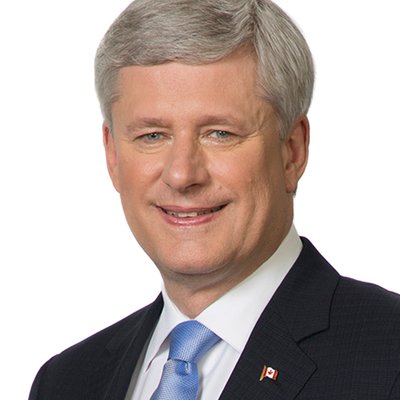
I’m delighted to share that “Here For Canada: Memoirs of the 22nd Prime Minister” is now officially released. It was an honour to serve our country, the best country in the world, with an incredible team of colleagues and I am pleased to share my account of those years.
Purchase your copy here: indigo.ca/products/untitled-…

Isabel Gibson retweeted

BREAKING NEWS: Canada has apparently run out of problems.
For days now, the country has been consumed by an unprecedented national crisis: ONE HOUR OF DAYLIGHT.
The outrage! The despair! The endless posts! You'd think someone had announced the sun was being discontinued.
Never mind that people can't afford their mortgages. Never mind grocery bills, housing costs, struggling healthcare, or children dealing with depression and mental health issues.
Nope. Our national emergency is whether we get our sunshine at 7 a.m. or 6 p.m.
And let's not forget that the difference between summer and winter daylight is HOURS, not one measly hour. Somehow we've all managed to survive that astronomical catastrophe every single year.
People work shifts, get up in the dark, go to bed in the dark, cross time zones, raise families and manage to reset their clocks without requiring a national counselling service.
But take away ONE HOUR of their preferred sunlight and apparently civilization is on the brink of collapse.
If only we could harness all this energy, passion and collective outrage and redirect it toward something that actually matters.
Canada might get something accomplished.
In the meantime, somebody please check on the sun. Apparently it's ruining everyone's life. 😂
Isabel Gibson retweeted
CBC seems increasingly fascinated with American politics while some of the most important accountability stories in Canada deserve far more sustained attention.
I have no objection to covering the U.S. midterms. American elections affect Canadian trade, investment and foreign policy. But CBC is Canada’s publicly funded broadcaster, and its first obligation should be to keep Canadians informed about what’s happening in their own country.
Consider what Auditor General Karen Hogan reported on October 29.
Canada’s military has serious gaps in its ammunition stockpiles. The Public Health Agency wrote off $331 million in expired or damaged medical supplies. The federal dental-care program exceeded its budget commitments by $1.1 billion in its first two years. FINTRAC has serious weaknesses in combating money laundering.
Meanwhile, the Parliamentary Budget Officer projects continued federal deficits exceeding $63 billion annually through 2030–31 and warns that Ottawa’s fiscal rules impose limited discipline on government spending.
These are documented findings, not partisan talking points.
Yes, CBC has reported on some of them. The question is whether they receive the sustained attention and scrutiny they deserve.
Canadians are struggling with housing affordability, living costs, productivity problems and government services. Yet we’re treated to extensive discussions about American congressional districts, Democratic prospects and Trump’s approval ratings.
Here’s a thought. How about giving Canadian taxpayers the same sustained attention CBC gives American voters?
And while we’re discussing political accountability, Canadians deserve to know who advises the Prime Minister, what influence they exercise and how government decisions are made.
I don’t need to believe CBC is taking instructions from the PMO to question its editorial priorities.
Public funding creates a public obligation. Journalism should challenge whoever holds power, regardless of political affiliation.
The next American election matters to Canada. But the performance of the Canadian government matters even more to Canadians.
CBC should spend less time obsessing over who might control Washington and more time holding the people who actually govern Canada accountable.

CBC’s coverage of the 2026 U.S. midterms has gone far beyond standard or even in-depth foreign reporting and into outright distraction. Katie Simpson, Willy Lowry and Paul Hunter have turned their Two Blocks from the White House podcast into a near-weekly seminar on midterm maps, Senate math and “what a Democratic sweep means for Canada.” Cross Country Checkup has handed entire national call-in hours to the same topic. Matt Galloway flew The Current to Texas, and Kris Reyes has been on the ground in Pennsylvania’s Lehigh Valley treating a single House race as a Canadian domestic story. This volume crowds out the issues that actually matter to Canadians right now
The irony is thick. The U.S. midterms themselves are being driven by the economy, affordability and cost-of-living anger. CBC is covering that American economic discontent in exhaustive detail while ignoring or burying the parallel failures at home. Auditor General Karen Hogan’s recent reports slammed the Carney government on military ammunition stockpiles, public health emergency supplies, a dental-care program that blew past its budget by roughly $1.1 billion, and ongoing weaknesses in tracking money laundering. The Parliamentary Budget Officer has undercut Carney’s claims on balancing the operating budget, projecting the target will be missed and questioning the government’s shifting definitions of capital versus operating spending. These are concrete, documented failures of the current government. CBC’s airtime is instead consumed by American swing-district voters and Trump’s approval ratings
The pattern looks coordinated. The PMO’s chief operating officer and senior adviser on Canada-U.S. relations is Maia Johnson, an American Democratic operative with prior roles on Hillary Clinton’s campaigns and Michael Bloomberg’s Hawkfish firm. She is the person charged with managing the day-to-day political and stakeholder operation around U.S. relations. CBC has never doe a serious story on this, shown her picture or asked about her security clearance. The sustained CBC emphasis on a potential Democratic “check” on Trump, the framing of every poll as a referendum, and the near-total displacement of domestic fiscal and accountability stories fit a playbook designed to keep older progressive Carney Boomer audiences fixated on Washington rather than on the AG and PBO findings landing with Canadians
CBC can cover consequential U.S. elections. They do not need to airlift hosts, dedicate podcasts and open the national phone lines for weeks while soft-pedalling reports that show their preferred government failing on the exact economic and competence issues voters care about on both sides of the border. The result is not journalism. It is a sustained CBC distraction from domestic failures that serves the PMO