
Established in 1958, UNESDA is a Brussels-based association representing corporates and national soft drinks associations. We're here to listen, learn & share.
Brussels
Joined October 2010
- Tweets5.2K
- Following799
- Followers2.3K
- Likes1.8K





Pinned Tweet
We have the perfect read for you to find out why #OurSectorMatters to Europe! All in just three key facts:
1.Our sector is a key driver of jobs and economic growth. Discover the stories of local #SoftDrinks companies across Europe.
2. Our sector innovates. In fact, we are the most innovative in the food and drink industry
3. Our sector takes ambitious actions that drive meaningful progress across Europe
🔎 Discover more in our NEW article in @euronews 👇
euronews.com/business/2025/1…

💡 UNESDA #FridayTip
A new month is just around the corner and what does that mean in Brussels?
🎨 Free museum visits on the first Sunday of every month! 😉
Want to know more?
👉familinbruxelles.com/en/free…

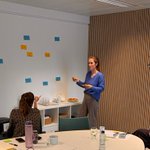
💡 AI is here to stay. It is rapidly becoming an essential tool in the workplace, and the question is: how can we integrate AI into our day-to-day work, and use it effectively to save time, reduce inefficiencies, and work smarter, including to support our members and be more creative?
That’s what we explored this week with Axonity during a tailored workshop for the UNESDA team. We were challenged to reflect on key pain points, identify which tasks are best suited for AI support and prioritise those where AI could deliver the greatest value.
We had no shortage of ideas. 😊
Thank you to Axonity for the enjoyable and insightful workshop! We are looking forward to the next steps in our AI journey.


A strong and more competitive EU Single Market requires practical action to remove regulatory barriers and avoid market fragmentation.
Under this new EU mandate, there are clearly good intentions to move things forward and some concrete changes, but progress is still too slow and much more work is needed by both the Member States and the European Commission. The EU needs to deliver much faster.
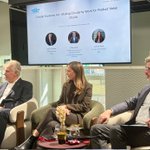
That’s our takeaway from yesterday’s EU Single Market workshop in Brussels, organised by the European Commission’s Directorate General for Internal Market, Industry, Entrepreneurship and SMEs (DG GROW). We joined policymakers and other industry representatives to discuss the practical measures industry needs to operate more effectively and remain competitive for a stronger Europe.
Our sector supports the EU’s ongoing efforts to simplify regulation and strengthen Europe’s competitiveness, and has been advocating for a set of concrete measures, including:
➡️ the new "proportionality test" under TRIS is much welcomed, but a more fundamental review needs to be done of the EU TRIS notification process to identify and remove additional barriers to the free movement of goods that translate into unjustified restrictions and increased costs;
➡️ ensuring the collection of up-to-date, robust dietary intake and food composition data across Europe to make sure measures to address public health concerns are necessary, proportionate and justified;
🔎 Find out more in our detailed comments to the European Commission’s public consultation on its new EU Single Market Strategy
👉 ec.europa.eu/info/law/better…

♻️ A circular economy works best when valuable materials remain in use and retain their value for as long as possible. That’s what high-quality, closed-loop recycling enables, and why it should be supported in the upcoming EU Circular Economy Act.
For beverage containers, closed-loop recycling is essential. It means turning used beverage bottles and cans into new bottles and cans.
🔔 But closing the loop is also about ensuring beverage producers have fair access to the food-grade recyclates generated from collected beverage containers.
Why is this so crucial?
🔔 Beverage producers finance the collection of beverage containers, are legally required to meet recycled content targets and comply with strict EU food safety requirements. Yet, they face strong competition for food-grade recycled materials from sectors that are not subject to the same food-contact and recycled content obligations.
👀 Swipe through our quick explainer 👇
🤔⬇️ Think you know how much the European soft drinks sector has reduced sugar over the past 25 years?
🔔 Here’s what we have achieved: more than one third!
But our sector’s efforts to reduce calories through sugar reduction started even earlier and have continued ever since, all thanks to innovation.
Over the past 25 years, we have continued to accelerate innovation to reduce sugar and expand our range of low- and no-calorie beverages to meet different consumer needs, preferences and lifestyles.
We can go even further if a supportive regulatory environment is in place, especially if the EU:
➡️ actively supports the use of low- and no-calorie sweeteners, in line with the positive safety assessments by the European Food Safety Authority (EFSA). These ingredients play a key role in reducing calories and sugar;
➡️ removes unnecessary regulatory barriers to food innovation, such as the EU’s 30% energy reduction rule which limits the use of low- and no-calorie sweeteners without any scientific or technical justification.
🔎 Explore our sugar reduction journey across Europe
👉unesda.eu/our-priorities/sug…
#DoingOurPart
🤖 Made with AI

💡 UNESDA #FridayTip
Can’t decide which flea markets to visit in France🇫🇷 and Belgium🇧🇪?
Here are some of the most beautiful ones worth exploring 👉lesbrocantes.be/

This World Food Day, let’s embrace the small actions that can help us make better use of our food, enjoy it safely, and prevent food waste.
Understanding date marking is one of them.
So, make sure you know what these dates mean:
🔹 Best Before: products can be safely consumed after this date
🔹 Use By: products can be consumed until this date, NOT after
👉unesda.eu/key-facts/date-mar…

🗣️ Have you been to AIM Brands Week in Brussels this week?
We can tell you that, so far, the policy discussions have been right on point.
♻️ Key takeaways from the discussion on Europe’s circular economy:
➡️ We are at a pivotal moment for the EU circular economy;
➡️ The upcoming EU Circular Economy Act represents a major opportunity to accelerate circularity, particularly through stronger Extended Producer Responsibility (EPR) systems;
➡️ Greater transparency is needed regarding the use of EPR fees;
➡️ Better EPR systems lead to better collection, and better collection leads to better recycling.
Indeed, well-designed collection and waste management systems are key to ensuring a reliable supply of high-quality recyclates. This is also why efficient schemes such as Deposit Return Schemes (DRS) matter, and why our sector has strongly supported their continued expansion across Europe. DRS help achieve high collection rates, with several European countries collecting over 90% of beverage containers.
🛒 Key takeaway from the discussion on the future of the EU Single Market, particularly on the planned revision of the Unfair Trading Practices (UTP) Directive:
➡️ EU rules need to catch up with today's market realities to ensure fair value for all
👏 A huge shoutout to AIM – European Brands Association for bringing together such an inspiring line-up of speakers and discussions on the key issues shaping the future of European consumers and businesses, including circularity, innovation and supply chain resilience.


📍🏠 When you think of the Netherlands🇳🇱, windmills and tulips probably come to mind. But did you know it is also home to local soft drinks companies like Vrumona that play an important role in supporting jobs and driving economic growth across the country?
Vrumona has been operating in the Netherlands for more than 80 years. The company employs over 350 people and works with a wide network of Dutch suppliers, including retailers, wholesalers and hospitality businesses.
🎥 Watch the video to hear from Ilco Kwast, Managing Director of Vrumona, on how the company’s socio-economic impact reaches far beyond its plant site.
🔔 Ilco also highlights the importance of a ‘policy environment that encourages innovation, enables investment and that is based on science, consistent policy and long-term predictability.’
🔎 Discover the socio-economic footprint of our sector across Europe
👉 unesda.eu/our-industry/socio…
#OurSectorMatters
♻️ There is a real opportunity to turn circularity into a positive business case for Europe. The forthcoming EU Circular Economy Act can make it happen. How?
In his new op-ed, our Director General, Nicholas Hodac, calls for two priority measures the EU Circular Economy Act should deliver:
➡️ Prioritising high-quality, closed-loop recycling and ensuring fair access to food-grade recycled material, so that used beverage containers are recycled back into new beverage containers.
Currently, there is no clear mechanism that ensures that beverage producers have access to the necessary feedstock for recycling. This is particularly important because beverage producers must meet recycled content targets and strict EU food safety requirements. On top of that, they face growing competition for food-grade recycled materials from sectors that are not subject to the same food-contact and recycled content obligations.
➡️ Ensuring a level playing field between virgin and recycled materials, not through restrictions on recyclate imports or mandatory use of ‘EU made’ recyclates, but through targeted fiscal incentives for recycling and the use of recycled content that help address the price gap between virgin and recycled materials, as well as improved traceability through distinct tariff codes.
🔎 Read Nicholas’ op-ed in @Parlimag ⤵️ theparliamentmagazine.eu/par…

🌍 As #EURegionsWeek starts today, you might be wondering: what makes local communities thrive?
The European soft drinks sector plays an important part in this. Our sector’s contribution goes far beyond producing beverages that consumers enjoy.
🏘️ We are a local sector, supporting Europe’s communities and economies through local production, jobs, ongoing innovation and investment.
Here’s what that looks like in numbers:
📍 500+ production sites
🗺️ over 97% of soft drinks made in Europe
👥 more than 1.8 million jobs supported across our supply chain
📈 €242 billion generated annually across our value chain
🍋 more than 85% of our ingredients sourced from European farmers
This shows that our sector is key to making Europe more competitive. That’s why we need clear, coherent and evidence-based EU policies that support innovation.
🎥 Discover how our sector contributes to Europe’s competitiveness through powerful stories from local soft drinks companies across the continent
👉unesda.eu/our-industry/socio…
#OurSectorMatters

🙌 Delighted to join the annual Industry Lunch in London yesterday, hosted by our British member association, @BritSoftDrinks (BSDA).
It was great to see MPs, government officials, industry leaders, and members come together to discuss the future of the UK's soft drinks sector and its role in supporting jobs, driving economic growth, and fostering innovation.
🔔 The soft drinks sector is a key part of the UK economy: it generates £26.3 billion (€30.7bn) in value, and supports nearly 56,000 jobs, including almost 17,000 direct roles mostly in highly skilled manufacturing.
🔔 The sector is also playing a crucial role in promoting balanced diets by expanding consumer choice through a wider portfolio of beverages with few or low calories. Today, more than seven in every 10 soft drinks sold in the UK are no-/low-calorie, accounting for 71.4% of total soft drinks sales.
As underlined by BSDA Director General Andy Bagnall: “𝘈𝘴 𝘢 𝘴𝘦𝘤𝘵𝘰𝘳, 𝘸𝘦 𝘩𝘢𝘷𝘦 𝘢 𝘤𝘰𝘮𝘱𝘦𝘭𝘭𝘪𝘯𝘨 𝘴𝘵𝘰𝘳𝘺 𝘵𝘰 𝘵𝘦𝘭𝘭, 𝘢𝘯𝘥 𝘐’𝘮 𝘥𝘦𝘵𝘦𝘳𝘮𝘪𝘯𝘦𝘥 𝘵𝘩𝘢𝘵 𝘰𝘯 𝘮𝘺 𝘸𝘢𝘵𝘤𝘩 𝘵𝘩𝘦 𝘉𝘚𝘋𝘈 𝘩𝘦𝘭𝘱𝘴 𝘵𝘩𝘦 𝘪𝘯𝘥𝘶𝘴𝘵𝘳𝘺 𝘵𝘦𝘭𝘭 𝘪𝘵 𝘣𝘦𝘵𝘵𝘦𝘳.”
👏 A big thank-you to BSDA for the excellent event and for the work it does every day to represent and support our sector across the country!
