

ExComrat X (@XExcomrat) profile picture
Joined January 2022
Photo by ExComrat X (@XExcomrat)Photo by ExComrat X (@XExcomrat)Photo by ExComrat X (@XExcomrat)Photo by ExComrat X (@XExcomrat)Photo by ExComrat X (@XExcomrat)Photo by ExComrat X (@XExcomrat)Photo by ExComrat X (@XExcomrat)Photo by ExComrat X (@XExcomrat)Photo by ExComrat X (@XExcomrat)Photo by ExComrat X (@XExcomrat)
The Woke West Women are in meltdown
To all those that supported, celebrated and praised Greta Thunberg…. What does it feel like to know that she is now laughing at you? 😂
4
ExComrat X retweeted
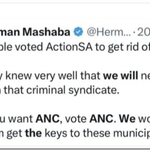
Penuel: "If you were in power would you arrest Cyril Ramaphosa for potential money laundering?" Herman Mashaba: "Yesterday..."
7
51
8
175
12,924
ExComrat X retweeted
Knew you can’t be trusted you lying cnut @HermanMashaba
16
55
5
134
1,658
Give this man a bells 🥃
12
88
4
432
4,081
Replying to @eNCA
I'd hate to be an investor who considers business viability, and the first issues I have to deal with is: 30% ownership demands. Racial/social engineering compliance. Threat to property rights. South Africa's water issues. Security risks and crime threats. Infrastructure deterioration. I haven't even begun doing the financial math yet, and already I have a mountain of shit to deal with.
1
11
456
ExComrat X retweeted
So cheating is fine when you play a South African rugby team. This is an absolute tragedy for World Rugby because it shows the sport is run by those whose interests are not truth and fair competition. Not as if it just happened now. Remember the 2011 Rugby World Cup quarter final between South Africa and Australia.
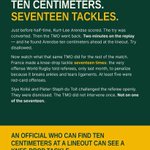
Dear World Rugby, you can suspend the coach but you can't suspend the footage. 17 tackles. We all saw them. Some of us counted more. FREE UNCLE RASSIE 🇿🇦 @WorldRugby @IrishRugby THE FOOTAGE SPEAKS!! 
#ScrumAtMe #FreeRassie #Springboks #WorldRugby
68
194
9
837
35,630
ExComrat X retweeted
Replying to @OldKhakiSafari
@OldKhakiSafari Michael blocked me. Please share this to his video response on your comment, please🙏🏼. And tell the coward to unblock me. I won't promise I will stop hitting him with facts around their coup in Tshwane. **Net direction: worsening or no meaningful improvement.** Johannesburg was already in serious trouble before ActionSA moved into ANC/EFF-aligned arrangements from around August 2024 (voting for Dada Morero as mayor and taking the speaker position). The period since then has not reversed the decline; in several key measurable areas it has continued or intensified. ### Key metrics **Financial governance (Auditor-General 2024/25)** The core municipality regressed from an unqualified audit opinion to a **qualified** one. This is a clear step backward. Water losses remained around 45% (~R2.8 billion in 2024/25, with ~R2 billion from leaks). Combined water and electricity losses were reported at roughly R8.5 billion for the year. New unauthorised and irregular expenditure stayed high, and only about 40% of planned service delivery targets (and ~36% of infrastructure targets) were achieved. **Water** Losses have stayed stubbornly above 45% for years. Pipe bursts increased from about 20,700 in 2023/24 to roughly 33,400 in 2024/25. By late 2026 residents in multiple areas (including Melville, Westbury, higher-lying suburbs and others) were reporting multi-week outages, with protests over dry taps immediately before the November 2026 local elections. Infrastructure renewal backlog remains in the tens of billions. **Electricity** City Power recorded 2.1 million forced interruptions between July 2025 and March 2026. Customers averaged more than 20 hours without power over that period; 60% of outages were linked to deteriorating networks. The utility’s infrastructure backlog is estimated at over R44 billion, with high vacancy rates in technical and engineering posts. **Broader resident experience** GCRO Quality of Life data shows Johannesburg (and the other Gauteng metros) at or near historic lows on the index, with falling satisfaction on water and electricity. Refuse collection backlogs, potholes and uncollected rubbish remained visible problems into late 2026. The city’s overall infrastructure backlog is still cited in the R220 billion range. ### Bottom line ActionSA’s shift into supporting the ANC-led setup in Johannesburg (after previously ruling out working with the ANC) has not produced a detectable turnaround. The long-standing structural problems — ageing pipes and cables, high non-revenue water and electricity losses, weak maintenance, and governance failures — have largely continued. By the time of the 2026 local elections, residents were still facing the same core failures, and in several measurable areas (audit outcome, pipe bursts, outage volumes) conditions had not improved and in places had worsened. The data does not support a claim of meaningful improvement since the mid-2024 coalition shift. The dominant picture is continued decline or stagnation under the arrangements ActionSA helped enable.
7
2
10
398
Replying to @ewnupdates
ASA was into cadre deployment all along, Cape will now move to protect itself and an independence referendum seems unavoidable... teapaw.org/lavaheadza/status/2123…
Sjoe! They Won the Coalition🇿🇦 They May Lose the Country! ~ The Coalition That Could Break South Africa💥Cape Independence and KwaZulu-Natal Balkanisation! ~ 💣 One Coalition Deal, Two Provinces, and the Beginning of a Very Different South Africa! Sjoe. Johannesburg has just demonstrated what finishing first is worth under pure proportional representation. The Democratic Alliance took roughly 34.8 percent of the vote and 91 seats on a 270-seat council. A majority requires 136. ActionSA, led by Herman Mashaba, secured 16–17 percent and 42–43 seats. Within days the ANC, ActionSA, the EFF and the MK Party were constructing majorities that would leave the largest party outside the mayoralty and the executive (Eyewitness News, 18 November 2026; BusinessTech, 18 November 2026). The party that arrived first in the economic capital can be locked out by parties that arrived later. Arithmetic has overridden mandate. That exclusion is the high-salience event that has most likely pushed the Western Cape across the threshold at which independence becomes the lower-risk option, and that has placed KwaZulu-Natal Balkanization firmly on the radar. No post-election poll has yet confirmed a majority for either outcome. The cumulative evidence—seat totals, contemporaneous coalition reporting, multi-year polling ranges, and documented fiscal flows—nonetheless indicates that Mashaba’s conversion of a mid-sized seat total into decisive veto power has updated the risk assessment for both provinces at once. Cape independence is now the more probable path inside the current cycle. KwaZulu-Natal autonomy follows as the logical subsequent pressure once the centre’s inability to protect plurality winners is established as operating fact. 1. The Arithmetic That Nullifies South Africa’s pure proportional representation system multiplies parties rather than concentrating them. Under the Municipal Structures Act the executive mayor is elected by a majority of councillors, not awarded to the largest party. Johannesburg’s numbers therefore permit exclusion: DA 91, ANC 63, ActionSA 43, MK 15, EFF 17. Combinations that exclude the DA reach or exceed 136. Mashaba’s party, holding less than half the DA’s seats, becomes the indispensable partner. This is the institutionalisation of kingmaker leverage. Historical surveys between 2020 and 2026 placed support for the idea of Western Cape independence in the 30–50 percent range of the provincial population; one pre-election poll recorded approximately 34 percent among voters living in the province itself (Cape Independence Advocacy Group, 2026; The Common Sense, 2026). An earlier Social Research Foundation poll recorded support near 51 percent inside KwaZulu-Natal for that province breaking away. The Johannesburg exclusion supplies the missing concrete precedent. Single-issue parties received negligible shares, so organised demand remains limited. The threshold claim is a hypothesis grounded in visible exclusion and prior polling ranges. It is the strongest available indicator that the price of plurality has risen. The 1996 Constitution assumed that national and provincial majorities would largely align. Section 235 recognises self-determination within the Republic yet supplies no procedural path to exit. When coalition arithmetic repeatedly prevents the largest party from governing the largest metro, the practical distinction between assigned provincial powers and residual control narrows for regions that already run their own service systems. The 2021 hung-council wave first revealed the pattern. The 2026 Johannesburg talks have elevated it to the operating rule of the economic capital. Sjoe! Ninety-one seats and still waiting in the corridor while 43 decide whether the door opens. The system has discovered that the power to withhold is more valuable than the power to arrive first. Stirring Questions: If the largest party in the economic capital can be excluded from functional leadership, what remaining incentive exists for voters in diverging provinces to treat national coalition outcomes as binding on their own majorities? When that exclusion is paired with already substantial latent support for greater autonomy? These questions together matter because they test whether the 2026 arithmetic has altered the risk calculus faster than gradual demographic or fiscal drift, and whether protective exit has become the rational default for both the Western Cape and KwaZulu-Natal. 2. Symmetric Exposure Both provinces already diverge from the coalitions that dominate national arrangements. In the Western Cape the DA retained outright majorities in Cape Town (approximately 56 percent) and in several other municipalities (Rateweb, 2026; IEC results). In KwaZulu-Natal the MK Party emerged as the largest force in 19 of 34 hung councils, including eThekwini with 86 seats. The Johannesburg precedent demonstrates that smaller parties can construct veto majorities against the first-place party. Once that mechanism is normalised, the expected cost of remaining rises symmetrically. Western Cape residents who have repeatedly rejected the parties that form the bulk of national coalitions face the prospect that future multi-party deals could override their local majorities. KwaZulu-Natal residents who have shifted support toward a regionally dominant party face the parallel risk that national coalition logic could still constrain or exclude that party’s preferred outcomes. Protective calculations therefore apply equally: convert temporary local strength into more permanent control before the same exclusionary arithmetic is applied. The provinces differ in party colouring, demography and institutional capacity; symmetry exists at the level of incentive structure, not identical political content. Comparative experience adds precision. In Belgium the repeated construction of national majorities that sidelined the largest Flemish parties accelerated demands for fiscal autonomy. In Canada the perception that federal coalitions were unresponsive to Quebec majorities preceded the 1995 referendum. Neither case maps exactly onto South Africa, yet both show how the normalisation of veto politics raises the relative attractiveness of exit options for regionally concentrated electorates. Mashaba’s success in Johannesburg has performed the same demonstration function for South African provinces. Sjoe! Two provinces, two different parties, one shared discovery: the centre can no longer guarantee that finishing first means governing. The arithmetic does not care about the colour of the jersey. Questions Stirring: Can the same veto logic that operates in Johannesburg be replicated against Western Cape majorities or against MK-led arrangements in KwaZulu-Natal? And what threshold of repeated exclusion would be required before protective demands become majority positions? These questions together are important because they determine whether the 2026 outcome remains a Gauteng-specific negotiation or becomes the template that makes independence or deep autonomy the lower-risk path for both provinces. 3. Salience Without New Polls Multiple surveys established substantial latent preference. The Johannesburg talks supply a high-salience event capable of moving soft or undecided respondents. Once residents in either province update their beliefs to include a non-trivial probability that local preference can be nullified by coalitions assembled elsewhere, the expected cost of the status quo rises relative to the expected cost of testing independence or deep autonomy. Salience can shift preferences faster than slow drift. The absence of a confirmatory post-election poll means the crossing remains unmeasured. The DA’s exclusion is identified as the trigger precisely because it is immediate and observable. Research on demonstration effects indicates that a single, highly visible failure of representation can compress timelines previously assumed to be multi-cycle. The Johannesburg outcome functions as that demonstration. For the Western Cape, Mashaba’s role in ousting the largest party supplies a concrete reason to treat independence as insurance against the same fate. For KwaZulu-Natal the same logic applies with a lag: once the centre’s inability to protect plurality winners is established, regional parties face stronger incentives to lock in local control. An unintended consequence is that kingmaker success in one metro can accelerate exit pressures in distant provinces, regardless of the kingmaker’s own national ambitions. Practical consequences follow for ratepayers: metro paralysis raises the relative value of provinces that can still convert majorities into consistent service delivery. Sjoe! No new poll is required for the calculation to change. Residents simply watched the largest party in the economic capital being told that its 91 seats were insufficient. That is enough to update the ledger. Stirring Qestions: How many additional high-salience exclusions would be required to convert the existing 30–50 percent band into a measured majority? What form would a confirmatory survey need to take to falsify or support the hypothesis? These questions together matter because the claim is explicitly testable; without them the argument remains coherent but unconfirmed, and the distinction between latent preference and organised demand remains decisive. 4. Parallel Pressure The identical coalition arithmetic that can sideline the largest party in Johannesburg can generate concurrent demands in KwaZulu-Natal. Functional separation—local power arrangements, fiscal retention efforts, resistance to selected national policies—need not wait for one province to complete a formal exit before the other advances. Historical processes of fragmentation show that once central enforcement capacity is visibly impaired, multiple regions move on overlapping timelines. Placing the Johannesburg demonstration beside KwaZulu-Natal’s 2026 electoral results and earlier secession polling makes the multi-regional prospect a direct implication of the same mechanism. Legal, economic and security constraints differ sharply between provinces; parallel movement is probable only in the limited sense of simultaneous pressure for greater autonomy, not simultaneous sovereign exit. The practical consequence is that the Western Cape need not succeed first for KwaZulu-Natal to accelerate. Each province supplies the other with evidence that the centre cannot reliably enforce uniform outcomes. Once that evidence is public, the cost of waiting declines for both. Governance analysis notes that when the centre loses the ability to convert electoral outcomes into consistent policy, sub-national actors rationally invest in alternative institutional arrangements, including independent generation capacity and localised revenue retention. Broader societal implications include the hardening of regional identity as residents recalculate the returns to national participation. Sjoe! The centre’s inability to protect the largest party in Johannesburg has become a shared reference point. Two provinces can now move without waiting for the other to finish the journey. Questions Stirring: Can functional separation in one province accelerates or dampens pressure in the other? What institutional responses from the centre would be required to reverse the impairment of uniform enforcement? These questions together are important because they distinguish between sequential and concurrent pathways and therefore shape whether Cape independence and later KwaZulu-Natal autonomy become mutually reinforcing rather than isolated experiments. 5. Conditions Already Present Western Cape provincial majorities already supply the legislative capacity to table a motion invoking self-determination or for the premier to initiate a referendum. Comparable provincial arithmetic exists in parts of KwaZulu-Natal. November 2026 fiscal-flow analyses, including the Econometrix report released with the Cape Independence Advocacy Group, documented substantial and growing net outflows from the Western Cape to the national fiscus; the province has simultaneously expanded independent generation capacity. These conditions lower the practical cost of greater autonomy. When combined with the Johannesburg signal, the previous multi-cycle assumption shortens. Legal pathways remain contested, fiscal models are projections rather than guarantees, and political will inside the dominant provincial parties has not yet been tested by a formal motion. The equal weighting of institutional readiness with the political demonstration shows only that the conditions for testing the question are more favourable than before the 2026 coalition talks. Mashaba’s success in Johannesburg has therefore done more than rearrange Gauteng metros. It has supplied the high-salience event that makes the existing legal and fiscal conditions in the Western Cape actionable inside the current cycle, and that makes parallel pressure in KwaZulu-Natal more probable rather than remote. Economic reasoning indicates that sustained net outflows combined with demonstrated local capacity create a measurable incentive to retain revenue streams once the political risk of remaining has risen. The broader implication is that repeated nullification of plurality winners erodes the expectation that electoral participation will produce corresponding governance, thereby lowering the cost of exploring alternatives. Sjoe! The door was already unlocked. Johannesburg simply showed everyone the key was never required. Stirring Questions: Is there concern whether any provincial majority will actually table such a motion inside the current cycle? What fiscal or service-delivery thresholds would make the cost of inaction exceed the cost of action for those majorities? These questions together matter because they convert structural possibility into observable political choice, and because the answer will determine whether the 2026 exclusion remains a Gauteng story or becomes the moment at which Cape independence, and later KwaZulu-Natal autonomy, moved from hypothesis to active pursuit. Synthesis The sequence is coherent. A documented exclusion in Johannesburg raises symmetric expected costs in two diverging provinces. The salience of that exclusion can update preferences without new polling. The same impairment of central capacity makes parallel pressure probable. Pre-existing legal and fiscal conditions make action inside the current cycle feasible. The collective strength lies in the independence of the sources—IEC seat totals, contemporaneous coalition reporting, multi-year polling ranges, and fiscal-flow analyses—each reinforcing the others like independent witnesses describing the same event. The argument is falsifiable: a post-election survey showing no movement in support, or the failure of any provincial majority to table a motion, would weaken it. The stakes are the continued capacity of the centre to enforce uniform outcomes once plurality winners can be nullified in the economic capital. Mashaba’s positioning of ActionSA as the indispensable partner has made that nullification the operating fact of the moment, and has thereby raised the probability that both the Western Cape and KwaZulu-Natal will treat protective exit as the rational response. The cumulative evidence indicates that the Johannesburg coalition outcome has most likely pushed Cape independence over the threshold and placed KwaZulu-Natal Balkanization on the likely radar. Objections One objection holds that coalition exclusion is normal and temporary, and that Johannesburg will eventually produce a stable government. The arithmetic shows otherwise: combinations that exclude the largest party already exist and have been actively negotiated. A second objection notes that independence parties received negligible votes, so latent polling support is irrelevant. Polling and electoral organisation are distinct; the former measures preference, the latter measures mobilisation. A third objection claims the Western Cape and KwaZulu-Natal lack the capacity for meaningful autonomy. Existing majorities, documented fiscal outflows and independent generation capacity supply evidence to the contrary, even while legal and political tests remain outstanding. Conclusion The 2026 Johannesburg outcome has measurably altered the risk calculus for both the Western Cape and KwaZulu-Natal. Finishing first no longer guarantees functional leadership. The price of plurality is now visible in the economic capital, and the conditions that would allow diverging provinces to test alternatives are already present. Mashaba’s role in ousting the DA has supplied the demonstration that makes Cape independence the lower-risk option inside the current cycle and that makes parallel pressure in KwaZulu-Natal more probable than sequential. Whether those provinces act remains open; the arithmetic that makes action more rational is not. The cumulative evidence indicates that the threshold has likely been crossed, and that the visible exclusion of a plurality winner in Johannesburg constitutes the clearest available signal that coalition arithmetic has raised the expected cost of remaining inside the unitary state high enough to accelerate demands for greater autonomy or exit in the Western Cape and KwaZulu-Natal, with the claim remaining a hypothesis pending confirmatory post-election polling. #SjoeNews 😂 #TheyWonJohannesburgLostSouthAfrica 🇿🇦 #TheGreatSAUnravelling 🧶 #OneCoalitionTwoDivorces 💔 #MashabaButterflyEffect 🦋 #JohannesburgDominoEffect 🎳 #CapeExitStrategy 🧳 #KZNPlotTwist 🤯 #TheUnionHasLeftTheChat 🚪 #DemocracyByCalculator 🧮 #91SeatsAndAConstitutionalCrisis 🪑 #KingmakerGoneWild 👑 #TheGreatPoliticalShuffle 💃 #CoalitionKaraoke 🎤 #OopsWeBrokeTheRepublic 🤡 #TheRepublicOfOops 😱 #CapeOfGoodDivorce 🏖️ #KwaZuluNatalAndChill 😎 #ThePoliticalDivorceCourt ⚖️ #PassTheMovingBoxes 📦 References: BusinessTech. (2026, November 18). ActionSA, ANC, EFF and MK looking ready to sweep Gauteng and leave the DA with nothing. Cape Independence Advocacy Group. (2026, November 16). OP-ED: What now for Cape Independence? [capeindependence.org/post/op…](capeindependence.org/post/op…) Eyewitness News. (2026, November 18). DA refuses to drop Helen Zille as ActionSA edges closer to ANC coalition deal. Rateweb. (2026). Western Cape local election results 2026. The Common Sense. (2026, November 4). LGE 2026: Latest polling. Social Research Foundation polling cited in The Common Sense. (2026). Attitudes to secession in KwaZulu-Natal and the Western Cape. IEC results as reported in multiple outlets, November 2026.
1
3
Graham Henry spoke about match-fixing......no ban.....how convenient World Rugby only banned Rassie because of their agenda against the Springboks
14
91
2
304
13,767
Herman the Snake for mayor - how the mighty fall.
2
ExComrat X retweeted
No Whites during apartheid became billionaires from a "White Economic Empowerment"; there were no such laws. Nor did Whites become multi millionaires working for the government. 40K+ Blacks became millionaires stealing from the tax payer whilst "working" for the government.
Our President, @CyrilRamaphosa is 80 times richer than @elonmusk's dad and has 5 kids, all with access to anything they can dream of. But it's Apartheid's fault that none of them are building machines that can catch rockets out of space 🤣🤣
132
145
19
484
20,725
ExComrat X retweeted
Ian Smith predicted: “If blacks are to rule themselves, people in towns will walk on sewage until they believe it’s normal, all the gains from colonization will vanish, infrastructure will collapse, roads will be impassable, trains will kill people until they’re abandoned as an usable mode of transport, hospitals will be closed, farms will be grabbed and nothing to feed the people”. How right he was. Is anyone better off thanks to decolonization? I think not
Ian Smith’s The Great Betrayal should be required reading in every classroom
77
823
34
4,499
67,355
So it turns out RASSIE was 100% correct again about the double standards
Breaking: Sam Prendergast free to play the Springboks after citing dismissed. Ireland out-half gave "detailed evidence" at hearing, Andy Farrell provided "submissions" on his behalf. 3-person panel "unanimously determined" that Prendergast proved the citing should be dismissed.
6
12
1
58
769
ExComrat X retweeted
Sunday, 9 November 1952. Duncan Village (then East Bank Location), East London. At an ANC Youth League meeting at Bantu Square during the Defiance Campaign, crowds of mainly young people turned on what historian Mignonne Breier calls symbols of white control. At about 5pm, Sister Aidan Quinlan (37), an Irish-born Dominican nun and doctor who ran the mission clinic, drove into Bantu Street. Her car was stopped and stoned. She was stabbed and burned in it, and her body was mutilated. Another crowd beat insurance salesman Barend Vorster to death the same day. Eight people were tried for her murder. Two were convicted and hanged. Four others were jailed for 6 months for despoiling her body. She had run a one-room clinic that saw up to 170 patients a day. Duncan Village now has a memorial centre in her name with a soup kitchen and adult classes.
8
24
2
61
1,473
ExComrat X retweeted
How foreign aid words in Africa:
🤖 Made with AI
79
782
22
6,179
55,448
ExComrat X retweeted
Replying to @John_C_Robbie
Well said John Robbie absolute sense. Rassies mother toungue is not English and his choice of words depicts this World Rugby with their high handed decisions and lack of transparency make one think they are trying to hide the very "match fixing" Rassie queries
2
2
45
ExComrat X retweeted
Have you ever thought about what a political party is? Do you belong to any?
1
2
107
Having read World Rugby’s new Match Official Abuse Sanction Process, I have some serious questions about the procedural fairness of Rassie’s suspension. • Why was a six-match ban imposed before Rassie was given the opportunity to defend his comments at a full hearing? • The sanctions table prescribes two matches for a first offence and six for a second. If previous offences were considered, on what regulatory basis can offences predating the introduction of this framework in July 2026 be counted? •The scoring matrix identifies similar conduct within the preceding 12 months as an aggravating factor. Rassie’s previous suspensions were in 2021 and 2022. • If World Rugby considers Rassie a repeat offender, why was the fast-track process used when Appendix 1, paragraph 8, specifically excludes persistent offending and complex cases? • Who were the other two panel members, and why hasn’t the completed scoring matrix been published? Procedural fairness is not a privilege afforded at World Rugby’s discretion. It should be a fundamental principle of its entire disciplinary process. If World Rugby demands accountability from players and coaches, it must hold itself to the same standard.
48
172
5
747
24,776
ExComrat X retweeted
Replying to @AdHabb
I am not a DA supporter 💯, but I'm happy for Helen to be given a chance to improve our city, ANC and its coalition partners and Mashaba have all failed dismally, Mashaba employed a crooked, rapist accused and child abuse Sibiya...
2
2
15
741
