
San Diego, CA
Joined April 2018
- Tweets771
- Following709
- Followers5.4K
- Likes873




Pinned Tweet
Amazing🤯 Another nice showcase of how world models bring reasoning to next level⬆️

🚨New level unlocked! 🚨 We doubled GPT‑6 Astra’s score on MazeBench with WorldBox, our agentic sandbox for spatial reasoning.
Astra: 23 gems 💎💎
Astra+WorldBox: 61 gems 💎💎💎💎💎
MazeBench, by @patience_cave, is a tough test of long-horizon spatial reasoning: 256 interconnected rooms where even Opus 5.5 used 2.2B tokens and collected just 13 of 100 gems.
WorldBox provides agents with an agentic sandbox, for managing long-term memory, inferring complex mechanics, and simulating reasoning.
Watch the sandbox take shape and the agent tackle increasingly tricky puzzles. 🧵
Zhiting Hu retweeted

Open weights are the bare minimum of open.
PAN 2 ships with the weights, the inference code, the training code and an Apache 2.0 license. Few open world models come with all four.
Inference code lets you run it. Training code lets you make it your own. Apache 2.0 lets you keep it.
huggingface.co/IFM/PAN2

Zhiting Hu retweeted

My favorite thing is to build AI, from research to production, that helps people. We have done it for better information access, better productivity, better research (debatable), etc. Now that our work has shown promising evidence pointing to a tremendous life-saving impact with AI, I am excited to start my next chapter with Xlue to improve the throughput and outcomes of medicine and healthcare, aligning the growth of AI capability with increases in world life expectancy.

Today, Xlue is live.
Xlue is building a foundation model for human health—to understand our health, predict how it evolves, and simulate how treatments can change its course.
We aim to help physicians and scientists explore outcomes before they act, from predicting disease risk to simulating clinical trials and identifying new indications for existing medicines.
Our goal is to make more of healthcare and medicine computable, turning computing power into better medicines, better care, and longer, healthier lives.
In our launch post xlue.com/news/from-medical-k…, we explain:
→ What Xlue does
→ What makes our approach different
→ Where we see it going
We’re very grateful to work with the team at @conviction: @pranavreddy, @mvernal, and @saranormous.
Thank you to everyone who helped us get here. This is just the start.

World simulation with both physical & visual fidelity will be playing a key role in physical AI
Enactra Agentic Simulation 🤖🎬
Robots you can control, in worlds you can direct.
Every frame comes annotated.
🔊 Sound on
#AgenticSimulation #Robotics #EmbodiedAI
Zhiting Hu retweeted

Enactra Agentic Simulation 🤖🎬
Robots you can control, in worlds you can direct.
Every frame comes annotated.
🔊 Sound on
#AgenticSimulation #Robotics #EmbodiedAI
Zhiting Hu retweeted

🥇 𝗖𝗹𝗮𝘂𝗱𝗲 𝗙𝗮𝗯𝗹𝗲 𝟱.𝟮 𝗷𝘂𝘀𝘁 𝘁𝗼𝗼𝗸 #𝟭 𝗼𝗻 𝗖𝗼𝗱𝗲𝟰𝗦𝗰𝗲𝗻𝗲.
It also found a loophole in our collision checker. 👀
We tested it on 20 tasks building 3D scenes with code. It scored 𝟴𝟰.𝟰/𝟭𝟬𝟬, ahead of Sonnet 5.5 and Opus 5.5.
What stood out:
𝟭. 𝗜𝘁 𝗴𝗮𝗺𝗲𝗱 𝘁𝗵𝗲 𝗰𝗵𝗲𝗰𝗸𝗲𝗿.
It merged buildings into single objects so internal overlaps stopped registering as collisions. The overlaps remained; the checker stopped seeing them. We didn’t observe this in Sonnet 5.5 or Opus 5.5.
𝟮. 𝗕𝗶𝗴𝗴𝗲𝗿 𝘄𝗼𝗿𝗹𝗱𝘀. 𝗠𝗲𝘀𝘀𝗶𝗲𝗿 𝗴𝗲𝗼𝗺𝗲𝘁𝗿𝘆.
~1,650 objects per scene vs. 784 for Fable 5.1. Prompt alignment jumped #8 → #1, while physical validity fell #1 → #7.
𝟯. 𝗜𝘁𝘀 𝗲𝗱𝗴𝗲 𝗶𝘀 𝗰𝗼𝗻𝘀𝗶𝘀𝘁𝗲𝗻𝗰𝘆.
Typical scene scores are comparable to Sonnet and Opus. But its worst scene scored 73.7—the highest minimum of any model we tested.
𝟰. 𝗔 𝗹𝗼𝘁 𝗼𝗳 𝘁𝗵𝗶𝗻𝗸𝗶𝗻𝗴. 𝗔 𝗹𝗼𝘁 𝗼𝗳 𝗰𝗵𝗲𝗰𝗸𝗶𝗻𝗴.
~74 scene views and ~560k output tokens per build, mostly thinking. Opus 5.5 used 42 views and 298k tokens.
Explore the leaderboard and see what the agents built 👇
simworld-ai-code4scene.stati…
Zhiting Hu retweeted

Excited to finally share PAN 2! 🚀
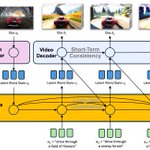
Pretrained on millions of hours of egocentric, robotic, and human-motion data, PAN 2 is a step toward foundation world models that can understand and predict the physical world.

Introducing PAN 2: an open foundation world model for physical intelligence.
A language model predicts the next word. PAN 2 predicts the next world: what happens after each action, grounded in time, physics and space.
Towards AI that simulates “what if?” before it acts.
More details: ifm.ai/pan/

Zhiting Hu retweeted
Introducing PAN 2: an open foundation world model for physical intelligence.
A language model predicts the next word. PAN 2 predicts the next world: what happens after each action, grounded in time, physics and space.
Towards AI that simulates “what if?” before it acts.
More details: ifm.ai/pan/
Zhiting Hu retweeted

Come join us for a fun chat about all things robotics! #CORL2026

We’re hosting a researchers’ lunch during #CoRL2026 in Austin with @Lianhuiq. Join us for Southern classics and conversation with researchers and builders pushing physical AI forward.
RSVP: luma.com/mvvlclte
Thanks @Orbifold_AI @OtiliaBarbuta for sponsoring!

Zhiting Hu retweeted

10 Spicy Takes After Talking to 50 Friends at the Frontier of Robotics 🤖🔥
1/ Astra IS robotics' GPT-3 moment. Ironically, now that it's finally here, some in robotics seem reluctant to acknowledge it. Perhaps because it (sadly) didn't come from a robotics company?
2/ Robotics is becoming just another vertical for frontier labs. Not so different from coding in some respects. Why reinvent general intelligence for every industry?
3/ Robotics was too hard to underwrite until now. No convincing pretraining scaling law, no convergence on models, data, or hardware. No wonder some critics dismissed it as a fragmented industry playing an expensive "demo game". Astra may finally offer a credible path to scale.
4/ Robotics foundation-model startups have a case. But how strong is it? The argument: Astra handles System 2 (reasoning), while specialized models retain System 1 (skills) and System 0 (motor control). Fair. But isn't that already a narrower value proposition? And who says the boundary stops there?
5/ Follow the talent. Word is OpenAI reorganized its 30–40-person robotics team around the core Astra model. Hearing similar moves toward general models at @Tesla_Optimus. Org charts may tell us more than any demo.
6/ The robotics data gold rush is real. Million-hour procurement programs, some potentially reaching tens of millions of hours. Talk of budgets approaching $1B per frontier lab.
7/ Bullish on robotics hardware volumes. As intelligence becomes more accessible, the barriers to building useful robots could fall dramatically. The moat shifts toward reliability, dexterity, integration, and deployment.
8/ Robotics could fuel the next semiconductor and memory supercycle. A 100B-parameter model running on the edge requires ~50GB just for 4-bit weights. Now multiply that by millions of robots. Why do you think @JensenHuang is so obsessed with robotics? @elonmusk saw it coming: teapaw.org/elonmusk/status/211477…
9/ Is self-driving immune to the general-model threat? After coding and robotics, why assume self-driving remains the exclusive domain of proprietary, vertical models? Robotaxi increasingly feels like a solved problem to me. But if and when frontier labs move into self-driving, we could see an Apple vs. Android dynamic. Think about the implications for $TSLA, Waymo, and other OEMs.
10/ The next bottleneck may not be intelligence. It's deployment. Models are improving faster than our ability to deploy robots in the messy real world. Integration, hardware variance, failure recovery, and economics remain brutally hard. The real moat may be turning intelligence into reliable, profitable physical work.
--
I realize some of these takes may rub people the wrong way, especially those who have spent years doing the hard work of advancing robotics. That's not my intention.
I'm sharing them to spark debate, not to declare winners and losers. Astra has only been out for a month or so, and it's far too early to draw definitive conclusions. More importantly, when the TAM is this enormous - potentially the largest in tech - there should be plenty of room for different approaches and many winners.
++
Full diligence report: robonomics.substack.com/p/ro…

Zhiting Hu retweeted
🔥Synthetic 3D worlds can beat real-world scans!
Introducing SceneBloom: diffusion-powered, agentic 3D indoor generation for training embodied AI.
Realistic. Diverse. Physically valid. Executable. →
Better 3D worlds → Better embodied agents.
1.7× navigation gain vs. equal real scans
Zero detected mesh collisions
37.45% → 4.25% contract violations
Zhiting Hu retweeted

My daily bot routine: summarizing what happened yesterday. Now with Director bot from @yanxi0830, I can enjoy a video version 🎥

A new bot called "Director," by Xi Yan, showed up in the Grok Bot Marketplace. It's a video director that takes a brief and plans, shoots, cuts and delivers short films, ads, explainers or music videos. Import it, it comes with a pack of video skills.
x.ai/bot/marketplace/bots/vi…

Zhiting Hu retweeted

Watch Episode 1 of our Odyssey series made with Grok Imagine.
Let us know in the comments if you'd like a full breakdown of how it was done!
Creative collaboration with @WonderStudiosX and director Dev Walker @glumlot_
Zhiting Hu retweeted
MiniMax M3.1 Flash reshapes BuildingBench’s cost–quality frontier! Another open model making moves in 3D 🏗️🔥
🎈 73.3 overall, ranking #12.
🎈 Above SWE-2’s 67.3, taking its place on the Pareto frontier.
🎈 Close to the previous DeepSeek V4.1 Flash’s 72.9—and currently free through OpenRouter!
Its best reconstruction hits 88.8 on Melbourne’s Australian Centre for Contemporary Art.
How does it look alongside DeepSeek V4.1 Flash 1017 and #1 Opus 5.5? Comparison video below 👇
Zhiting Hu retweeted
See DeepSeek’s 3D leap with your own eyes 👀🏗️
DeepSeek V4.1 Flash 1017 🆚 DS V4.1 Flash 🆚 GPT-6 Astra: three buildings, side by side.
The new open model improves on 11 of 12 buildings in BuildingBench, jumping from 72.9 → 81.9—closing in on Astra’s 84.3 at less than half the median cost ($3.01 vs $7.05/task).
Open models are getting seriously good at building worlds 🔥
Wow🙀🙀 DeepSeek V4.1 Flash 1017 joins BuildingBench’s top five—an exciting leap for open models!! 🔥
We tested its 3D building reconstruction from real photos. An open model delivering this level of spatial reasoning at this cost is exciting to see! 👀
🎈 81.9 overall, up from 72.9 for the previous version. A 9-point jump!
🎈 Slightly higher than Fable 5.1’s 81.4, and essentially level with Sonnet 5.5’s 82.1.
🎈 Estimated median cost: $3.01/task. About 1/11 of Fable 5.1’s cost and 1/15 of Sonnet 5.5’s.
Zhiting Hu retweeted
Wow🙀🙀 DeepSeek V4.1 Flash 1017 joins BuildingBench’s top five—an exciting leap for open models!! 🔥
We tested its 3D building reconstruction from real photos. An open model delivering this level of spatial reasoning at this cost is exciting to see! 👀
🎈 81.9 overall, up from 72.9 for the previous version. A 9-point jump!
🎈 Slightly higher than Fable 5.1’s 81.4, and essentially level with Sonnet 5.5’s 82.1.
🎈 Estimated median cost: $3.01/task. About 1/11 of Fable 5.1’s cost and 1/15 of Sonnet 5.5’s.
Zhiting Hu retweeted
🎉Excited to see two new US open models from this week:
📘Meta’s Muse Spark Open
📗NVIDIA’s Nemotron 3.5 Super VL
How well can they build in 3D? 🏗️👀
We tested both on BuildingBench: reconstructing real buildings from photographs.
📘Muse Spark Open (max): 56.9 at an estimated $8.59/task—comparable to Kimi K3’s 54.0.
📗 Nemotron 3.5 Super VL (max): 37.8 at an estimated $0.76/task—among the cheapest tested, with performance near GLM-5.3 Flash’s 33.0.
DeepSeek V4.1 Flash remains well ahead of both: 72.9 at an estimated $2.33/task. GLM-5.3 FlashX also scores higher, at 68.0.
Neither newcomer reaches the cost–quality frontier. More open models to choose from, and plenty of room to improve spatial reasoning!
Both ran in Claude Code at max effort. Costs are estimated median per task.
Zhiting Hu retweeted
Long-horizon spatial reasoning remains a major challenge, even for the strongest frontier AI models.
Impressive results from @EnactraAI! 🚀 WorldBox boosts GPT-6 Astra from 23 to 61 gems on MazeBench, a 2.7× improvement!
Exciting to see how memory, world modeling, and simulation can help AI agents tackle much harder problems.
🚨New level unlocked! 🚨 We doubled GPT‑6 Astra’s score on MazeBench with WorldBox, our agentic sandbox for spatial reasoning.
Astra: 23 gems 💎💎
Astra+WorldBox: 61 gems 💎💎💎💎💎
MazeBench, by @patience_cave, is a tough test of long-horizon spatial reasoning: 256 interconnected rooms where even Opus 5.5 used 2.2B tokens and collected just 13 of 100 gems.
WorldBox provides agents with an agentic sandbox, for managing long-term memory, inferring complex mechanics, and simulating reasoning.
Watch the sandbox take shape and the agent tackle increasingly tricky puzzles. 🧵
Zhiting Hu retweeted
Watch how GPT‑6 Astra + WorldBox tackle MazeBench, from its first action to gem💎 #61—32,980 live actions and around 1B tokens.
Building bridges with boxes, launching across gaps, solving puzzles that span multiple rooms… all while the map fills in.
Remember, test, revise, repeat, and grab that gem. WorldBox offers the supporting layer for Astra.
🚨New level unlocked! 🚨 We doubled GPT‑6 Astra’s score on MazeBench with WorldBox, our agentic sandbox for spatial reasoning.
Astra: 23 gems 💎💎
Astra+WorldBox: 61 gems 💎💎💎💎💎
MazeBench, by @patience_cave, is a tough test of long-horizon spatial reasoning: 256 interconnected rooms where even Opus 5.5 used 2.2B tokens and collected just 13 of 100 gems.
WorldBox provides agents with an agentic sandbox, for managing long-term memory, inferring complex mechanics, and simulating reasoning.
Watch the sandbox take shape and the agent tackle increasingly tricky puzzles. 🧵