Comms @a16zfrontier 🤠 // Prev @KrakenFX, @AVAX, @Blockchain // Tweets only reflect my views, NFA // I just want to win.
Joined April 2014
- Tweets479
- Following1.4K
- Followers6.5K
- Likes13.5K








Patrick Sutton retweeted

IF YOU’RE A FOUNDER BUILDING ON THE EAST COAST -- we’d love to meet you!!! 👀
The @speedrun team is in NYC this week, and we’re popping up in SoHo on Wednesday with coffee, pastries, coworking, stickers + limited edition apparel.
Bring your laptop and come hang. We’ll be around 11am-2pm ET to talk through what you’re building and answer any questions about your SR008 app before the deadline on Nov 1.
Spots are limited, so request one here: speedrun.a16z.com/xp


Patrick Sutton retweeted

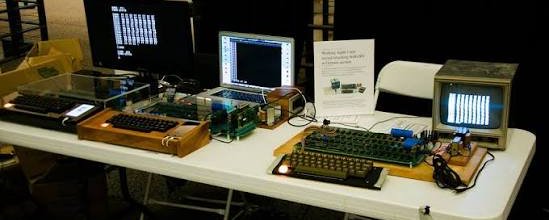
What the smartest people do on the weekend is what everyone else will do during the week in.... how many years now? what things?
Patrick Sutton retweeted

Wow @OrnnExchange data

Patrick Sutton retweeted
There are lots of very powerful forces -- including smart people working on things, semiconductors getting faster, networks getting better, software and hardware improving -- things that drive technologies upwards
And so it's always a good idea when you hear people dismiss things as toys to think very carefully about what trajectory that technology is following: You have to look at those forces and map the trajectory...
Patrick Sutton retweeted

Patch or Die!
Today we sent the following out to the CEOs in our portfolio regarding the widespread vulnerabilities that have been detected by AI agents:
The previous week should make it obvious that things have changed. Vulnerabilities are being discovered and exploited at a rate that has never been seen before. While there has been a flood of new vulnerabilities AI agents are being adopted at scale multiplying the potential risk. Agents not only help automate the attacker lifecycle, every ai agent is an insider threat. Your environments are designed to withstand attacks from the outside, not from within. As such, we are suggesting company leaders consider the following changes:
1 - Ensure you're sufficiently staffed for security. The average enterprise allocates roughly 10% of its tech spend to security. Consider doubling that. There are likely thousands of vulnerabilities that need fixing in your environments. Security through obscurity no longer works, all that can be exploited will be exploited.
2 - Establish a zero tolerance policy for secuirty bugs in new features and product releases. Re-examine launch and release schedules and consider delays to ensure all vulnerabilities are patched before deploying new features or products.
3 - Double tap the zombies. Find all old legacy environments that have been neglected and turn them off. Labs, test environments, zombie CI/CD projects etc. Turn it off for now. If it isn’t tied to revenue, kill it.
4 - End the risk acceptance process. Over the last 10 years the risk acceptance process has morphed from a way to accept risks to enable the business, to a way to justify never fixing security issues. Adopt a zero tolerance policy for security issues and risks.
Patrick Sutton retweeted

this is a great opportunity to help shape and market a newly-branded fund within @a16z 🫶

I am hiring a social media lead for a16z Frontier!! “We’re lucky enough to be living through one of the most consequential curves in human history today” — THIS is the time, come work with us now! ⚡️🔑🔭💥🗺️
a16z.com/about/jobs/?gh_jid=…

Patrick Sutton retweeted
AI broke the "covenant" between the internet's distribution side and its content side.
@cdixon on what this means: painful in the near term for businesses that depend on clicks, but an opportunity for entrepreneurs to rethink how the web works from first principles.

Today, a16z Crypto is becoming a16z Frontier.
Since joining a16z in 2013, @cdixon has focused on technologies that look futuristic well before they reach the mainstream. Those themes led to investments in Oculus, Skydio, Zipline, Coinbase, Solana, and Uniswap.
Frontier expands that mandate beyond crypto to back "outer planet" founders who are building new technologies and creating markets that may take years to develop.
Chris joins @pmarca, @bhorowitz, and @eriktorenberg to discuss why crypto has become part of the broader tech landscape, why Frontier fills a hole in the firm's architecture, and why they'd rather be too early than too late.
They also get into why the gap between AI-native startups and incumbents is the widest Marc has ever seen, how AI could pull forward 20 years of frontier technology, why stablecoins may become the way AI agents pay each other, how AI is breaking the internet's business model, and why today's 18-year-olds are about to become superhumans.
0:50 Introducing a16z Frontier
2:49 Smartphone parts to drones and VR
4:47 Backing the "outer planets"
7:11 Good ideas that look like bad ideas
10:43 The JP Morgan photo in Marc's office
15:13 Good tech ideas eventually work
16:53 AI may pull tech 20 years forward
18:18 The widest AI gap Marc's ever seen
22:06 Workers adopt AI before companies do
26:32 Old use cases vs. AI-native ones
30:08 Beyond "product manager brain"
34:45 AI can reverse engineer any hardware
38:23 The case for open source AI
46:36 How AI breaks the internet's model
49:11 VR, homebrew hacking, multiplayer AI
54:00 If you're 18, study "modern alchemy"
YouTube: youtu.be/-9XQMHhpypc
Not an offer or solicitation. None of the information herein should be taken as investment advice; Some of the companies mentioned are portfolio companies of a16z. Please see a16z.com/disclosures for more information. A list of investments made by a16z is available at a16z.com/portfolio.
Patrick Sutton retweeted

18 years ago, the Bitcoin whitepaper was published. Crypto has entered adulthood.
With that maturity comes a shift: from an industry to a technology - what it was always meant to be.
A technology pushing the frontier of AI, finance, payments, gaming, collectibles, and more. Enabling entirely new kinds of networks.
I'm excited to be on the frontier.


Patrick Sutton retweeted

I am hiring a social media lead for a16z Frontier!! “We’re lucky enough to be living through one of the most consequential curves in human history today” — THIS is the time, come work with us now! ⚡️🔑🔭💥🗺️
a16z.com/about/jobs/?gh_jid=…
Patrick Sutton retweeted

Apropos of nothing, Frederick Jackson Turner argued that the frontier made America: its institutions, its individualism, and its restless inventiveness.
Patrick Sutton retweeted
Stripe uses stablecoins. Wall Street is tokenizing assets.
@cdixon says crypto used to be its own world. The lines got blurrier when more companies — and not just "crypto companies" — started building on it.
Today, a16z Crypto is becoming a16z Frontier.
Since joining a16z in 2013, @cdixon has focused on technologies that look futuristic well before they reach the mainstream. Those themes led to investments in Oculus, Skydio, Zipline, Coinbase, Solana, and Uniswap.
Frontier expands that mandate beyond crypto to back "outer planet" founders who are building new technologies and creating markets that may take years to develop.
Chris joins @pmarca, @bhorowitz, and @eriktorenberg to discuss why crypto has become part of the broader tech landscape, why Frontier fills a hole in the firm's architecture, and why they'd rather be too early than too late.
They also get into why the gap between AI-native startups and incumbents is the widest Marc has ever seen, how AI could pull forward 20 years of frontier technology, why stablecoins may become the way AI agents pay each other, how AI is breaking the internet's business model, and why today's 18-year-olds are about to become superhumans.
0:50 Introducing a16z Frontier
2:49 Smartphone parts to drones and VR
4:47 Backing the "outer planets"
7:11 Good ideas that look like bad ideas
10:43 The JP Morgan photo in Marc's office
15:13 Good tech ideas eventually work
16:53 AI may pull tech 20 years forward
18:18 The widest AI gap Marc's ever seen
22:06 Workers adopt AI before companies do
26:32 Old use cases vs. AI-native ones
30:08 Beyond "product manager brain"
34:45 AI can reverse engineer any hardware
38:23 The case for open source AI
46:36 How AI breaks the internet's model
49:11 VR, homebrew hacking, multiplayer AI
54:00 If you're 18, study "modern alchemy"
YouTube: youtu.be/-9XQMHhpypc
Not an offer or solicitation. None of the information herein should be taken as investment advice; Some of the companies mentioned are portfolio companies of a16z. Please see a16z.com/disclosures for more information. A list of investments made by a16z is available at a16z.com/portfolio.
Patrick Sutton retweeted

Being at the frontier is why I love being in VC, but in particular working with @cdixon. He always invests in the craziest stuff - the stuff people maybe struggle to understand at first or don’t take seriously. This makes marketing at the frontier challenging but a hell of a lot of fun - it's all new! Crypto was the frontier and is now a proven category of financial technology. Excited to chart the next frontier!
Patrick Sutton retweeted

The biggest risk is not being ambitious enough.
Beyond excited to expand our scope to founders building new technologies and creating new markets with @a16zfrontier.

Patrick Sutton retweeted
"We want to err on the side of being too early."
Today, a16z Crypto is becoming a16z Frontier.
Since joining a16z in 2013, @cdixon has focused on technologies that look futuristic well before they reach the mainstream. Those themes led to investments in Oculus, Skydio, Zipline, Coinbase, Solana, and Uniswap.
Frontier expands that mandate beyond crypto to back "outer planet" founders who are building new technologies and creating markets that may take years to develop.
Chris joins @pmarca, @bhorowitz, and @eriktorenberg to discuss why crypto has become part of the broader tech landscape, why Frontier fills a hole in the firm's architecture, and why they'd rather be too early than too late.
They also get into why the gap between AI-native startups and incumbents is the widest Marc has ever seen, how AI could pull forward 20 years of frontier technology, why stablecoins may become the way AI agents pay each other, how AI is breaking the internet's business model, and why today's 18-year-olds are about to become superhumans.
0:50 Introducing a16z Frontier
2:49 Smartphone parts to drones and VR
4:47 Backing the "outer planets"
7:11 Good ideas that look like bad ideas
10:43 The JP Morgan photo in Marc's office
15:13 Good tech ideas eventually work
16:53 AI may pull tech 20 years forward
18:18 The widest AI gap Marc's ever seen
22:06 Workers adopt AI before companies do
26:32 Old use cases vs. AI-native ones
30:08 Beyond "product manager brain"
34:45 AI can reverse engineer any hardware
38:23 The case for open source AI
46:36 How AI breaks the internet's model
49:11 VR, homebrew hacking, multiplayer AI
54:00 If you're 18, study "modern alchemy"
YouTube: youtu.be/-9XQMHhpypc
Not an offer or solicitation. None of the information herein should be taken as investment advice; Some of the companies mentioned are portfolio companies of a16z. Please see a16z.com/disclosures for more information. A list of investments made by a16z is available at a16z.com/portfolio.
Patrick Sutton retweeted

Chris Dixon on the "second-order effects" behind a16z's early bets on Oculus, drones, and crypto:
"I joined the firm in 2013. I talked to Marc and Ben, and I said, 'Hey, I wanna do this crazy stuff,' and they were like, 'Great.'"
"That led to a couple of themes at the time, and they're all kind of what I would call kinda second-order effects. You had smartphones obviously start in 2007, and by 2013 had gotten mainstream, and there were all these kind of first-order effects like building apps on top."
"But a second-order effect was that you had the components of smartphones. You had sensors and chips getting better and better, and maybe people could repurpose those in different ways."
"We invested in Oculus as an example, and that was really kind of a reconfigured smartphone. Skydio, that was one of our investments from back then that was, at the beginning, kind of a reconfigured smartphone."
"Crypto, I think at the time was kind of a downstream effect to me of sort of the open-source software movement morphing into services and also kind of a result of social media where you could have these communities form without mainstream acceptance and coalesce around these blockchains."
@cdixon
Today, a16z Crypto is becoming a16z Frontier.
Since joining a16z in 2013, @cdixon has focused on technologies that look futuristic well before they reach the mainstream. Those themes led to investments in Oculus, Skydio, Zipline, Coinbase, Solana, and Uniswap.
Frontier expands that mandate beyond crypto to back "outer planet" founders who are building new technologies and creating markets that may take years to develop.
Chris joins @pmarca, @bhorowitz, and @eriktorenberg to discuss why crypto has become part of the broader tech landscape, why Frontier fills a hole in the firm's architecture, and why they'd rather be too early than too late.
They also get into why the gap between AI-native startups and incumbents is the widest Marc has ever seen, how AI could pull forward 20 years of frontier technology, why stablecoins may become the way AI agents pay each other, how AI is breaking the internet's business model, and why today's 18-year-olds are about to become superhumans.
0:50 Introducing a16z Frontier
2:49 Smartphone parts to drones and VR
4:47 Backing the "outer planets"
7:11 Good ideas that look like bad ideas
10:43 The JP Morgan photo in Marc's office
15:13 Good tech ideas eventually work
16:53 AI may pull tech 20 years forward
18:18 The widest AI gap Marc's ever seen
22:06 Workers adopt AI before companies do
26:32 Old use cases vs. AI-native ones
30:08 Beyond "product manager brain"
34:45 AI can reverse engineer any hardware
38:23 The case for open source AI
46:36 How AI breaks the internet's model
49:11 VR, homebrew hacking, multiplayer AI
54:00 If you're 18, study "modern alchemy"
YouTube: youtu.be/-9XQMHhpypc
Not an offer or solicitation. None of the information herein should be taken as investment advice; Some of the companies mentioned are portfolio companies of a16z. Please see a16z.com/disclosures for more information. A list of investments made by a16z is available at a16z.com/portfolio.
Patrick Sutton retweeted
Chris Dixon and Ben Horowitz on why a16z Crypto is now a16z Frontier, a fund for the "outer planet" founders building things that don't fit into any existing category:
"Years ago, [crypto] was sort of its own world with its own companies and its own investors. The lines have blurred, and it's become kind of more part of the tech landscape."
"What we found with our vertical strategy is that there's still new things that fall outside of the verticals... And so by doing this, we will have the motion to invest in the very most interesting founders who are outer planets... It kind of fills a hole in the architecture."
"At the end of the day, more than categories, more than products, we invest in entrepreneurs, and so many of the most interesting entrepreneurs are outer planets, so this gives us a real way to get to them."
"Plenty of ideas that were not discussed today are probably more interesting and more creative. If for whatever reason they don't fit in the other kind of core areas at our firm, we're open-minded and willing to engage with those kinds of creative ideas."
@cdixon @bhorowitz
Full conversation: youtu.be/-9XQMHhpypc
Patrick Sutton retweeted

“The next big thing will start out looking like a toy.” -Chris Dixon, 2010
Chris is an OG American Dynamism investor. An OG VR investor. An OG robotics investor. The OG crypto investor.
Finally, an OG Fund, only for originals.
Patrick Sutton retweeted
Today, a16z Crypto is becoming a16z Frontier.
Since joining a16z in 2013, @cdixon has focused on technologies that look futuristic well before they reach the mainstream. Those themes led to investments in Oculus, Skydio, Zipline, Coinbase, Solana, and Uniswap.
Frontier expands that mandate beyond crypto to back "outer planet" founders who are building new technologies and creating markets that may take years to develop.
Chris joins @pmarca, @bhorowitz, and @eriktorenberg to discuss why crypto has become part of the broader tech landscape, why Frontier fills a hole in the firm's architecture, and why they'd rather be too early than too late.
They also get into why the gap between AI-native startups and incumbents is the widest Marc has ever seen, how AI could pull forward 20 years of frontier technology, why stablecoins may become the way AI agents pay each other, how AI is breaking the internet's business model, and why today's 18-year-olds are about to become superhumans.
0:50 Introducing a16z Frontier
2:49 Smartphone parts to drones and VR
4:47 Backing the "outer planets"
7:11 Good ideas that look like bad ideas
10:43 The JP Morgan photo in Marc's office
15:13 Good tech ideas eventually work
16:53 AI may pull tech 20 years forward
18:18 The widest AI gap Marc's ever seen
22:06 Workers adopt AI before companies do
26:32 Old use cases vs. AI-native ones
30:08 Beyond "product manager brain"
34:45 AI can reverse engineer any hardware
38:23 The case for open source AI
46:36 How AI breaks the internet's model
49:11 VR, homebrew hacking, multiplayer AI
54:00 If you're 18, study "modern alchemy"
YouTube: youtu.be/-9XQMHhpypc
Not an offer or solicitation. None of the information herein should be taken as investment advice; Some of the companies mentioned are portfolio companies of a16z. Please see a16z.com/disclosures for more information. A list of investments made by a16z is available at a16z.com/portfolio.