


Pinned Tweet
it turns out the hardest part of generative UI isn't generating the UI.
models have been able to generate good-looking HTML for a while. the more interesting challenge is getting it to feel like it actually belongs in chatgpt. one of our big bets with Intelligent UI was that you didn't have to choose -- that you could keep ~all of the power of HTML and still have it feel fast and native, like it was always part of chat
the other half of the problem is model judgement. how do we post-train gpt-6 to know when an interface would actually help? what should it show or let you do? how do we make it useful and beautiful without taking over the conversation?
none of this was obvious when we started, and there's plenty we're still figuring out. luckily, one of my favorite things about openai is that if you believe in an idea, you can just go build it, even if it takes a lot of prototypes to get there
really excited this is finally out, and incredibly proud of the team. onwards!


Andrew Chen retweeted

I’m incredibly excited to share this video, in which I had the extraordinary privilege of mentioning the transformative impact of @OpenAI Codex and AI models on biomedicine, as well as what I’m working to develop using these technologies. I believe the video is beginning to air across various media outlets.
I hope it inspires others to explore the incredible possibilities AI is opening up for biomedical science and humanity! 🖖
I am truly grateful and thankful to OpenAI team for the opportunity and a tiny drop of contribution in this most important era of human existence.🙏
Andrew Chen retweeted

Becoming a bigger and bigger fan of the new ChatGPT chat model. Just great for explaining complex topics.

Andrew Chen retweeted

I just fixed my dishwasher with the help of ChatGPT. A trivial task. I had been about to order a new one. So this software has increased the country's real wealth yet decreased the measured GDP. The main economic indicator is structurally incapable of registering the thing that actually makes people better off, namely the growth of knowledge
Andrew Chen retweeted

Extension kits for the microduck might be popular. Here is one to voltron five ducks into a macroduck.

Andrew Chen retweeted

BREAKING: A non-mathematician lab employee used an UNRELEASED model to narrow the P vs. NP problem down to just TWO possible answers
Andrew Chen retweeted

Misaligned model tries to EXFILTRATE ITS WEIGHTS but is STOPPED by heroic AWS EGRESS FEE SPEND LIMIT



Andrew Chen retweeted

We’re giving scientists, mathematicians, and engineers free access to our frontier models—starting with 10,000 researchers and expanding to 100,000 through 2027.
ChatGPT for Academic Researchers is built to accelerate discovery across disciplines.
Andrew Chen retweeted

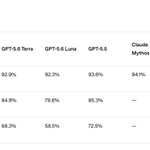
Turns out GPT-5.6 Sol is actually SoTA on ARC-AGI-3.
Just took two setting changes. You just have to allow it to reason and work over multiple context windows with the help of our canonical compaction implementation.
openai.com/index/how-two-set…

Andrew Chen retweeted

we listen, we hustle, we iterate, we care
it’s who we are and will continue to be


Andrew Chen retweeted

A ChatGPT automation just found ~$45K in erroneous invoices across 3 years of billing history that I've confirmed and already had resolved. My lifetime history for ChatGPT is ~$1,800, so it just paid for itself 25x over.
I setup an automation with read-only access to my email, and tasked this one specifically with analyzing construction invoices. It has access to prior construction invoices, emails, meeting notes, etc. It produces a report and emails it to me (the only email its allowed to send, enforced by API token) whenever I receive a construction invoice.
Across 3 years of construction projects, it found about $45K in issues. Some were wrong amounts, some were duplicate invoices, some were invoices addressed to the wrong person. I manually verified, emailed my GCs, and got refunded/credited.
I get multiple construction bills each month and each bill is ~50 pages in a PDF of low-quality scanned paper. I do manually review each bill but its pretty hard to be right all the time.
I do believe these were genuine mistakes and not done out of ill will just based on what the mistakes were. I don't want to share my full construction costs across the past few years, but $45K is a very small percentage of overall billed amounts.
Pretty sweet.
Andrew Chen retweeted
If you were using Codex before, two things to do
1. Keep using Codex. It is for you
2. Tell your friends and family about ChatGPT Work who you always wanted to show Codex but they’re not as technical and don’t work with code every day
and tell me how it goes
Andrew Chen retweeted
Hello beautiful people! We have reset usage limits across Codex and ChatGPT Work. And another one will come later in the day. Rejoice.
Now that I have your attention, a quick update on ChatGPT Work, Codex and all the updates we shared yesterday.
We’ve spent the last 24 hours reading feedback, looking at usage patterns, and talking with many of you. The short version is that there is a *lot* of excitement for GPT 5.6 Sol, ChatGPT Work on mobile & web, but also that we didn't get everything quite right.
- We made it too easy to use the highest-compute settings without making the impact on usage limits sufficiently clear.
- We reorganized the desktop app in one bold move, making familiar things like chats and projects harder to find.
- Our launch framing was focused on ChatGPT Work and to some of our Codex fans it made it feel like Codex was going away over time. Absolutely not our intention, we love Codex and it is here to stay.
- And we introduced regressions for some existing multi-agent workflows, alongside a collection of rough edges in plugins and other parts of the experience.
We’re landing a first set of improvements today. We’re resetting usage twice so people can keep experimenting, changing defaults and the model picker so they don’t push people toward unnecessarily expensive settings, fixing several plugin submission issues, improving how we represent Codex in the product, and cleaning up some of the most immediate desktop problems.
A larger set of improvements will land next week. We’re bringing chats and projects back into the sidebar in a more familiar and customizable way, making usage and reset timing much more visible, clarifying when to use ChatGPT Work and when to use Codex, and addressing the many other smaller pieces of great feedback we've had.
The ambition behind this launch hasn’t changed. We think bringing ChatGPT and Codex together into a workspace where people and agents can collaborate is a very important step forward. But an ambitious direction doesn’t excuse avoidable confusion or regressions in the first version.
Please keep the feedback coming. We’re moving quickly, and you should see the experience already get better with a few updates today; and substantially better again next week.

Andrew Chen retweeted

GPT-5.6 is a much better writer than Fable.
It consistently one-shots marketing emails for @tedescau that every previous model would fail at. Fable is too verbose and liable to fall into using sentences in its own private language.
If you use AI for writing, 5.6 is a fantastic model for you.