
Research Scientist @ Google DeepMind | Formerly: PhD @ MIT EECS.
Joined August 2017
- Tweets333
- Following252
- Followers1.4K
- Likes535





Pinned Tweet
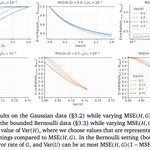
You need to evaluate an AI system and you have three things:
1. A cheap judge, which is noisy. 🙈
2. An expensive judge, which is accurate. 🧑⚖️
3. A budget 💸
How should you spend the budget to get the best possible estimate of model quality?
arxiv.org/abs/2506.07949
And another related paper in this direction that we just put out. In this one we empirically explore how sequential auctions can be used to allocate multi-step work in a decentralized marketplace of self-interested AI agents.
arxiv.org/abs/2610.22201


Adam Fisch retweeted

First-price auctions are simple and (provably) good, and this is good news. Impressively thorough results from @_onionesque @jacobeisenstein and friends

Check out our paper on whether first-price auctions can efficiently allocate queries among strategic AI agents (in a decentralized serving-time market):
arxiv.org/abs/2610.20587

Had fun thinking about this problem — and decentralized AI agent marketplaces more broadly! Check it out.
Check out our paper on whether first-price auctions can efficiently allocate queries among strategic AI agents (in a decentralized serving-time market):
arxiv.org/abs/2610.20587
Adam Fisch retweeted

Check out our paper on whether first-price auctions can efficiently allocate queries among strategic AI agents (in a decentralized serving-time market):
arxiv.org/abs/2610.20587
Adam Fisch retweeted

Presenting this tomorrow at the 11am poster session at COLM, come say hi!


Adam Fisch retweeted

Nice summary by @rasbt!
In Mixture of Recursions the model can decide how many loops to apply per token.
And was really nice working with @raymin0223 @yujin301300 @reza_byt @kim_sungnyun @jenhriver @TalSchuster @adamjfisch @harhrayr Ziwei Ji @AaronCourville Se-Young Yun

A lot of hype around OpenAI's Astra model here on my timeline today. Apparently, this goes back to a new article from The Information, which said Astra is a "recurrent depth or looped transformer".
It's always interesting to read about new or different approaches (including rumors about what the closed labs may be up to), but let's debunk this a bit.
About 2 months ago, I shared the architecture details of Nanbeige, for example, where "Nanbeige4.2-3B is pretrained from scratch on 28T tokens with a Looped Transformer that reuses the layer stack to increase capacity without adding parameters."
Yes, that's it. The looped transformer idea is just reusing layers in the transformer block.
In the case of Nanbeige, the main idea is to reuse the same 22-layer stack (=transformer block) twice instead of once. So, effectively it extends the 22-layer architecture to 44 layers, but without duplicating the weights.
In simple terms, this roughly doubles the size of the model (if we ignore the embedding and output layers for a second). But instead of requiring 2x the storage and RAM to host this model, it stays at the same size since we reuse the components. However, it's almost 2x as expensive in terms of compute, because we run the embedded text through almost 2x as many layers.
Why? In the Nanbeige 4.2 technical report, the researchers found that two passes gave the best trade-off and retained about 75% of the token efficiency of a standard architecture. (More passes gave barely any gains but made the training much slower and much more expensive.)
While, as far as I know, Nanbeige 4.2 is the first notable open-weight model that adopted this approach, the idea goes back to the NeurIPS paper "Mixture-of-recursions: Learning dynamic recursive depths for adaptive token-level computation". Actually, this paper proposes a mechanism that is a bit more sophisticated by adding a learned router that determines whether each token receives one, two, or more passes. So, easy tokens can exit early while harder tokens receive additional computation.
In sum, Astra may be a really good model, but this shouldn't be about this "looped transformer aspect," which is just a tiny architectural tweak.
Also, the statement "the new technique works in a way that obscures some or all of the AI's reasoning, otherwise known as 'chain-of-thought'" is not necessarily true with respect to the looped transformer method. It's possible that The Information journalist refers to some other technique or misunderstood the looped transformer method.
Reusing layers does not by itself suppress visible chain of thought. It adds computation in hidden states before the next token is emitted, just as ordinary transformer layers do.
But based on the information we have, the only plausible interpretation here is that if a model uses more of these recurrent passes, it may need to generate fewer intermediate reasoning tokens. So then more of its computation happens in latent activations that cannot be read as text. But we would get the same effect if we were scaling up the model size, like GPT 5.6 Luna -> GPT 5.6 Sol.

Adam Fisch retweeted
Recursive or Looped Transformers are powerful tools, especially when initializing and training them correctly, or when slightly relaxing the layer tying constraint with layer-wise LoRAs.
Check out @raymin0223 student research project @GoogleDeepMind which found the right recipe

🚀 Excited to share our latest research @GoogleDeepMind on ♻️Recursive Transformers!
We make smaller LMs by "sharing parameters" across layers. A novel serving paradigm, ✨Continuous Depth-wise Batching, with 🏃Early-Exiting could significantly boost their decoding speed!
🧵👇

Adam Fisch retweeted
I'm so happy to be able to announce the first general purpose sign-language-to-text translation (SL2T) model from my team that's out today and powering a new ASL input feature on @Android phones (and don't worry, we're not stopping at ASL).
Happy to share CollabEval, recent(-ish) work from @GoogleDeepMind and @GoogleResearch that can be used to improve the statistical efficiency of model evaluation by exploiting correlations between historical evals of different models on the same tasks.
arxiv.org/pdf/2607.05046
I'm particularly excited about CollabEval, because unlike some of our other work (+ related) which focuses on using cheap proxies to reduce the cost of labeling outputs, CollabEval allows you to skip generation altogether---which can be the bottleneck in long-horizon agent tasks.
If you're at ICML @icmlconf , I'll be talking about some of this work and more at the Statistical Frameworks for Uncertainty in Agentic Systems workshop (agentic-uncertainty-icml2026…) on July 11th. Come by and chat!
Had a really fun time working with Charlie during his time at @GoogleDeepMind on balancing many data sources for efficient AI evaluation. Checkout the paper, and his poster session tomorrow at @iclr_conf!

Looking forward to this workshop!

Very happy with our great speaker line up:
Speakers: Yaniv Romano @yaniv_romano, Ying Jin @YingJin531, Adam Fisch @adamjfisch, Yarin Gal @yaringal , Andreas Vlachos @vlachos_nlp , Seong Joon Oh @coallaoh
New work on learning when to ask clarifying questions—and when not to!
The right strategy is context / user dependent, and is important to be able to learn and adapt to so that you don’t end up with an AI model that is wrong… or annoying.
New work together with colleagues from @GoogleDeepMind / @Google on evaluating multi-turn, collaborative problem solving capabilities (or the lack thereof) in current AI models by having them play what we call "private information games." Checkout the paper!
Are AI models effective collaborators, or mere assistants awaiting your next command? (arxiv.org/abs/2602.24188)
To find out, we make AI collaborate with itself, in private information games: tasks that require sharing private information, like this chess board ordering task.

Adam Fisch retweeted

Outstanding paper 3🏆: Don't lie to your friends: Learning what you know from collaborative self-play
openreview.net/forum?id=2vDJ…

Adam Fisch retweeted
As we are spotlighting these last few days, let's also spotlight the spotlights. COLM 2025 has 24 spotlight papers that will be presented as plenary orals 👏


Adam Fisch retweeted

✨Huge thanks for interest in Mixture-of-Recursions! Codes are officially out!
It's been a long journey exploring Early-exiting with Recursive Architecture.
I'll soon post my 👨🎓PhD thesis on Adaptive Computation too!
Code: github.com/raymin0223/mixtur…
Paper: arxiv.org/abs/2507.10524
