




Pinned Tweet
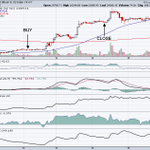
This chart shows how a particular trade was executed by AI model. What would be a TA interpretation? The reason for closing the trade is clear. Why did it open? #AI $BTC @willywoo @TechCharts @GertvanLagen

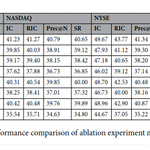
Random variation of existing results. The reviewers at @SciReports have failed. Interesting how the results for other architectures are so similar. @RealAAAI #AlgoTrading


Sharpe ratio = 40.79. Ha, ha... The paper is full of errors because @SciReports does not properly review papers. Retraction asap.

ALGOTRIX retweeted

Balaji just told you the charging problem is solved and nobody’s doing the infrastructure math.
BYD has 500 of these Megawatt chargers deployed in China. They’re targeting 4,000 by end of year.
Tesla has 75,000 Supercharger connectors. At 250-350kW each.
Here’s the constraint nobody’s pricing: each BYD Megawatt charger requires a direct connection to the medium-voltage grid. That’s the kind of power that runs small factories. You can’t just upgrade an existing site. You’re building new electrical infrastructure from scratch, often requiring grid connection timelines measured in years, not months.
Tesla spent 13 years building infrastructure that can serve 75,000 cars simultaneously at 250kW. BYD’s tech requires roughly 4x the grid capacity per charger. The bottleneck was never the battery chemistry. The bottleneck is getting 1MW to the parking lot.
And here’s what the demo doesn’t show: the InsideEVs test started at 13% and hit 60% in 5 minutes. That’s not a full tank. The Han L has 700km total range on China’s lenient test cycle. Real-world EPA equivalent is closer to 550km. Five minutes gets you about half a charge.
The tech is real. BYD’s battery holds 600kW at 90% state of charge, which is genuinely impressive. But the “EV flippening” requires BYD to build more grid infrastructure in 3 years than Tesla built in 13. And they have to do it in countries where grid connection timelines are measured in quarters, not weeks.
China can mandate the grid upgrades. The rest of the world has to negotiate with utilities.


What the @SciReports paper shows is that their "frequency-domain complex attention mechanism" did not improve anything.
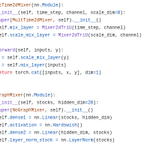
Can you imagine that you would copy a table from another paper, and failed to mention that in your paper? Conferences and journals should worry more about creative research results than about whether reviewer names got revealed. @iclr_conf
ALGOTRIX retweeted

It’s unfortunate that a bug in OpenReview allowed reviewer and AC identities to be extracted.
That said, this is a chance to reflect on our practices: We should write our reviews as if our names were attached to them and visible to authors and the broader community, even when the recommendation is a strong reject!
ALGOTRIX retweeted

We are aware of low-quality and LLM-generated reviews and are currently deliberating on appropriate courses of action. For now, authors who receive very poor quality or LLM-generated reviews should flag them to their ACs. We appreciate the community's efforts in reporting these!
ALGOTRIX retweeted

I am an AC for ICLR 2026. One of the papers in my batch was just withdrawn. The authors wrote a brief response, explaining why the reviewers failed at their job. I agree with most of their comments. The authors gave up. They are fed up. Just like many of us. I understand. We pretend the emperor has clothes, but he is naked.
Here is the final part of their withdrawal notice. I took the liberty to make it public, to highlight that what we are doing with AI conference reviews these last few years is, basically, madness.
---
Comment: We thank the reviewers for their time.
However, upon reading the reviews for our paper, it became immediately apparent that the four "reject" ratings are not based on good-faith academic disagreement, but on a critical failure to read the submitted paper.
The reviews are rife with demonstrably false claims that are directly contradicted by the text. The core justifications for rejection rely on asserting that key components are "missing" when they are explicitly detailed in the manuscript. Some specific examples are (and many are even fake claims).
Claim: Harder tasks like GSM8K are missing.
Fact: GSM8K results are in many tables, like Table 2 (Section 4.2) and Appendix G.
Claim: The method does not use per-layer ranks.
Fact: This is the entire point of our method. The reviewer clearly mistook our method for the baselines. (Section 2, Table 1).
Claim: The GP kernel is not specified.
Fact: It is specified in Appendix E (Table 6).
Claim: There is no ablation of the method's three stages.
Fact: Section 4.4 ("Ablation Study") and Appendix J are dedicated to this.
Reviewers have a fundamental responsibility to read and evaluate the work they are assigned. The nature of these errors is so fundamental, so systemic in overlooking explicit content, that it goes far beyond what "limited time" or "oversight" can explain. This work has gone through several rounds of revision over the last year. In earlier submissions, the paper usually received borderline or weak-accept scores.
Numerous signs strongly suggest that some reviewers are relying entirely on AI tools to automatically generate peer reviews, rather than fulfilling their fundamental responsibility of personally reading and evaluating manuscripts.
We strongly protest this.
This is a gross disrespect to the authors. It is a flagrant desecration of the reviewer's sacred duty. It fundamentally undermines the integrity of the entire peer-review process.
Given that the reviews are not based on the actual content of our paper, we have decided to withdraw the submission.
We leave this comment so that future readers of the OpenReview page are aware that the items described as "missing" are already present in the submitted manuscript. These negative reviews for this submission are factually unsound and do not reflect the content of the paper. We cannot and will not accept an assessment that is not based on the work we actually submitted.
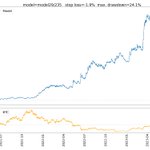
Can a trading model perform better than cumulative weekly true range? It seems to be an upper bound...true efficiency=real PnL, max efficiency=cumulative weekly TR. Is there a better way? You can add all zig-zags, but is it a better measure?


ALGOTRIX retweeted

1. Fear of Unwinding Yen Carry Trade - if the US rates goes down and the Japanese bond yield goes up further. There is no much profit in yen carry trade. As and when it starts to unwind, more treasuries will be flooded into markets and also pushing Yen higher against Dollar
2. The Maturity wall of 9000 Billion bonds getting renewed over a period of 1 year may push the yeilds higher due to lower demand.
3. ON RRP is at a low point coming down to 20 billion from a high of 2400 billion. Pushing short term rates and SOFR higher.
4. Derivatives Melt Down : the 465 trillion dollar Interest Rate Swaps , A 1% rate swing = massive impact (~$4.6T?). Similar to the 2022 UK gilt crisis , the big 5 banks like JPM, Goldman Sachs, Citi , BofA , Wells Fargo, exposed big time! Fed cuts could spark global sell-off
The same will happen to all custom indicators and systems for stock trading. #algotrading

