

Founder & CEO SeedLegals, the largest closer of funding rounds in the UK. Now in the US. The man behind the BBC iPlayer.
London
Joined August 2008
- Tweets7.5K
- Following2.1K
- Followers6K
- Likes2.3K




Fundraising is broken. Founders have an idea, tell investors they're raising $500K to fund the next 18 months. Investors wire their entire amount up front without any idea of whether it'll take off. But founders don't need $500k. If they had $50k a month, that would be awesome.
So founders struggle to raise because they're asking too much, and investors lose their investment by giving it all up front rather than based on validation and traction.
Welcome to Steadily, the milestone-based fundraising platform.
gosteadily.lovable.app
And introducing the Steadily SAFE, the world's first milestone-based SAFE investment instrument.
☝ Before you get too excited, everything above is a concept we put together at a hackathon in New York today. Thanks to vibe coding, in the space of 5 hours, we came up with a concept, made a Lovable web page, and built an actual working app. Well, mostly working.
If enough people like this, we'll go and build it!
Thanks to Hunter Peress, Paula Bejarano, Femi Palmer & Shubh Khandhadia who collectively brainstormed and built this together with me at Deal Flow: NYC's First VC Hackathon here in New York, arranged by the amazing Somya Gupta.

Anthony Rose retweeted

Every time age verification is asked for, a new VPN user is born💫

Anthony Rose retweeted

When the Online Safety Act was introduced to Parliament by the last Conservative government, it was presented as an important tool to protect children from online harms.
Since then, it has done anything but. Ofcom has even shown extraterritorial ambitions, infringing on the free speech rights of American citizens and unfairly targeting US businesses.
Ofcom’s own figures show that the Act has had no impact on the harmful content children can access online since the children’s safety duties came into force in July 2025.
Ofcom said: “We have not observed any significant changes in the incidence or severity of any kind of content over the first nine months after the children’s safety duties came into force.”
Now ministers want to ban under-16s from using social media.
These online censorship measures are clearly failing to achieve their stated aim. It raises the question: was this ever really about protecting children — or was there something more sinister at play?
Read more below from @GuidoFawkes 👇

Anthony Rose retweeted

⚠️The #OnlineSafetyAct is a total failure.
The UK’s online safety regulator found “no significant change in children seeing harmful content” since the Act came into force.
We warned the Act wasn’t fit for purpose. Brits now have more censorship & less freedom online.

Anthony Rose retweeted

Online Safety Act a failure.
Colour me unexpected.
Who could have predicted this?

Anthony Rose retweeted

Absolutely damning. The UK’s Online Safety Act is not only a censor’s charter, it’s a total failure - our YouGov poll showed even most MPs say it should be repealed or reformed.
Yet, here come more policies to ruin the internet. Next: passports to get online, spyware for phones.
Anthony Rose retweeted

One good comment to the UK Online Safety Act consultation: age verification mandates are exposing UK Internet users to unbelievable levels of opsec and identity theft risk, drive people to the dark web, and could be abused by future govts.
From: an actual software developer

Anthony Rose retweeted

🚨NEW: The Online Safety Act has been a failure, according to a new report from Ofcom.
Ofcom have found "no significant change" in children encountering harmful content since the law came into effect last July. This is despite the signifigant threats to free speech and privacy.
Anthony Rose retweeted
A schoolteacher responds to Parliament's Online Safety Act Inquiry. He writes that it has made "literally no difference" to safety, censored the Internet for adults, "terrible" for user privacy, and is easily circumvented - by children - with no effort.
committees.parliament.uk/wri…


Anthony Rose retweeted
The UK Online Safety Act is not going to work. It is pushing the UK in the direction of a Digital ID and Chinese style internet censorship.
@anthonyrose interviewed NYM CEO @harryhalpin
They talked about why people need VPNs, how NymVPN works and the current landscape of UK internet censorship. ⤵️

The UK government's Online Safety Act is a national embarrassment. If you've been following the news, the UK government, under the guise of protecting children, is trying to force websites to require all UK users to provide passport or other ID in order to access content on those sites.
The way this plays out is websites and platforms will pull out of the UK, and then everyone will use a VPN to continue to access them as if they are in a different country. It take seconds to install a VPN, bypasses the government's efforts to control your access to the internet.
There's been talk of VPNs being banned, but that can't happen because banks and any number of companies rely on VPNs. More importantly, welcome to the next generation of distributed VPNs. Distributed VPN networks have no central control. And thanks to the code being open-sourced, anybody can create their own VPN network, there'll be thousands of websites you can download a VPN installer from.
Next-generation distributed VPNs just killed the Online Safety Act.
To explain how current and next-gen distributed VPNs work, I spoke to @harryhalpin, CEO at Switzerland-based @nym , a privacy-first VPN. I admire Harry's passion for protecting the core values of the internet against state control.
@prestonjbyrne you can add distributed VPNs to your list of reasons it won't work.
Anthony Rose retweeted

Congratulations! 🙌🏻

Ofcom Concedes Defeat in the 4chan Case
prestonbyrne.com/2026/10/20/…

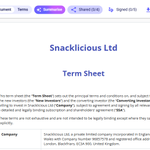
You can now get an AI summary of your fundraising and legal documents on @SeedLegals.
As part of the rapidly growing set of AI features on SeedLegals, it's now super easy to get a summary of the terms in your documents. You can even ask questions about the document and the deal terms.
And if you're an admin on the company, if you want to change anything, just click on the Terms tab to set your preferred terms, and everything will update instantly.

Do you buy or rent computers for your team? And do you get Macs or PCs? It's a question that gets asked a lot in founder WhatsApp groups.
If you have a team of 10 or more you’ll know that every few months someone's computer is going to get stolen at the pub, or someone's going to stand on it (my favourite was a stiletto heel through the screen of one of my team's computers).
If you rent then it's not your problem. Regardless, you want everyone's hard drive to be encrypted with remote wipe capability enabled so your customer data isn’t exposed.
When you start your company you're not going to be thinking of any of this, which makes complete sense. But at some point, you're going to get tired of doing the computer management yourself, and you'll want to bring in someone to manage that for you and install device management software (“MDM”) on everyone's computers.
Meet Rob from STODL. We use STODL to manage our team’s computers at @seedlegals. After buying hundreds of computers over the years we're about to switch to renting instead of buying, as everyone's using AI these days and renting lets us swap them out faster as needs change.
In addition to managing your team’s computers, STODL also automate common tasks in your company with AI, which is brilliant for anyone who's not an AI guru themselves and wants the benefits of AI automation in their company. Head over to stodl.ai for more.
STODL is SeedLegals perks partner - mention you're a SeedLegals customer when you talk to them.
Anthony Rose retweeted

Everybody knows pro rata rights are valuable, but it's equally well known that they're basically unenforcable because no VC firm wants to sue a founder.
So, this supposedly professional industry has operated on an opaque "honour system" where pro rata rights are generally respected.
Certainly, there's no question of pro rata allocation if a company is struggling. Founders will take all the money they can get from their existing investors.
However, problems arise when a company catches the attention of an big firm with the brand strength to push other investors around to get more ownership.
Just like the illiquidity ratchet, this structurally punishes early investors by attacking their ability to maintain ownership of their winers or offer pro rata as a coinvestment opportunity for their LPs.
It's time that this changes. Early investors deserve to maintain the rights that they receive in return for investing when others are unwilling.
A few other comments on the importance of pro rata:
"All VC fund managers want to be able to continue to invest in the successful startups they back. The pro rata right that typically comes with investing in a startup can be one of an emerging manager’s most valuable possessions." - @KevinDowd
"''Capturing pro-rata' is sooooo important in early stage venture. You make 20 investments in a fund. One is going to return the entire fund. Two more are going to return it again." - @fredwilson
"The best VCs vigorously defend their pro rata rights. This strategy is crucial for staying in the top quartile of performers. The persistence of returns among top VCs across generations is largely attributed to their steadfast use of pro rata rights." - @alphaptrs
carta.com/data/emerging-mana…
avc.com/2014/07/the-pro-rata…
alphapartners.com/press/alph…

Anthony Rose retweeted
2026: "We lobbied the UK government to ban non-competes!"
2028: "A giant US company stole all my employees. We need to lobby the government to do something about it!"

2026: "We lobbied the UK government to ban non-competes!"
2028: "A giant US company stole all my employees. We need to lobby the government to do something about it!"
Anthony Rose retweeted

So: there's going to be a ban on NCs for startups and scaleups... but academia, finance, and all other industries don't have this ban?
This will just recycle talent much quicker within the industry (not great, especially smaller ones who can't compete on salaries), and do nothing about adding talent.
Looking forward to final details, hope it's not an own goal.

NON COMPETES BANNED
Today, the PM has announced that his Government will legislate to functionally ban non-compete agreements for startups and scaleups in the UK or as he called it - the Bosman ruling for ruling for the innovation sector' 😂
At the @StartupCltn been working on this for months and we think it’s a huge potential unlock for our tech ecosystem.
Here’s what you need to know…
- Measures to functionally ban non-competes for startups and scaleups in the UK are going to be set out.
- There will also be consultation on a wider set of restrictive practices including gardening leave.
- More detail on these plans at the budget in a few weeks (Wednesday 28th October) including a timetable for consultation with a view to legislation in the coming months.
We think this is a huge move and so do lots of friends including so many of the great founders that signed the letter with Inherent just the other week.
Why? Because talent matters and mobile talent means startups can build. The Valley was built on free-flowing talent. In the UK, we’re now seeing our own versions of this story with companies being built from alumni of both homegrown firms like Revolut and beyond. But we need that to move faster. Hiring and building faster means British startups and scaleups can grow faster. Barriers to that slow our ecosystem down.
We won’t pretend it will be perfect, and people (including some of our friends but also lots of fairly vested interests too) will have a right to disagree. But we think that startups will thrive and win in a faster paced Britain.
So we are delighted with the progress today - as part of a strong speech by the PM outlining his ambition for building the world’s leading innovation nation including more on tax, growing companies outside London and more. But this is the start, not the end of the process. The announcement launches a consultation. It doesn't mean the issue is settled. How far reform goes, and what it looks like on the ground, is still to be decided.
The Prime Minister today has done something that can materially impact the trajectory of the UK tech ecosystem and with it our economy - but only if we make sure it’s delivered. So, the real work starts now.

Anthony Rose retweeted

Interesting counter-take on today's Non-Competes announcement:
Anthony's company works with 40,000+ startups. He believes the ban on non-competes is a result of AI companies lobbying Andy Burnham, in a plan to steal the UK's AI 'crown jewels' - poaching Deepmind's staff.
You've probably seen that the government is planning to limit non-competes in employee agreements. Looks like the entire thing is a stitch-up by a bunch of AI companies trying to poach employees from Google DeepMind, and the government is falling for it.
If you're a well-funded AI company and you want to poach fabulously well paid people from Google DeepMind, you would be miffed to discover that, no matter how much you want to pay them, they had a non-compete that prevented you from hiring them. And so you might think, we'll lobby the government to ban non-competes.
businessinsider.com/google-d…
But that thinking is myopic because the reason Google bought DeepMind was for their talent, and Google relied on the UK's flexible non-compete provisions to make it worthwhile for them to pay $400 million for the company. If non-competes were banned, Google would never have bought DeepMind, or would have bought it for a fraction of the price, and the UK startup ecosystem would have been so much the poorer for it.
I would be surprised if, when this legislation is announced, it actually amounts to anything. Lawyers will have a field day with it, and it'll be so watered down as to be pretty ineffective, but I'm hoping that common sense prevails and it doesn't get enacted in the first place. There are already precedents that make non-competes of longer than 3 or 6 months largely ineffective unless the employee is suitably compensated for it.
And that's the thing: why should the government prevent consenting adults from agreeing something between themselves? The bar has to be very high for that, and it's not met in this case.
