
Iranian American. Working towards a Free Iran. Payande Iran. Javid Shah. Liberty and Freedom. https://teapaw.org/t.co/old2BiXYai
United States
Joined May 2026
- Tweets5.5K
- Following209
- Followers1.8K
- Likes5.7K




Ali Samani retweeted

Turkey is throwing the Islamic Republic a financial lifeline with a gas deal as the blockade chokes its oil revenues—while exploiting the regime’s desperation.
Bloomberg and Turkish industry reporting describe an extension of the existing agreement between BOTAŞ and Iran’s National Iranian Gas Company through 2032. Industry sources put contracted volumes at 10 billion cubic meters annually, with the pricing formula unchanged. Neither government has officially announced the extension.
For the Islamic Republic, the importance is immediate. Pipeline gas preserves an export channel that bypasses the maritime restrictions choking its oil trade.
The payment mechanism matters. Turkish Finance Minister Mehmet Şimşek has said payments enter a “strictly controlled account” under an arrangement with the U.S., with funds restricted to essentials such as food and medicine.
That limits the regime’s access to freely spendable foreign currency. It still preserves earnings that can finance essential imports and ease pressure on government resources. Turkey is keeping an economic lifeline open through an established, restricted payment channel.
For Turkey, the calculation is commercial. Iranian pipeline supplies remain useful when LNG is expensive, while maintaining several suppliers gives Turkey greater flexibility and bargaining power.
But the underlying imbalance exposes how badly the Islamic Republic has squandered Iran’s energy potential.
Iran holds the world’s second-largest natural gas reserves, yet suffers chronic domestic shortages and has few significant export customers. Iranians endure rationing and industrial shutdowns while the government depends on a narrow set of buyers for revenue.
Turkey has spent years expanding its alternatives through LNG infrastructure, Azerbaijani supplies and domestic production. Its energy minister has said Iranian gas could be replaced if necessary.
Iran supplied roughly 7.7 billion cubic meters to Turkey in 2025—around 13% of Turkish imports, ranking behind Russia, Azerbaijan and U.S. LNG.
Turkey has options. The Islamic Republic urgently needs customers.
A seller desperate for revenue, isolated from wider markets and constrained by sanctions has less room to bargain. Turkey understands the leverage that comes with being one of its few remaining buyers.
There is something parasitic about this relationship. Turkey benefits from Iran remaining weak enough to need the earnings and isolated enough to have few alternatives. The extension alone does not establish a discounted price, but the imbalance gives Turkey leverage to pursue favorable terms.
Erdoğan does not need ideological loyalty to the clerical leadership to sustain this arrangement. Turkey gains useful supplies and bargaining power. The regime preserves export earnings that help it withstand pressure.
For ordinary Iranians, the deeper scandal is what remains unrealized. Their country possesses extraordinary gas wealth, yet sanctions, mismanagement and inadequate investment have undermined domestic supply and export opportunities.
The regime secures breathing room, Turkey benefits from its leverage, and Iranians continue living with energy shortages in a country overflowing with gas.

Alongside Qatar, Turkey is fighting harder than almost any other government to keep the Islamic Republic in power.
Reuters reports that Erdoğan has spoken with President Trump three times since October 28 and urged him not to resume attacks on Iran. Qatar is simultaneously leading mediation intended to prevent another military campaign and secure an agreement that could ease pressure on the regime.
Turkey calls this diplomacy. In practice, Erdoğan is lobbying Trump to withhold further strikes while Turkey benefits from energy routes that weaken the economic pressure on the Islamic Republic.
This position is not driven by loyalty to the clerical regime. It reflects a cold calculation that a weakened but surviving Islamic Republic serves Erdoğan better than its collapse.
A classified Iraqi geospatial-intelligence report exposes part of the economic relationship.
According to Sky News Arabia and Alhurra, crude from Kirkuk, Sulaymaniyah and the Kurdistan Region is moving along two illicit routes.
The eastern route carries oil through the Bashmakh and Parwez Khan crossings into Iran. There, it is refined or blended with Iranian petroleum products, relabeled as Iraqi and exported to Afghanistan to evade sanctions.
The northern route moves crude through Fishkhabour and the Ibrahim Khalil crossing into Turkey, where it is sold outside Iraq’s authorized oil-marketing system.
Satellite imagery documented a dramatic expansion in tanker activity, storage tanks and warehouses around the Iranian crossings. Iraq’s parliament has opened an investigation into who controls these networks and how much revenue has been stolen.
Turkey’s larger advantage is the official Ceyhan route.
Iraqi exports through Turkey reached approximately 400,000 barrels per day in October. Some North Oil Company sources placed flows as high as 500,000 barrels on November 1, although that peak has not been officially confirmed.
The Kurdistan Region alone was supplying approximately 220,000 barrels per day by mid-November. Basra crude has also been trucked north and fed into the pipeline because disruption in the Persian Gulf has made Iraq’s traditional southern route less reliable.
Turkey and Iraq signed a one-year arrangement covering up to 750,000 barrels per day through the northern corridor. Turkey is therefore turning the conflict into an opportunity to strengthen Ceyhan as a major Mediterranean energy gateway.
The collapse of the Islamic Republic would threaten Erdoğan’s preferred balance.
It could produce another refugee crisis, strengthen Kurdish armed movements and create a power vacuum along Turkey’s border. A post-regime Iran could also realign toward the United States and Israel, reducing Turkey’s regional influence and eliminating its value as an intermediary.
Even the Trump administration’s diplomatic channel through Turkey has reinforced this argument. U.S. Ambassador Tom Barrack has opposed regime change, repeatedly raised the “day after” problem and pushed negotiations over another military campaign.
Barrack even described the Islamic Republic as “not an evil regime,” while separating its clerical establishment from the IRGC.
Erdoğan does not want a powerful Islamic Republic.
He wants one that is weakened, dependent and permanently useful to Turkey.
Qatar keeps the diplomatic channel open. Turkey pressures the Trump administration, expands its energy position and profits from becoming an alternative route around the Persian Gulf.
This is not neutral mediation.
It is regime preservation presented as peace.

Ali Samani retweeted

REPORT: Cloud One, the U.S. Air Force's flagship cloud computing platform, was breached by hackers.
Officials discovered the intrusion within the past month during a routine system upgrade.
Sensitive tactical, personnel, and logistics data may be at risk. Investigators have not identified the attackers or confirmed whether data was stolen. The Air Force declined to comment.
Reuters

Ali Samani retweeted
Eisenkot's condition for Ra'am joining his government: call Hamas a terrorist organization.
Mansour Abbas will "address the issue of how Hamas is defined" in a Channel 12 interview tomorrow evening. His party backed a bill labeling Hamas a terror group last week.

Ali Samani retweeted

🇰🇼🇮🇹 Italian technicians Antonio Saccocio and Emanuele Lo Russo, both employees of Rheinmetall Italia, were killed in a drone attack on a military facility in Kuwait.
The strike targeted an air defense post, described by Kuwaiti authorities as a “vital facility,” where the technicians were maintaining Skyguard radar antennas.
At least one Skyguard unit was reportedly destroyed.
Two possible locations for the strike are:
* Ali Al Salem Air Base (29°19′52.84″N, 47°31′27.39″E)
* Ahmed Al Jaber Air Base (28°54′55.81″N, 47°47′39.01″E)
Kuwait and Italy blamed Iran for the strike, while Tehran denied responsibility.


Ali Samani retweeted

🇮🇶🇮🇷🇺🇸 Iraq's most hardline militia is moving its gear west, and it isn't hiding why.
Kataib Hezbollah has shifted equipment to western Iraq, dug new positions, brought in reinforcements, with Iranian and Houthi advisers nearby, Iraq's Al-Mada reported Wednesday, citing unnamed sources. The plan: if Washington strikes Iran again, US bases in the region get hit.
It has done it before. The group claimed attacks on US forces in the Gulf after the war on Iran began on February 28.
Then Esmail Qaani lands in Iraq. He heads the Quds Force, the Revolutionary Guards' arm that handles Iran's allies abroad, and an Iraqi official says he came to cool things down. The firefighter owns the matches.
US pressure split Iraq's militias. The ones still refusing to disarm are the ones closest to Tehran. A smaller army, but a sharper one.

They're not the only countries being pushed to leave opec. This is the true goal.

The Trump administration pushed Venezuela and Iraq to consider leaving OPEC earlier this year and blocked Venezuela from paying its membership dues.
Washington sought to boost oil production in both countries, fearing OPEC quotas could constrain U.S. investment.
Saudi Crown Prince Mohammed bin Salman intervened to persuade Washington to drop its pressure on Venezuela, while Iraq’s oil ministry convinced its prime minister to remain in the group.
Source: Reuters

Ali Samani retweeted

Q: How are you preparing to deal with the next incoming Israeli leadership?
Trump: They have no military. Their military is decimated. Their air force is wiped out.
Ali Samani retweeted

.@POTUS on Iran: "We're trying to give them a chance to be smart. They have no military... If we did anything, we would absolutely hit Pickaxe Mountain, but we haven't seen any real activity there."
Ali Samani retweeted

Trump told reporters he has spoken with Netanyahu over the past few days. "We're trying to give them (the Iranians) a chance to be smart. If we do something, we will definitely hit Pickaxe Mountain. We can tell them that, because there's really nothing they can do about it. But we haven't seen any real activity there. It would be nice if they made a deal. Personally, I don't think (they will)", he said

Trump in a call with American soldiers for Thanksgiving: “We have victory at hand [in Iran]. It will happen whenever I want it to happen. We are trying to be nice. We are giving them every chance to make a deal and save a lot of lives, but I am not sure if they are going to take advantage of that. Many people question why - are they crazy? Maybe they are.”
This December Will Decide The Iran War teapaw.org/i/broadcasts/2ZBeBRWlV…

Ali Samani retweeted

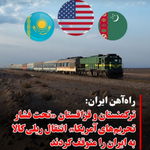
A train carries about 1,500 tons, a ship about 100,000: 66 trains to match one ship.
Cheaper? Nope, a container is at $3,000 by sea and $12,000 by land, an extra $18 billion a year.
One train a day is about 20,000 containers a year. The southern ports brought in 2 million.
The blockade is working.

گفته بودیم یا راهی میسازیم یا راهی مییابیم.
مسیر مستقیم ریلی حمل و نقل کالا از شیان #چین تا منطقه آزاد اینچهبرون.
#ایران_بزرگ_محاصره_شدنی_نیست.
در هر رام #قطار،بار کامل یک #کشتی با سرعتی بیشتر از کشتی به وارد کشور میشود.
با هزینه حمل و ریسکی به مراتب کمتر از حمل با کشتی.
Ali Samani retweeted

Iran backed Kataib Hezbollah reportedly folded some 2,000 fighters into allied Popular Mobilization Forces (PMF) brigades as Iraqi forces reclaimed Jurf al Sakhr. Critical equipment was evacuated to Anbar and Karbala. - ISW
Ali Samani retweeted

South Korea will stay out of the US-Iran war, Foreign Minister Cho Hyun told his Iranian counterpart, Abbas Araghchi, on Thursday as he outlined plans to expand a South Korean naval mission into waters south of Oman, closer to the Strait of Hormuz.
Cho said the move was intended to protect South Korean nationals and economic interests, according to Seoul’s foreign ministry.
South Korea’s parliamentary defense committee approved a motion to extend the Cheonghae anti-piracy unit’s deployment off Somalia and expand its patrol area.
The motion would add a maritime patrol aircraft and a team to dispose of explosives, while barring the unit from taking part in military operations between countries.
Ali Samani retweeted

ویدیوی منتشرشده از گذرگاه مرزی ریمدان در استان سیستان و بلوچستان، صف طولانی صدها کامیون را نشان میدهد که رانندگان آنها چندین روز است در انتظار انجام مراحل اداری، تخلیهٔ بار و عبور از مرز هستند.
یکی از رانندگان در این ویدیو از دریافت رشوههای ۳۰ میلیون تومانی از سوی برخی متصدیان امور اداری مستقر در این گذرگاه خبر میدهد. به گفتهٔ این راننده، افرادی که این مبلغ را پرداخت میکنند، میتوانند مراحل اداری را خارج از نوبت انجام دهند، در حالی که سایر رانندگان ناچارند روزها در صفهای طولانی منتظر بمانند.


Ali Samani retweeted

أغلقت قيادة حرس حدود المنطقة الأولى معبر "پشتە" غير الرسمي على الحدود العراقية الإيرانية، ضمن محافظة حلبجة، في إطار حملة لإغلاق المعابر غير الرسمية في إقليم كردستان العراق.
Ali Samani retweeted
The Israeli military said it carried out airstrikes targeting dozens of Hezbollah rockets and launchers at a training camp belonging to the group's elite Radwan Force in Ain al-Tineh, southern Lebanon.


Ali Samani retweeted

After killing two Italian air defense technicians during strikes against Kuwait earlier, Iranian Foreign Minister Abbas Araghchi held a phone call will his Italian counterpart, expressing condolences but still denying Iran’s obvious involvement in the strike.

Ali Samani retweeted

🚨🦀
سرگردانی هزاران راننده در مرز ریمدان بلوچستان؛ محرومیت از آب، غذا و امکانات بهداشتی/به گزارش حالوش، امروز پنجشنبه ۵ آذر، تصاویر تازهای از صفهای چندکیلومتری هزاران خودروی سنگین در مسیر گذرگاه مرزی ریمدان منتشر شده است. سوءمدیریت مسئولان مرزی و گمرکی رژیم تروریستی جمهوری اسلامی، هزاران راننده را برای روزهای متوالی در شرایطی طاقتفرسا گرفتار کرده است. رانندگان از بینظمی در نوبتدهی، عبور خودروها خارج از صف، نبود آب آشامیدنی، عرضه غذاهای مانده و غیربهداشتی و قفل بودن یا قطعی آب سرویسهای بهداشتی خبر میدهند. تداوم این وضعیت، علاوه بر تحمیل هزینههای سنگین به رانندگان، سلامت و معیشت آنان را نیز با تهدید جدی مواجه کرده است.
Thousands of truck drivers remain stranded at the Rimdan border crossing in Iran's Baluchestan region. New footage published by Haalvsh on Thursday, November 26, shows thousands of trucks backed up for kilometers. Mismanagement by the Islamic Republic regime's border and customs authorities has left drivers stranded for days under unbearable conditions. Drivers report chaotic queue management, vehicles cutting in line, inadequate access to drinking water, spoiled and unsanitary food, and restrooms that are either locked or have no running water. The ongoing situation is imposing heavy financial losses on drivers while seriously threatening their health and livelihoods.