

Senior Medical Leader | Allergy & Immunology Expert | Medical Advisor & Educator | Founder of a private allergy clinic. Tweets are not medical advice
Санкт-Петербург, Россия
Joined October 2014
- Tweets520
- Following143
- Followers158
- Likes1.2K


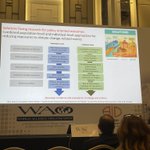


A fascinating concept from #EAACI2026: what do allergy and spaceflight have in common?
Both involve oxidative stress, mitochondrial dysfunction, and immune dysregulation. Science is exploring whether targeting mitochondrial adaptation could become a future therapeutic strategy.
9
1/2 One of the most thought-provoking sessions at #EaaciCongress2026: IgG is not simply "good" or "bad".
IgG can act as a friend (blocking IgE and supporting tolerance), a witness (marker of exposure), or even an enemy, as some IgG memory B cells may later switch to producing IgE
1
33
2/2 Another key message: not all IgG are the same.
IgG1, IgG2, IgG3, and IgG4 have different biological functions. IgG4 is often linked to immune tolerance and allergen immunotherapy, while total food-specific IgG alone tells us very little about disease. #EaaciCongress2026
29
A fascinating talk by Jasper Kappen at #EaaciCongress2026 on switching biologics in severe asthma.
We increasingly view it as a normal part of asthma management.
The question is no longer "Which biologic is best?" but "Which biologic is best for this patient at this moment?"
10
One of the most interesting food allergy updates at #EaaciCongress2026:
Omalizumab is increasingly being used not only to prevent reactions, but as a bridge to food introduction.
The goal may not be complete tolerance, it may be safer eating and a better quality of life.
1
12
One of the interesting talks at #EaaciCongress2026 was Prof. Marcin Kurowski’s presentation on exercise as a treatment for asthma.
The key message: don't restrict exercise in asthma. Confirm the diagnosis, optimize treatment, achieve control, and then prescribe exercise
1
16
While creating a lecture for physicians on the molecular aspects of grass pollen allergies, I realized I’d missed some important CRD features, like Phl p 5 as a marker of severity, or the variability within group 1 and group 5.
1
37
Olga Zhogoleva retweeted

The inflammasome may play a key role in mast cell degranulation and anaphylaxis, although its exact mechanisms remain unclear.
A new @AllergyEaaci News & Views article discusses its role in vesicle mobilisation and potential as a therapeutic target.
doi.org/10.1111/all.70123

Yesterday I did one thing I have wanted to do for a long time. I named my lecture: "Urticaria: everything you always wanted to know about, but were afraid to ask". It's a reference to Woody Allen, if you know what I mean.
1
21
Olga Zhogoleva retweeted

False-Negative Exercise Tests After Wheat Desensitization: What This Study Found 🏃♂️🌾
A study of children desensitized to wheat found that 26.4% of those with a negative or indeterminate exercise provocation test (#EPT) still developed exercise‑induced #allergicreactions during follow‑up.
🔍 Key factor: Higher ω5‑gliadin–specific #IgE levels were strongly linked to these false negatives.
🌿 Notable detail: All reactions occurred outdoors, suggesting environmental influences.
📌 Takeaway: Even after a negative EPT, ongoing monitoring is essential for wheat‑desensitized children, and better predictive markers are needed.
.
🔗 doi.org/10.1111/pai.70274
#pai_journal # ω5gliadin #falsenegatives #exerciseprovocationtest #wheat #predictivemarkers #originalarticle

Olga Zhogoleva retweeted
The Sting Challenge Test (SCT) remains the gold standard to confirm VIT efficacy in Hymenoptera venom allergy.
#EAACI Position Paper highlights:
▪️ Confirms real-world protection
▪️ Detects VIT failure
▪️ Not for routine diagnosis
Read it here:
doi.org/10.1111/all.70096

Medicine struggles not with lack of data, but with saying “we don’t know”.
I've just finished the lecture for my educational course for physicians about stepping down in CSU, based on collective clinical experience from this absolutely wonderful paper pubmed.ncbi.nlm.nih.gov/3681…

6
Overdiagnosis feels helpful, until it blocks better explanations. I'm talking about MCAS. Seems like it has become utterly popular in medical conferences for gastroenterologists and psychiatrists, since a lot of patients are coming from them to allergists lately.
1
6
