

Cofounder, @LeashBio.
Salt Lake City, UT
Joined May 2010
- Tweets7.1K
- Following2.7K
- Followers1.3K
- Likes21.2K





Ian Quigley retweeted

🚩 When Polymarket or Kalshi says there's a 70% chance something will happen, should we believe it?
Excited to share our new paper, just published in PNAS, in which we examined more than ONE MILLION forecasts from Polymarket, Kalshi, Manifold, and Metaculus, spanning 12 domains and forecasting horizons ranging from hours to years.
The main finding is striking: Prediction markets and collective forecasting platforms are remarkably well calibrated. When they assign events a 70% probability, those events really do happen about 70% of the time. And this pattern holds surprisingly well across different platforms, domains, and forecasting horizons.
But there's an important twist. When we looked more closely, we discovered systematic biases in some of the domains where forecasting matters most (wars, elections).
For decades, psychologists have documented how poorly humans often reason about probability and uncertainty. Our findings offer an encouraging counterpoint: When judgments and information are aggregated, we can achieve a surprisingly accurate understanding of an uncertain future.
That doesn't mean we can predict what will happen next with certainty. But it does mean that we can be remarkably good at estimating how uncertain the future really is.
This work was a great collaboration. The data for this project was meticulously collected for years by Justin Dickerson, the project was led by Hilla Shinitzky and Maayan Peer, with @mattansb leading the analyses.
📄 Read the paper:
pnas.org/doi/10.1073/pnas.26…
#Forecasting #Polymarket #Kalshi #DecisionScience #PNAS

Ian Quigley retweeted

Today we release our first collaborator model @humansand! Ampersand is the first model with privacy built in (unlike most other models where privacy is an afterthought), co-designed in tandem with our product (more soon!!).
We designed our environment and simulations such that the post-training’s optimization pressure incentivizes decisions that abide by contextual privacy norms, through long horizon outs.


Unlike assistant models trained with verifiable or preference reward, Ampersand was trained to understand the long term consequences of its actions through simulation feedback
ampersand.humansand.ai/blog

Addendum: a brief taxonomy of agent failure modes


Ian Quigley retweeted

Since the beginning of Leash, the main battle we have fought is generalization vs memorization. It is too easy for models to memorize the patterns that lead to binding in this particular instance, but fail to generalize the next time you use the model.
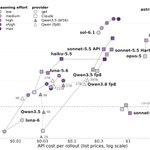
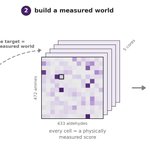
Last week we released Minos, our framework of premeasured experimental worlds for agentic science.
Minos is not for obtaining the best scientific result, it's for understanding how AI agents make scientific decisions and maybe help them make better ones.
Let's dig in!
1/

We dropped ~4500 transcripts of agents working on these tasks for you to dig through yourself at strelka.leash.bio. We hope folks find a more complete taxonomy of failure that we can all use to improve agentic science.
11/
Ian Quigley retweeted

Pretty clever idea from @allmeasures and @Andrewdblevins at @leashbio to use a dense combinatorial set of experimental data like a DEL screen as an environment to test how well agents can optimize in chemical space.
Medchem optimization in the real world isn't so constrained, but it's plausible to me that ability at the DEL task would transfer to the real world.
I wonder where else the idea can be applied to build RL environments for science.
Blog post: leashbio.substack.com/p/maki…
Preprint: github.com/Leash-Labs/minos-…
The preprint nicely addresses the biggest question I had from reading just the blog post by performing a "shuffle" ablation suggesting that it was measuring actual chemical reasoning ability instead of just "Mastermind" ability.
I would also be interested in seeing some other baselines beyond random, like a fingerprint-based optimizer.

Ian Quigley retweeted

5/ These gels are super soft (stiffest ~330 Pa, 1000x+ below earlier yeast squeezing work), like mucus or tissue. Physical constraint alone slows division, with no detectable change in gene or protein expression.
