



Kei. Han retweeted

🚨 Japan’s corporate credit market is showing its sharpest deterioration since September 2022.
The cost of insuring debt against default rose for ALL 40 major Japanese companies tracked from October 1–28, with SoftBank and Nissan leading the widening.
The median increase in five-year credit-default swaps was 12 basis points.
At the same time, Japanese corporate bond issuance reached roughly ¥2.5 trillion in October, a record for the month and about 50% above last year.
Corporate bond spreads are now around their widest levels in 2.5 years.
Signs of strain are already appearing:
• Mitsui Fudosan shelved a bond sale.
• NTT Finance raised less than initially expected.
• Export-Import Bank of Korea postponed a yen bond offering.
AI financing concerns, pressure on automakers, and heavy issuance are weighing on the market.

Kei. Han retweeted

India is mounting an increasingly costly defence of the rupee, deploying tens of billions of dollars and resorting to extraordinary market interventions to protect a currency that has come under pressure from elevated oil prices and investor outflows.
The central bank since June has already used about $90bn of the more than $140bn it raised from India’s diaspora to prop up the rupee, including through sales to the spot market and currency swaps to absorb surplus liquidity.


Gold had a nice wake up rally in August after my correction warning back in March. Quality gold miners even outperformed this rally and are near ATH.
But u see, the fundamental setup remains unchanged IMHO from March/April. I am long term bullish but don’t like gold here short term (months) due to higher energy prices.
We get higher oil, higher diesel, higher inflation and likely higher US rates in September and thereafter. Book it. That, for one, is not bullish. US gold ETFs become marginal sellers or at least not buyers.
But my key concern remains weaker EM FX in Turkey due to higher energy cost (both crude and natgas) which may force the gov to sell more gold reserves. So that is an obvious risk factor
India is less obvious but matters most. It has a structural problem: it imports nearly all the gold its households buy, and those imports ultimately have to be paid for in foreign currency. Pro Memoria: Indian HH are the 2nd largest gold buyer globally
Gold was 8% of merchandise imports in 2025, making it a meaningful drain on FX when demand surges. With the 2026 oil shock simultaneously increasing India’s dollar requirement for energy imports, Modi wants to reduce another large discretionary source of dollar demand.
So Modi attacked the gold leg. In May the gov raised the gold import duty from 6% to 15%, tightened import rules and licensing, delayed some bullion-import permissions and Modi personally asked Indians to stop buying gold for a year unless necessary.
The World Gold Council explicitly describes these measures as intended to “conserve foreign exchange reserves” amid pressure on INR.
As u know, I follow oil with laser eyes and think we will now enter the end game. Ultimately, the SoH will be solved but the coming months will be testing ones. Make no mistake. This is getting real now, even though most are tired to pay attention.
Message: I don’t think it is the time to get back into gold. The rally is for 2027. My view anyway


Kei. Han retweeted

BofA client retail equity positioning rose back to its joint record high of 66.4% of client AUM, while cash fell to 9.3%, a new record low.
Bonds remained at 17.1% (two tenths above the 16.9% September 4th that was the lowest since March 2022).


The Week Ahead – The Rotation Continues
AI worries are pressuring Tech and sending yields lower as we embark on a heavy earnings week including several names in the cross-hairs.
pro.thestreet.com/market-com…

Kei. Han retweeted
BofA saw SPX gamma last week at the 99th one-year percentile on Thursday, “the second straight week where gamma finished above 90th %ile at every single close,” which almost certainly dampened volatility. However, nearly half of that gamma was in options tied to Friday’s options expiration so gamma can be expected to at least start the week positive but off the extreme levels hit last week.
Again the curve looks more like a mountain than a hill, very elevated around 2% in either direction but falling sharply if we move outside of that range, turning negative before we even get to 3% (noting though that these are not fixed and will move daily as does spot).

The Week Ahead – The Rotation Continues
AI worries are pressuring Tech and sending yields lower as we embark on a heavy earnings week including several names in the cross-hairs.
pro.thestreet.com/market-com…
Kei. Han retweeted
Factset: For Q3 2026, the “Magnificent 7” companies is are expected to have earnings growth of 33.2% from the year earlier outpacing the 27.7% for the other 493 S&P 500 components.
Looking ahead, though, analysts predict that will flip in Q4 with the "Other 493" reporting growth of 30.6% vs 23.6% for the “Magnificent 7”.
If those are the actual growth rates for the quarter, it would mark the first time the “Magnificent 7” companies will have reported lower earnings growth than the other 493 S&P 500 companies since Q4 2022 (-30.6% vs. 1.6%).


🇺🇸 #SPX | Are “Magnificent 7” Companies Still Top Contributors to S&P 500 Earnings Growth for Q3? - Factset
advantage.factset.com/hubfs/…

Kei. Han retweeted

EVERCORE:
“.. the OBBBA’s incremental stimulus was already realized in FY26” — and now implies “fiscal drag of roughly 0.6% of GDP in the FY27 baseline.” 😞

Kei. Han retweeted

The Kospi falls today below 30 July level on angst about AI and Korea is most exposed globally.
What that means is that the Bank of Korea is likely to hold for the rest of the year as KRW strengthened and wealth effect turns negative.
Australia is also another candidate to hold as its variable rate transmits rate hikes into the labor market and eventually the economy.

Ready? Let's do some reading together.
Today, we are reading what's in the headlines, as in the IMF/World Bank take on AI and exposure to AI financial shocks.
First, equity leverage and debt.
imf.org/-/media/files/public…


Kei. Han retweeted

This headline today seems to have many frazzled: *THUNE SAYS HE IS 'OPEN TO CONSIDERING' AN EXPORT BAN ON DIESEL
An export ban on deisel would have the OPPOSITE effect as intended, imho. Here are my thoughts on WHY:
A diesel export ban would work against its own intent for three reasons. First, the United States is not short of diesel, it is short of cheap diesel, and the price is set by the global barrel. Gulf Coast refiners export a record volume of distillate because Europe and Latin America lost roughly 30% of Russian refining capacity to Ukrainian strikes and then lost the rest to Moscow's July export ban, so the marginal buyer of American diesel sits in Rotterdam and Santos, not Pennsylvania. Pulling US barrels off that market does not lower the global price, it raises it, and the US retail pump still prices off the global market because the Northeast, the region actually feeling the squeeze, imports its diesel rather than sourcing it from Texas. Second, the barrels that get trapped do not flow north. The Jones Act waiver in force through November 15 has moved about 125 thousand barrels a day across all products combined, is now administered voyage by voyage with an individual Department of War determination for each ship, and is throttled by clean tanker rates that are already at multi year highs. Stranded product in PADD 3 collapses the Gulf Coast diesel crack, and refiners respond to a collapsing crack the only way they can, by cutting runs, which removes the very supply the ban was meant to protect. That is exactly what the Energy Department found when it modeled the same idea in October 2022 and quietly dropped it. Third, the signal is permanent even if the ban is temporary. The United States became the supplier of last resort for the free world's distillate over a decade, and a ban announced to get through a midterm tells every buyer from Mexico to Germany that American supply is politically conditional. They respond by building redundancy, contracting with other suppliers, and paying a premium for reliability elsewhere, which weakens US refining margins structurally long after the ban is lifted. The diesel problem is a refining capacity and crude quality problem layered on a war. An export ban addresses neither and makes both worse.
Kei. Han retweeted

China may bar citizens from leaving the country for up to three years under tighter travel rules, BBC reports.
Kei. Han retweeted

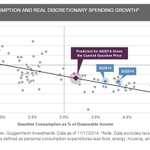
U.S. gasoline shortage draws in hedge funds
Investors have become exceptionally bullish about the outlook for U.S. gasoline prices as inventories have depleted to the lowest seasonal level for fourteen years and refiners have limited options for replenishing them in the short term.
Low stocks and lack of refinery options have made refined fuels and especially gasoline the top target for hedge funds and other money managers, according to the latest position data published by regulators and exchanges.
U.S. stocks of finished gasoline and blending components at refineries and tank farms and in pipelines had fallen to just 206 million barrels on August 28.
Gasoline stocks were down from 219 million barrels at the same point a year earlier and nearly 20 million (-9% or -2.73 standard deviations) below the ten-year seasonal average.
Before the war within Iran began, stocks had been about 5 million barrels (+2% or +1.00σ) above average at the end of February.
Since then, however, stocks have depleted by 47 million barrels, more than twice as fast as the average draw down of 22 million ...
Full article is available on my website: jkempenergy.com/2026/09/07/u…


Kei. Han retweeted

The hiring intentions index of the NFIB survey fell three points in August, but it remains much stronger than a few months ago. It has been a great guide to the trend in payrolls over the last four years, if it is advanced by four months, though the recent drop in the number of small businesses completing the survey and the higher volatility of the index lately raise questions about its future reliability.


Kei. Han retweeted

One of several hawkish notes in Chair Warsh's Jackson Hole speech was his point that inflation has broadened significantly over the past year or so. 54% of PCE deflator components rose by more than 3% in the year to July, up from just under 40% in early 2025. (1/2)


Kei. Han retweeted

Just read this... "ATI doesn't work. US 30y was canceled in Oct2001... 30y yield was higher 11 days later. 10v30 flattened 15bp on the day... by summer 10v30 was the steepest since 1992. 10y term premium had a very short dip before it started climbing sharply again"
Kei. Han retweeted

Too many are focused on the falling cost of tokens and assume OS models are "cheaper" than the frontier
But, many open source models use tokens inefficiently
The better way to judge model economics is cost per task. On that basis, we see K3 as ~25% more expensive vs frontier

