

Co-founder & CEO @getbelong - NRI savings and investments | 2x fintech entrepreneur
Bengaluru, India
Joined February 2015
- Tweets791
- Following232
- Followers969
- Likes339





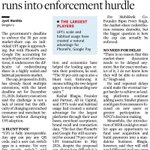

SEBI just banned the publishing of grey market premiums (GMP) of IPO bound stocks.
In November 2025, SEBI said offer documents are long and complex, and that retail investors instead rely on grey market trends and unverified social media posts.
GMP is popular because it answers the question on everyone’s mind: will this stock list higher than its IPO price?
👉 Removing it only works if investors get something better to base their decisions on.
SEBI has been building one such document.
In March 2026, it rebuilt the abridged prospectus, the short summary of an IPO's offer document, in three ways:
1️⃣ It now comes out when the company first files draft papers, not just before the issue opens.
2️⃣ It follows a fixed format: business summary, key financials, top 10 risks and a QR code to the full document.
3️⃣ It shows what promoters and major shareholders paid for shares over the last one and three years.
GMP tells you what others expect on listing day - this one tells you what you are buying, and how the IPO price compares with what insiders paid.
IPO investors: if your app showed this where GMP used to be, would you read it?
legal.economictimes.indiatim…

Had a great conversation with @kshanand, Editor at #ETMarkets on the shift in how NRIs are managing their money and the role GIFT City is playing in helping them invest globally with the trust of Indian regulatory oversight and convenience of Indian customer service.
Thanks Kshitij for taking out the time.
Read the full conversation on ETMarkets NRI Talk:
economictimes.indiatimes.com…
#NRITalk #NRIInvestments #GIFTCity #GlobalInvesting


60
India is having its best month and its worst year for foreign money at the same time.
Foreign investors have bought a net $10 billion of Indian stocks in November so far, beating the monthly record of $8.42 billion set in December 2020.
Yet 2026 is still a record $21.33 billion net outflow, more than 2025's $18.91 billion.
👉 The AI trade has pushed this money in both directions.
In October, experts said part of the selling was global money moving into AI stocks in the US, Taiwan and South Korea, a trade where India has few listed companies.
This month, AI bubble worries are hitting chip-heavy markets like Taiwan and South Korea, and the same gap has made India a hedge. "The AI trade money has been coming into India," Anil Bhansali of Finrex Treasury Advisors told ET.
Domestic institutions, which absorbed foreign selling for most of the year, have net sold ₹52,410 crore this month. This rally rests on foreign money, much of it a hedge that can leave as quickly as it came.
If you invest in India from abroad, did you add this month because your view on India changed, or because it balances your tech stocks?
thehindubusinessline.com/dat…

73
Foreign investors have bought a net $9 billion of Indian stocks in November, and the selling point is what India doesn't own.
In last week's tech selloff, investors pulled a record $655 million from BlackRock's Taiwan ETF. Its India ETF took in over $316 million, its biggest week since June 2025.
According to Global X's India ETF fund manager, over 40% of the emerging markets index is chips and tech hardware, mostly Korea and Taiwan, while India has almost no chip exposure.
👉 For funds measured against that index, owning India means falling behind when chips rally. When chips fall, India is the large, liquid market that isn't exposed.
That gap caused India to trail Asia for two years but pull money in now.
But will this money stay when the AI trade comes back or will it leave as quickly as it arrived?
moneycontrol.com/news/busine…

68
How much should you leave your kids when deciding to retire early?
A Dubai-based NRI couple, aged 38 and 40, with two children and AED 7.6 million (~19 crore), asked Reddit when they could retire. One question stood out: how do you get over the guilt of not saving as much as possible for your children?
👉 Some suggestions that came up -
1. Fund their education until they graduate and can stand on their own feet.
2. Go further and cover postgraduation, then step back.
3. Set aside a fixed amount for them, and treat the rest as yours.
The guilt lingers because "enough for the kids" is usually a feeling rather than a number.
Once you put a number to it, the retirement question gets simpler: your corpus is whatever is left after that amount.
For NRI parents planning to retire early: how do you decide?
Thread: reddit.com/r/FatFIREIndia/co…

2
153
Why is Blackstone paying ₹5,000 crore for 16% of IIFL Finance, an Indian NBFC?
India has been seeing a spate of such deals recently:
- Emirates NBD now owns 60% of RBL Bank.
- Canada's Fairfax is set to buy 60.72% of IDBI Bank.
- Bank of America is buying up to 49.9% of Jio Financial's lending arm.
- MUFG has invested in Shriram Finance.
👉 What they are all buying is acceleration.
A lender needs branches in small towns, staff who can value gold or read a local shop's cash flow, and years of repayment history on each kind of borrower.
Buying an existing one gets you all of that on day 1. Reuters notes IIFL gives Blackstone access to gold loans and small business credit, both fast-growing.
As more of India's lending comes under foreign ownership, will they continue to be nimble enough to serve the small borrower market effectively, or ultimately move up the income ladder to serve the segment the foreign owners know better?
reuters.com/world/india/blac…

About 75% of India's 24 crore demat accounts are estimated to be inactive. SEBI is considering a rule to mark them as such.
SEBI is discussing a 2-year dormancy rule for demat accounts.
Under the proposal, reported by Moneycontrol, both demat and trading accounts could be classified dormant after two years without any activity. Today, only trading accounts have such a rule.
👉 The main concern is misuse. SEBI is worried idle accounts may be used as mule accounts.
There is a cost problem too - depository participants must maintain every account, used or not, adding to technology, data storage and compliance costs. Some investors also stop paying maintenance charges.
SEBI is yet to say whether holding shares, or receiving dividends and bonus shares, will count. If only transactions count, an investor who bought shares in 2023 and still holds them but has not done any other transaction since then could be classified dormant.
Dormancy wouldn't take away ownership, but the investor may need to complete verification before selling again.
Done well, a uniform rule could also give India a truer count of its active investors, by separating accounts that are only registered from those actually in use.
It will be interesting to see where SEBI draws the line on activity when the final circular comes out.
moneycontrol.com/news/busine…

1
93
Excited to announce that US stocks and ETFs are now live on Belong for NRIs and OCIs!
From today, US investing sits in the same app as GIFT Nifty, GIFT City mutual funds and USD fixed deposits.
On Belong, NRIs and OCIs can now invest in US markets:
✅ From a foreign or Indian bank account, with full repatriation
✅ With no capital gains tax in India
✅ Through an account that stays active even if you change countries
✅ Under regulatory supervision of IFSCA, the GIFT City regulator
✅ With low fees: brokerage at 0.1% (capped at $10)
The app also offers ETFs across countries, sectors and themes, along with gold, silver and platinum at the world price, without India's import duty, from $1.
Experienced NRI traders get access to commodity and leveraged ETFs.
👉 Explore US investing on the app: app.getbelong.com/bKvL/X
Since day one, we have been building Belong as one place where global Indians can save and invest globally.
Launch of US listed stocks and ETFs take us a step closer, putting Indian and global investments side by side. 🚀
Proud of the entire Belong team that built this!
@GetBelong

Wall Street is looking to insure itself against an AI crash.
Investors have poured in trillions of dollars into the AI race with huge bets on chips, data centres and computing power.
Much of it is borrowed. Morgan Stanley Research estimates AI-linked companies raised $466 billion in debt in the first nine months of 2026. A year earlier, it was $101 billion.
But the infrastructure is being built today, and its profits may take years. That gap has started worrying lenders and investors.
👉 So they are trading more credit default swaps (CDS), which pay out if a company defaults on its loans.
Morgan Stanley says average weekly CDS trading on bonds of Oracle, SpaceX, Alphabet, Amazon, Meta, Broadcom and Nvidia has jumped multi fold in the last couple of months from less than $2 billion in July to over $9 billion in September
👉 Investors may be getting more careful about who will eventually make money from the boom, and who is borrowing too much to build it.
As firms like Anthropic file to go public, more money is heading into AI but some of it is now taking the other side of the bet.
wsj.com/finance/stocks/ai-in…

80
Why should an NRI need an Indian phone number to access their own financial life?
A Reddit thread started with an NRI paying Rs 1.5k-2k every couple of months just to keep an Indian number active for bank OTPs. Many in the thread said packs as cheap as Rs 118 a month do the job.
Some NRIs said HDFC, ICICI, SBI and Kotak send OTPs to their overseas numbers. Others still face reliability issues.
But banking is only part of the problem. A single Indian number can be linked to - government portals, PF accounts, or simply paying a bill back home.
👉 The underlying problem?
India's digital infrastructure still assumes you have an Indian phone number, even when you live thousands of kilometres away.
Until it does, a missed recharge can lock NRIs out of services they already use.
Removing outdated location-based dependencies may be the simplest fix for NRIs.
For those who've tried giving up their Indian number - which service made it hardest?
Thread: reddit.com/r/nri/comments/1w…

2
158
Banks in GIFT City want IFSCA to exempt $52.82 billion of loans from its green lending rule.
These loans were given to finance leveraged FCNR deposits under RBI's recent scheme to bring NRI dollar deposits into Indian banks.
The GIFT City branches of 20 banks loaned over $50 billion in less than three months up to August 31 when the scheme window closed.
IFSCA's rule says that for every $100 these branches lend in a year, at least $5 must go into green or social loans the next year.
On a loan book of $52 billion that comes to about $2.6 billion.
If IFSCA doesn’t grant any exemption, GIFT City banks will have to lend $2.6 billion to green and social projects by next year.
One banker says there aren't enough of them with the required credit worthiness.
economictimes.indiatimes.com…
3
319
Is GIFT City the cheapest option for India or global investing?
This is a question I have been asked often.
It is for some use cases but not all. However, beyond cost comparisons, it also provides regulatory confidence and Indian customer support which may be more valuable when it comes to investing your hard earned money.
Shared my views on this topic with @imNavneetDubey at @moneycontrolcom.
Read the full article here - moneycontrol.com/news/busine…

1
76
Lenders are reportedly offering to finance 60-90% of some retail applications in the Jio Platforms IPO.
👉 Reliance Power’s 2008 IPO offers a cautionary parallel.
It was subscribed about 73 times, and nearly 80% of HNIs reportedly borrowed to apply. On listing day, the stock closed 17% below its issue price.
👉 Borrowing to chase listing gains works only if the listing goes up. When it doesn't, the loss and the interest bill arrive together.
Curious to know what kind of listing gains are people expecting especially given the market conditions?
Source: livemint.com/market/india-ji…

4
192
An NRI filed Indian tax returns as a resident to keep things simple. Now they must answer a tax summons about their foreign accounts.
Their income in India was under ₹1 lakh. They thought filing as a resident just meant paying a little more tax.
But filing ITR as a resident comes with a bigger duty. A resident must declare every bank account and asset they hold abroad.
This NRI obviously held accounts abroad, and the summons now asks about them. In the thread, they asked how India even gets account details from other countries.
👉 The answer is global data sharing.
Under CRS, banks in most countries, from the UK to the UAE and Singapore, share financial data of Indian citizens with India and vice versa. The US does the same under FATCA.
So the department saw two things that didn't match. The return said resident with no foreign accounts. The data from abroad showed overseas accounts and assets. That gap is what led to the summons.
Filing ITR is not just about tax owed to the government. And filing as a resident Indian comes with a larger responsibility than most NRIs think.
Thread: reddit.com/r/IndiaTax/commen…

2
127
Indian stocks are the cheapest they have been in six years. Bernstein still says they are too expensive for foreign investors.
👉 How can both be true?
Bernstein has cut its Dec 2026 Nifty target to 25,000 from 26,000.
Meanwhile, Nifty's forward P/E has fallen to 16.6x, its lowest in six years, says MC. Yet Bernstein says India is still the world's third-most expensive equity market, costlier than several faster-growing Asian markets.
👉 Part of the answer is who keeps buying.
This year, foreign investors pulled ₹3.08 lakh crore out of Indian stocks. Domestic institutions, including mutual funds, put in ₹6.83 lakh crore, more than twice as much.
Bernstein calls the current level of mutual fund and SIP-driven buying as unprecedented.
That buying stopped the market from falling further. It may also be why prices never fell far enough to tempt foreign funds.
- An Indian saver compares stocks with an FD.
- A foreign fund compares India with Taiwan and South Korea.
The same price can look fair to one and expensive to the other.
For a bigger rally, Bernstein says India needs one of two things: clearer profit growth, or a further fall in prices.
Which one do you think will happen in India?
moneycontrol.com/news/busine…

70
HSBC might be the biggest lender to Indian startups.
HSBC has been building up to this for years. Its startup lending budget has grown 20 times since 2019:
2019: $50 million
2022: $250 million
2024: $600 million
2025: $1 billion
It has already lent more than half of that $1 billion, according to ET.
Compare this with venture debt funds which specialise in lending to startups. In 2025, all of them put together lent around $1.3 billion to Indian startups, according to Business Standard.
👉 The bank is also cheaper. A bank loan costs around 10% interest a year, compared with 14-18% from venture debt funds.
On a ₹100 crore loan, that means paying about ₹10 crore a year in interest instead of ₹16 crore.
For startups, that is cheaper money to grow without giving away a share of the company. For venture debt funds, it is a big new rival that can charge less.
👉 What makes an international bank like HSBC willing to lend a billion dollars to Indian startups while most of our Indian banks still shy away from it?
bfsi.economictimes.indiatime…

3
94
How much money does an NRI actually need to retire in India?
I came across a Reddit discussion where a family that had planned for a $1.5-2 million retirement corpus began questioning whether they needed that much after speaking to people who had already moved back.
👉One distinction stood out to me: retiring in India requires planning for two different budgets.
1. The cost of returning: A one-time return budget - buying and furnishing a home, relocating, getting a car etc.
2. The cost of staying: This is a retirement budget - the recurring cost of housing, education, healthcare, household help and travel, year after year.
Mixing the two budgets can inflate how much you think you need before making the move.
Once the cost of returning is taken care of, most people said ₹2-3 lakhs a month is enough for a comfortable Tier-1 city lifestyle.
For those who have moved back, or advised families who did: did you calculate the cost of moving back separately from the cost of living?
Thread: reddit.com/r/nriFIRE/comment…

2
140
GIFT City and the London Stock Exchange want to bring their capital markets closer.
NSE IX and the London Stock Exchange have signed an MoU yesterday to explore:
1. Dual and cross-listings across equities, fixed income and ETFs
2. Derivatives based on FTSE Russell indices
3. Joint development of new equity indices
4. Cross-border trading connectivity and market data distribution
Two possibilities stand out to me:
👉 Derivatives based on FTSE Russell indices
FTSE Russell creates indices like FTSE 100. Derivatives based on these indices, if launched on NSE IX, could offer new ways for GIFT entities to trade international markets.
👉 Cross-listing of LSE-based ETFs
London lists a wide range of ETFs across global equities, UCITS, bonds and other asset classes. Cross-listing them on NSE IX could let investors access these ETFs directly through GIFT City.
The detail I’ll be watching is which ETFs get cross-listed first.
If UCITS versions of indices like the S&P 500 make the list, this MoU will matter to far more people than the derivatives will to traders.
lseg.com/en/media-centre/pre…

1
117