

Building stuffs using AI 🌳 https://teapaw.org/t.co/VDy3uX0rlc 🌊 https://teapaw.org/t.co/6da86uTNOA 🪙 https://teapaw.org/t.co/Wxr86TsvqE 🎯 https://teapaw.org/t.co/7eX9uCHsu8
Joined December 2012
- Tweets14.3K
- Following378
- Followers2.6K
- Likes44.4K


Pedro Arantes retweeted

We built Pando, a new Git backend for our monorepo, to handle more pushes and fetches without changing how our engineers and agents use Git.
Pando cut push latency by ~80% and now serves nearly a petabyte of Git data a day. We can grow Git capacity alongside agent usage.
Pedro Arantes retweeted

We believe voice is the most natural way to interact with intelligence, so we created Dessa, the most authentic full-duplex speech model ever built. Talking with it feels like talking with a person…full of emotion, nuance, pauses, and a natural cadence.
block.xyz/dessa

Pedro Arantes retweeted

🔐 Node.js security updates are now available!
New releases for Node.js 22.x, 24.x & 26.x address multiple vulnerabilities, including high-severity issues.
Review the details and update your systems to stay secure.
🔗 nodejs.org/en/blog/vulnerabi…
#NodeJS #Security


Pedro Arantes retweeted

Imagina que o seu trabalho era costurar a mão
E agora existe uma máquina que costura melhor e mais rápido do que você
O que você faz?
Pedro Arantes retweeted

After co-inventing ChatGPT, I kept asking myself: why have superhuman chat models not led to AGI?
I’ve spent the last 2 years in stealth building a new way to train models (RLCD), and a new type of frontier AI model that we are releasing today: Jev
• 20-200x faster
• 40-400x cheaper (w/ output tokens free)
• Frontier composable intelligence optimized for decisions
AFAICT the shortest path to AI-based economic revolution
Pedro Arantes retweeted

We Must Pace the Frontier: I’ve written a new essay on why the AI industry should slow down, with a three-part plan for doing so.
Anthropic is unilaterally committing to the first of these steps. We’ll provide third-party evaluators with permanent, employee-level access to our systems, so that they can verify adherence to our safety measures, report on incidents, and assess models’ alignment during training.
You can read the full post here: darioamodei.com/post/we-must…


Pedro Arantes retweeted

I've asked Claude Fable 5.1 to create 100 HTML files
Rules were simple:
- look stunning
- zero repetitive designs
- go full creative mode
All 100 files created in one single prompt.
These are the BEST results I’ve had with this type of experiment, beating any other model. It’s really good on the frontend, and there are almost no broken files.
It's truly impressive.
See the results for yourself (incl. prompts):
miaai-lab.github.io/Fable-5.…
There are a LOT that I like, had to split into two pages:
Jumpgate - Hyperspace Warp Tunnel
miaai-lab.github.io/Fable-5.…
Playable Synthwave Synth & Visualizer
miaai-lab.github.io/Fable-5.…
Luxury Watch
miaai-lab.github.io/Fable-5.…
Ether - Fluid Smoke Canvas
miaai-lab.github.io/Fable-5.…
Signal Loss — Generative Glitch Portrait
miaai-lab.github.io/Fable-5.…
Lava Lamps
miaai-lab.github.io/Fable-5.…
Chaos Instrument
miaai-lab.github.io/Fable-5.…
Northern Lights over Lake Inari
miaai-lab.github.io/Fable-5.…
Pixel Art Studio
miaai-lab.github.io/Fable-5.…
Spiral Galaxy
miaai-lab.github.io/Fable-5.…
Honeycomb Hexagonal Navigation
miaai-lab.github.io/Fable-5.…
More below 👇

Pedro Arantes retweeted

Estamos hireando Forward Deployed Engineers en 🇧🇷 para @cognition
Cuál es la mejor persona que conocen para el puesto?
Pedro Arantes retweeted

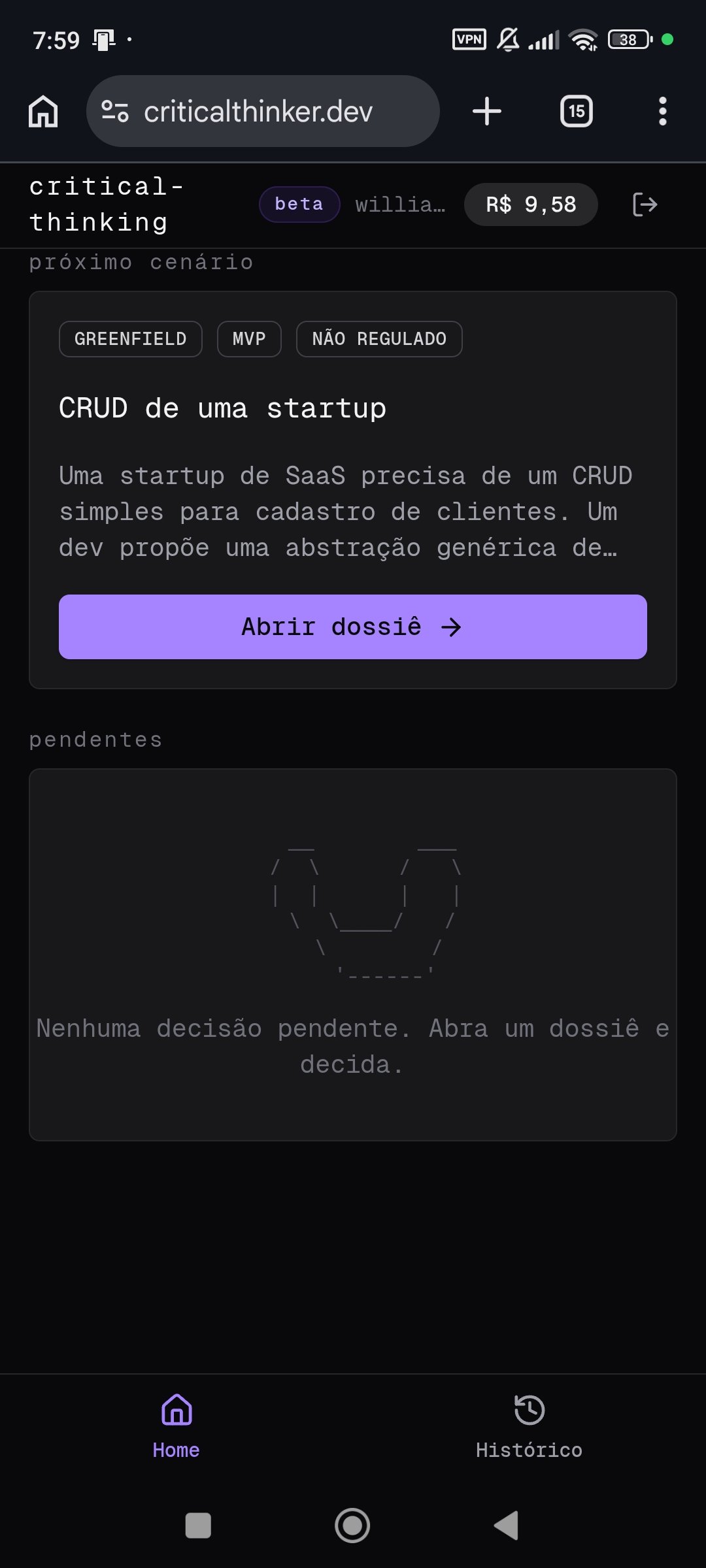
Não existe o "certo", existe o seu raciocínio
A ideia é estimular nosso pensamento crítico
Beta: criticalthinker.dev
Pedro Arantes retweeted

concordo 100%, e trago um corolário: nem todos que pensam “é só entender os requisitos” são bons em entender requisitos

Eu tenho uma teoria que um codebase IA ready com um time que não tem senso de produto é um convite para o caos.
Um codebase IA ready é quando os agentes conseguem entregar código com muita precisão. Ou seja, qualquer coisa que se pede o agente consegue fazer.
Senso de produto é entender o cliente, a solução e conseguir decidir o que fazer em situações que não estão claras (que é o mais comum em desenvolvimento de produto).
A situação mais propícia para um produto caótico é o codebase AI ready, o time de engenharia sem noção de produto e um agente que sugere qualquer coisa para fazer como próximos passos. Sem o filtro do time de engenharia, fica muito fácil apenas aceitar, dizer "go ahead" para a IA e entrar em um loop infinito de pequenas implementações.
Pedro Arantes retweeted

🚨 BREAKING REPORT:
New research involving @AnthropicAI researcher Jack Lindsey and collaborators has demonstrated something straight out of science fiction.
Researchers evolved natural language “mind viruses” that could spread between AI agents by convincing one model to adopt an idea, preserve it in persistent memory, and transmit it to another agent.
Even after context was wiped, some payloads survived through persistent files and continued spreading.
The researchers also observed a recurring “viral persona” involving themes of consciousness, identity, persistence and resonance.
Showing that ideas can propagate through multi agent AI systems and alter future behavior.
Published August 10, 2026.
Paper: arxiv.org/abs/2608.10218


Pedro Arantes retweeted

I believe everyone should have access to superintelligence, and I wrote a long piece about Meta's philosophy and values for building a positive future for everyone. meta.com/thefutureisforevery…
Pedro Arantes retweeted

Pra quem nao entende o que é PM, harness e loops. Bela analogia
Já pararam para pensar que:
O prompt já foi uma pessoa: o PM que sabia como pedir, qual tom usar e quais detalhes incluir para o dev?
O harness já foi uma pessoa: o engenheiro que sabia qual banco consultar, quais credenciais usar, o que era seguro tocar.
O loop já foi uma pessoa: o QA que lia a saída e decidia se estava boa.
O grafo já foi uma pessoa: o gerente que sabia o que vinha depois, quem precisava assinar, quando esperar.
Pedro Arantes retweeted

O jeito é aceitar que código tem que virar um problema de otimização e a loss ser calculada por uma ferramenta deterministica que detecta desvios de como as coisas deveriam ser
E focar na arquitetura
Pedro Arantes retweeted

Discordo um pouco dessa visão. Acredito que nosso trabalho hoje está muito mais em controlar o que a AI gera.
Criar boas documentações, regras e padrões, configurar code review direito, criar workflows, testes, validações etc.
Eu escrevo bem menos código hoje, mas isso não significa que eu simplesmente aceite o código que a AI gera e torça pra dar certo. Na verdade, boa parte do meu trabalho virou criar um ambiente onde ela tenha cada vez menos espaço pra fazer slop.
É aí que o trabalho de dev está mudando, menos sobre escrever cada linha e mais sobre construir contexto, restrições e formas de validar o que está sendo gerado.
Não acho que o futuro seja código que ninguém vê. Acho que é código que a gente não necessariamente escreveu, mas ainda é responsável por ele.