





Atchamic retweeted
Note, the lead is not widening. Vote anything but Hochul!
**4 MORE YEARS AND SHE’LL HAVE DOUBLED THE DEFICIT**
Do you want another four years of rising bills, thinner services, and a bigger hole in the state’s finances?
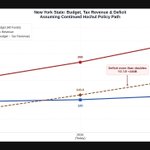
Under the current path the gap between what New York spends and what it collects in state taxes has already climbed from roughly $90 billion in 2022 to about $143 billion today. By 2030 that same gap reaches $200 billion--more than double where it stood four years ago. That is not abstract accounting. It shows up in everyday costs.
A household already paying among the highest combined state and local taxes in the country can expect continued pressure on utility bills (the state has already layered on dozens of utility tax and fee increases), higher property taxes passed through by local governments, and steeper prices for everything from childcare to car insurance as businesses and landlords absorb higher costs. Medicaid and school-aid growth that outruns revenue means either slower expansion of programs people rely on or higher taxes to keep them going. Transit riders face the prospect of fare hikes or service cuts if the MTA’s own widening gaps are not closed. High earners and businesses continue to leave, shrinking the tax base that is supposed to pay for all of it.
So far the shortfall has been papered over with three familiar tools: large amounts of federal aid, draws on cash balances and reserves, and one-time accounting moves. Federal money has covered a big share of Medicaid, education, and other programs, but those dollars are not permanent and are already being reduced. Reserves sit near $15 billion and have been kept flat even as the budget grows, so the cushion gets thinner relative to the size of the problem. One-time fixes and timing shifts make the current year look better while pushing the real cost into later years. The result is a larger structural gap--Comptroller DiNapoli has flagged roughly $32 billion in cumulative shortfalls across 2028–2030--without a durable plan to close it.
A state cannot run this way indefinitely. Spending that keeps rising faster than the tax base, while population stagnates and high-income residents leave, eventually forces a choice: higher taxes on the people and businesses that remain, cuts to the services those taxes are supposed to fund, or both. Four more years on the same trajectory simply makes the reckoning larger.
Atchamic retweeted
**4 MORE YEARS AND SHE’LL HAVE DOUBLED THE DEFICIT**
Do you want another four years of rising bills, thinner services, and a bigger hole in the state’s finances?
Under the current path the gap between what New York spends and what it collects in state taxes has already climbed from roughly $90 billion in 2022 to about $143 billion today. By 2030 that same gap reaches $200 billion--more than double where it stood four years ago. That is not abstract accounting. It shows up in everyday costs.
A household already paying among the highest combined state and local taxes in the country can expect continued pressure on utility bills (the state has already layered on dozens of utility tax and fee increases), higher property taxes passed through by local governments, and steeper prices for everything from childcare to car insurance as businesses and landlords absorb higher costs. Medicaid and school-aid growth that outruns revenue means either slower expansion of programs people rely on or higher taxes to keep them going. Transit riders face the prospect of fare hikes or service cuts if the MTA’s own widening gaps are not closed. High earners and businesses continue to leave, shrinking the tax base that is supposed to pay for all of it.
So far the shortfall has been papered over with three familiar tools: large amounts of federal aid, draws on cash balances and reserves, and one-time accounting moves. Federal money has covered a big share of Medicaid, education, and other programs, but those dollars are not permanent and are already being reduced. Reserves sit near $15 billion and have been kept flat even as the budget grows, so the cushion gets thinner relative to the size of the problem. One-time fixes and timing shifts make the current year look better while pushing the real cost into later years. The result is a larger structural gap--Comptroller DiNapoli has flagged roughly $32 billion in cumulative shortfalls across 2028–2030--without a durable plan to close it.
A state cannot run this way indefinitely. Spending that keeps rising faster than the tax base, while population stagnates and high-income residents leave, eventually forces a choice: higher taxes on the people and businesses that remain, cuts to the services those taxes are supposed to fund, or both. Four more years on the same trajectory simply makes the reckoning larger.

Atchamic retweeted
**4 MORE YEARS AND SHE’LL HAVE PERSONALLY DOUBLED THE DEFICIT**
Do you want another four years of rising bills, thinner services, and a bigger hole in the state’s finances?
Under the current path the gap between what New York spends and what it collects in state taxes has already climbed from roughly $90 billion in 2022 to about $143 billion today. By 2030 that same gap reaches $200 billion--more than double where it stood four years ago. That is not abstract accounting. It shows up in everyday costs.
A household already paying among the highest combined state and local taxes in the country can expect continued pressure on utility bills (the state has already layered on dozens of utility tax and fee increases), higher property taxes passed through by local governments, and steeper prices for everything from childcare to car insurance as businesses and landlords absorb higher costs. Medicaid and school-aid growth that outruns revenue means either slower expansion of programs people rely on or higher taxes to keep them going. Transit riders face the prospect of fare hikes or service cuts if the MTA’s own widening gaps are not closed. High earners and businesses continue to leave, shrinking the tax base that is supposed to pay for all of it.
So far the shortfall has been papered over with three familiar tools: large amounts of federal aid, draws on cash balances and reserves, and one-time accounting moves. Federal money has covered a big share of Medicaid, education, and other programs, but those dollars are not permanent and are already being reduced. Reserves sit near $15 billion and have been kept flat even as the budget grows, so the cushion gets thinner relative to the size of the problem. One-time fixes and timing shifts make the current year look better while pushing the real cost into later years. The result is a larger structural gap--Comptroller DiNapoli has flagged roughly $32 billion in cumulative shortfalls across 2028–2030--without a durable plan to close it.
A state cannot run this way indefinitely. Spending that keeps rising faster than the tax base, while population stagnates and high-income residents leave, eventually forces a choice: higher taxes on the people and businesses that remain, cuts to the services those taxes are supposed to fund, or both. Four more years on the same trajectory simply makes the reckoning larger.

Atchamic retweeted
Bad news for us. Ps: Newsday seems a little off on this.
**4 MORE YEARS AND SHE’LL HAVE DOUBLED THE DEFICIT**
Do you want another four years of rising bills, thinner services, and a bigger hole in the state’s finances?
Under the current path the gap between what New York spends and what it collects in state taxes has already climbed from roughly $90 billion in 2022 to about $143 billion today. By 2030 that same gap reaches $200 billion--more than double where it stood four years ago. That is not abstract accounting. It shows up in everyday costs.
A household already paying among the highest combined state and local taxes in the country can expect continued pressure on utility bills (the state has already layered on dozens of utility tax and fee increases), higher property taxes passed through by local governments, and steeper prices for everything from childcare to car insurance as businesses and landlords absorb higher costs. Medicaid and school-aid growth that outruns revenue means either slower expansion of programs people rely on or higher taxes to keep them going. Transit riders face the prospect of fare hikes or service cuts if the MTA’s own widening gaps are not closed. High earners and businesses continue to leave, shrinking the tax base that is supposed to pay for all of it.
So far the shortfall has been papered over with three familiar tools: large amounts of federal aid, draws on cash balances and reserves, and one-time accounting moves. Federal money has covered a big share of Medicaid, education, and other programs, but those dollars are not permanent and are already being reduced. Reserves sit near $15 billion and have been kept flat even as the budget grows, so the cushion gets thinner relative to the size of the problem. One-time fixes and timing shifts make the current year look better while pushing the real cost into later years. The result is a larger structural gap--Comptroller DiNapoli has flagged roughly $32 billion in cumulative shortfalls across 2028–2030--without a durable plan to close it.
A state cannot run this way indefinitely. Spending that keeps rising faster than the tax base, while population stagnates and high-income residents leave, eventually forces a choice: higher taxes on the people and businesses that remain, cuts to the services those taxes are supposed to fund, or both. Four more years on the same trajectory simply makes the reckoning larger.

Atchamic retweeted

78 female Democrats in Congress BLOCKED the release of sexual misconduct reports.
The same ones yelling about Epstein 24/7.
The irony is wild.

Atchamic retweeted

We would rather see you wandering around like this (with your tax-funded security protecting you from your cashless bail pals) than adding to your other 'accomplishments.'
You've screwed us in about every way already. Do you really have more to destroy with another term?

Atchamic retweeted
NY VOTES RESULTS, NOT INSULTS
New York once proved that results beat ideology. Under Gov. George Pataki (1995–2006), the state enacted over $100 billion in cumulative tax cuts, created more than 600,000 jobs, and cut welfare rolls by over a million people. He signed more than 100 laws toughening criminal penalties. Crime fell for 11 consecutive years. New York went from the 6th most violent state to the 6th safest and the safest large state in the nation. That is what accountability and economic growth look like.
Kathy Hochul’s record is the opposite. She inherited and has defended the 2019 bail reforms that stripped judges of the ability to weigh public safety and dangerousness for many offenses. Minor tweaks since then have not fixed the core problem. High-risk defendants released without meaningful conditions reoffend at elevated rates. The revolving door has produced repeat assaults, robberies, and worse. Families have buried loved ones because people with serious records walked free after arrest. That is not compassion—it is a policy failure that has cost lives.
Her sanctuary stance has compounded the damage. New York has refused to honor thousands of ICE detainers. Federal data shows these unhonored requests involve people charged with or convicted of homicide, sexual assault, kidnapping, weapons offenses, and other serious crimes.
The result is criminal illegal aliens released back onto the streets. Specific cases include the subway attack that killed Air Force veteran Richard Williams and other preventable victimizations. Hochul even signed legislation limiting local police cooperation with ICE. These choices prioritize non-citizens who break the law over the safety of New Yorkers.
Voters can judge the records. One administration cut taxes, created jobs, and drove crime down for over a decade. The other has overseen higher costs, defended policies that return dangerous people to the street, and accepted sanctuary outcomes that have led to American deaths. Results, not rhetoric. Vote accordingly.


Atchamic retweeted

Governor Hochul, while you’re enjoying the Halloween decorations in Sleepy Hollow, Black families in Buffalo are living with problems that don’t disappear when the costumes come off.
How many Buffalo parents are worried about paying rent, keeping the lights on, putting groceries on the table, or getting their children through schools where far too many students cannot demonstrate grade-level proficiency?
You found time for a seasonal photo opportunity. When will Buffalo’s struggling neighborhoods get the same attention?
Halloween is supposed to be frightening for one night. For families facing poverty, educational failure, and economic insecurity, the uncertainty lasts all year.
And here’s the particularly egregious part: New York has one of the country’s highest levels of per-pupil education spending. Yet spending and educational achievement remain two very different things.
Governor, here are the numbers your Halloween photograph won’t show.
According to the U.S. Census Bureau, 26% of Buffalo residents live in poverty. Census.gov Buffalo’s 2024–25 school results show just 28% proficiency in English language arts and 25% in mathematics among tested students in grades 3 through 8. Acture Insights +1
That’s approximately three out of four students failing to reach proficiency in mathematics, while the state spends billions on education.
Governor, Buffalo’s Black families do not need another picturesque photograph. They need measurable improvements in educational achievement, economic opportunity, neighborhood safety, and housing affordability.
Enjoy Sleepy Hollow. But remember, you govern Buffalo, too.
And the frightening numbers are real.
#AStoneGroove #SilentMajoritySpeaks

**4 MORE YEARS AND SHE’LL HAVE DOUBLED THE DEFICIT**
Do you want another four years of rising bills, thinner services, and a bigger hole in the state’s finances?
Under the current path the gap between what New York spends and what it collects in state taxes has already climbed from roughly $90 billion in 2022 to about $143 billion today. By 2030 that same gap reaches $200 billion--more than double where it stood four years ago. That is not abstract accounting. It shows up in everyday costs.
A household already paying among the highest combined state and local taxes in the country can expect continued pressure on utility bills (the state has already layered on dozens of utility tax and fee increases), higher property taxes passed through by local governments, and steeper prices for everything from childcare to car insurance as businesses and landlords absorb higher costs. Medicaid and school-aid growth that outruns revenue means either slower expansion of programs people rely on or higher taxes to keep them going. Transit riders face the prospect of fare hikes or service cuts if the MTA’s own widening gaps are not closed. High earners and businesses continue to leave, shrinking the tax base that is supposed to pay for all of it.
So far the shortfall has been papered over with three familiar tools: large amounts of federal aid, draws on cash balances and reserves, and one-time accounting moves. Federal money has covered a big share of Medicaid, education, and other programs, but those dollars are not permanent and are already being reduced. Reserves sit near $15 billion and have been kept flat even as the budget grows, so the cushion gets thinner relative to the size of the problem. One-time fixes and timing shifts make the current year look better while pushing the real cost into later years. The result is a larger structural gap--Comptroller DiNapoli has flagged roughly $32 billion in cumulative shortfalls across 2028–2030--without a durable plan to close it.
A state cannot run this way indefinitely. Spending that keeps rising faster than the tax base, while population stagnates and high-income residents leave, eventually forces a choice: higher taxes on the people and businesses that remain, cuts to the services those taxes are supposed to fund, or both. Four more years on the same trajectory simply makes the reckoning larger.
**4 MORE YEARS AND SHE’LL HAVE PERSONALLY DOUBLED THE DEFICIT**
Do you want another four years of rising bills, thinner services, and a bigger hole in the state’s finances?
Under the current path the gap between what New York spends and what it collects in state taxes has already climbed from roughly $90 billion in 2022 to about $143 billion today. By 2030 that same gap reaches $200 billion--more than double where it stood four years ago. That is not abstract accounting. It shows up in everyday costs.
A household already paying among the highest combined state and local taxes in the country can expect continued pressure on utility bills (the state has already layered on dozens of utility tax and fee increases), higher property taxes passed through by local governments, and steeper prices for everything from childcare to car insurance as businesses and landlords absorb higher costs. Medicaid and school-aid growth that outruns revenue means either slower expansion of programs people rely on or higher taxes to keep them going. Transit riders face the prospect of fare hikes or service cuts if the MTA’s own widening gaps are not closed. High earners and businesses continue to leave, shrinking the tax base that is supposed to pay for all of it.
So far the shortfall has been papered over with three familiar tools: large amounts of federal aid, draws on cash balances and reserves, and one-time accounting moves. Federal money has covered a big share of Medicaid, education, and other programs, but those dollars are not permanent and are already being reduced. Reserves sit near $15 billion and have been kept flat even as the budget grows, so the cushion gets thinner relative to the size of the problem. One-time fixes and timing shifts make the current year look better while pushing the real cost into later years. The result is a larger structural gap--Comptroller DiNapoli has flagged roughly $32 billion in cumulative shortfalls across 2028–2030--without a durable plan to close it.
A state cannot run this way indefinitely. Spending that keeps rising faster than the tax base, while population stagnates and high-income residents leave, eventually forces a choice: higher taxes on the people and businesses that remain, cuts to the services those taxes are supposed to fund, or both. Four more years on the same trajectory simply makes the reckoning larger.
Bad news for us. Ps: Newsday seems a little off on this.
**4 MORE YEARS AND SHE’LL HAVE DOUBLED THE DEFICIT**
Do you want another four years of rising bills, thinner services, and a bigger hole in the state’s finances?
Under the current path the gap between what New York spends and what it collects in state taxes has already climbed from roughly $90 billion in 2022 to about $143 billion today. By 2030 that same gap reaches $200 billion--more than double where it stood four years ago. That is not abstract accounting. It shows up in everyday costs.
A household already paying among the highest combined state and local taxes in the country can expect continued pressure on utility bills (the state has already layered on dozens of utility tax and fee increases), higher property taxes passed through by local governments, and steeper prices for everything from childcare to car insurance as businesses and landlords absorb higher costs. Medicaid and school-aid growth that outruns revenue means either slower expansion of programs people rely on or higher taxes to keep them going. Transit riders face the prospect of fare hikes or service cuts if the MTA’s own widening gaps are not closed. High earners and businesses continue to leave, shrinking the tax base that is supposed to pay for all of it.
So far the shortfall has been papered over with three familiar tools: large amounts of federal aid, draws on cash balances and reserves, and one-time accounting moves. Federal money has covered a big share of Medicaid, education, and other programs, but those dollars are not permanent and are already being reduced. Reserves sit near $15 billion and have been kept flat even as the budget grows, so the cushion gets thinner relative to the size of the problem. One-time fixes and timing shifts make the current year look better while pushing the real cost into later years. The result is a larger structural gap--Comptroller DiNapoli has flagged roughly $32 billion in cumulative shortfalls across 2028–2030--without a durable plan to close it.
A state cannot run this way indefinitely. Spending that keeps rising faster than the tax base, while population stagnates and high-income residents leave, eventually forces a choice: higher taxes on the people and businesses that remain, cuts to the services those taxes are supposed to fund, or both. Four more years on the same trajectory simply makes the reckoning larger.
Atchamic retweeted
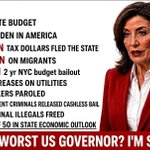
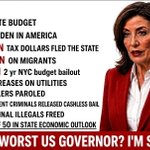
📣 Hochul CONSTANTLY treating “New York’s first mom governor” as the achievement. It's actually THE TELL.
If that milestone were evidence she was doing a good job, the results would back it up. THEY DON'T! Instead New York ranks DEAD LAST in personal income growth, tax competitiveness, economic outlook, and population out-migration. IF SHE CARES ABOUT NY FAMILIES WHY IS SHE CHASING THEM OUT FOR FOR BETTER OPPORTUNITIES ELSEWHERE?
Being the first mom governor doesn’t prove competence any more than it proves failure. The record does. Right now the record says she is FAILING AT THE JOB, not defining it. If the priority really is families, the numbers should show it.
Save NY, vote ANYTHING OTHER THAN HOCHUL.
