
Prof in infectious disease ecology & network epi @Georgetown. #netsci, #spatialepi, #bigdata, #mathbio, #openscience, she/her. @bansallab@mstdn.science
Washington, DC
Joined September 2011
- Tweets2.2K
- Following861
- Followers3.6K
- Likes3.4K




Shweta Bansal retweeted

We recently preprinted our meta-analysis of spatial and social behaviour in wild animal systems! Have a read if you're interested in density dependence, disease transmission, network scaling and structuring, or comparative behavioural work: doi.org/10.1101/2024.06.28.6… (1/4)

Shweta Bansal retweeted

Some new old work from the @bansallab is out now in Vaccine - how do you build a vaccine stockpile that's smart about both spillover and spread? Two case studies on MERS and Nipah, with thanks to @CEPIvaccines 🔓
authors.elsevier.com/a/1jHp7…

Shweta Bansal retweeted

#NetSci2024 is almost here! Join us Monday, June 17 in Room 206A for two incredible sessions:
🌟 9am: EPIMOB2024
🌟 2:30pm: DISRUPT-NET
Programs out now:
🔗 EPIMOB2024: epimob.weebly.com/program.ht…
🔗 DISRUPT-NET: disrupt-net.weebly.com/progr…
See you there!
The addition of diversity, equity, and inclusion (DEI) sessions at scientific conferences is excellent progress! ...
Managing diseases in livestock in a country the size of the U.S. is a huge challenge due to the frequent and extensive movement of animals across the nation. Learn more in a piece I wrote for @statnews with my colleague, Colleen Webb (CSU):
statnews.com/2024/05/07/trac…

Pasteurization appears to inactivate #H5N1 so milk continues to be safe, but you might be surprised to learn how prevalent raw milk consumption is in the US.
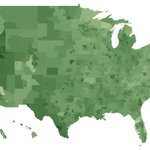
Raw milk sales are permitted in most states (thanks to @AlexesMerritt for the map, data from procon.org)

A recent study also found that 4.4% of US adults had raw milk in the last year. And the traits most associated with raw milk consumption: young age (18-35yo), high income (also possibly high education), living in the Northeast, and in rural areas. doi.org/10.4315/JFP-21-407
For more on raw milk H5N1 risks, also check out @HelenBranswell great piece from yesterday: statnews.com/2024/04/29/bird…

Shweta Bansal retweeted
‼️ Excited to announce the FIRST edition of DISRUPT-NET satellite at @netsci2024 ‼️ Co-organized with @bansallab and @Gfalbery. The call for abstracts is now open. The submission deadline is May 1, 2024. Visit epimob.weebly.com/call-for-a… for more information.

Shweta Bansal retweeted

3. Impact of spatial connectivity on NPIs effectiveness
@chiaresabbatini @pullano_giulia @laura_didom @s_rubrichi @bansallab @FaculteSanteSU @iplesp @inserm @agenceANRS @AgenceRecherche @MOOD_H2020 @ESCAPEpandemics
bmcinfectdis.biomedcentral.c…


3 new papers between the end of 2023 and the start of 2024 !
@Leblanc_Judith @eugeValdano @chiaresabbatini


Shweta Bansal retweeted
Some new (old) work with @bansallab up on medRxiv today: how do you design a vaccine stockpile that's robust to heterogeneity in spillover risk, epidemic characteristics, human mobility, and vaccination strategies? Case studies on Nipah virus and MERS-CoV: medrxiv.org/content/10.1101/…


Shweta Bansal retweeted
New paper!! In it, @mattjsilk, @bansallab, and I look at the social network literature to examine how and why people compare social networks across species, identifying problems and suggesting solutions to help do so in the future: onlinelibrary.wiley.com/doi/…

Shweta Bansal retweeted

This #ABS2023 talk by Melissa Collier et al. in @bansallab was one of my favorites so far: social behavior has big consequences for disease transmission in bottle nose dolphins! 🐬

Shweta Bansal retweeted
😍 Come to see my poster #52 on assessing spatial connectivity in the US for metapopulation models using mobility data @netsci2023 @bansallab @vcolizza #epimob

Shweta Bansal retweeted
Just presented my work on characterizing the mobility process behind the early-stage COVID-19 spatial invasion in Senegal w/ @chiaresabbatini @bansallab @vcolizza @netsci2023

Hearty Congratulations to @casey_zipfel! So proud! grad.georgetown.edu/2023/06/…

Shweta Bansal retweeted

Researchers have disentangled the rhythms of human indoor activity to better understand the risks of respiratory disease transmission. elifesciences.org/articles/8…
