
Author most recently of Land Between the Rivers: A 5,000 Year History of Iraq. Former editor, Middle East Monitor and foreign editor, Prospect Magazine.
Joined August 2011
- Tweets473
- Following369
- Followers695
- Likes3.1K








Pinned Tweet
A very nice review of my new book LAND BETWEEN THE RIVERS in the New York Times.
"Conceptual originality and laudable ambition... inspired by firsthand experience of the region. A sweeping history."
nytimes.com/2024/09/08/books…
Professor van de Mieroop is a giant in his field and I'm honored.
@nytimesbooks @groveatlantic @atlanticbooks

Blue tsunami: nobody's talking about the role of the pro-Putin stance within the White House regarding Ukraine
Americans poll 90-10 against Putin and with Ukraine. Including more than 85% of Republicans
Not #1 issue but it lands in a deep place where Americans feel real horror

Bartle Bull retweeted

270 us election
Hey if you have trouble waiting for all the returns, try playing 270 US election found on the Apple or Android play stores to kill some time and sharpen your skills.
It’s my game to let everyone act as campaign manager so now is the time to have fun.
Download it

November 1st, 1814: the Congress of Vienna begins. 100,000 visitors descend upon the city. The Four Powers want to exclude France, but within a week Talleyrand works his way into the inner circle. The resulting Concert of Europe lasts 100 years.

I've ordered my copy of the next great American work of art by @walterkirn of the superb @countyhwy

Bartle Bull retweeted

There is one in Harvard's Memorial Church too, in Latin, about the German Harvardians who fought in WWI diversis sub signis. No such memorial for the Second World War, which is right.


Thrilled to receive my copy of the latest from the courageous, learned and faithful Pastor @jakedell73

Bartle Bull retweeted

Riots Fizzle Out As French Refuse To Protest More Than 32 Hours Per Week buff.ly/dBUpivo

On this date in 1812, Napoleon, in a hut in the Russian village of Gorodnia, makes the fateful choice of the ruined road to Smolensk for his withdrawal from Moscow.
In that scorched-earth wasteland devoid of food or forage, the Grande Armee dies, never to recover, and with it the Napoleonic dream.
The alternative "southern route," with General Kutuzov in the way, is untouched and "abundant."

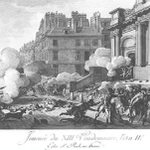
October 5th 1795: a 26-year old Napoleon's famous "Whiff of grapeshot" clears the Paris streets.
October 5th 2026: the last day before the present riots, then small but already violent, explode into a massive intifada.

Bartle Bull retweeted

Jack London’s study.
His stories, particularly his short stories, are some of the most gripping prose in the English language.


The undersung and little-understood War of 1812 paved the way for this ....and for the rest of the world-saving partnership between the two great English-speaking nations.

The Laying of the First Transatlantic Telegraph Cable 🇬🇧🇺🇸
The massive 2000+ mile long wire was laid by Great Britain and the US in 1858.
To complete the feat HMS Agamemnon and USS Niagara, each shouldering half the burden, began at opposite ends of the Atlantic and met in the middle.
The cable was then spliced together and dropped to the sea floor.
Slowly, but surely, the Agamemnon and Niagara returned to their respective continents, specifically Ireland and Newfoundland.
Both ships arrived by the 5th of August and their ends were connected to the local telegraph network.
The first Transatlantic telegraph was then sent was by Queen Victoria to President James Buchanan.
It took some 16 hours to transmit.
It was an incredible achievement and one that paved the way for the undersea cables which connect our world so effortlessly today.

In England the sharing of baths (sequentially; and to a lesser but meaningful degree, simultaneously) is considered a sign of good breeding.
@walterkirn


This by the great @aroberts_andrew just in.... Can't remember the last time I looked forward so much to reviewing a book.
@WSJBooks

Bartle Bull retweeted

Oct 13, 1812: American troops crossed the Niagara River to invade Canada and ended up trapped on a cliff, watching thousands of their own militia refuse to come help them.
The US had declared war on Britain that June, and many Americans believed Canada would fall easily. The army on the Niagara frontier was commanded by Stephen Van Rensselaer, a New York politician and militia general with no real military experience.
Before dawn, boats started ferrying American soldiers across the river to the village of Queenston. British fire was heavy and many boats were hit or drifted off. A wounded young captain named John Wool found a fishermen's path up the cliff and led his men to the top. They took the British cannon on the heights.
Gen. Isaac Brock, the British commander and the best general Britain had in Canada, rushed to the scene and led a counterattack up the hill on foot. He was tall, in a bright uniform, and an easy target. An American shot him in the chest and he died on the slope. He's still one of Canada's greatest heroes.
Lt. Col. Winfield Scott crossed over to take command on the heights. But on the American shore, thousands of New York militiamen refused to get in the boats. They said militia couldn't be forced to fight outside the United States. They'd also seen the wounded being brought back.
That afternoon British reinforcements and Mohawk warriors closed in. With their backs to the cliff and no help coming, the Americans surrendered. Scott tied a white cravat to his sword to give up. Around 900 Americans were captured.
Scott was later exchanged. He went on to become one of the greatest generals in American history.

Bartle Bull retweeted

On this day in 1994: Netscape Navigator launched.
It was the first commercial web browser.

Bartle Bull retweeted

Jean Lafitte (c. 1780 - c. 1820) was a pirate, smuggler, and one of the most notorious figures to operate around New Orleans.
Born around 1780, Lafitte and his brother Pierre established themselves in the Barataria Bay region south of New Orleans, where they built a smuggling empire. From their base at Grand Terre, Lafitte’s men captured and smuggled goods while operating outside the authority of the United States and Spain.
But when the British threatened New Orleans during the War of 1812, Lafitte found himself in an unexpected position.
In late 1814, the British approached Lafitte and offered him money, protection, and a commission if he would help them attack New Orleans. Instead, Lafitte warned the Americans of the British plans.
Andrew Jackson initially distrusted Lafitte, but the pirate eventually offered his men, weapons, ammunition, and knowledge of the local waterways to the American cause.
Lafitte’s Baratarians fought alongside Jackson’s army during the Battle of New Orleans on January 8, 1815. His artillerymen were particularly valuable, helping man the American guns behind the earthworks.
The Americans won a resounding victory, and Lafitte’s name became forever connected with the defense of New Orleans.
Ironically, the man who had spent years evading the law became an American hero in one of the most famous battles in U.S. history.
Lafitte eventually disappeared from the Gulf Coast and the details of his later life remain uncertain. But his name never disappeared from New Orleans.
Today, Jean Lafitte is remembered throughout Louisiana—in places such as Jean Lafitte National Historical Park and Preserve, streets, and businesses.
From pirate and smuggler to wartime ally, Jean Lafitte left one of those most interesting legacies in New Orleans and American History.

Bartle Bull retweeted

Imagine being one of Columbus' sailors.
You are sailing into the complete unknown, going weeks without seeing land, and surviving solely on stale biscuits.
You must have thought you had followed a madman to your doom; but then, all of a sudden, you land on an island previously unknown to your world, and it is inhabited by a population completely alien to you.
An entire new world had just opened up, and it must have seemed limitless.
All the old stories of Eden, the Fountain of Youth, and cities of gold, were all suddenly very possible.


