

Aviation Safety professional. Chief of Flight Safety of aviation company. Love nature, pets, music & cooking. Opinions personal.
Bengaluru, India
Joined August 2009
- Tweets239K
- Following1.5K
- Followers7.1K
- Likes186K

Chris Viper-1 retweeted

For twenty years, helicopters flew low over a few villages in north Kerala and sprayed something on the hills. Children there were being born with illnesses doctors could not explain. The person who finally stopped the helicopters was not a scientist or a minister. It was a woman who noticed the fish in her well had died.
Her name is Leelakumari Amma.
She was an agricultural officer and lived in Pullur, Kasaragod, next to the cashew estates of the Plantation Corporation of Kerala, a company owned by the state government. From 1978 the corporation sprayed the pesticide endosulfan over those estates from the air. The mist settled on homes, ponds, wells and schools below.
On spraying days she could not open her windows. Around the estates, babies were born with deformed limbs and enlarged heads. Nobody had officially connected it to the spraying.
In October 1998 she filed a case in the Munsif Court at Hosdurg. The court gave an interim order stopping the spraying. The corporation fought back. She won again in the sub court.
In 2000 the Kerala High Court upheld the order.
The helicopters stopped.
In 2011 the Supreme Court banned endosulfan across India. Kerala listed 6,278 people in Kasaragod as endosulfan victims, and about 500 deaths were officially recognised.
In January 2017 the Supreme Court ordered ₹5 lakh compensation for each victim. In May 2022 it pulled up the state over the delay. Reports from that hearing said only 8 of 3,704 eligible victims had been paid in full.
From @san_x_m .

Chris Viper-1 retweeted

UP SSR Draft roll analysis: Do read 👇🏼
The 2026 Special Intensive Revision removed 2.89 crore names to clean Uttar Pradesh's roll. We then read every one of the 13,58,68,905 entries in the 2027 SSR draft, card by card, across 403 constituencies and 1,73,730 booths. This is what the clean-up left behind. 👇🏼
macinsights.in/stories/13-59…


Chris Viper-1 retweeted

🇮🇳 I’m not saying he had it coming…. but he had it coming!
Speed limits exist for a reason. You can’t do GTA in real life, bud. It doesn’t work like that!
Writer: Jamie


Chris Viper-1 retweeted

At MLA Anant Singh’s daughter’s wedding scenes, Bihari hoards completely bereft of basic human dignity
No wonder Modi is so desperate to push the delimitation bill through in order to give these vermin slaves all the clout to rule India.
The same Modi promises Vishwaguru status for India by 2047😡🤬

Chris Viper-1 retweeted

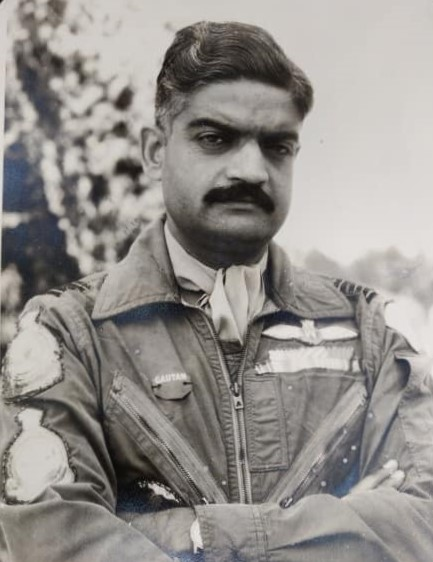
One brother earned the MVC & Bar, the other the VM & Bar!
Gautam's younger brother, Wg Cdr P Ashoka (4653), won two trophies at the Empire Test Pilots' School, Farnborough, in 1963. He earned his Vayu Sena Meda for expanding the flight envelope of the HF-24 Marut and a Bar for his pioneering work on the HS-748 freighter.
He spent 24 years as Chief Test Pilot at HAL, successively at Kanpur, Nasik and Bangalore. His memoir, 'Riding the Wind', published in 2019, chronicles a remarkable flying career spanning half a century and also of the growth of military aviation in this country.
#IAFHistory @IAF_MCC


On this day in 1972, one of the IAF's finest Canberra pilots accomplished an extraordinary feat of flying. He brought an engineless MiG-21 down intact in an agricultural field outside Pune. Tragically, it was what happened after touchdown that cost him his life.
Wg Cdr Padmanabha 'Bob' Gautam (4482), MVC & Bar, VM, was just 39. He was one of only two IAF officers to have been awarded the Maha Vir Chakra twice.
An alumnus of 3 JSW at Dehradun, the precursor to the NDA, Gautam was commissioned with the 60th Pilots' Course on 1 April 1953. He started his flying career on fighters, followed by a stint instructing on Harvards at Jodhpur. In 1958, he converted to the Canberra with the very first Jet Bomber Conversion Unit (1 JBCU) course at Agra.
In October 1961, Gautam was amongst the pilots of the six-Canberra detachment of 5 Squadron sent to the Congo under Wg Cdr AIK Suares as part of the UN mission.
The Katangese forces possessed a Fouga Magister jet, flown by mercenary pilots, which had been harassing UN ground forces. On 6 December 1961, Suares and Gautam attacked its base at Kolwezi, nearly 1,300 km from their operating base, through exceptionally difficult weather.
The Fouga had been parked away from the runway in a jungle clearing. Despite heavy ground fire, Gautam destroyed it, attacked three other aircraft and damaged airfield installations. The raid effectively broke the back of the Katangese air arm. Gautam subsequently flew several close air support missions over Elizabethville, earning a Vayu Sena Medal for Gallantry.
By the 1965 War, Sqn Ldr Gautam was commanding JBCU at Agra. The conversion unit and its instructors were pressed into operational service, with Gautam undertaking some of the most demanding missions of the Canberra fleet.
On the night of 13 September, six Canberras raided Peshawar, at the extremity of their operating range, deep inside Pakistan. Gautam was the pathfinder, responsible for locating and marking the target for the other bombers. Despite intense anti-aircraft fire, he accurately placed the Target Indicator Bomb and inflicted damage on the runway. On their way out, the Canberras were intercepted by a Pakistani F-104 Starfighter, which fired a missile at one of them. All six returned safely.
Gautam also undertook reconnaissance, airfield attacks and ground strafing missions against Pakistani troop concentrations in the Gujrat and Chawinda sectors, braving ground fire and Sabre opposition. He earned his first Maha Vir Chakra.
Between 1967 and 1969, Gautam served as a flying instructor in Iraq, flying the MiG-15 and MiG-17. Remarkably, while in Iraq, he accomplished a near dead-stick landing on a MiG-17, earning commendations from both the Iraqi government and the IAF.
Returning to India, he took command of 16 Squadron at Gorakhpur. In December 1971, Gautam and his navigator, Sqn Ldr Kalyan Kumar Dutta (5450), flew six missions together across both theatres of the war, including daring night raids on Mianwali. Gautam earned a Bar to his MVC and Dutta a Vir Chakra.
In 1972, Gautam moved to Pune as Officer-in-Charge Flying of 2 Wing and converted to the MiG-21. Interestingly, his Station Commander, Air Cmde Dilbagh Singh, the first CO of the IAF's first MiG-21 squadron and a future Air Chief, was himself converting to the Canberra.
On the morning of 25 November, Gautam was on his eighth training sortie after conversion, flying a MiG-21 FL of 8 Squadron, when he suffered an engine failure.
The Senior Air Traffic Control Officer on duty, K. Parthasarthy (6175), asked Gautam over the radio, “Ejecting?”
“Belly landing,” came the response.
With its delta wing, high landing speed and rapidly diminishing energy in unpowered flight, the MiG-21 was a particularly unforgiving aircraft to force-land. Attempting it with the undercarriage retracted, outside an airfield, was quite another proposition.
Parthasarthy watched in astonishment as Gautam brought the aircraft down in a large harvested field. The MiG touched down intact and travelled a considerable distance before striking a wall of boulders and catching fire.
Barely half an hour earlier, Gautam and Parthasarthy had been making plans to take their annual physical fitness test together.
In less than twenty years of commissioned service, Gautam had fought in three conflicts, instructed pilots in two air forces and earned three gallantry decorations. His two younger brothers, P Ashoka and P Ajit, were also IAF pilots, both qualifying as test pilots.
There is a little-known tradition at V.S. Satav School in Wagholi, near Pune. Gautam is believed to have steered his stricken aircraft away from the school before attempting the forced landing. More than half a century later, the school reportedly continues to pay homage to him.
#IAFHistory @IAF_MCC
Chris Viper-1 retweeted

Why Saurav has been stopped from paying tribute to Babasaheb Ambedkar in UP?

Chris Viper-1 retweeted

I was on my way to Meerut to pay homage to Babasaheb Ambedkar ji’s statue on Constitution Day. But I am stopped at the border and being disallowed. Is offering flowers to Babasaheb a crime in UP today?
क्या यूपी में बाबासाहेब जी के मूर्ति को माला चढ़ाना आज एक अपराध हे? मैं इसका विरोध करता हूँ।

Chris Viper-1 retweeted
The MiG-21 wasn’t just an interceptor; it was a cameraman. @IAF_MCC turned it into a fighter-recce (FR) system. Began as an experiment in 1971 War, built into a program in 1977 with 101 Sqn, consolidated in 17 Sqn, and validated in Kargil. (1/19)
#MiG21Nuggets #IAFHistory

Chris Viper-1 retweeted
Are a few more views, likes and followers really worth compromising something as basic as intellectual honesty?
In a little over three months, three pieces of my writing on the history of the Indian Air Force have been plagiarised. One on the MiG-25's role in Op Safed Sagar, another on Air Vice Marshal Jaswant Singh, and most recently one on Wing Commander P. Gautam. Entire passages reproduced verbatim or with a little paraphrasing.
Despite several readers and well-wishers taking up the issue, little has come of it. Substack has neither acted on my complaint nor communicated what action it intends to take. X does not even offer a straightforward way to report plagiarism.
I spend a considerable part of my spare time sifting through old records, studying logbooks, speaking to veterans and their families, and trying to piece together the history of our Air Force. Much of this work is possible because people have been extraordinarily generous in sharing their memories, knowledge and personal archives with me. I have an ethical obligation to acknowledge their contributions.
I share and write purely for the love of it and because I feel that the history of the Indian Air Force deserves to be known far more widely, both within India and outside.
I have always encouraged people to use my research and reproduce my writing. I am genuinely delighted when someone takes these stories to an audience I may never have been able to reach. But surely, in doing so, we can observe some basic ethics.
There is so much of our history that remains untold. And there is only so much time one has to pursue it alongside everything else in life.
I would much rather spend that time researching the next story than having to establish that I wrote the last one.


Chris Viper-1 retweeted

I get very scared when I receive mails from LinkedIn saying that 98 people are viewing my profile…I’m like, which BS Dhanoa’s profile are they really interested to know and more importantly what is the context of people’s interest in the profile, coz I haven’t updated it in ages
Chris Viper-1 retweeted

navdeep rinwa is a 1999 batch ias officer serving as the chief electoral officer of uttar pradesh.
i allege, there is atleast 1 (ONE) 1999 batch ias officer that does not know how to read anymore
@ceoup do you know who that 1999 batch ias officer could be


The draft electoral roll( or voter list) of Special Summary Revision(SSR- 2027) published on 17th November 2026 is available on the website of Chief Electoral Officer Uttar Pradesh ( ceouttarpradesh.nic.in ) is machine readable and searchable.
@ECISVEEP
Chris Viper-1 retweeted

The post wasn't written by her but copied from Anchit Gupta.
teapaw.org/AnchitGupta9/status/21…
On this day in 1972, one of the IAF's finest Canberra pilots accomplished an extraordinary feat of flying. He brought an engineless MiG-21 down intact in an agricultural field outside Pune. Tragically, it was what happened after touchdown that cost him his life.
Wg Cdr Padmanabha 'Bob' Gautam (4482), MVC & Bar, VM, was just 39. He was one of only two IAF officers to have been awarded the Maha Vir Chakra twice.
An alumnus of 3 JSW at Dehradun, the precursor to the NDA, Gautam was commissioned with the 60th Pilots' Course on 1 April 1953. He started his flying career on fighters, followed by a stint instructing on Harvards at Jodhpur. In 1958, he converted to the Canberra with the very first Jet Bomber Conversion Unit (1 JBCU) course at Agra.
In October 1961, Gautam was amongst the pilots of the six-Canberra detachment of 5 Squadron sent to the Congo under Wg Cdr AIK Suares as part of the UN mission.
The Katangese forces possessed a Fouga Magister jet, flown by mercenary pilots, which had been harassing UN ground forces. On 6 December 1961, Suares and Gautam attacked its base at Kolwezi, nearly 1,300 km from their operating base, through exceptionally difficult weather.
The Fouga had been parked away from the runway in a jungle clearing. Despite heavy ground fire, Gautam destroyed it, attacked three other aircraft and damaged airfield installations. The raid effectively broke the back of the Katangese air arm. Gautam subsequently flew several close air support missions over Elizabethville, earning a Vayu Sena Medal for Gallantry.
By the 1965 War, Sqn Ldr Gautam was commanding JBCU at Agra. The conversion unit and its instructors were pressed into operational service, with Gautam undertaking some of the most demanding missions of the Canberra fleet.
On the night of 13 September, six Canberras raided Peshawar, at the extremity of their operating range, deep inside Pakistan. Gautam was the pathfinder, responsible for locating and marking the target for the other bombers. Despite intense anti-aircraft fire, he accurately placed the Target Indicator Bomb and inflicted damage on the runway. On their way out, the Canberras were intercepted by a Pakistani F-104 Starfighter, which fired a missile at one of them. All six returned safely.
Gautam also undertook reconnaissance, airfield attacks and ground strafing missions against Pakistani troop concentrations in the Gujrat and Chawinda sectors, braving ground fire and Sabre opposition. He earned his first Maha Vir Chakra.
Between 1967 and 1969, Gautam served as a flying instructor in Iraq, flying the MiG-15 and MiG-17. Remarkably, while in Iraq, he accomplished a near dead-stick landing on a MiG-17, earning commendations from both the Iraqi government and the IAF.
Returning to India, he took command of 16 Squadron at Gorakhpur. In December 1971, Gautam and his navigator, Sqn Ldr Kalyan Kumar Dutta (5450), flew six missions together across both theatres of the war, including daring night raids on Mianwali. Gautam earned a Bar to his MVC and Dutta a Vir Chakra.
In 1972, Gautam moved to Pune as Officer-in-Charge Flying of 2 Wing and converted to the MiG-21. Interestingly, his Station Commander, Air Cmde Dilbagh Singh, the first CO of the IAF's first MiG-21 squadron and a future Air Chief, was himself converting to the Canberra.
On the morning of 25 November, Gautam was on his eighth training sortie after conversion, flying a MiG-21 FL of 8 Squadron, when he suffered an engine failure.
The Senior Air Traffic Control Officer on duty, K. Parthasarthy (6175), asked Gautam over the radio, “Ejecting?”
“Belly landing,” came the response.
With its delta wing, high landing speed and rapidly diminishing energy in unpowered flight, the MiG-21 was a particularly unforgiving aircraft to force-land. Attempting it with the undercarriage retracted, outside an airfield, was quite another proposition.
Parthasarthy watched in astonishment as Gautam brought the aircraft down in a large harvested field. The MiG touched down intact and travelled a considerable distance before striking a wall of boulders and catching fire.
Barely half an hour earlier, Gautam and Parthasarthy had been making plans to take their annual physical fitness test together.
In less than twenty years of commissioned service, Gautam had fought in three conflicts, instructed pilots in two air forces and earned three gallantry decorations. His two younger brothers, P Ashoka and P Ajit, were also IAF pilots, both qualifying as test pilots.
There is a little-known tradition at V.S. Satav School in Wagholi, near Pune. Gautam is believed to have steered his stricken aircraft away from the school before attempting the forced landing. More than half a century later, the school reportedly continues to pay homage to him.
#IAFHistory @IAF_MCC
Chris Viper-1 retweeted

Plagiarised word for word from @AnchitGupta9
teapaw.org/anchitgupta9/status/21…
On this day in 1972, one of the IAF's finest Canberra pilots accomplished an extraordinary feat of flying. He brought an engineless MiG-21 down intact in an agricultural field outside Pune. Tragically, it was what happened after touchdown that cost him his life.
Wg Cdr Padmanabha 'Bob' Gautam (4482), MVC & Bar, VM, was just 39. He was one of only two IAF officers to have been awarded the Maha Vir Chakra twice.
An alumnus of 3 JSW at Dehradun, the precursor to the NDA, Gautam was commissioned with the 60th Pilots' Course on 1 April 1953. He started his flying career on fighters, followed by a stint instructing on Harvards at Jodhpur. In 1958, he converted to the Canberra with the very first Jet Bomber Conversion Unit (1 JBCU) course at Agra.
In October 1961, Gautam was amongst the pilots of the six-Canberra detachment of 5 Squadron sent to the Congo under Wg Cdr AIK Suares as part of the UN mission.
The Katangese forces possessed a Fouga Magister jet, flown by mercenary pilots, which had been harassing UN ground forces. On 6 December 1961, Suares and Gautam attacked its base at Kolwezi, nearly 1,300 km from their operating base, through exceptionally difficult weather.
The Fouga had been parked away from the runway in a jungle clearing. Despite heavy ground fire, Gautam destroyed it, attacked three other aircraft and damaged airfield installations. The raid effectively broke the back of the Katangese air arm. Gautam subsequently flew several close air support missions over Elizabethville, earning a Vayu Sena Medal for Gallantry.
By the 1965 War, Sqn Ldr Gautam was commanding JBCU at Agra. The conversion unit and its instructors were pressed into operational service, with Gautam undertaking some of the most demanding missions of the Canberra fleet.
On the night of 13 September, six Canberras raided Peshawar, at the extremity of their operating range, deep inside Pakistan. Gautam was the pathfinder, responsible for locating and marking the target for the other bombers. Despite intense anti-aircraft fire, he accurately placed the Target Indicator Bomb and inflicted damage on the runway. On their way out, the Canberras were intercepted by a Pakistani F-104 Starfighter, which fired a missile at one of them. All six returned safely.
Gautam also undertook reconnaissance, airfield attacks and ground strafing missions against Pakistani troop concentrations in the Gujrat and Chawinda sectors, braving ground fire and Sabre opposition. He earned his first Maha Vir Chakra.
Between 1967 and 1969, Gautam served as a flying instructor in Iraq, flying the MiG-15 and MiG-17. Remarkably, while in Iraq, he accomplished a near dead-stick landing on a MiG-17, earning commendations from both the Iraqi government and the IAF.
Returning to India, he took command of 16 Squadron at Gorakhpur. In December 1971, Gautam and his navigator, Sqn Ldr Kalyan Kumar Dutta (5450), flew six missions together across both theatres of the war, including daring night raids on Mianwali. Gautam earned a Bar to his MVC and Dutta a Vir Chakra.
In 1972, Gautam moved to Pune as Officer-in-Charge Flying of 2 Wing and converted to the MiG-21. Interestingly, his Station Commander, Air Cmde Dilbagh Singh, the first CO of the IAF's first MiG-21 squadron and a future Air Chief, was himself converting to the Canberra.
On the morning of 25 November, Gautam was on his eighth training sortie after conversion, flying a MiG-21 FL of 8 Squadron, when he suffered an engine failure.
The Senior Air Traffic Control Officer on duty, K. Parthasarthy (6175), asked Gautam over the radio, “Ejecting?”
“Belly landing,” came the response.
With its delta wing, high landing speed and rapidly diminishing energy in unpowered flight, the MiG-21 was a particularly unforgiving aircraft to force-land. Attempting it with the undercarriage retracted, outside an airfield, was quite another proposition.
Parthasarthy watched in astonishment as Gautam brought the aircraft down in a large harvested field. The MiG touched down intact and travelled a considerable distance before striking a wall of boulders and catching fire.
Barely half an hour earlier, Gautam and Parthasarthy had been making plans to take their annual physical fitness test together.
In less than twenty years of commissioned service, Gautam had fought in three conflicts, instructed pilots in two air forces and earned three gallantry decorations. His two younger brothers, P Ashoka and P Ajit, were also IAF pilots, both qualifying as test pilots.
There is a little-known tradition at V.S. Satav School in Wagholi, near Pune. Gautam is believed to have steered his stricken aircraft away from the school before attempting the forced landing. More than half a century later, the school reportedly continues to pay homage to him.
#IAFHistory @IAF_MCC
Chris Viper-1 retweeted
Plagiarism is unethical. Please don’t copy like this.
teapaw.org/arun_golaya/status/212…

Plagiarism is unethical and undermines intellectual capacity of people who come up with original ideas, as well as the hard work of researchers who dig into primary sources & oral histories.
@ManiYogini (over 20k followers, claims to run a media & news company) has copied @AnchitGupta9’s detailed account of Wg Cdr Bob Gautam almost word-for-word without attribution.
Original: teapaw.org/AnchitGupta9/status/21…
Copied version: teapaw.org/ManiYogini/status/2125…
I too have had instances of some “big” handles copying my posts and simply replicating them. What do they gain? Followers, yes. But what’s the whole point if their followers only get to see the thoughts of others?
Stealing is stealing…whether you steal money or ideas.
We must call this out @LevinaNeythiri @CaptDKS @InsightGL @YusufDFI @alpha_defense @AadiAchint @KRANTII01 @cdf_23 @nitingokhale @acorn
