

A person who thinks all the time has nothing to think about except thoughts.
Nairobi, Kenya
Joined August 2015
- Tweets16.3K
- Following4.9K
- Followers4K
- Likes35.5K

Hivi ndio vile mlipiga pang'ang'a ya Ruto. Saa hii ona mahali nchi iko.

Kenya's Teachers Service Commission is now filled with masculine leadership.
What we, citizens expect:
• Open, transparent recruitment of teachers.
• Straightforward promotions on merit, without subjecting teachers to endless interviews.
• Equitable distribution and staffing of teachers across the country.
• Fairness in embracing teachers' requests, e.g, transfers and leave.
• Ensure that teachers teach values, morals and dignity, not twerking, miseducating, defiling and sodomizing children.
• Encourage teachers to live a healthy life. No teacher should be FAT. Obese teachers should be re-tooled.

25
Give us the tender number. We want to confirm something on our own.

This afternoon, H.E. President William Ruto launched the upgrading to bitumen standard of the 16 Km Ruambwa–Mau Mau (Mabinju Beach) Road in the Budalangi area of Bunyala, Busia County.
The project marks a significant step towards improving connectivity in this low-lying region, which frequently experiences seasonal flooding that disrupts transport and access to essential services.
Once complete, the road will provide more reliable, year-round access for residents, ease the movement of people and goods and strengthen links to markets and essential services.
Importantly, the improved road network will give a major boost to rice farming in Bunyala by making it easier for farmers to transport inputs to their farms and deliver harvested rice to markets and processing centres. This will help reduce post-harvest losses, improve market access and unlock greater economic opportunities for the area’s agricultural communities.
Beyond improved mobility, the project is an investment in climate resilience, agricultural productivity, livelihoods and inclusive economic growth for the people of Bunyala.
#KeRRAikoWorks


26

Kama Parliament ndio bado tunasaka our comrades wenye walipotea, unadhani State House saa hii tungekuwa hapa TL tunabishana na Paragraph Jones?


51
"Uko hapa kutafuta unga, sisi tuko hapa kwa conviction."


Not reading all that. Ruto is taking the country to the dogs but let us blame the opposition. Some madness.
Kenya's Opposition Is Not Showing the Seriousness Required to Rescue This Country From Ruto's Government
I am increasingly worried about the Kenyan opposition, particularly the lack of urgency, seriousness and enthusiasm among its leaders at a time when the country is facing some of its worst economic and political problems.
William Ruto's government has created enough public anger to give any serious opposition an opportunity to present a convincing alternative, yet the people seeking to replace him appear more interested in political positioning than preparing to govern.
Kenya is carrying a public debt of more than KSh13 trillion, businesses are struggling under heavy taxation, unemployment remains a major problem and families are finding it increasingly difficult to afford basic necessities.
We have witnessed killings during protests, allegations of enforced disappearances, police brutality and repeated complaints about the conduct of state security agencies, yet accountability for these abuses remains a serious concern.
These are not ordinary political problems that can be solved through another election campaign, a change of personalities or the excitement that comes with removing an unpopular President.
The biggest question facing Kenya today is no longer simply how to remove William Ruto, but what happens to the country immediately after he leaves office.
And this is where I believe the opposition leadership is failing Kenyans.
Look at the politicians presenting themselves as alternatives to Ruto, including David Maraga, Edwin Sifuna, Okiya Omtatah, Kalonzo Musyoka and others seeking national leadership.
Beyond their speeches, political meetings, criticism of Ruto and promises to restore good governance, where is the serious discussion about how they intend to repair the economy?
What exactly will happen on the morning of August 11, 2027, assuming Ruto loses the presidential election and a new administration eventually takes office?
The debt will still be there, the loans will still require repayment, government employees will still expect their salaries and millions of Kenyans will still be struggling with the same economic problems.
The incoming President will not have the luxury of spending another five years blaming William Ruto for everything that went wrong under the previous administration.
Yet I have not seen enough serious work from the opposition leadership explaining how it intends to deal with this situation.
Which government expenses will be eliminated immediately, and what will replace the revenue currently collected through taxes that the opposition keeps promising to reduce?
How much can Kenya realistically save by cutting government waste, and will those savings be enough to finance the relief that struggling households and businesses desperately need?
What happens to the country's borrowing programme, the existing debt obligations and the public projects that have already consumed billions without delivering the expected benefits?
These are questions that should be occupying opposition leaders every single day, with proper teams developing proposals and explaining them to Kenyans long before the next election.
Instead, the political conversation appears to revolve around who should become President, who should control which party, who deserves to lead the opposition and who has the largest crowd at a political rally.
There is very little evidence of the urgency that should come from people who genuinely believe the country is facing a national crisis.
You cannot tell Kenyans that Ruto has destroyed the country and then approach the responsibility of replacing him as though you are organising an ordinary political campaign.
If the situation is as serious as opposition leaders keep telling us, then their preparation for government should be equally serious.
Where are their teams working on public debt, healthcare, education, economic recovery, policing, government spending and the restoration of public confidence in state institutions?
Where are the detailed proposals explaining what can be achieved immediately, what will require legislation and what might take several years to repair?
Where are the people who will be responsible for implementing these proposals, and why are Kenyans not hearing from them regularly?
Some opposition leaders have presented ideas on these issues, and that deserves recognition, but isolated promises are not the same thing as a credible programme for governing an economically troubled country.
Even the question of accountability for police killings and alleged enforced disappearances requires something more serious than promises to investigate everything once a new President takes office.
Who will conduct those investigations, how will the independence of investigators be protected, and what safeguards will prevent a future administration from using the same security institutions against its political opponents?
Kenyans should be hearing these answers now, when the politicians are seeking their support, rather than after the election when promises become much easier to abandon.
And this brings me to the slogans surrounding the various political movements.
Every morning, we hear "Sisi Ni Maraga," "Sisi Ni Sifuna," "Sisi Ni Omtatah" and similar declarations of loyalty to particular politicians, but the leadership benefiting from this excitement has a responsibility to give it serious direction.
The problem is not that supporters are shouting slogans. The problem is that political leaders appear comfortable allowing slogans to become the main message of their movements.
If a movement spends months celebrating the popularity of its leader without explaining what that leader intends to do in government, the responsibility for that failure cannot be placed entirely on supporters.
The politicians themselves must answer for the quality of the political organisations they are building.
A serious presidential candidate should be uncomfortable with a campaign whose greatest achievement is getting thousands of people to repeat his name without examining his plans for the country.
I am equally concerned about how emerging political movements can become dominated by aggressive online accounts that appear suddenly, adopt the photographs of popular politicians and begin treating every question about policy as an attack.
There is reason to examine whether some political movements are being disrupted by people whose interests lie elsewhere, including the possibility of government sympathisers posing as supporters.
Whatever the explanation, opposition leaders cannot sit comfortably as the organisations forming around them become distracted by internal quarrels, competing personalities and arguments that have little to do with the country's problems.
The responsibility for protecting a political movement from such distractions rests with its leadership, which should be setting priorities, managing disagreements and making sure public discussions remain focused on national issues.
What I find particularly disappointing is the apparent absence of a shared sense of national emergency among the politicians who say they want to replace Ruto.
They should be competing over who has the most credible plan for reducing government expenditure, creating jobs, restoring healthcare services and preventing another administration from abusing public institutions.
Instead, much of the competition appears to concern political titles, party ownership, alliances and the question of who will eventually become the opposition's presidential candidate.
Kenyans have already experienced enough governments that arrived with enormous promises and then spent years explaining why those promises could not be fulfilled.
The country cannot afford another group of politicians who discover the seriousness of Kenya's economic problems only after occupying State House.
And if the opposition leaders genuinely do not know how to solve the problems facing Kenya, they should have the courage to admit it rather than continue selling themselves as the only people capable of rescuing the country.
There is nothing wrong with politicians acknowledging that the problems are bigger than any single individual or political party, then joining citizens and qualified professionals in developing a national programme for recovery.
If the existing political class cannot offer credible leadership, Kenyans should organise themselves peacefully and constitutionally, take a greater role in deciding the country's future and demand accountability from everyone seeking public office.
We need a country where political leadership is judged by the ability to solve problems rather than the number of people willing to shout somebody's name at a rally.
The opposition should understand that public frustration with Ruto is not automatically public confidence in the people seeking to replace him.
Kenya does not need another President whose biggest qualification is that he is not William Ruto.
It needs leadership that understands the condition of the country, can explain the difficult decisions ahead and is prepared to be judged by the results.
And unless the opposition begins showing that level of seriousness, Kenyans risk spending another election fighting to remove one government without knowing what kind of government they are bringing in.
Removing Ruto is one assignment. Repairing Kenya is another, and I am not convinced that the current opposition leadership has demonstrated sufficient preparation for the second.

1
36
Cracking aje na Babu has his party, Sifuna has his party. Kila mtu atengeneze party yake.
Babu Owino says the deal was Sifuna for president, Babu for party leader. Sifuna denies betrayal, saying a later meeting picked him as party leader and presidential aspirant. Linda Mwananchi’s unity is now cracking over who controls the party.

4
67
THE SOURCE 🐦 retweeted

I am very worried for Sifuna. I am beginning to suspect that his online movement has been infiltrated by government trolls whose real assignment is to make him look politically unserious.
Yesterday, I made a very neutral observation about the poor state of political communication across all political camps in Kenya. I never mentioned Sifuna, his supporters or his political ambitions.
But within hours, accounts identifying themselves as Sifuna supporters had descended on my post with insults, accusations that I was looking for employment and the usual nonsense about big bloggers losing influence.
Why would a genuine supporter of Sifuna feel threatened by a discussion about improving political communication in Kenya?
This is where my suspicions begin.
If I were sitting somewhere in the NIS and wanted to weaken an emerging politician without attacking him directly, one tactic worth examining would be the use of accounts posing as his most enthusiastic supporters, provoking unnecessary fights and making his movement appear hostile to everyone outside its immediate circle.
The behavior of these guys …. raises an important question about who benefits from these endless confrontations.
Why would someone wake up every morning shouting “Sisi Ndio Sifuna” until midnight without spending even a fraction of that energy explaining what Sifuna stands for?
Where are the discussions about his economic proposals, public debt, unemployment, taxation, corruption and how he intends to address the problems facing ordinary Kenyans?
Instead, somebody posts an observation about political communication, and suddenly an entire group abandons everything to insult him.
How exactly does that advance Sifuna’s political interests?
This is how a promising political movement risks being turned into a circus. You create the impression that its supporters are intolerant, incapable of engaging with criticism and interested only in fighting people on social media.
We saw how enormous online excitement around Omtata and Maraga failed to develop into the national political machinery their admirers had imagined. Sifuna should be careful not to follow the same path.
The people genuinely supporting Sifuna should be the first to question accounts that spend their days manufacturing enemies instead of communicating his agenda.
And this is not an argument against organic political support. Organic support is valuable. But genuine supporters should be able to explain why their preferred candidate deserves public confidence beyond repeating his name.
I would not be surprised if some of the loudest accounts claiming to defend Sifuna are actually doing the political work of his opponents, whether deliberately or through sheer ignorance.
You do not need to defeat a politician when you can turn his supporters into his biggest public relations liability.
Sifuna needs to watch what is happening around him. Not everyone shouting “Sisi Ndio Sifuna” is necessarily helping Sifuna.
Some may be doing exactly what his political opponents would want them to do.

We see you and we don't like what we are seeing.
I urge Bloggers to confirm things before posting online. Claims by Some bloggers that UON has gangs are false #BaBuOwinoIsInnocent
69
Kwani nani alikuwa DP?

In 2022, we inherited an economy on the brink of collapse, with the country at the risk of defaulting on its international debt obligations.
But through deliberate policy interventions and prudent economic management, we have stabilised the economy and placed Kenya on a path of renewed growth, making it one of the most vibrant and resilient economies in Africa.
The Kenya shilling has stabilised at KSh129 to the US dollar from a high of KSh162, inflation averaged 4.1 per cent in 2025, down from 9.6 per cent in 2022, while lending rates have declined from 17.2 per cent in November 2024 to 14.4 per cent in September 2026.
Similarly, our agricultural reforms are delivering results across key value chains, including maize, tea, coffee, sugar and dairy, translating into increased production, improved productivity and better earnings for farmers.
In education, we have recruited 100,000 teachers and will hire an additional 20,000 in the coming year. We have aligned the Competency-Based Education curriculum to the demands of our changing society, while the Tertiary Education Placement and Funding Bill currently before Parliament will strengthen equity and fairness in access to higher education.
On infrastructure, we are building 7,000km of roads across the country, including the completion of projects that had stalled for years. The Rironi-Mau Summit road and the Horn of Africa Gateway Development Project in Northern Kenya are progressing well.
We have also commenced the expansion of Jomo Kenyatta International Airport and are extending modernisation efforts to the ports of Mombasa and Lamu to strengthen our position as a regional transport and logistics hub.
Through the National Infrastructure Fund, we will soon commence the dualling of the Nairobi-Mombasa highway, among other strategic projects.
We will also undertake the construction of 50 mega dams to expand electricity generation, strengthen water security and unlock millions of acres for irrigation.
In healthcare, we have registered 33.7 million Kenyans under the Social Health Authority up from eight million under the defunct National Hospital Insurance Fund, significantly expanding access to affordable and accessible healthcare.
Through the Affordable Housing Programme, more than 313,000 homes are at various stages of construction across the country, creating over 1.1 million jobs and expanding economic opportunities for Kenyans.
Our overseas employment programme has opened up opportunities for our people, with 707,000 Kenyans securing jobs abroad.
Our task remains far from complete. We are determined to build on these gains, deepen our reforms and accelerate development to make everyday life more affordable, and more rewarding for every Kenyan.
Delivered the State of the Nation Address in Parliament, accounting to the people of Kenya the progress made, challenges overcome and commitments fulfilled in the past four years of our administration.
Usawa ni Sawa.


1
36
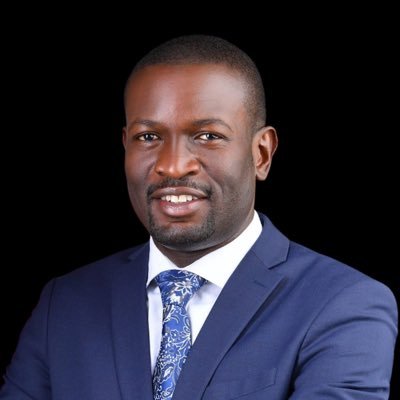


Resign and support UDA fully.

Kenyan law is clear:
You cannot be a member of two political parties. Forming, joining or promoting another party while elected on a different ticket can cost you your seat (Constitution Art. 103 + Political Parties Act). Yet some ODM-elected senators still pay the Ksh 20,000 monthly subscription to ODM while openly building new parties.
That is not strategy. That is hypocrisy. Resign and campaign cleanly or let the Registrar enforce the law.@KoinangeJeff
15
