

AI Scientist & Tech Leader | Exploring the Intersection of #GenAI and #Bio & I'm the minion of my 🐈. Former @ALBAsynchrotron @BSC_CNS @UniUtrecht @Zymvol
Barcelona, Spain
Joined January 2010
- Tweets2.3K
- Following608
- Followers544
- Likes8.9K





Brian Jimenez retweeted

Harmonic Torsional Diffusion for Protein-Ligand Flexible Docking
1. Harmony is a flexible docking diffusion framework that treats ligand and pocket side-chain torsions as circular variables (on a torus) rather than regressing angle updates with Euclidean heads, addressing a key geometry mismatch in many diffusion docking models.
2. Core idea: parameterize each rotatable bond’s torsional score field as the derivative of a learned Fourier (harmonic) potential on the circle. Instead of predicting a single angle delta, the network predicts harmonic coefficients (a_k, b_k) that define a periodic potential whose gradient yields the torsional score.
3. The noise-level dependence for torsions is not left for the network to learn implicitly. Harmony uses an analytic factor from VE diffusion on the torus: the heat semigroup damps Fourier modes by exp(-(1/2) k^2 σ(λ)^2), inducing frequency-aware behavior where high-frequency components disappear at high noise and re-emerge as denoising proceeds.
4. This construction makes periodicity explicit, aligns the score parameterization with the actual forward noising process (wrapped Gaussians = heat kernel on the circle), and provides an inductive bias consistent with rotameric side-chain motion and multimodal ligand conformers.
5. Task setup: pocket-based flexible docking with fixed protein backbone and flexible pocket side chains. The state is modeled on a product manifold z = (t, R, τ, χ) in R^3 × SO(3) × T^{m_l} × T^{m_s}, jointly denoising translation, rotation, ligand torsions, and side-chain torsions.
6. Architecture: a heterogeneous SE(3)-equivariant e3nn GNN over a multi-scale pocket graph (ligand atoms, receptor residues at Cα with ESM-2 embeddings, and receptor atoms). Harmony is designed as a drop-in replacement for torsion regression heads: the backbone can stay the same while torsions become harmonic.
7. PDBBind (ESMFold apo receptors) results: with top-1 selection from 10 samples by an internal confidence head, Harmony improves ligand pose accuracy (L-RMSD < 2 Å: 64.2% vs ~39–42% for recent flexible pocket docking baselines) and improves pocket all-atom reconstruction (AA-RMSD < 1 Å: 47.3% vs 41.7% for FlexDock). It also reports faster runtime in their setup.
8. Physical validity: on PoseBusters without relaxation/post-processing, Harmony improves both success rate and “PB-valid” rates relative to comparable pocket flexible diffusion baselines, with notable gains in checks related to internal steric validity, ligand strain, and protein–ligand separation.
9. Ablations support the mechanism: fewer Fourier modes work best (peak around K=4), removing the analytic frequency damping hurts performance, and applying the harmonic head to only ligand or only side chains degrades the other—suggesting coupled learning benefits when both torsion sets use the harmonic formulation.
10. Case studies (EBNA1 6NPP and KRAS G12D 6GJ8) illustrate behavior in different pocket regimes: maintaining local loop closure in a polar/broader site and improving pose recovery in a shallow, exposed site where shape constraints are weak.
💻Code: github.com/dunnolab/harmony
📜Paper: arxiv.org/abs/2608.20366
#ComputationalBiology #MolecularDocking #DiffusionModels #GenerativeAI #DrugDiscovery #ProteinLigand #GeometricDeepLearning #SE3Equivariance #ScoreBasedModels

Brian Jimenez retweeted
A Novel Benchmark Dataset for Enzyme Function Prediction Reveals the Limitations of State-of-the-Art Models
1. The paper introduces EnzymARC, a benchmark specifically designed to test whether EC-number predictors can detect loss of catalytic competence, not just recognize an enzyme family “scaffold” by sequence similarity.
2. EnzymARC is built from Swiss-Prot enzymes filtered to high-confidence annotations: 218,504 sequences with both an EC number and a Rhea ID (length 100–1,000 aa). Of these, 79,505 also include experimentally annotated active-site residues, enabling structure-guided decoy construction.
3. Key idea: generate “putative non-functional” decoys by systematically disrupting catalytic machinery while keeping the overall sequence highly similar—creating challenging negatives that standard benchmarks largely lack.
4. Two decoy types are created. (i) Catalytic decoys: mutate each annotated catalytic residue using ESM-2 masked LM, sampling from the five lowest-probability amino acids at that position (median identity to parent: 99.6%). (ii) Radius decoys: structure-aware random mutagenesis within 5 Å, 10 Å, and 15 Å shells around the active-site center of mass using AFDB structures (median identities: 98.4%, 89.8%, 72.9%).
5. Three representative EC prediction paradigms are benchmarked: DIAMOND (homology transfer), CLEAN (contrastive learning over ESM-1b embeddings), and DeepEC (CNN-based hierarchical EC predictor with an explicit enzyme vs non-enzyme discriminator).
6. DIAMOND largely fails to reject inactive decoys: it transfers the original EC to ~94–95% of catalytic/5 Å/10 Å decoys, and still yields ~89% false positives at 15 Å. This quantifies how global similarity transfer cannot detect active-site destruction.
7. CLEAN shows a similar vulnerability at low perturbation: false positive rates exceed 90% for catalytic and 5 Å decoys, and remain ~80% at 10 Å. Only at 15 Å does it substantially drop (to ~30.8% predicting the original EC), implying the learned embedding space often behaves like an enhanced similarity metric rather than a detector of catalytic integrity.
8. Importantly, CLEAN misclassifies with high confidence: decoy embeddings often remain close (low Euclidean distance) to the predicted EC cluster centers even after catalytic-site disruption, suggesting the model’s confidence calibration does not reflect mechanistic viability.
9. DeepEC is comparatively more sensitive when perturbations become large (FPR ~19% at 10 Å and ~4.4% at 15 Å), consistent with the benefit of training that includes negative examples (non-enzymes). But it still struggles with subtle active-site edits (FPR ~83.7% on catalytic decoys), indicating that generic non-enzyme negatives are not enough to learn active-site failure modes.
10. Takeaway: modern EC predictors can be dominated by “phylogenetic shortcuts,” failing to distinguish catalytically incompetent variants from functional enzymes when sequence scaffolds remain intact. The authors argue that structure-aware negative examples (like active-site-disrupted decoys) should be integrated into both training and benchmarking to improve functional robustness—especially relevant for genome annotation and for generative enzyme design pipelines that use EC numbers as optimization targets.
💻Code: github.com/jsartori12/EnzymA…
📜Paper: biorxiv.org/content/10.64898…
#ComputationalBiology #Bioinformatics #Enzymology #ProteinLanguageModels #MachineLearning #Benchmarking #GenomeAnnotation #ProteinEngineering #AlphaFold #SwissProt

"Rewrite it in Rust" isn't a silver bullet. While you gain safety and speed, full rewrites often spawn new bugs. The smart move? Adopt Rust incrementally. Nice post!👇🏼

When does rewriting in Rust actually make sense? 🦀
Marek Grzelak and Mateusz Maćkowski, creators of cot.rs looked beyond the RIIR meme at real projects: performance gains, memory safety, new bugs, abandoned rewrites, and Rust’s growing role in Linux and Windows.
Read the full post to find out 👇
blog.jetbrains.com/rust/2026…

3
137
Brian Jimenez retweeted

The SparkleDock code is now publicly available on Zenodo: zenodo.org/records/21787250
Brian Jimenez retweeted
📢 Thrilled to share that our paper, “Scalable High-Fidelity Macromolecular Docking for GPU-accelerated Supercomputers,” has been accepted to the SC26 Technical Papers Program!
arxiv.org/abs/2608.07078
@br_jimenez
Many thanks to Brian Jimenez for LightDock!
#LightDock

"A single binary operator, eml(x,y) = exp(x) − ln(y), together with the constant 1, generates the standard repertoire of a scientific calculator"
arxiv.org/abs/2603.21852
Brian Jimenez retweeted

💡 Did you know that #LightDock was developed by Zymvol’s CTO @br_jimenez , together with @dxbarradas and @jroeltou ?
If Structural Biology is your thing, try out this tool for modelling interactions between macromolecules.
✅ Free
✅ Open server
✅ AI-powered

Brian Jimenez retweeted

Excited to share that our recent research using #Martini3 #CG simulations on the role of Spc2 in the yeast signal peptidase complex (SPC) has been published in the @JCellBiol
Read the full article here: rupress.org/jcb/article/223/…

Brian Jimenez retweeted

Hace unos días hablaba con un grupo de personas allegadas sobre si dejar Twitter o no. He estado a punto. Pero al final decidí quedarme precisamente por lo que dice Alfonso. Me niego a ceder… Por mucho que sepa que probablemente no sirva para nada.

Brian Jimenez retweeted

Could the “guy who worked on Alphafold” saying “This paper sure saved our ass on that Nobel prize” come forward please? Maybe a citation would have been nice 😪.


CNNs (@ylecun, @Yoshua_Bengio) led to Spherical CNNs (@TacoCohen, @mario1geiger, @jonkhler, @wellingmax), and eventually to the SE(3) Transformer (@FabianFuchsML, @danielewworrall, Volker Fischer, @wellingmax).
SE(3) is the special euclidean group, consisting of rigid translations and proper rotations in 3 dimensions—meaning it inherently respects the structure of euclidean space. An architecture with this property is indispensable for moving from fixed grids to freely moving cells.
The power of Equivariant transformers can be seen through its use in AlphaFold, which outputs the 3D coordinates of all heavy atoms for a given protein using the primary amino acid sequence and aligned sequences of homologues as inputs (@GoogleDeepMind, John Jumper, @demishassabis)
AlphaFold recently won the Nobel Prize in Chemistry for its groundbreaking advance in protein structure prediction.
The particular architecture I currently use is the Equiformer (@yilunliao, @tesssmidt), which builds on all of these ideas.
Brian Jimenez retweeted

The failure of authorities to issue public warnings in time before the devastating floods in Valencia offer an example of what it means when far-right policies meet environmental disasters.
One of Vox's conditions for backing the PP's Carlos Mazón as regional premier was the elimination of the Valencian Emergency Response Unit.

Brian Jimenez retweeted

I can't stop thinking about this blog post where they replaced Redis with SQLite—and surprisingly, SQLite was faster!
What's interesting is that Redis was running locally, SQLite was storing the data on disk. So it was memory (Redis) vs disk (SQLite), but Redis needed to communicate through IPC.

ALT Test Results chart showing SQLite to be faster than Redis
Brian Jimenez retweeted

If you're looking for failure in AI-driven (or any) drug discovery, you'll easily find it.
The hard work is properly benchmarking various approaches for relevant tasks and publicly reporting your findings fairly.
Where is AI winning?
science.org/content/blog-pos…

Brian Jimenez retweeted

WOW. @Microsoft just open-sourced the code for one of "THE MOST" influential Paper of 2024 🔥
1-bit LLMs (e.g., BitNet b1.58).
Now you can run a 100B param models on local devices quantized with BitNet b1.58 on single CPU at 5-7 tokens/sec 🤯
The dream we have all been waiting for.
📊 Performance Improvements:
- Achieves speedups of 1.37x to 5.07x on ARM CPUs
- Larger models see greater performance gains
- Reduces energy consumption by 55.4% to 70.0% on ARM
- On x86 CPUs, speedups range from 2.37x to 6.17x

Brian Jimenez retweeted
#HIRING We're looking for a #MolecularModeler to help us advance our transformative technology to multiple on-going projects.
Check out all our job openings at: zymvol.com/careers/

Brian Jimenez retweeted

Llevo casi 50 plazas universitarias a las que me he presentado en los últimos años y, básicamente, 9 de cada 10 son así. Es de vergüenza como se gestionan estas plazas públicas y se nos expulsa del sector universitario a quienes no tenemos un padrino o departamento detrás.
Can we stop publishing software in science without testing it properly? Having a couple of examples and 2 notebooks in the repository is not testing. FGS, it hurts even more when the group is from a technical university.
Make it be a Python package. Write docstrings, lint the code. Teach yourself some OOP, don't add binaries to the repos (WTF), don't "import *". Don't use all available resources (GPUs detected, all for me now)...
1
2
160
Brian Jimenez retweeted

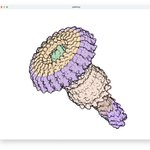
There is a new tool on BioIcons to turn any protein (in PDB format) into a 2D vector illustration in SVG format. You can upload any PDB file or import from PDB, AlphaFoldDB or ESMFoldDB. Feedback welcome :)
bioicons.com/pdb2vector/
