







M. Prakash retweeted

Since March 2026, NavIC has had only 3 working navigation satellites, one short of the 4 needed for a position fix. Once NVS-03 is operational, NavIC's base layer is back to 4, bringing back standalone 3D positioning over India.
Since the launch, interest in NavIC has shot up. People want to know how it works, why it dropped to 3 satellites, and what its status is right now.
We built a free NavIC hub on our platfor to answer exactly that 👇
📖 Overview: why India built NavIC, every launch, the failures and the fixes, Gen-1 vs Gen-2
🎓 Learn: interactive lessons on trilateration, pseudorange (d = c × t), L5 + S band and the ionosphere, skyplots and DOP, multipath, and clocks
⏱️ RAFS: the story of India's own rubidium atomic clock from SAC-ISRO, with stability charts and live broadcast clock data
🛰️ Constellation: every IRNSS/NVS satellite, whether operational, unhealthy, silent or retired
📊 Status dashboard, updated hourly from NASA CDDIS data:
• Live health per satellite (health flag, URA, clock drift)
• Daily clock drift from IGS data
• Availability: are 4+ satellites up for a fix?
• India coverage map
• Orbits and ground tracks
• NavIC vs GPS, Galileo, BeiDou, GLONASS, QZSS
• Gen-1 vs Gen-2 clock trends
• Events: clock jumps, health changes, new satellites
When NVS-03 starts broadcasting, it should show up in our Events feed as a new satellite, automatically.
Note: this is built on open broadcast navigation data from IGS and NASA CDDIS. It's not ISRO telemetry and not an official ISRO status page.
Start here 👉 indianspaceflight.in/navic
Live status 👉 indianspaceflight.in/navic/c…
#NavIC #ISRO #NVS03 #GNSS #IndianSpace
Ranking of countries by racist population
1. Japan
2. Korea
3. Brazil
4. Taiwan
5.Xhina
6. Bharat
7. Venezuela
8. Nepal
9. Russia
10. Nigeria
11. United States
12. UK
13. France
14. Philippines
15. South Africa
16. Fuckistan
17. Ukrain
18. Sweden
19. Canada
20. Egypt


The video was physically shipped to Canada. That's probably why they're taking so long to post it. 😭

Congratulations Team #ISRO for the successful launch of GSLV-F18/NVS-03 mission!
NVS-03: third satellite of the 2nd generation NVS series will augment the NavIC constellation and support continuity of navigation services.
Another milestone in India's space journey!
@isro @MEAIndia @mygovindia @IndianDiplomacy
M. Prakash retweeted
🚨 NVS-03 has completed its second orbit raising maneuver!
Its 440 N LAM (Liquid Apogee Motor) engine burned for 51 min 25 s, raising perigee to 24,691 km from 5,477.6 km.
With one more orbit raising maneuver NVS-03 will be placed in its intended GSO.


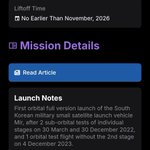
South Korea is going to launch a demo flight tomorrow at 10:30 am IST.
This is a solid fuel rocket with 4 stages and capable of carrying half a ton payload to low earth orbit.


M. Prakash retweeted

Commissioning a rocket engine test facility of 800kN scale is no simple task. @astrobase_space teams on full throttle !

M. Prakash retweeted

HONORABLE MENTION | EtherealX Base 001 (Cuddalore, Tamil Nadu)
• Earlier engine-development site; layout renders show a test stand zone
• Thrust rating and test schedule: not public
From 12 kN to 2 MN, India's private test stands are scaling fast 🚀🇮🇳


M. Prakash retweeted
AGNIKUL | Horizontal Test Stand
• Enclosed, containerized, weighed down with heavy counterweights
• Rated up to 12 kN
• For upper-stage engine qualification and final pre-flight checks of Agnilet, the single-piece 3D-printed engine


M. Prakash retweeted
AGNIKUL | Booster Stage Engine Test Facility
• Vertical stand rated up to 100 kN
• Angled steel flame deflector + dug-out exhaust trench steer the blast away
• For qualifying booster-stage engines


M. Prakash retweeted
AGNIKUL | Stage Test & Integration Facility (STIF), Chennai
• Vertical stand rated 300–400 kN
• Fires a whole first stage with clustered engines, fuel plumbing and avionics together
• Proves Agnibaan's clustered-engine design


M. Prakash retweeted
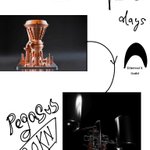
ETHEREALX | Pegasus Horizontal Test Facility (Base 002)
• Thrust stand rated to 400 kN
• 210 bar: India's highest-pressure-rated pressure-fed engine test
• For Pegasus: 80 kN upper-stage engine
• First hot fire: Nov 14 ("the first of many")


