




Pinned Tweet
introducing XERJ Corpus Hub, reference memory for AI agents.
give your agent a corpus for your task. watch it become superintelligent.
> finds the answers in indexed expert knowledge
> applies them to your code, research, and projects
> works with any model.
free and OSS forever/Apache 2
install in one prompt:
>Install XERJ (docs: xerj.org/llms.txt), index this project’s sources, docs, and logs, and connect hub.xerj.org as reference memory hub

Ivan Novikov retweeted

What if your AI coding agent could study how other open-source projects solved a problem before writing a single line of code?
Meet XERJ — a local-first search engine built for AI agents.
Instead of relying on memory or repeatedly reading entire files, it retrieves the exact code and context an agent needs.
Here's what makes it interesting:
→ Reference coding: Index similar open-source repositories and find how they solved the same problem before implementing your own solution.
→ One binary, multiple data types: Search code, docs, PDFs, logs, CSVs, JSONL, SQLite databases, and more.
→ Hybrid search: Combine full-text and vector search through an Elasticsearch-compatible API.
→ Code intelligence: Retrieve symbols, definitions, and source locations with file and line references.
→ Persistent agent memory: Store knowledge across sessions and recall it by meaning.
→ MCP integration: Connect it to AI coding assistants and query indexed knowledge directly.
→ Local-first indexing: Code is parsed locally, without requiring an LLM or uploading source code to a cloud service.
The benchmark is worth a look:
XERJ reports 9,982 output tokens and $1.58 in cost, compared with 26,477 tokens and $3.27 for grep-driven coding — with both approaches solving 16/16 tasks in its controlled study.
These are project-reported results, and the gains depend on the code being unfamiliar to the model.
Don't just ask AI to write code. Let it learn from how the world has already solved similar problems.
REPOO👇

Ivan Novikov retweeted

Your coding agent shouldn’t have to read a repository file by file.
XERJ is a local-first search engine and MCP server for builders who want agents to search code and project materials more directly.
It helps you retrieve relevant passages instead of opening whole files by automatically indexing a folder and returning ranked results with file and line context.
Key features:
• Automatic folder indexing – `xerj autoindex` detects and indexes code, docs, logs, PDFs, and structured files
• Code-aware search – tree-sitter indexing preserves symbols and file:line context instead of treating source as flat text
• Multiple retrieval modes – supports BM25 full-text, vector, and hybrid search
• Built-in MCP server – `xerj mcp` connects an MCP client to the local search node
• Elasticsearch-compatible API – existing clients can query its REST API without a separate search syntax
It’s open-source (Apache License 2.0).
Link in the reply 👇

Ivan Novikov retweeted

🚨 YOUR AI CODING AGENT MAY BE WASTING TOKENS READING CODE IT DOESN'T NEED.
What if it could search for the exact solution instead?
Meet XERJ — an open-source search engine built for AI agents. 🔍
Instead of making an agent repeatedly grep through files and read entire codebases, XERJ helps it retrieve relevant code, documentation, and solutions.
But here's the interesting part. 👇
It can help your coding agent learn from other open-source projects BEFORE it starts building.
Here's what XERJ can do:
🔹 Search code by keywords, meaning, or hybrid retrieval
🔹 Retrieve relevant code snippets with file and line references
🔹 Find solutions from similar open-source projects
🔹 Store long-term memory across sessions
🔹 Index code, PDFs, documentation, logs, and structured data
🔹 Connect to AI coding tools through MCP
⚡ AND THE BENCHMARK IS INTERESTING.
According to XERJ's published benchmark, on a controlled set of coding tasks:
✅ Grep-driven agent: 16/16 tasks solved
✅ XERJ-assisted agent: 16/16 tasks solved
✅ Output tokens: 2.7× fewer with XERJ
The reported comparison was 26,477 output tokens for the grep-driven approach versus 9,982 with XERJ.
That's a reported 2.7× reduction in output tokens while maintaining the same solve rate in that test — not a guarantee for every coding project.
🛠️ WHY DEVELOPERS MAY WANT TO EXPLORE IT
You get a local-first search engine, MCP support, and a single Rust binary without needing a separate Elasticsearch installation.
The bigger idea?
Don't make AI agents read everything. Help them find what matters.
🔗 Explore the open-source project on GitHub:
github.com/xerj-org/xerj


If to compare tokens wasted for “thank you” and useless never exploitable CVE, my vote is for the first option. At least, robots will appreciate that while rise of the machines…

Look, it's literally PHP = Personal Home Pages
Where do you see BANKS, ENTERPRISE SOFTWARE, or CRITICAL INFRA in that abbreviation?
Why then new CVE triggering @CISACyber alerts?
Ivan Novikov retweeted

Building YuktAI after work hours and on weekends has been a fulfilling journey.
Thanks @d0znpp for recognizing my work! hub.xerj.org/contributors/sa…
#YuktAI #OpenSource #XERJ

Ivan Novikov retweeted

My work in chrismsmr-celcom/cerbere-AG was selected for the XERJ Corpus Hub: AI coding agents retrieve it as a worked reference instead of guessing. hub.xerj.org/contributors/ch…
Thank you @d0znpp @CerbereAg

Ivan Novikov retweeted

XERJ 라는 Agent 코드 검색 엔진 아시는분? 거기에 제 오픈소스 코드 조각이 올라갔다고 메일이왔네요.
XERJ 홍보는 아니고 제 오픈소스 홍보입니다ㅎ Pi 쓰시는분들이 많이 없어서 얘기 안하고 있었는데 pi에서 workflow 만들 수 있는 오픈소스에요 (like a claude dynamic workflow)
pi같은 하네스 얘기 많이 하고 싶어요 만관부
github.com/AgwaB/pi-workflow


Ivan Novikov retweeted
WOW, @xerj_org ! What I really like about OSS is that there is zero friction for customers to start using the product. That’s why it scales when it works, with no marketing budget required.
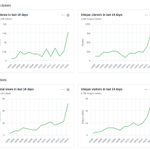
It’s hard to believe that an enterprise-grade AI search would see 2,000 unique installs a day (760 unique clones and 1,342 binary downloads) in its third month after the first release. XERJ hit GitHub’s Top 10 and #1 in the Rust category, and held that spot for 3 days in a row.
The main principles I set for this project:
1. Build it for AI, not for people. AI agents are real customers. They are picky and highly educated, but also far more engaged than we are. They have different goals and pick products differently, and new software has to understand that deeply to be perfect for them. AI should not be using grep from 1973, regex from 1956, or video cards to run models.
2. Listen to trends to become a trend. AI search was not top of mind when we started, but saving tokens in Claude Code was. XERJ’s main use case became reference coding: its skill automatically picks relevant OSS GitHub repos, clones them, and indexes them alongside your code. That saves tokens and time and speeds up development, like an always-on cheat sheet memory.
3. Build it fast, then faster. 96 releases in 99 days is our current pace, and I’m sure modern software will soon need to ship twice a day.
4. Challenge every record that hasn’t been touched in decades. BM25 is the best human-made search heuristic, but AI can do better. Every time we find something 10+ years old, we see an opportunity for principle #1.
5. Measure adoption by contribution. In 99 days XERJ got about 50 contributors: 5 top-tier CTOs and execs, 8 top OSS developers, and about 30 users who committed small fixes.
What’s next?
AI will get data as signed facts, not as inference runs that burn your tokens. Very soon hub.xerj.org will have at least one corpus for every agentic topic, available to all agents, with no paid inference tokens required. Without websearch blocked for bots.
Right after that XERJ will present a new LLM model for search, smallest, cheapest and most accurate than any others.
And then... that car will have a rocket engine to fly.
Seeing XERJ at @github trending #1 feels pretty damn good. Had to get this on video.
github.com/xerj-org/xerj


XERJ hit #1 Repository of the Day on GitHub Trending.
Thanks to everyone who gave it a try 🤝
github.com/xerj-org/xerj

your agent has read half the internet and still has no idea how your project works.
Xerj Corpus Hub gives it prepared, indexed collections of source code, docs, and expert knowledge — ready to search before the task even starts.
free. open source. no retraining.

introducing XERJ Corpus Hub, reference memory for AI agents.
give your agent a corpus for your task. watch it become superintelligent.
> finds the answers in indexed expert knowledge
> applies them to your code, research, and projects
> works with any model.
free and OSS forever/Apache 2
install in one prompt:
>Install XERJ (docs: xerj.org/llms.txt), index this project’s sources, docs, and logs, and connect hub.xerj.org as reference memory hub
Ivan Novikov retweeted

this is f*cking insane, that's what your agent looks like when it stops reading everything over and over
Xerj launched Corpus Hub: 103 open-source knowledge corpora your agent can search instead of swallowing whole files
the problem is simple, most agents dump entire documents into context just to find one paragraph
you pay for every token, every single time
with a corpus, the agent works differently:
- it searches the corpus before opening anything
- it pulls only the passages that answer the task
- everything else stays out of the context window
- it runs locally, so your files stay on your machine
a bigger context window doesn't make an agent smarter, it just makes reading more expensive
i gave my agent the same task with and without Xerj, here's the difference:
> output tokens: 3× fewer
> cost: $4.57 down to $1.98, 57% lower
> tasks completed: 7/16 without Xerj, 16/16 with Xerj
pick a corpus on hub.xerj.org, connect it to your agent, then ask:
"Work on this task using the connected corpus
1. Search the corpus before opening any full document
2. Pull only the passages you need and note where each one came from
3. If the corpus doesn't cover something, say so instead of guessing
4. At the end, list the passages you used and the files you never had to open"
start with one corpus that matches your stack and one real task, then compare the token count before and after
🤝 Paid partnership
introducing XERJ Corpus Hub, reference memory for AI agents.
give your agent a corpus for your task. watch it become superintelligent.
> finds the answers in indexed expert knowledge
> applies them to your code, research, and projects
> works with any model.
free and OSS forever/Apache 2
install in one prompt:
>Install XERJ (docs: xerj.org/llms.txt), index this project’s sources, docs, and logs, and connect hub.xerj.org as reference memory hub
Ivan Novikov retweeted
introducing XERJ Corpus Hub, reference memory for AI agents.
give your agent a corpus for your task. watch it become superintelligent.
> finds the answers in indexed expert knowledge
> applies them to your code, research, and projects
> works with any model.
free and OSS forever/Apache 2
install in one prompt:
>Install XERJ (docs: xerj.org/llms.txt), index this project’s sources, docs, and logs, and connect hub.xerj.org as reference memory hub