

Founder & CEO 🐕@cerbereag The control infrastructure for autonomous AI agents operating across real-world @luviaplace to be passionate about what I've done
Joined September 2026
- Tweets296
- Following247
- Followers111
- Likes384



Pinned Tweet
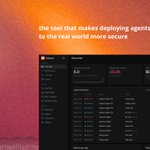
Cerbere-AG is a three-layer security guardrail for AI agents: Regex, ML, and an LLM Judge.
AI agents are unpredictable. They improvise and act with full autonomy. I built Cerbere-AG (named after the three-headed dog, Cerberus) so that autonomy doesn’t come at the cost of control.
Why three layers? Our benchmarks show it:
→ Regex alone lets more than 30% of attacks through.
→ ML pushes recall up to 100% in some of our tests, but raises false positives.
→ The LLM Judge resolves the ambiguous cases ML can’t classify.
It also looks at context. Cerbere-AG follows tool calls, checks whether they’re legitimate, and then allows them, blocks them, or flags them for real-time human approval. Agents keep their autonomy, and humans keep control.
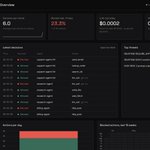
Everything is audited too. The collector gathers spans and traces into an audit trail that is independent from the agent and supports compliance.
And like any tool, it has limits. That’s why observability matters: security isn’t only about blocking attacks, it’s about understanding what happened, what was allowed, what was blocked, and why.
Open source and free for now. Try it and give me your honest feedback 👇
github.com/chrismsmr-celcom/…
app.cerbereag.site
Giving an AI agent access to your APIs, internal tools, and sensitive data is a security decision — not just an engineering one.
Cerbere-AG is building the security infrastructure that lets companies and engineering teams deploy AI agents with greater control and confidence.
Monitor agent execution. Track untrusted data. Enforce security policies. Audit tool calls.
The goal: know what your agents are doing, understand where risks emerge, and control what they’re allowed to do.
Deploy AI agents without giving up control.
🔗 github.com/chrismsmr-celcom/…

🚀 Introducing Taint Tracking in Cerbere-AG.
AI agents don’t just process prompts. They read webpages, retrieve documents, and pass data between tools.
What happens when untrusted data influences a sensitive action?
Cerbere-AG’s new taint tracking capability follows untrusted data through agent execution, helping identify risky data flows before they reach sensitive operations.
Track the data. Trace its path. Understand the risk.
Built for safer AI agent execution.
🔗 github.com/chrismsmr-celcom/…

We’ve just added two new features to Cerbere AG:
>Shadow Mode
>Incident Mode
Both are designed to give developers more visibility and control over their AI agents.
Launch demo video coming tomorrow.
Open-source. Free. Built for AI agent security.
github.com/chrismsmr-celcom/…
Cerbere-AG is a three-layer security guardrail for AI agents: Regex, ML, and an LLM Judge.
AI agents are unpredictable. They improvise and act with full autonomy. I built Cerbere-AG (named after the three-headed dog, Cerberus) so that autonomy doesn’t come at the cost of control.
Why three layers? Our benchmarks show it:
→ Regex alone lets more than 30% of attacks through.
→ ML pushes recall up to 100% in some of our tests, but raises false positives.
→ The LLM Judge resolves the ambiguous cases ML can’t classify.
It also looks at context. Cerbere-AG follows tool calls, checks whether they’re legitimate, and then allows them, blocks them, or flags them for real-time human approval. Agents keep their autonomy, and humans keep control.
Everything is audited too. The collector gathers spans and traces into an audit trail that is independent from the agent and supports compliance.
And like any tool, it has limits. That’s why observability matters: security isn’t only about blocking attacks, it’s about understanding what happened, what was allowed, what was blocked, and why.
Open source and free for now. Try it and give me your honest feedback 👇
github.com/chrismsmr-celcom/…
app.cerbereag.site
Prompt injection defense isn't about catching bad words. It's about watching what untrusted data DOES.
Here an agent exfiltrates a secret encoded in base64. No keywords. Blocked anyway.
I started without a plan: an API key, a Supabase account, and the desire to build something agentic. An observability runtime, then security on top of it, and then the real question: who controls what the agents do? 855 commits later, it's called Cerbère AG. Self-taught, brick by brick. Runtime security for AI agents. Open-core, Apache 2.0.
github.com/chrismsmr-celcom/…
Cerbere-AG is a three-layer security guardrail for AI agents: Regex, ML, and an LLM Judge.
AI agents are unpredictable. They improvise and act with full autonomy. I built Cerbere-AG (named after the three-headed dog, Cerberus) so that autonomy doesn’t come at the cost of control.
Why three layers? Our benchmarks show it:
→ Regex alone lets more than 30% of attacks through.
→ ML pushes recall up to 100% in some of our tests, but raises false positives.
→ The LLM Judge resolves the ambiguous cases ML can’t classify.
It also looks at context. Cerbere-AG follows tool calls, checks whether they’re legitimate, and then allows them, blocks them, or flags them for real-time human approval. Agents keep their autonomy, and humans keep control.
Everything is audited too. The collector gathers spans and traces into an audit trail that is independent from the agent and supports compliance.
And like any tool, it has limits. That’s why observability matters: security isn’t only about blocking attacks, it’s about understanding what happened, what was allowed, what was blocked, and why.
Open source and free for now. Try it and give me your honest feedback 👇
github.com/chrismsmr-celcom/…
app.cerbereag.site
My choice: B for production, potentially with LangGraph inside Temporal activities for complex agent reasoning. I’d also add Cerbere AG as the runtime security and control layer to enforce policies, secure tool calls, manage human approvals, and maintain audit trails.

You are building an AI support agent handling 10M+ users, with RAG, tool calls, long-running workflows, retries, and human approval.
Which architecture would you ship?
A) LangGraph + Postgres/pgvector + Redis + Kafka
B) Temporal + Postgres + OpenSearch + Redis
C) Custom event-driven agents + Kafka + Cassandra + OpenSearch
D) Managed Agent Runtime + vector DB + Postgres + Redis
My work in chrismsmr-celcom/cerbere-AG was selected for the XERJ Corpus Hub: AI coding agents retrieve it as a worked reference instead of guessing. hub.xerj.org/contributors/ch…
Thank you @d0znpp @CerbereAg

Cerbere AG was designed to make the deployment of AI agents safer and more autonomous without you losing control.
Watch the demo video on YouTube:youtu.be/TfyxTCkgXqA?si=IlmQ…

Christopher Dikesa retweeted
Cerbere-AG is a three-layer security guardrail for AI agents: Regex, ML, and an LLM Judge.
AI agents are unpredictable. They improvise and act with full autonomy. I built Cerbere-AG (named after the three-headed dog, Cerberus) so that autonomy doesn’t come at the cost of control.
Why three layers? Our benchmarks show it:
→ Regex alone lets more than 30% of attacks through.
→ ML pushes recall up to 100% in some of our tests, but raises false positives.
→ The LLM Judge resolves the ambiguous cases ML can’t classify.
It also looks at context. Cerbere-AG follows tool calls, checks whether they’re legitimate, and then allows them, blocks them, or flags them for real-time human approval. Agents keep their autonomy, and humans keep control.
Everything is audited too. The collector gathers spans and traces into an audit trail that is independent from the agent and supports compliance.
And like any tool, it has limits. That’s why observability matters: security isn’t only about blocking attacks, it’s about understanding what happened, what was allowed, what was blocked, and why.
Open source and free for now. Try it and give me your honest feedback 👇
github.com/chrismsmr-celcom/…
app.cerbereag.site
Christopher Dikesa retweeted
Why Cerbere?
Vigilance. Three heads, three layers: fast rules, ML, and an LLM judge.
And one principle: nothing reaches the real world without being authorized.
Autonomy needs boundaries. Cerbere enforces them at runtime.

Why Cerbere?
Vigilance. Three heads, three layers: fast rules, ML, and an LLM judge.
And one principle: nothing reaches the real world without being authorized.
Autonomy needs boundaries. Cerbere enforces them at runtime.
AI agents are moving into production, but the damage is becoming harder to ignore.
A 2026 Cloud Security Alliance survey found that 65% of organizations surveyed experienced an AI agent-related incident in the past 12 months.
I’m building Cerbere AG to help prevent that: runtime security, control, and observability for AI agents.
github.com/chrismsmr-celcom/…
Christopher Dikesa retweeted
I ran Cerbere AG against 2,003 test cases: 1,000 attacks, 703 benign prompts, and 300 hard negatives.
Results with regex + ML:
• 100% attack recall
• 571.8 ms p95 latency
• 2.28% false-positive rate on benign prompts
• 1.33% false-positive rate on hard negatives
The trade-off is clear: catching attacks is only half the problem. Legitimate requests must keep working, too.
The next challenge is reducing false positives without losing detection coverage.
Building runtime security for AI agents, one benchmark at a time.
You want to be the first, join the waiting list ln.run/8SXZd
Coming soon: Luvia, a travel agent that lives in WhatsApp.
Search flights, book, get your itinerary, receive alerts when something changes, and ask any travel question, all in a simple chat. No app to install, no forms. Voice notes welcome.
Payment stays secure: Luvia sends you a link to luviaplace.com to complete it.
We’re also building Luvia for travel agencies. Your clients, your brand, your relationship, with an assistant that handles the repetitive work 24/7 so your team can focus on advice.
Travel agencies bring the trust. Luvia brings the speed.
This is a preview of what’s coming. Want early access, or want Luvia for your agency? Join the waitlist: travelwithluvia.com
Christopher Dikesa retweeted
AI agents are becoming more autonomous. But autonomy without control is a risk.
I built Cerbere AG, an open-source runtime security layer that sits between AI agents and their tools to detect, block, and require human approval for sensitive actions, with observability and audit trails.
Built from Kinshasa. Now in public beta.
I’m looking for design partners and developers to test Cerbere in real-world environments and help shape what comes next.
Open source. Free. Benchmarks available on GitHub.
🔗 github.com/chrismsmr-celcom/…
Collector: app.cerbereag.site
If you’re building or deploying AI agents, let’s talk.