

A Molecular Biologist and Biochemist. Transcription factors, genomics, synthetic biology and the molecular basis of disease.
Adelaide, South Australia
Joined October 2011
- Tweets350
- Following727
- Followers192
- Likes428



david bersten retweeted

I sequenced my genome at 30×. Now my Mac has 54.4 GB of DNA data: two FASTQs with 435 million read pairs, plus three VCFs cataloging my genetic variants.
Claude Fable 5.2 has been analyzing it for hours. Still no results. Should I start to worry?


david bersten retweeted

When you were told Santa Cruz antibodies suck
@thermofisher "Hold my beer"

david bersten retweeted

Your academic CV is NOT linked to your ability to make big discoveries.
1. Andre Geim, a co-discoverer of graphene, wrote in his Nobel Lecture article:
“So, at the age of 33 and with an h index of 1 (latest papers not yet published), I entered the Western job market for postdocs.”
2. Albert Einstein searched for a teaching position for two years. He had to accept a position at a Patent Office, where in a SINGLE year he wrote FOUR papers that completely revolutionized science (the photoelectric effect, Brownian motion, special relativity, and E=mc2).
Only few years later did he finally enter academia, becoming a lecturer at the University of Bern. Not even a professor.
3. Katalin Karikó...
Her mRNA grant proposals were repeatedly rejected. She was demoted out of the faculty position to a senior research investigator. She remained in a low-status research position for 10 years. She had little grant funding and no independent laboratory. And yet she persisted with her ideas about modified RNA, eventually discovering how it could suppress inflammation and receiving the 2023 Nobel Prize (with Drew Weissman). It was a very hard path.
Other examples include Frances Arnold, Michael Brown, Randy Schekman, who got Nobel Prizes for the discoveries they made as young PIs in newly established labs. And many others.
📍So, let’s keep in mind that:
1. Big discoveries are often unforeseen. They emerge from wild hypotheses, random research and risky projects (e.g. graphene was a tiny side project!). Make sure you have such projects in your lab.
2. Most truly impactful discoveries did not require high h-indices, excessive funding or a high-IF journal. They required CREATIVE people and persistence.
3. Rejection of your proposal does NOT mean it proposes bad science. Such rejections represent the opinion of one person who has a rather subjective idea of what ‘good science’ means.
4. For younger people, it’s easier to do risky research. If we lock them to unnecessarily high tenure-track requirements, such discoveries become UNLIKELY.
A strong scientist is not defined by high “academic metrics”.
A strong scientist is the one who proposes risky creative endeavors outside the conventional boundaries.
Who sees risk as an opportunity to make discoveries.
And who is constantly seeking out these risks in the lab.
__
My new conversation with the leading expert in creativity research - Prof. Keith Sawyer - about discoveries, academia and professional myths:
youtu.be/HiDZfBJIBIw
___

david bersten retweeted

Claude Science is incredible. I gave it some sequencing data, and in 8 hours it did a full analysis, generated figures, wrote a paper, submitted it for publication, got rejected, revised and resubmitted, got rejected again, it is now applying for positions in industry


david bersten retweeted

We have developed a cysteine-free, highly thermostable tagging system, UTag, that enables single-mRNA translation tracking in live cells. You may wonder how different tagging systems affect translation kinetics—we addressed this by performing a systematic comparison.
david bersten retweeted

Generative design of sequence specific DNA binding proteins.
Most fun paper I have ever written, with @enishasehgal and @YPolitansk15183 and the team, on a project which is a testament to the power of RFdiffusion3.
biorxiv.org/content/10.64898…
david bersten retweeted

Excited to share our discovery of a new programmable RNA-guided DNA-targeting system hiding inside bacteriophages that predates CRISPR.
We call it VIPR (Viral Interference Programmable Repeat), and it uses an entirely new logic to find its targets.
Thread + link below.

david bersten retweeted

🌐 🧬SEED 2026: Bigger, Broader, Better. Join the largest program in synthetic biology and make your mark. Submit your abstract and register now bit.ly/3NdirTa #SEED2026 #SyntheticBiology #SynBio #BiotechInnovation #Biomanufacturing #GenomeEngineering
david bersten retweeted

Actually... 250K structures was overkill. Technically, one structure with a good alpha/beta mix should've been enough. AlphaFold didn't solve the protein folding problem, it solved the low-resolution to high-resolution problem. (1/2)


david bersten retweeted

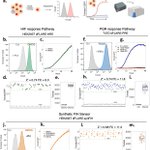
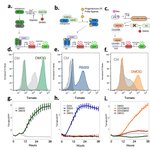
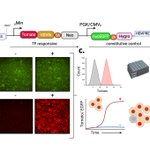
We are pleased to share a paper from our lab out in this week’s issue of @Nature, where we show that HT + ML can dramatically speed up the synbio DBTL cycles, profiling gene circuit design spaces at unprecedented scale: nature.com/articles/s41586-0… (1/16)

david bersten retweeted

A new robotic lab that makes human embryos using AI is now responsible for 19 babies. Is it better at IVF than humans are? bloomberg.com/news/features/…

david bersten retweeted

Excited to share that the most recent paper from my PhD is now online in @NatureComms! We made new inroads to further our understanding of how the estrogen receptor is regulated and mechanistic conservation across vertebrates. nature.com/articles/s41467-0…

david bersten retweeted

Our new preprint is online! Viruses, bacteria and parasites use effector proteins to evade immunity and rewire host cell pathways. Together with @AlexanderStark8, we wondered if we could systematically map what these effectors, regardless of their origin, do in human cells. 1/8
david bersten retweeted

The GUI for processing BindCraft inputs is fantastic, something I always wished BindCraft would have!

david bersten retweeted

Boltz-2 is available as an accelerated, downloadable NVIDIA NIM microservice!

david bersten retweeted

🧵5 Top Free Alternatives to BioRender for Scientific Illustrations!
These five websites offer free scientific illustrations for biologists. Great for presentations, research papers and other research communication needs.
Save and share the post!

david bersten retweeted

Our lab is seeking a postdoctoral scientist to work with us on an exciting new project modelling cancer extracellular matrix structures using nanofabrication approaches. Full details are at shorturl.at/fF4OC.