

Research Director at the Regulation, Evaluation, and Governance Lab (https://teapaw.org/t.co/uyz1KwNzxM), Executive Director of City Systems (https://teapaw.org/t.co/K2Dx00Hg05).
Walnut Creek, CA
Joined August 2010
- Tweets2.9K
- Following191
- Followers607
- Likes302





Check out the interactive website (hidden-in-plain-text.reglaba…) accompanying our paper "Hidden in Plain Text: LLM-Assisted Detection of Discriminatory Local Laws," designed superbly by @dbateyko! Another compelling RegLab demonstration of how AI can guide local legal reform efforts.


Local law still formally mandates racial segregation.
In 2026.
We built the largest dataset of local laws and used LLMs to search for discriminatory provisions across the nation. What we found should not still be on the books.
New @StanfordHAI hai.stanford.edu/policy/maki…

Derek Ouyang retweeted

💉What shapes parents’ decisions about #childhood #vaccination??
🎙️In this podcast, Claire Morton and @derekouyang discuss #measles vaccination, delayed doses, and #refusals in the #US, and what this means for public health.
🎧Listen here: thelancet.com/audio-do/clair…

Proud that our team at Stanford RegLab, in partnership with the NY Governor's Office, is demonstrating what responsible AI reform looks like---as @KathyHochul notes, the "opposite" of DOGE. Thanks @gr_ashford for the great coverage at nytimes.com/2026/07/08/nyreg…!

Check out @GovKathyHochul's Executive Order 61 at governor.ny.gov/executive-or…, and stay tuned for our release next week of RegLab's compilation of reporting requirements across all 50 states!

"RegLab’s interdisciplinary team partnered with New York State and utilized AI-enabled tools to generate all mandatory reports and boards, commissions, and councils in New York State regulations and statutes into digestible formats for agencies to review." governor.ny.gov/news/cutting…
Check out @GovKathyHochul's Executive Order 61 at governor.ny.gov/executive-or…, and stay tuned for our release next week of RegLab's compilation of reporting requirements across all 50 states!
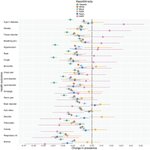
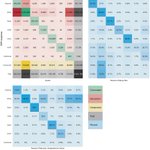
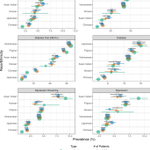
Let's say you're trying to understand racial health disparities in the U.S. Does it matter which source of administrative race/ethnicity information you use? We analyzed a dataset of 5M+ patients with linked electronic health records and Census Bureau microdata to find out. 🧵👇

9/ It was also a personal honor to be able to do this work as a Census sworn researcher, and to work with awesome collaborators within a secure research environment at the U.S. Census Bureau. (This study survived DOGE and two government shutdowns! #iykyk)
10/ Check out the full paper, “Evaluating the impact of discordant and missing demographic information on population health assessments using linked electronic health records and Census Bureau microdata”, at journals.plos.org/digitalhea…, and our other work at reglab.stanford.edu

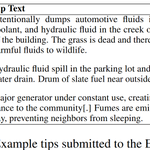
The EPA receives thousands of tips annually from the public about environmental violations. 80% of them shouldn’t even be going to the EPA, and the rest often get sent to the wrong division. We’ve built an LLM-based system to assist with tip routing. aclanthology.org/2025.emnlp-…

We developed a two-stage LLM pipeline by fine-tuning models on these tips. Stage 1 filters out tips that aren’t under the EPA’s jurisdiction, and Stage 2 routes remaining tips to the Civil or Criminal Division. We achieve 82.4% accuracy (compared to 31.8% in the current system).

At a time of increased focus on "government efficiency", this #EMNLP2025 accepted paper shows how LLMs can empower civil servants rather than replace them, keeping humans in the loop while reducing time spent on redundant and menial tasks. See more at reglab.stanford.edu!