

Farmer : Thought Provoker : Challenger of “That’s how we’ve always done it”
Iowa, USA
Joined January 2016
- Tweets10.8K
- Following6.6K
- Followers13.7K
- Likes60.7K



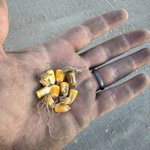


One of the long time perceived advantages of spreading dry fertilizer in the fall is “it gives it time to break down”. Is that perceived advantage….
45%True
55%False
1,369 votes • Final resultsPoliticians think “We the People” are useful idiots.
Need proof? Watch a political ad.
No substance. No mention of plans to fix problems. Just fear, outrage, and childish attacks packaged for people they apparently assume can’t think for themselves.
They’d rather try to manipulate voters than make an intelligent argument. Disgusting


Did you learn anything from the older generation today? I did. I learned I’m incapable of blowing out the combine air filter without overwatch. So you just bite your tongue and laugh it off.

Let’s try this again: Beans coming out fast in Dexter, IA. Yields seem to be running 20.34986 to 27.56324 bu per acre. 14.123456% moisture.


Dusty Rich 🇺🇸 retweeted

U.S. farm debt is at a record $605 billion, according to the latest USDA data. But what if that number doesn't capture everything farmers actually owe?
That is a question I've spent a long time thinking about. (Years. Literally, years.) As part of my reporting travels this year for my Reuters series on the US farm economy, I've interviewed dozens of farmers across seven states, along with lenders, economists, agricultural suppliers and government officials, to understand how farmers are financing their operations.
And what I found is a much more complicated lending landscape than the traditional picture of a farmer sitting down with a banker. Most of the commercial-sized row-crop farmers I interviewed had seven to 10 separate lines of credit. Some had more than 30. One Iowa farm family had 42, which might seem wild - but it's largely because equipment dealers often required separate credit lines each time they bought or leased a new piece of machinery.
Farmers are increasingly turning to suppliers, equipment dealers, cooperatives and other nontraditional lenders for financing - for lots of very legitimate reasons. But some of that debt is difficult for the federal government to measure, using its current data sources and methods.
USDA officials told Reuters the agency is launching research efforts to better understand the size of that lending market, exploring other ways to try to gather that data — and studying whether financial stress in agriculture could have broader economic consequences.
There's a lot more to unpack here, including some fascinating research on equipment financing and the gaps in existing federal data. And yes, it's an area that I'm continuing to report on.
Here's my exclusive story: lnkd.in/gwytKeHJ

No matter how uncertain the road ahead may seem, the same God who paints a sky like this is making a way. What a beautiful reminder of His power and goodness this morning.

What training is being given to coop/grain buying facilities’ employees on how to grade grain? There’s no doubt there is a lot of damage in soybeans this year. Were these folks crash coursed and said try your best?
Dusty Rich 🇺🇸 retweeted

Building soil P is expensive. The math and the field don’t agree.
Just jumped in the combine helping the family farm . Bean yields around here have been pretty good. Can’t speak for everybody, but overall solid. Quality’s a little off.
I was listening to a video saying phosphorus needs to be 50 ppm, preferably 100. We just finished a field that made over 60. Around here most APHs are 43 to 45. Mother Nature gets the credit. She did the work.
That field tested 3 to 10 ppm phosphorus. Do you really believe another 10, 12, 15 bushel was sitting there just because the soil test number was higher?
I ran the math with Grok on building this ground to 50. 11-52-0 at $1,152 a ton is $1.11 a pound of P₂O₅. University data (Iowa State, Minnesota, SDSU, Tri-State) says it takes about 16 to 20 pounds of P₂O₅ to move a Mehlich-3 test 1 ppm. From 5 ppm to 50, that’s roughly $900 an acre on paper. At pH 7.2, calcium ties a lot of that up. Figure 40 percent fixation and you’re closer to $1,500 an acre before you even count crop removal working against you every year.
Then ask how many bushels that takes to break even. Chasing that ppm, I’d go broke — or I’d be better off buying more land.
We foliar fed this field several times. No check strip, so I can’t prove it paid. I believe it did. Exudation drives phosphorus uptake, stimulation and plant health drives exudation. The more you stimulate the crop, the more phosphorus gets in the plant. - both are important soil P and Uptake. Can’t spend it all just to get it applied to the soil.
I’m not anti-phosphorus. I want P in the field. I’m anti-losing money chasing a magical ppm.
South Dakota cash beans are about $12.40 tonight. At that price, $1,200 an acre is 97 bushels. $2,000 is 161 bushels. Spread over five years, you need an extra 19 to 32 bushel every single year just to get your money back. Not once. Every year.
I didn’t get to see the debate last night with Zach Lahn and Rob Sand but from what I’ve read Lahn slaughtered him. It must be true because the local news (propaganda) hasn’t said a word about it. If Sand did take the beating I’ve heard I can only imagine the worse beating his in-laws gave him afterwards. $13.1M in donations comes with some serious expectations.


