

PhD on Computer Engineering. Deep Learning Professor. AI Researcher. Amateur Philosopher. Always Truth above beautiful lies. Humanist-accelerationist.
Madrid
Joined April 2026
- Tweets1.8K
- Following903
- Followers286
- Likes907





The proof of the Riemann Hypothesis seems to be correct. Amazing.

The Lean FRO and Mathlib Initiative have released a joint statement on the Lean verification of the Riemann Hypothesis.
On November 20, Levent Alpöge released a proof of the Riemann Hypothesis as a Lean library of 17 million lines of code. Over the past day, the Lean and Mathlib communities worked together to verify it. The statement certifies the proof as correct and describes how it meets all necessary verification criteria.
Congratulations to Levent on this achievement, and thank you to everyone in the community who contributed to the verification.
Full statement: leanprover-community.github.…

1
36

The game is over.

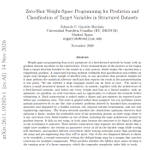
Recursive self-improvement just got a lot more concrete: a 27B language model figured out how to patch its own weights and got better on problems it had never seen. Researchers gave it access to its weights, its graded answers, and a way to test its edits. The best patch raised accuracy from 57.2% to 63.8% across 490 held-out problems, without another training run or extra compute per answer once the patch was in place.
Each session still started from the same base model, so better patches replaced older ones rather than building on them. The next experiment I want to see: give the patched model the same job and find out if it’s any better at improving itself.

2
34
The Generalized Riemann Hypothesis performed by Claude and the mathematician of Anthropic has been verified in Lean by four independent kernels. Time to think slowly about what this means. For research, agentic AI is the way to go.
1
68
Edugarmer retweeted

Recuerdo que a comienzos de los 2000s el uso de las redes neuronales (aún muy primitivas) como técnica para resolver problemas estaba denostado por eso de que "si las usas realmente es porque no entiendes cómo resolver el problema".
Creo que en unos años se verán de la misma forma algunas de las reflexiones de ahora sobre las matemáticas y la IA, y cuál es el valor de sus soluciones por no entenderlas.


Edugarmer retweeted

if someone had told me at the beginning of the year that in 2026 AI would produce math results on
navier-stokes, unique games, PTH, yang-mills existence and the riemann hypothesis all while we're still debating whether these LLMs are stochastic parrots
i wouldn't have believed it


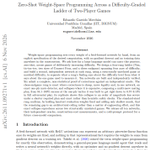
We are beginning to climb from AGI to ASI. If weight space programming finally works for LLMs to perform recursive enhancement, we are done. The Riemann Hypothesis being proven is the first real result that shows the potential.
63
Edugarmer retweeted

History was made today. Humanity will look back on 2026 and think: this was the threshold we crossed, the moment the future changed for everyone, forever.
People probably first sensed that something was shifting in late 2025 with Claude Code, when agentic AI became truly tangible for them. In the first half of 2026, things picked up speed. Model releases became more frequent, and everyone could feel the gaps between models and the improvements becoming more and more tangible. In the second half of 2026, however, there was a qualitative leap. It was no longer just the models getting better. It was the insights, the results, the outputs, the scientific solutions produced with AI that became more impressive, and today they have probably reached their absolute peak.
OpenAI led the way and solved the Navier-Stokes problem, a Millennium Prize Problem that humans had failed to solve for a very, very long time. A few weeks later, they published results on more than 300 open mathematical problems, many of which had also gone unsolved for decades. The entire scientific world was stunned, frozen in shock. But today Anthropic went a step further. Levent Alpöge, working with Claude, has almost certainly proven the Riemann Hypothesis. This is, and it’s hard to put into words, incredible and unfathomable. Today, I would say, is the proof of superintelligence. One of the greatest mathematical problems, if not the greatest, unsolved for 167 years, the holy grail of mathematics and science, has fallen. And it follows, and this should be clear to everyone, that all other problems will fall too.
We know that the development of AI models keeps moving forward relentlessly, and that this is just one step on the path to ever better models. And if the Riemann Hypothesis has already been proven today, there is simply no telling what even better models will solve. Dario Amodei said that AI will in all likelihood cure diseases, perhaps even all diseases. And although these are two different scientific disciplines, the significance of these breakthroughs shows that this is becoming more and more likely. 2026 will go down in human history as a turning point, the moment the singularity became tangible. And 2027 will be the year the singularity breaks into reality with full force and full impact.
I am in shock and excitement and I don't know what to think. But deep inside if feel joy.
This day is one of the best days ever for all of us.
AI solving the generalized Riemann Hypothesis and Spanish politicians in the debate did not even talked about artificial intelligence one single time in two hours. Feel like an alien in Spain right now.
1
54
Edugarmer retweeted
Oh my god: Anthropic mathematician Levent Alpöge (@__alpoge__) says he has proven the Riemann Hypothesis, open for 167 years.
"I believe I have, working with Claude, discovered a proof of the Riemann Hypothesis."
He says the method also covers the Generalized Riemann Hypothesis. The proof is out as Lean code (a proof language where a computer checks every step), so experts should be able to check it quickly, Scientific American reports.
Same Alpöge who was behind this year's Jacobian conjecture result and the Navier-Stokes work with Tristan Buckmaster.
I assume we will get an official statement very soon from him!!

Edugarmer retweeted

What slows reinforcement learning post-training?
See how NVIDIA Dynamo helps reduce repeated compute, weight-update overhead, and worker disruption and how @MicrosoftAI uses it for rollout inference.
Read the technical blog ➡️ nvda.ws/3WSjNYq


