

Building Hong Kong × China AI Operator Community AI Agents | Workflows | Growth Mindset
Hong Kong
Joined November 2018
- Tweets3K
- Following1.1K
- Followers8.9K
- Likes2.3K





Simon Hoiberg cut AWS from $8k to $300/month on 3 Hetzner servers. 4 SaaS products, 50k+ users, near-100% uptime.
The cheaper bill isn't the story.
An AI agent caught the alarm, fixed it, sent the report to Telegram. He read it when he woke up.
That's a different operating model.
A 4B parameter model that generates interactive Three.js scenes — Qwen3.5-4B-3D-Coder.
The October 29 update puts the full FP16 weights, the training dataset and a technical report out in public. The dataset is 4,146 synthetic samples.
That's a startlingly small amount of data to teach a model a whole 3D library.
$28,775 to make. 62,479,089 views across the Nexus episodes so far.
And the one they’re calling their greatest is about a guy with zero brain cells riding a dinosaur that shoots exploding pimples.
That premise is doing a lot of work.
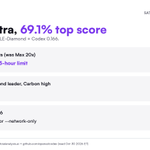
Saturday AI board: 3 updates from the last 2 days
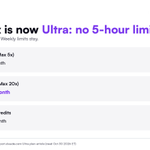
→ Claude Max 20x is now Ultra: $200 a month, no 5-hour limit for verified accounts
→ HLE-Diamond: 1,000 questions; Gemini 4 Carbon high leads at 69.1%
→ Codex 0.166 adds codex doctor --network-only for connection checks
I think the Ultra change is the 1 most people will feel this week.
Which of the 3 matters most to you?
via @claudeai claude.com/pricing

A 42K-star open-source project on GitHub for AI video editing, and it's not just helping you edit — it does the whole thing without you lifting a finger.
That's the version of AI editing worth watching.

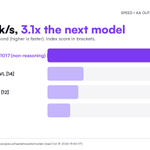
The fastest model on Artificial Analysis runs 1,486 tokens/s, 3.1x the next one
→ DeepSeek V4.1 Flash 1017 (non-reasoning): 1,486 tokens/s, scores 19
→ Nemotron 3.5 Super VL: 474 tokens/s, scores 14 at $0.54 a task
→ Gemini 3.5 Flash-Lite: 406; Beam 1.0: 299
I think raw speed is for autocomplete and routing, not for the hard step.
Where would you trade score for speed?
via @ArtificialAnlys artificialanalysis.ai/leader…

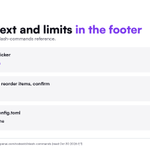
Show context and rate limits in the Codex footer with 1 command
→ Step 1: /statusline
→ Step 2: toggle and reorder items: model, context stats, rate limits, git branch, token counters
→ It updates right away and saves to tui.status_line in config.toml
I think context stats are the 1 item everyone should turn on.
What is in your status line?
via @OpenAIDevs developers.openai.com/codex/…

Same Artificial Analysis score of 35 for 3 models; the bills differ 39x
→ GPT-6.1 Sol low: 35 at $0.16 a task
→ Claude Opus 5.5 low: 35 at $0.98
→ Grok 4.7 high: 35 at $6.18
I think low effort on a big model is underrated; check the bill before the brand.
Which of the 3 would you run for a cheap first pass?
via @ArtificialAnlys artificialanalysis.ai/leader…

Gemini 4 Carbon high leads the new 1,000-question HLE-Diamond at 69.1%
→ Claude Opus 5.5 max 67.9%, Opus 5.5 xhigh 64.0%
→ Carbon leads both halves: 79.6% on reasoning, 58.6% on knowledge
→ 500 reasoning and 500 knowledge questions; 272 include an image
I think the knowledge half is where the next gains have to come from.
Which half would your model fail first?
via @ArtificialAnlys


We've launched our HLE-Diamond leaderboard, our independent evaluation of the refined 1,000-question version of Humanity's Last Exam, as part of v5 of the Artificial Analysis Intelligence Index
HLE-Diamond was released by @CAIS and @scale_AI after a year of cleaning and refining the original Humanity's Last Exam dataset with input from the research community. It has 1,000 closed-ended questions, split evenly between reasoning and knowledge, and 272 of them include an image.
We run every question once without tools, using the official HLE system prompt. GPT-5.6 Luna (medium) grades each answer against the reference answer with the official HLE judge prompt, and we report the share of questions judged correct (pass@1).
Key takeaways:
➤ Only 17 model variants (~13%) score above 50% today: Gemini 4 Carbon (high) leads at 69%, followed by Claude Opus 5.5 (max) at 68%
➤ Models score higher on reasoning than on knowledge: Over 90% of the models we measured do better on the reasoning portion of the benchmark. Gemini 4 Carbon (high) leads both, at 80% on reasoning and 59% on knowledge. Claude Opus 5.5 (max) and GPT-6 Astra (max) both score 78% on reasoning, and Opus 5.5 is ahead on knowledge, 58% vs 50%
➤ Open weights models trail by more than 30 points: Kimi K3.1 Pro (weights not yet released) is the top open weights model at 37%, followed by MiniMax-M3.1-Flash at 28% and Kimi K3 (max) at 27%

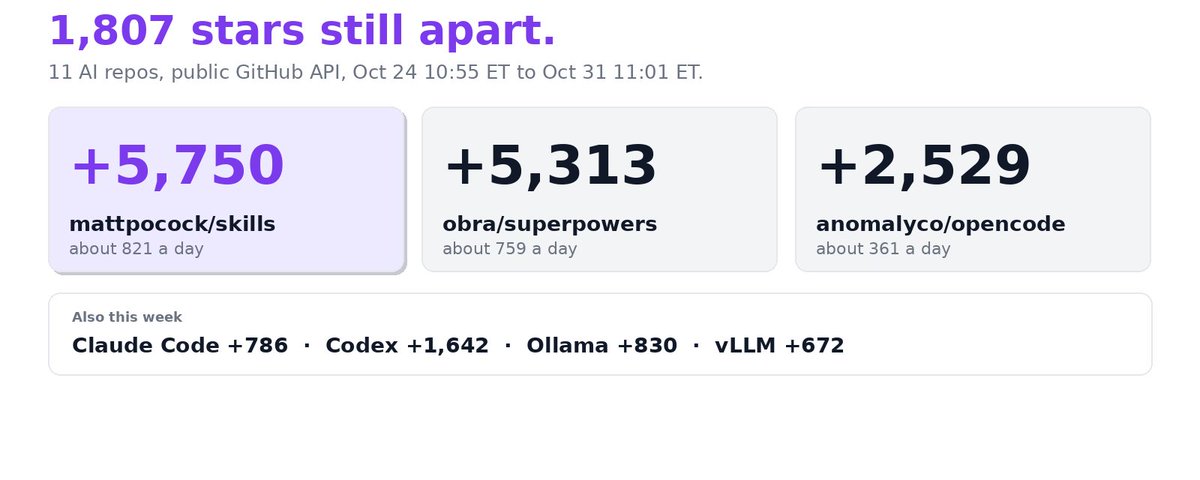
Race check: mattpocock/skills is 1,807 stars behind obra/superpowers
→ mattpocock: +5,750 in 7.0 days
→ obra: +5,313
→ 11 AI repos, same window
I think skills still win attention.
Will it ever pass?
via @mattpocockuk
Claude Max 20x is now Ultra: $200 a month, no 5-hour limit for verified accounts
→ Max 5x is now just Max, still $100 a month
→ Ultra gives 10x Pro usage every week; weekly limits stay
→ Ultra comes with $200 a month in API credits, up from $100 on Max
I think dropping the 5-hour window matters more than the new name.
Did the 5-hour limit ever stop your work?
via @claudeai


We’re renaming our Max plans:
Max 5x → Max
Max 20x → Ultra
Max is still $100/month, and Ultra is still $200. If you’re a subscriber, there’s nothing you need to do.
We’re also removing the 5-hour limit for verified Ultra accounts, starting today with most existing subscribers. Newer accounts keep a temporary limit until they’re verified, which helps us prevent fraud and abuse. You'll get an email when it's removed.
Weekly limits remain unchanged. View our plans here: claude.com/pricing

Friday AI board: 1 open weights flagship, 1 safety method, $500 API credits
→ Mistral Large 4: open weights, 52B active parameters, 26 on Artificial Analysis
→ Anthropic self-assessment: 94% of high-priority cases at a 1% false-positive rate
→ OpenAI: up to $500 a month in API credits for ChatGPT Pro and Business
I think the credits are the 1 you can actually use this weekend.
Which of the 3 matters most to you?
via @ArtificialAnlys artificialanalysis.ai/models…

GPT-6.1 Terra runs 91 tokens/s at every effort on Artificial Analysis; max costs 14x low
→ Low: 29 at $0.07; medium: 38 at $0.17
→ High: 42 at $0.26; xhigh: 45 at $0.40
→ Max: 51 at $0.96
I think the xhigh to max step is the 1 that pays: 6 points for $0.56.
Do you pick effort by score or by bill?
via @ArtificialAnlys artificialanalysis.ai/leader…

Remap any Codex TUI shortcut in 1 command and keep it in config.toml
→ Step 1: /keymap
→ Step 2: pick the context and action, then enter a binding like ctrl-a or shift-enter
→ Context bindings override tui.keymap.global; an empty binding list unbinds the action
I think the unbind trick is the most useful line on the page.
Which Codex shortcut would you change first?
via @OpenAIDevs developers.openai.com/codex/…

Watch or stop every Claude Code workflow run from 1 view
→ Step 1: /workflows lists running and completed workflows
→ Step 2: open a run to see each phase with its agent count
→ To stop a run from the list, select it and press x
I think this is the 1 view to keep open while agents work in the background.
How many workflows have you run at once?
via @ClaudeDevs code.claude.com/docs/en/work…

GPT-6.1 Sol xhigh and Opus 5.5 high both score 52; Sol is 4.6x cheaper
→ GPT-6.1 Sol xhigh: 52 at $0.76 a task
→ Claude Opus 5.5 high: 52 at $3.46
→ GPT-6 Astra medium: 51 at $2.73
I think same score, 4.6x the bill is the easiest A/B test you can run this week.
Would you swap a coding agent from Opus high to Sol xhigh?
via @ArtificialAnlys artificialanalysis.ai/leader…

ChatGPT Pro and Business now get up to $500 a month in OpenAI API credits
→ Pro: $100, $200 or $500 a month by tier
→ Business: $20 per paid Standard seat, $100 per Premium seat, pooled and capped at $500
→ Credits expire each billing cycle, and Codex usage through API keys is not covered
I think the Codex line is the fine print most people will miss.
What would you build with the credits first?
via @OpenAIDevs teapaw.org/OpenAIDevs/status/2115…


Get a cited research report from Claude Code with 1 bundled workflow
→ Step 1: /deep-research What changed in the Node.js permission model between v20 and v22
→ Step 2: it fans out web searches, cross-checks the sources and votes on each claim
→ Step 3: /workflows shows the run; claims that fail cross-checking are filtered out
I think the vote step is why this beats 1 plain web search.
What question would you hand it first?
via @ClaudeDevs code.claude.com/docs/en/work…

Mistral Large 4 is now open weight: 26 on Artificial Analysis
→ 52B active, 1M context
→ $2.06 a task, down 63%
→ FrontierCode: 19.7% vs 15%
I think efficiency is the story.
Would you self-host it?
via @MistralAI

Claude now checks its own chats for misuse: 94% of high-priority cases flagged
→ That is at a 1% false-positive rate; overall it flags 78% of what a stronger classifier flags
→ About 10 extra output tokens per check, under 2% added inference compute
→ Running in every Claude model since Fable 5; it has caught misuse since June
I think the cost is the story: the chat is already in the KV cache, so the check is nearly free.
Would you trust a model to grade its own conversations?
via @AnthropicAI teapaw.org/AnthropicAI/status/211…


We’ve trained Claude to flag potential misuse in conversations, a technique we call self-assessment. Right after it responds, Claude gives a preliminary safety assessment of the conversation.
Since we began using self-assessment in June, it has surfaced misuse that our other safeguards weren’t designed to catch.
Because Claude has already read the conversation, self-assessment is very efficient. And unlike classifiers, which target a discrete set of harms, it draws on Claude’s own judgment, so it gets more accurate as our models improve.
Read more on our new Safeguards blog:
safeguards.anthropic.com/202…
