

Eritrea is a blessed country 🇪🇷 Peace to the world l peace to East Africa l #development #Sustainablity #Resilience #ClimateAction #EnergyTransition #equity
Joined August 2023
- Tweets4.5K
- Following1.7K
- Followers2.3K
- Likes7.6K
Jawar, no one needs a lecture from you. Here’s the actual truth about the so-called ''Oromuma ideology,'' taken from a university forum. Eritrea is not opposed to Oromuma in general it is only against its expansionist agenda
እርቻ በቀይህ ባህር ናከብራለ ኣተባልም እንዴ

The Eritrean regime has now elevated its anti-Oromo hate campaign to the level of official state policy. In its latest attack, the Ministry of Information published an article labelling Oromummaa a “dangerous and narrow ethnic ideology” and attempting to link it to Ethiopia’s political crisis. The Ministry also shared the article on its official X account, as shown in the attached screenshot. Yet Oromummaa simply means being Oromo—just as Eritrawinet means being Eritrean. In effect, the regime is portraying Oromo identity itself as a dangerous ideology.
The political calculation behind this campaign appears to have three objectives:
Provoke communal conflict within Ethiopia and destabilise the country from within.
Isolate and politically encircle the Oromo by deepening divisions between them and other nations and nationalities.
Portray Abiy Ahmed’s government as an instrument of “Oromo supremacy” to alienate other groups from it.
The TPLF once labelled the Oromo struggle “narrow nationalism” as a tactic to delegitimise and belittle the movement. Oromo dissidents were branded narrow nationalists, ostracised and hunted down for three decades. The Eritrean regime has now taken that rhetoric a step further, branding Oromo identity itself as a dangerous ideology.
After facing backlash for advancing this narrative in his May 2025 speech, Isaias Afwerki continued promoting it through regime-funded politicians and media outlets. Now, the same rhetoric is being amplified openly through his government’s diplomatic and state-media channels. Two days ago, it was the Eritrean Embassy in Nairobi; yesterday, it was the Ministry of Information in Asmara.
Why this sudden escalation? Desperation?


Eri_Blooming ,🇪🇷 retweeted

A peaceful demonstration by Horn of Africa communities gathered from all over Europe is taking place today (13 November 2026) in Geneva.
Eritrea has spent nearly three years actively campaigning for peace in response to a declared war against its sovereignty, creating space for the international community to fulfill its responsibilities.
But everything has limits.
ሆየ ወዲ ኤረይ ሆየ፣ወዲ ትግራይ ሆየ
Amhara communities are actively seeking to ensure accountability for those who have been inciting violence against the people of Welega and Arsi.
Dr. Senait calls on all Amharas and Ethiopians to do their part.
Baliegie liji😅
The Day After Isaias: Security, Sovereignty and Eritrea's Political Transition
In a previous article titled “If Ethiopia Breaks Eritrea’s Defences, What Comes Next?”, I argued that Abiy Ahmed would face two choices: either advance towards Asmara to neutralise the security threats emanating from Isaias’s regime or limit the military operation to capturing the Port of Assab.
I also outlined three potential scenarios if Abiy chose to advance towards Asmara: the Eritrean army removes Isaias and negotiates a settlement before ENDF reaches the capital; Isaias retreats to the Sahel region to wage an insurgency; or ENDF marches on Asmara, forcing Isaias to flee the country.
With diplomatic efforts by multiple international actors failing to resolve the standoff, and reports of direct engagements between Eritrean and Ethiopian forces along the border, the Ethiopian government, the Eritrean opposition, and the international community should be preparing for what might follow if ENDF breaches the border and Isaias loses control of Eritrean affairs.
For Ethiopia, removing the threat posed by Isaias as an Egyptian proxy would achieve little if Eritrea subsequently descended into prolonged instability. Preserving the country's state institutions and preventing another security vacuum along Ethiopia's northern border should therefore be major priorities.
The Humanitarian Challenge: Opening the Open-Air Prison
One immediate consequence of an ENDF advance across the border could be a mass influx of Eritreans into Ethiopia, further overwhelming an already severely strained humanitarian situation in northern Ethiopia. Eritrea's current situation bears some resemblance to East Germany on the eve of the fall of the Berlin Wall.
Under Isaias, Eritrea has effectively become one large prison, particularly since the 1998–2000 war. The country has become almost completely sealed off from its neighbours, diplomatically isolated from much of the international community, and disconnected from the wider world in an age of digital communication, with internet access severely restricted. Eritrean youth have risked landmines and gunfire from border guards to flee the country, often using Ethiopia as a stepping stone on their journey to Europe and elsewhere.
Ethiopia has already hosted large numbers of Eritreans fleeing Isaias's rule. According to UNHCR, the country sheltered 181,264 Eritrean refugees at the end of 2020. As of October 2026, approximately 117,000 Eritrean refugees and asylum seekers remained registered in Ethiopia.
Before the Tigray war, Eritrean refugees were accommodated in four camps in Tigray and two in Afar, alongside those living outside the camps. Several of these facilities were destroyed during the war, forcing refugees to relocate elsewhere in Ethiopia. New sites were subsequently established in Amhara and Afar. With much of the original refugee infrastructure lost or disrupted, another large influx following an ENDF advance would be particularly difficult to manage.
ENDF must therefore prepare safe-passage corridors to protect fleeing civilians from landmines and other dangers along the border. New arrivals would also put additional pressure on Tigray and Afar, two regions already grappling with multiple humanitarian crises. The Ethiopian government, both regional administrations, and international humanitarian organisations should prepare arrangements for receiving, sheltering, and protecting those fleeing the fighting.
A transition would also have to address the fate of political prisoners and thousands of young Eritreans trapped in indefinite national service. Their release, demobilisation, and reintegration would be essential to restoring normal civilian life. In particular, securing the release of prominent political dissidents who have languished in prison for more than two decades should be a paramount priority, both on humanitarian grounds and as a means of establishing political legitimacy for the transition.
Avoiding a Security Vacuum
If Isaias is removed, particularly following an ENDF advance on Asmara without prior intervention by the Eritrean army, Eritrea could face serious internal instability and threats to maritime security.
Communal and sectarian tensions in multiethnic Eritrea, long suppressed by the regime's repressive apparatus, could resurface as its control weakens. Those preparing for a transition would need to identify potential flashpoints and establish mechanisms to contain tensions before they turn violent.
The disintegration of the army and security institutions could create a dangerous vacuum before a new government is able to establish control. Engaging moderate elements within the armed forces and retaining as much of the existing security apparatus as possible, subject to appropriate reorientation and vetting, would help reduce that risk.
The lesson from the US decision to disband the Iraqi army after the 2003 invasion should not be forgotten. That decision left thousands of disgruntled and unemployed officers and soldiers, some of whom went on to form or join insurgent and terrorist groups, contributing to years of prolonged conflict.
Given the collapse of neighbouring Sudan, extraordinary care will also be needed to prevent insecurity from spilling across borders and further complicating Eritrea's post-Isaias transition.
An interim government bringing together the opposition and moderate elements of the former regime should be established alongside efforts to preserve the security institutions. Ethiopia must avoid becoming an occupying power or even being perceived as having such intentions. Its military presence inside Eritrea should be limited to what is strictly necessary to facilitate a transition and enable Eritreans to establish their own administration. That administration must have credible Eritrean leadership and a clear path towards civilian government, rather than becoming a political order that rival factions could portray as an Ethiopian project.
Maritime security presents another challenge. Securing Eritrea's territorial waters and protecting the Red Sea trade route, particularly amid threats emanating from Yemen, will require advance preparation. Ethiopian authorities are reportedly already in discussions with partners about jointly deploying naval assets to secure the territorial waters. ENDF is also reported to have trained approximately 7,000 naval personnel and to have ordered several ships.
Respecting Eritrean Sovereignty
Any Ethiopian military advance could create lasting political problems if its actions or rhetoric alienate Eritreans, inflame nationalism, or undermine efforts to stabilise the country. The Ethiopian government and ENDF must learn from their latest military campaigns in Tigray, where they have been perceived more positively than in previous engagements. In confronting Isaias, they should be even more careful to respect the symbols, monuments, and historical legacy of Eritrea's national liberation struggle.
During my travels in Europe, several African countries, and the United States, I have met former fighters of the Eritrean People's Liberation Front, young Eritreans who fled the country, and others who grew up abroad. Many were deeply critical of Isaias and wanted political change, but they were equally determined to defend their country's independence. They made it clear that removing him must not come at the expense of the sovereignty for which so much was sacrificed.
During one of those trips, I met a young Eritrean woman named Harnet (ሓርነት), around 21 years old, who was born in Europe to Eritrean parents and had never visited Eritrea. Born more than a decade after independence in 1993, her name means liberation or freedom in Tigrinya. In our short conversation, she connected its meaning to Eritrea's sovereignty, something she had learned about from her parents. What struck me was how strongly she identified with a country she had never visited. Her attachment reflected the same commitment to independence I had encountered among former liberation fighters and young Eritreans who had fled the country.
The Ethiopian government and ENDF must take this deep attachment to independence seriously. They must consistently reassure Eritreans, through both words and actions, that their country's sovereignty will be respected and preserved.
While neutralising the security threats posed to Ethiopia by Isaias's regime may be a legitimate objective, all other bilateral matters, including access to ports, must be resolved through negotiations once a new Eritrean government is constituted. They must not be imposed through military force.
Transitional Justice and Reconciliation
Eritreans will also have to confront the abuses of the past without allowing revenge to determine the country's future. Those responsible for serious crimes must face justice, but ordinary soldiers, civil servants, and their families should not be punished simply because of their association with the former regime. A transition driven by collective punishment could create new divisions and undermine the stability Eritrea desperately needs.
A Historic Opportunity for Eritreans
I urge Eritreans, particularly those in Ethiopia and the diaspora, to bridge their factional divisions and prepare to seize the opportunity should political change come. They need to develop a common transitional programme rather than wait for Isaias's departure before beginning another struggle over political power. They must be ready to transform their hard-won independence into an inclusive democratic system and embark on a path of sustainable development founded on peaceful coexistence within Eritrea and with its neighbours.
The end of Isaias's rule, if it comes, should not simply mark the removal of one authoritarian leader. It should open the way for Eritreans to reclaim their country, preserve their independence, and build a state that serves all its citizens. For Ethiopia, the lasting gain would be a secure northern border and a stable Eritrean neighbour with whom unresolved disputes could finally be settled through negotiations.
Five #US senators have sent a letter to the Secretary of State
#2. In particular, any discussion of a military acquisition of the Port of Assab should be off the table
Abiy Ahmed has lost in every aspect of diplomacy and failed in bringing peace to Ethiopia


The #TDF Eastern Front is performing its Tigray anthem, a song that carries deep historical significance
Eri_Blooming ,🇪🇷 retweeted
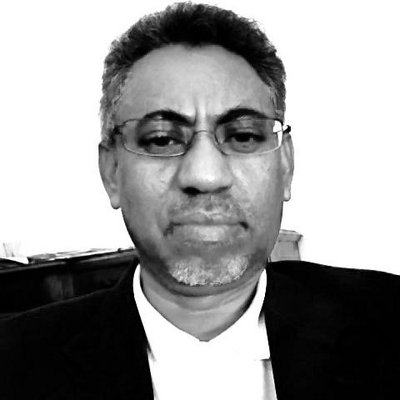
#Condolences: His Reverend Abune Lucas, Administrator of the Office of the Patriarch, Member of the Holy Synod of the Orthodox Tewahdo Church, and, Archbishop of the Central Region, has passed away at the age of 94 due to illness.
Prayer services for Abune Lucas will be held on Wednesday at Asmara's St. Mary Church and Funeral Services later on Thursday, 12 November, at Debre Libanos Monastery.


Ethiopian opposition figure Yilkal Getnet said that Jawar Mohammed will be held accountable in court for his recent narration about Welega and Arsi.
Major General Kindu Gezu Tegegn has once again spoken about invading a sovereign nation. Whether such a move is even possible is a separate question; we continue sharing these statements simply to document and archive the sequence of events,
General Tsadkan's indirect message to Getachew Reda and others.
He has also decided to stay out of politics.
Mr. Hu Changchun restated China’s firm stance on the necessity of upholding Eritrea’s sovereignty and territorial integrity in the first place.

The mercenary in Tigray who posted the video using this Instagram account, given the video title, ''be evil and make money,''


A #UAE-hired mercenary has recorded himself in the Tigray war, along the side of the ENDF,

A #UAE-hired mercenary has recorded himself in the Tigray war, along the side of the ENDF,


