Data Mesh | Data Products | Data Marketplaces | Data Ecosystems
Toronto, Ontario
Joined October 2013
- Tweets413
- Following1.3K
- Followers221
- Likes712


Eric M. Broda retweeted

Came across a really interesting piece on headless agents and zero trust execution. It inspired how I think about build safe agent identity and how we orchestrate multi-agent collaboration.
agenticmesh.substack.com/p/b…
Got to chat with the author, @ericmbroda, and we traded notes on agent safety.
Still chewing on how much of that structure a personal agent needs before it feels like enterprise IAM.
If you're working on agent safety, delegation, traceability, or compliance, DM me or comment. Happy to compare notes.
Eric M. Broda retweeted

Protecting enterprise data in a world where agents are using our systems 100X more than people ever did is going to be one of the more complex security and governance challenges of the 21st century.
Importantly, security and productivity gains are inexorably linked in the world of AI. If you give an agent too much unfettered information access, it will be difficult to truly control and protect your data; and conversely, if you lock everything down completely, you won’t get any real productivity gains from AI.
We need all new ways to protect our systems, environments, and structured and unstructured dada in the enterprise in an intelligent way by modernizing our approach to security and governance.
At Box, as one example, we’re building new intelligent ways to protect enterprise data and agentic use of that information. A recent update in Box Shield is to provide granular controls on what content agents can and can’t work with based on document classification level. We’re also working on other features that can automatically detect and alert (or block) when data is being accessed or used in unusual or anomalous ways by agents.
And this is just the start. There’s a ton more innovation coming across the entire industry - from the labs like OpenAI or Anthropic; security platforms like Palo Alto Networks, Cisco, CrowdStrike, Okta; or startups like Enclave, Method, Alterion, Runlayer, and many many others - to rethink how we protect information in the world of AI agents. Exciting and wild times ahead.

Eric M. Broda retweeted

Former Canada Prime Minister Jean Chrétien: "I have message for American friends...never mistake our generosity for weakness. Never mistake our tolerance for lack of determination. And never, never mistake our kindness for softness...We bow to no one."
Eric M. Broda retweeted

This great speech, by a 92-year-old Canadian patriot and former prime minister, should touch the heart of every American.
Trump’s assault on Canada is stupid and self-defeating.
We should not make enemies of the people we have known as friends and allies for generations.

Eric M. Broda retweeted

Someone please tell me this exists: a meta-harness + kanban board to orchestrate my agents across platforms (Claude, Codex, Grok, Muse, etc.) tracking progress and handing off projects to each other cleanly when one hits its limits. What's the best way to do this?
Eric M. Broda retweeted

Anthropic published a security guide that basically tells you to stop trusting your own AI agents.
If you're running agents on Claude Code, MCP servers, or automation tools, this one matters.
Here's what it actually says: 👇

Eric M. Broda retweeted

I think it is really worth reading this piece on RSI at Anthropic.
There is a bit of navel-gazing, some marketing, and a lot of very sincere beliefs about what Anthropic thinks is likely in the near future of AI that you probably want to be aware of. anthropic.com/institute/recu…

Eric M. Broda retweeted

Our internal data shows Claude is accelerating AI development—a possible path to recursive self-improvement, or AI autonomously building a more capable successor.
It’s happening faster than we thought, and the implications deserve greater attention. anthropic.com/institute/recu…
Eric M. Broda retweeted

Tokenmaxxing
The stuff I'm hearing is just insane. People are spending hundreds of thousands of dollars a month on tokens? Guys, what are you shipping?
I am seeing people fully enraptured by illusions of productivity. They have swarms of agents coordinated by Byzantine Octopus harnesses. They're munging thousands of tokens a second. They're doing all this stuff, churning unfinished marginalia faster than ever before. Spinning their wheels and shipping absolutely jack shit for their customers.
Someone once pointed out that psychedelic drugs give their users the feeling of insight, but not actual insight. You wake up in the morning and you remember you had unlocked the mysteries of the universe, but all you can find are some spirals you scrawled on a notepad. Similarly, some engineers are falling all the way down the rabbit hole to the feeling of productivity, doing Heroic Doses of tokens on their way to True Productivity. Inevitably, they will reach psychosis before enlightenment.
On a serious note, we're getting a lot of utility from AI for engineering at our company. I think we would really struggle to burn more than $5K per engineer per month. It turns out that extra-high-thinking mode on ultra-speed doesn't actually get you that much. Admittedly, we have a small codebase, but we have good tools -- and most of our problems are about thinking, understanding, and navigating real-world constraints. And I expect that's pretty much the same for most companies.
Maybe if you're a big, established company with a 10M+ LOC codebase, you blow through the context much faster and can spend more money, but at that point -- do you really want to ship millions of lines of code a month? Aren't you concerned about stability? (I can think of a few valid exceptions, but for most F1000s this is just a non-starter.)
Eric M. Broda retweeted

Should we be doing real-time authorization for agents, with short-lived creds?
Lengthy piece here makes the case ... nordicapis.com/why-real-time…

Eric M. Broda retweeted

Every time I see a team celebrating their new "shared module," I remember this lesson.
Reuse is a dangerous form of coupling.
They found the same logic in two places and did what good engineers do: put it in one place and called it a win. Clean, responsible, textbook.
Six months later, someone needs to change it.
Suddenly, a small update for one team's requirements breaks three services, blocks two releases, and triggers an emergency meeting between people who've never talked to each other before.
This is the cost nobody preaches about.
DRY is one of those principles that feels unquestionably right until you apply it across team boundaries. The moment you share a module between domains, you're not just sharing code. You're creating a dependency that nobody owns and everyone resents.
Before you reuse, ask:
Will this change often?
Does it belong to one domain?
Are the consumers truly aligned in purpose?
Will one team’s change surprise another team?
If the answer to any of these is "I'm not sure," stop. Duplicate it.
I know how that sounds. It feels lazy. It feels like the thing a junior developer does before they know better. But here's what nobody wants to say out loud: two independent implementations you control are almost always cheaper than one shared one serving masters with different goals.
Duplication is a local problem. Coupling is an organizational problem.
One of them you can fix in an afternoon. The other requires a meeting with five teams and someone's manager.
Reuse isn't free. Treat it like the trade-off it is.

Eric M. Broda retweeted

Each agent ships with the connectors, skills, and subagents the task needs, ready to use as-is or adapt to your firm's own standards.
Read more: claude.com/solutions/financi…

Eric M. Broda retweeted

On April 21, we challenged lawyers from all over the world to spend an afternoon building real, production-ready skills with Claude Cowork.
5 hours. 200+ lawyers. 10+ countries. 13 completed projects producing new legal AI skills.
Every skill is live on our showcase site at go.heycounsel.com/hackathons
Eric M. Broda retweeted

Eric Broda is a veteran of the software industry, and the co-author of the new O’Reilly book, Agentic Mesh: The GenAI-Powered Autonomous Agent Ecosystem. He joins @seanfalconer to discuss Agentic Mesh, distributed systems, and more.
@ericmbroda
softwareengineeringdaily.com…

Eric M. Broda retweeted

Let Claude Code automate your business operations
I started a tutorial series geared towards providing example of real-world document-heavy tasks that can be automated with agentic workflows: starting with KYC (know your customer) and loan processing, and expanding to some other examples.
These tutorials are designed as much for coding agents as well as humans. A lot of these operations tasks require extremely high accuracy, which requires both
1️⃣ Extremely high-quality extraction with confidence scores and citations
2️⃣ An agentic workflow with nonzero determinism: extract from a prescribed set of documents (identification, statements), and conform to a specified output format.
If you’re also trying to build real-world, business-critical, document-heavy operations workflows, feel free to point your coding agent at this repo!
It uses LlamaParse for high-accuracy document parsing/extraction, complete with citations and confidence scores, to give you guarantees on capabilities.
Check out the KYC tutorial: github.com/jerryjliu/llamapa…


Tutorial: Automating KYC with AI agents 🪪🕵
I’m creating a new tutorial series of automating practical document workflows with agents.
Every financial institution needs to perform KYC (know your customer) to verify a customer’s identity, and this involves manually sifting through IDs, bank statements, etc. and doing the cross-checking by hand.
This is a great first use case for agentic document workflows:
1. Extract identification information from the user supplied ID (license, passport)
2. Extract fields from utility bills/bank statements and then use LLMs to cross-validate extracted fields with the extracted ID fields
It obviously doesn’t cover the full e2e process and uses publicly available online data, but should be a good reference guide to get started. To make this work well, you do need high-quality document extraction with confidence scores and citations!
Check out the tutorial: github.com/jerryjliu/llamapa…
If you’re interested come check out LlamaParse: cloud.llamaindex.ai/?utm_sou…
Eric M. Broda retweeted

Running agents locally is a dead end. The future of software development is hundreds of agents running at all times of the day — in response to bug alerts, emails, Slack messages, meetings, and because they were launched by other agents. The only sane way to support this is with cloud containers.
Local agents hit a wall quickly:
• No scale. You can only run as many agents (and copies of your app) as your hardware allows.
• No isolation. Local agents share your filesystem, network, and credentials. One rogue agent can affect everything else.
• No team visibility. Teammates can't see what your agents are doing, review their work, or interact with them.
• No always-on capability. Agents can't respond to signals (alerts, messages, other agents) when your machine is off or asleep.
Cloud agents solve all of these problems. Each agent runs in its own isolated container with its own environment, and they can run 24/7 without depending on any single machine.
This year, every software company will have to make the transition from work happening on developer's local machines from 9am-6pm to work happening in the cloud 24/7 -- or get left behind by companies who do.
Eric M. Broda retweeted

Solid framing, the seven dimension model aligns with practical governance needs
Eric M. Broda retweeted

What's the biggest challenge you've encountered while scaling agents in production?
This Friday, @ericmbroda (Eric Broda) joins the @AI_TCG_CNCF (AI Technical Community Group) to discuss using Kubernetes as the control plane for agent fleets.
Details: community.cncf.io/events/det…
#Kubernetes #AgenticAI #CNCF #CloudNative


We have a special guest this Friday, March 13th — Eric Broda, author of Agentic Mesh and Implementing Data Mesh (O'Reilly).
What's the biggest challenge you've hit scaling agents in prod?
Join us! RSVP: community.cncf.io/events/det…
#Kubernetes #AgenticAI #CNCF
Eric M. Broda retweeted

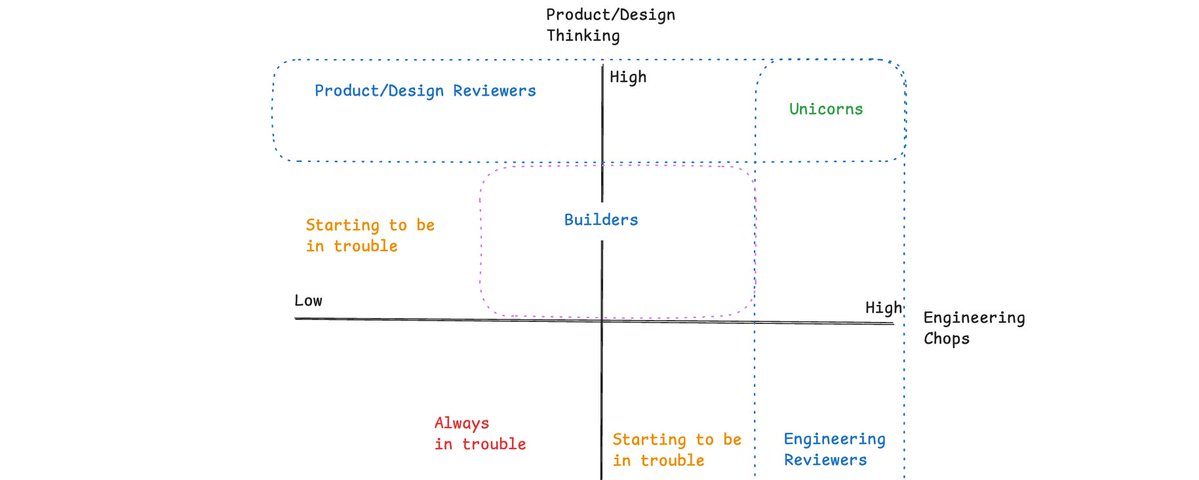
I wish I had articulated it this cleanly. But this is absolutely on point, and will get only more visible and obvious in the coming months.