

Teacher at Jose Marti MAST 6-12 Academy
Joined June 2015
- Tweets3.5K
- Following467
- Followers258
- Likes1K


Erik Veiga retweeted

Vous voyez le point bleu légèrement à droite ?
C'est la Terre, vue depuis Saturne par la sonde Cassini à 1,44 milliard de km d'ici.
Mais cette image historique en vraies couleurs cache bien plus de merveilles que vous ne l'imaginez.
Laissez-moi vous guider dans ce coin de système solaire:
- Tout d'abord, la sonde est en éclipse ici. Elle est dans l'ombre de Saturne, d'où le gros rond noir visible en haut à gauche.
- Malgré tout, les anneaux sont visibles. Pourquoi ? La lumière solaire filtre et diffuse à travers la glace et la poussière des anneaux. Leur teinte beige/dorée vient du fait que la glace est "polluée" par des poussières de silicates et même par quelques molécules organiques orangées (les tholins).
- Des anneaux très fins sont visibles notamment un brillant tout blanc juste après les anneaux principaux. Là c'est directement le Soleil qui en est responsable, la lumière se fait diffracter par ces anneaux fins et est déviée vers la caméra. L'anneau le plus brillant est l'anneau F, et celui tout seul un peu plus bas est l'anneau G.
- L'immense bande bleuâtre en bas de l'image, c'est aussi un anneau de Saturne mais un peu spécial. Cet anneau E est alimenté en continu par les geysers de glace d'Encelade, une petite lune de Saturne qui abrite un océan souterrain. Il apparaît bleu parce qu'il est constitué de grains de glace microscopiques. Il est quasiment impossible à observer depuis la Terre, là on ne le voit que parce qu'il est rétro-éclairé.
- Regardez la couche supérieure de l'atmosphère de Saturne, elle brille ! C'est exactement le même phénomène que sur Terre quand le ciel reste brillant pendant de longues minutes après le coucher du Soleil: la diffusion atmosphérique. Le Soleil, pourtant caché derrière la planète, voit sa lumière diffusée vers l'avant par les brumes et les gaz de la très haute atmosphère.
- L'échelle de cette photo est immense: 1 pixel sur Saturne fait 69 km, et au niveau de la Terre 1 pixel fait 86 620 km de côté.
- Et je reviens sur ce point bleu, le système Terre-Lune, qui semble fusionné en un seul éclat de lumière tellement ces mondes sont lointains. Ce 19 juillet 2013, nous étions nombreux à avoir formé des groupes en extérieur pour sourire à la caméra, la NASA avait prévenu que cette photo allait être prise et les passionnés du monde entier se sont rassemblés pour cette photo de famille. Si vous êtes né avant cette date, je sais précisément où vous étiez à l'instant de cette photo: dans ce petit pixel bleu perdu dans l'espace.
Crédit photo: NASA/JPL/SSI/CICLOPS

Erik Veiga retweeted

A spaceship with less memory than one photo on your phone just got so far from Earth that its messages now take a full day to reach us.
And it still picks up when NASA calls.
It's Voyager 1, launched back in 1977, the same year the first Star Wars came out. This week it crossed 16 billion miles, which is how far light travels in 24 hours. So if NASA sends it a command on Monday, the command lands Tuesday, and the earliest anyone at mission control finds out if it worked is Wednesday.
They're pulling this off with almost nothing. Its computers hold about 69 kilobytes of memory. Its radio puts out roughly 22 watts, about what the bulb in your fridge uses. By the time that signal gets back to us it's fainter than a billion-billionth of a watt, and NASA's 70-meter dishes still dig science data out of it at 160 bits per second. Your phone on bad hotel wifi is tens of thousands of times faster.
The team keeps fixing it anyway. When one memory chip died in late 2023 and Voyager started sending back gibberish, engineers figured out which 3% of the code was gone, rewrote it, and wedged it into other spots in a computer with almost no free room. They did that from 15 billion miles away, waiting the better part of two days to see each step land. Last year they brought back a set of thrusters that had been written off as dead since 2004.
What they can't fix is the power. Voyager runs on decaying plutonium that loses about 4 watts a year, and it's already down to less than half the roughly 470 watts it launched with. It left Earth with 10 science instruments, and only 2 are still switched on. NASA turned another one off in April just to keep the fuel lines from freezing. Sometime in the early 2030s the power runs out for good.
When that happens, the spacecraft just keeps coasting at 38,000 mph with nobody on the other end.
Forty-nine years of flying got us one light-day away, and the closest star to the Sun sits about 1,550 light-days out. At Voyager's speed that's roughly a 75,000-year trip. Voyager is pointed somewhere else anyway, and its nearest brush with another star comes about 40,000 years from now, when it drifts past a small one called Gliese 445 at a distance of 1.6 light-years.
Bolted to its side is a gold record with greetings in 55 languages and the sound of a human heartbeat. It's built to last around a billion years. So the thing we made that'll outlast pretty much everything is basically a mixtape drifting through the dark, with nobody around to play it.

Erik Veiga retweeted

Oh, how you shined!
To everyone who raised a light or lit up a landmark to celebrate Voyager’s Light-Day, thank you for shining bright with us.
Erik Veiga retweeted

Voyager 1 has reached one light-day away from Earth! Amaze amaze amaze! #NASA #SpaceExploration #Voyager1
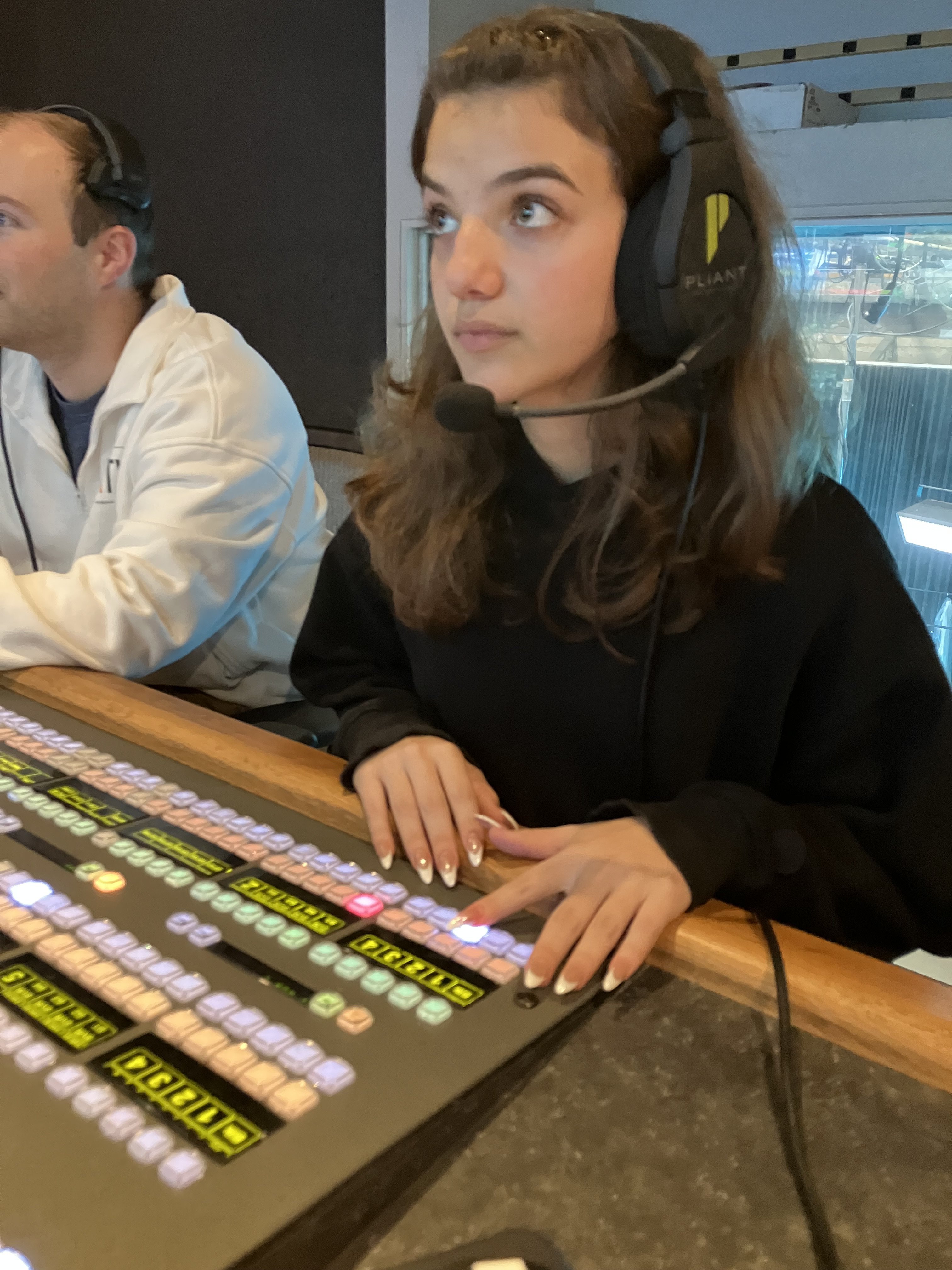
Our @josemartimast TV Production students spend the day at @UM_TV learning about media production and communications #mast2627 – at Coral Gables, FL


Thanks again to @UM_TV and the University of Miami School of Communications @UMSoC for inspiring my students and being such great hosts #mast2627 @josemartimast – at Coral Gables, FL


1
21
Erik Veiga retweeted

A Hero That Trusted His Intuition.
The problem wasn’t that Morgan Stanley didn’t believe him.
Rick Rescorla had already been right once. After the 1993 basement bombing of the World Trade Center, the firm’s security chief walked the towers, studied the site, and reached a conclusion most people preferred not to hear: the World Trade Center was still a target. Next time, he said, it would not be a truck. It would be an airplane.
An airplane. In a 1993 report.
Executives listened. Then they looked at the lease.
Morgan Stanley was the largest tenant in the complex—twenty-two floors of the South Tower, thousands of brokers, and a trading infrastructure that could not be packed into boxes and wheeled across the Hudson.
They literally made it a trading center.
The contract with the Port Authority ran until 2006. Walking away from premium Manhattan space of that scale would have meant penalties measured in the hundreds of millions, plus the operational chaos of relocating an entire downtown machine. So the company stayed.
Rescorla adjusted. If they could not leave the building, they would learn to escape it.
He built a protocol and treated it like doctrine. Unannounced drills. No exemptions. Brokers who billed by the minute were pulled off their desks and sent into the stairwells two by two, starting from the top floors, leaving a lane for firefighters coming the other way.
People complained. He did not care. Practice, he believed, was the only thing that would beat panic.
On the morning of September 11, 2001, American Airlines Flight 11 hit the North Tower. From the 44th floor of the South Tower, Rescorla could see the fire. Then the Port Authority came over the speakers: the South Tower was secure. Stay at your desks.
Rescorla grabbed a bullhorn and ignored them.
He started the drill his people already knew by heart. Floor by floor, two by two, down the stairs. He sang as he moved—Cornish songs from childhood, then “God Bless America”—keeping the line moving, refusing to let the stairwell become a stampede. Seventeen minutes later, the second plane struck the South Tower.
By then, most of Morgan Stanley was already on the way out.
Of the 2,687 employees in the building that morning, all but 13 survived.
It was stunning.
Rescorla could have been outside with them. He went back up instead. Colleagues told him to leave. He said he would, as soon as he was sure no one was left behind.
He was last seen around the 10th floor, heading higher.
The South Tower fell at 9:59 a.m. They never found him.
He was one of the 13.
He was a hero in every sense of the word.
Remember Rick Rescorla, he remembered for us.

Erik Veiga retweeted

In 1988 Dolly Parton pulled every 7th and 8th grader in Sevier County into a room and told them to pick a buddy.
She made them sign a contract.. if BOTH graduate, she hands you both $500. One fails, nobody gets paid.
The county dropout rate went from 35% to 6%.
She handed out the checks herself.
In 1989 she offered $500 to every kid in the county who wanted to go to the local college.
When Gatlinburg burned in 2016, she sent 900 families $1,000 a month for six months.
You've probably heard that part.
Here's the part you haven't:
The fund raised more than expected, so she showed up in May and handed every one of those families another $5,000 on top.
Then she quietly put $3 million into the recovery group that handles the years after the news trucks leave.
She built her county an entire hospital.
She played a benefit concert in 2007, Dollywood and the Stampede matched it, and LeConte Medical Center opened in 2010 with a birthing unit and a women's center in it.
In 2022 she started covering 100% of tuition, books, and fees for Dollywood employees.
Full-time, part-time, AND seasonal.
In 1991 she paid for a bald eagle sanctuary because the birds couldn't be released back into the wild, no press release.
And when Hurricane Helene came through here in Western North Carolina, she wrote a personal check for $1 million and her companies matched it.
She didn't owe North Carolina anything, but she helped us anyway.
She started the Imagination Library because her daddy couldn't read or write. Before he passed, he told her it was the most important thing she ever did.
Rest in Peace, Dolly 🇺🇸

Erik Veiga retweeted

Elon Musk was asked why SpaceX barely files patents.
His answer flips everything business schools teach about protecting ideas.
"Patents are a recipe book for your competitors."
The room expected the standard answer. Patents protect innovation. Patents are moats. Every startup lawyer's first advice is file, file, file.
He explained why that's backwards for SpaceX. A patent is a public document. You file one, and you've published your engineering solution to the entire planet, with diagrams. Your only protection is your ability to sue whoever copies it. His primary long term competitors are in China. He said suing there would be pointless, so a patent filing would simply be handing over the blueprints with extra steps.
So SpaceX protects almost nothing on paper. The protection is velocity. By the time anyone reverse engineers the current rocket, SpaceX is two generations ahead. The moat isn't a document. The moat is speed.
Think about what that reveals. He'd rather rely on outrunning everyone forever than on a legal system defending yesterday's work. Most companies protect the past. He decided the past isn't worth protecting because he's never going back to it.
Secrets are for companies that stopped moving. If your advantage needs a lawyer to survive, it was never an advantage. It was a head start you wasted.
Erik Veiga retweeted
"It is not the critic who counts; not the man who points out how the strong man stumbles, or where the doer of deeds could have done them better. The credit belongs to the man [NOTE: Or woman] who is actually in the arena, whose face is marred by dust and sweat and blood; who strives valiantly; who errs, who comes short again and again, because there is no effort without error and shortcoming; but who does actually strive to do the deeds; who knows great enthusiasms, the great devotions; who spends himself in a worthy cause; who at the best knows in the end the triumph of high achievement, and who at the worst, if he fails, at least fails while daring greatly, so that his place shall never be with those cold and timid souls who neither know victory nor defeat."


Erik Veiga retweeted

The podcast world just lost a legend, one of the two best podcasters in the universe:
John C. Dvorak (@THErealDVORAK) has passed away.
Please pray for his family, @AdamCurry (practically family), and closest friends.

Erik Veiga retweeted

John C. Dvorak
April 5th, 1946 - July 20th, 2026
mailchi.mp/nashownotes/rip-j…
Erik Veiga retweeted

Glass is a true "permanent material"—it can be recycled indefinitely (100% closed-loop) without any loss in quality, purity, or performance. Unlike most materials, its chemical structure remains unchanged through repeated melting and reforming, allowing old bottles and jars to become brand-new high-quality containers forever.
This stands in stark contrast to plastic, which is far cheaper for companies to produce and transport (lighter weight means lower shipping costs, and raw material/energy inputs are generally lower). Yet this short-term savings comes at a steep environmental price: we're degrading ecosystems, landfills, and oceans to cut a few cents per unit.
Glass offers genuine sustainability advantages when recycled properly:
• Using cullet (recycled glass fragments) replaces virgin raw materials (sand, soda ash, limestone)—one tonne of cullet saves about 1.2 tonnes of new resources.
• It slashes energy use dramatically: every 10% increase in cullet reduces furnace energy needs by ~2.5–3%, and melting 100% cullet can cut energy by up to ~40% compared to virgin production.
• CO₂ emissions drop significantly—studies show ~580–670 kg saved per tonne of recycled glass (cradle-to-cradle), with up to 58–60% reduction when using high cullet percentages.
• Fewer raw material extractions mean less mining impact and habitat disruption.
The key to unlocking glass's full potential is clean, color-sorted collection. Mixed colors or contamination (from curbside debris, ceramics, or other recyclables) often downgrades glass to lower-value uses like fiberglass insulation or road aggregate instead of bottle-to-bottle recycling. Proper sorting—by color and purity—keeps it in the premium loop.
By improving recycling habits (rinsing containers, separating by color where possible, and supporting deposit-return systems), we can maximize glass's role in a true circular economy. It's one of the few packaging options that genuinely protects resources long-term—let's not sacrifice it for cheaper, disposable alternatives that harm the planet.


Erik Veiga retweeted

Retour vers le Futur est le plus grand film de philosophie jamais déguisé en blockbuster pour enfants. Et personne ne parle des leçons de vie qu'il contient.
🧵
En surface c'est un film sur une DeLorean et un ado qui embrasse presque sa mère par accident. En profondeur c'est un traité sur la nature humaine, le libre arbitre et la responsabilité individuelle.
Première leçon : l'homme peut devenir bon ou mauvais. C'est un choix, pas une fatalité.
George McFly. Dans la timeline originale c'est un loser. Soumis. Écrasé par Biff. Incapable de tenir tête à qui que ce soit. Sa vie entière est définie par un moment de lâcheté.
Même George McFly. Dans la timeline modifiée, il met un coup de poing à Biff. Un seul moment de courage. Et toute sa vie change. Il devient auteur. Confiant. Respecté. Heureux.
Le film ne dit pas que George était "génétiquement" un loser ou un gagnant. Il dit que George avait les deux en lui. Et qu'un seul moment de décision a déterminé lequel des deux prendrait le dessus.
C'est Dostoïevski en version pop. Le bien et le mal coexistent dans chaque homme. Le choix fait la différence.
Deuxième leçon : rien n'est jamais écrit d'avance.
"Your future hasn't been written yet. No one's has. Your future is whatever you make it. So make it a good one."
Doc Brown dit ça à la fin du troisième film. C'est la phrase la plus anti-déterministe du cinéma. Et c'est exactement le contraire de ce que le marxisme, la sociologie bourdieusienne et le déclinisme français racontent.
Le marxisme dit : ta classe sociale détermine ton destin. Bourdieu dit : ton capital culturel détermine ton destin. Le déclinisme dit : le système est foutu, rien ne changera.
Doc Brown dit : ton futur n'est pas encore écrit. C'est toi qui le crées.
Chaque timeline dans le film est la preuve que les petites décisions individuelles ont des conséquences massives. Un coup de poing change une vie. Un mot de trop détruit une famille. Un acte de courage crée un futur entièrement différent.
C'est l'effet papillon comme philosophie de vie. Et c'est profondément libéral au sens originel du terme : l'individu est souverain sur son destin.
Troisième leçon : le vrai ennemi c'est pas l'autre. C'est ta propre lâcheté.
Biff est le méchant apparent. Mais le vrai antagoniste du film c'est la lâcheté de George. Biff ne fait qu'occuper l'espace que George lui cède. Le jour où George décide de ne plus céder, Biff n'est plus rien. Un bully sans victime consentante c'est juste un mec pathétique qui crie dans le vide.
Combien de gens vivent dans la timeline où ils n'ont jamais mis le coup de poing ? Pas un coup de poing physique. Le coup de poing métaphorique. Dire non. Quitter le job. Lancer la boîte. Dire la vérité. Refuser le confort de la soumission.
Quatrième leçon : le futur se construit avec de l'énergie.
Le flux capacitor a besoin de 1.21 gigawatts. C'est pas un détail narratif. C'est une métaphore. Le voyage dans le temps, la capacité à changer son futur, demande une quantité d'énergie massive. Pas n'importe quelle énergie. Une énergie concentrée, focalisée, canalisée sur un seul point.
C'est exactement ce que demande l'entrepreneuriat. Ce que demande la création. Ce que demande n'importe quel changement de trajectoire de vie. Une quantité massive d'énergie focalisée sur un seul point de décision.
La majorité des gens n'ont pas 1.21 gigawatts. Pas parce qu'ils n'ont pas l'énergie. Parce qu'ils la dispersent. Un peu de plainte ici. Un peu de scroll là. Un peu de confort partout. L'énergie fuit de partout et il ne reste rien pour le flux capacitor.
Cinquième leçon : le passé t'explique mais ne te définit pas.
Marty découvre que son père était un loser. Que sa mère buvait. Que sa famille était dysfonctionnelle. La tentation aurait été de dire "je suis le produit de mon environnement". Le déterminisme social appliqué à la famille.
Mais Marty ne fait pas ça. Il intervient. Il change le cours des choses. Non pas en niant le passé mais en refusant d'en être prisonnier.
C'est la leçon la plus puissante pour quiconque vient d'un milieu difficile. Ton passé est réel. Tes circonstances sont réelles. Mais elles ne sont pas ton futur. Ton futur est le produit de tes décisions, pas de tes origines.
Sixième leçon : la technologie est un outil. L'humain est le pilote.
La DeLorean ne va nulle part sans quelqu'un au volant. La machine voyage dans le temps. L'humain choisit la destination. Doc Brown construit la machine. Marty décide quoi en faire.
C'est exactement la relation qu'on devrait avoir avec l'IA. La technologie est le véhicule. L'humain est la vision. Sans vision, la DeLorean est une voiture moche qui traîne dans un parking. Avec une vision, elle change l'histoire.
Robert Zemeckis a mis tout ça dans un film pour enfants en 1985. Pas dans un traité de philosophie. Pas dans un essai. Dans un film avec un skate, un ampli géant et un mec qui dit "Great Scott!".
C'est la définition du génie de la vulgarisation. Les vérités les plus profondes emballées dans le divertissement le plus pur.
Ton futur n'est pas écrit. Mets le coup de poing. Trouve tes 1.21 gigawatts. Et conduis.
Roads ? Where we're going, we don't need roads.


Martial arts star Chuck Norris dies at 86 @Bob_Mondello via @NPR
npr.org/2026/03/20/nx-s1-575… – at Miami, FL

60