

✏️Inspiring, educating & connecting future leaders with the principles of a free society. | Est. 1946
Atlanta, GA
Joined January 2009
- Tweets97.1K
- Following8.5K
- Followers99.7K
- Likes16.7K




Pinned Tweet
Why is your health insurance tied to your job?
In the 1940s, the U.S. government capped cash wages. To compete for labor, companies started offering untaxed health coverage instead.
In 1954, Congress made it permanent, locking Americans into getting healthcare from their employers forever.
Foundation for Economic Education retweeted

The milestones are familiar: get a degree, find a good job, build a life. For Gen Z, the math behind that equation looks very different.
Join @interintellect and @feeonline in Manhattan for a night of lively debate with @krishnanrohit, @AllisonSchrager, @FOMO_sacer, @Abi0lvera, @shadihamid, and @JraissatiJorge, moderated by @dgrcosta and @theannagat, on the economics, ambitions, and cultural shifts shaping a generation.
interintellect.com/salons/th…

Foundation for Economic Education retweeted

The effects may reach well beyond the European steel market. A manufacturer that pays more for its raw material faces higher costs than competitors that can buy cheaper steel in other markets. If it raises prices, it risks losing orders; if it absorbs the costs, it has fewer resources to invest and grow. Protecting steel mills can therefore weaken other industries that employ more people and produce higher value-added goods.
My newest with @feeonline
fee.org/articles/the-cost-of…

Foundation for Economic Education retweeted

You folks ever give, um, credit to the guy who wrote the piece?
Ah, just kidding. Here's the link.
#housing #affordablehousing #capitalism
fee.org/articles/why-cities-…


“The interesting thing about the British experience, however, is that it was almost entirely native private enterprise that found both the initiative and the capital to lay down the system of communications which was essential to the British industrial revolution.”
- Phyllis Deane
The cost of regulations appears everywhere. Businesses spend money on compliance, which affects consumers and workers through higher prices, lower wages, fewer job opportunities and reduced investment.


“Force – sending a policeman to take the money from somebody’s pocket – is fundamentally at the basis of the philosophy of the welfare state.”
- Milton Friedman

Foundation for Economic Education retweeted

The founders fought the revolutionary war because of principles. @LawrenceWReed1 explains that "No taxation without representation," was not about the amount of tax but about the idea that parliament had no right to tax the colonies without representation, even if the tax was minimal. @feeonline

The Conscience of the American Revolution. @LawrenceWReed1 discusses Mercy Otis Warren, the often overlooked patriot, playwright, and historian who helped shape America’s founding. @feeonline
Foundation for Economic Education retweeted
The Future of the Republic
What is the most important issue facing America today? According to economist and historian @LawrenceWReed1, it has always been the same thing: character. He explains that a nation that gets character wrong is on the road to extinction. @feeonline
The Conscience of the American Revolution. @LawrenceWReed1 discusses Mercy Otis Warren, the often overlooked patriot, playwright, and historian who helped shape America’s founding. @feeonline
“Poverty is no mystery. Poverty has been, and remains, man’s standard dish throughout history at most places in the world. Affluence is the mystery.”
- Walter Williams

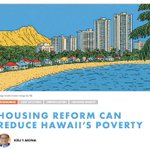
"One of the most effective ways for lawmakers to reduce poverty in Hawaii wouldn’t cost taxpayers a dime: housing reform.
According to a new study from Pew Charitable Trusts, the state’s poverty rate would decline by 26% and its child poverty rate by 36% if housing policies led to a 20% reduction in inflation-adjusted rent."
- Keli‘i Akina

“The nationalization of productive resources, far from liberating men from enslavement by things, as Marx and Engels had envisioned, converts them into slaves of their rulers and, because of endemic shortages, makes them more materialistic than ever.”
- Richard Pipes
"Free trade recognizes that openness, competition, and comparative advantage yield greater prosperity for nations over time." - @Sergio_Econ

“Industrial planners everywhere face an information problem. From the standpoint of consumer and producer satisfaction, how can a planning board know which industries should be “born” and which should “die,” which should be subsidized and which should be self-sufficient, which should receive tax credits and which should not?”
- Walter Williams