

Lecturer in Scottish Electoral Politics @EdinburghPIR 🗳️🏴 | Dandies 🔴⚪ | Abundance bro 🏗️
Edinburgh
Joined March 2019
- Tweets7.8K
- Following5K
- Followers1.3K
- Likes56K









Fraser McMillan 🌐 retweeted

The cyberpocalypse is going to hit British politics like an asteroid. So many people have heads buried so far in the sand (just look at what Parliament spends its time discussing...)
Fraser McMillan 🌐 retweeted

first set of photos to really make me internalize 2013 is about to be closer to the 90s than to today soon – at New York, NY


Fraser McMillan 🌐 retweeted

NEW WORKING PAPER
We meta-reanalyzed a decade of candidate-choice conjoint experiments.
144 papers. 243 studies. 434K respondents. 2.18M candidate matchups. 52 countries.
tl;dr: It turns out people vote based on policy...
Here's what we learned:

Fraser McMillan 🌐 retweeted

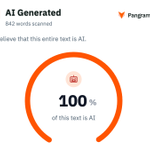
Stuff like this is what downgrades my expectations re: speed of AI diffusion + impact on the economy. One of the easiest, cheapest, high value things editors could do right now is just run stuff they publish through pangram and I would bet less than 5% are doing it every single time.

Fraser McMillan 🌐 retweeted

Data project (AI-able) and exam (paper, no aids) score distribution on the undergraduate Development Economics course I have been teaching at Stockholm University, 2022-2026.

Fraser McMillan 🌐 retweeted

Today we're sharing some initial data on how Americans use Claude for politics, based on aggregated conversation data analyzed with differentially private methods. A couple interesting takeaways:
*Almost no one asks AI how they should vote*
About ~5.75% of conversations in the US touch on some kind of political or social issue in a recent one-week period, and less than 0.01% of conversations involve asking how to vote.
*Political conversations have many goals*
These conversations have wide-ranging goals, everything from research and writing assistance to learning, fact-checking, and arguing.
We are continuing to make progress on improving how Claude talks about these topics---steadily increasing our performance on our even-handedness evals and partnering with a range of outside organizations to develop new measures of political bias---and I hope that sharing information about the shape of these conversations will help people outside the company evaluate AI's political bias, accuracy, and other criteria in ecologically valid ways. I'd love to discuss this with people who are interested, as it was a huge priority for me before joining.
This was a big joint effort as part of our work preparing for the midterm elections @AnthropicAI.
Full post is here: anthropic.com/news/2026-us-m…


Fraser McMillan 🌐 retweeted

Under our new Westminster model this works out as:
🎗️ SNP — 46 seats
🔶 LD — 5
🌳 Con — 3
🌹 Lab — 3
The SNP are swamping Labour as they did in 2015, 2017 and 2019


NEW: Scottish Westminster Voting Intention on behalf of @theSNP
SNP: 34% (+4)
Labour: 20% (-15)
Reform UK: 18% (+11)
Conservative: 12% (-1)
Lib Dem: 8% (-2)
Green: 6% (+2)
Others: 3% (+2)
Changes since the 2024 General Election
F/w 18th September - 12th October 2026

the "Feb 2020" feeling is correct but tech adoption is not like a virus
Altman said it, there will be a huge lag in uptake in the real economy, plus likely massive negative polarisation/backlash
will be THE issue at 28/29 US/UK elections if we aren't all paperclips by then


Fraser McMillan 🌐 retweeted

📢New paper in @The_JOP on the reciprocal nature of citizens’ support for democratic transgressions.
We show that citizens reciprocate undemocratic behavior: When confronted with violations by political opponents, citizens’ support for transgressions by their own side doubles

Fraser McMillan 🌐 retweeted

On the eve of The AGI Chronicles (which comes out tomorrow!) I'm publishing an excerpt from "Big Blob of Compute," a 2017 internal research document by Dario Amodei, back when he was a researcher at OpenAI.
It's never been published before, but BBOC is, in my mind, the essay that started the AI race. It described Amodei's hypothesis that scaling up AI models was the best way, by far, to make them smarter. GPT-2 was an experiment to test the hypothesis, and when it worked, OpenAI went all-in on scaling, which led to the race we have today.
It's a fascinating historical artifact that deserves to see the light of day. And it's taken on mythical proportions inside the AI industry, which is now spending trillions of dollars building the "big blobs" that Amodei thought would be necessary to get to AGI.
Enjoy! And please pre-order the book if you do!
kevinroose.substack.com/p/th…

Fraser McMillan 🌐 retweeted

The world is being reshaped daily by AI. Yet after a month of party conferences, I was taken aback at just how little interest our political leaders seem to have in what's going on
My @thetimes column
thetimes.com/uk/politics/art…

Fraser McMillan 🌐 retweeted

Axios is reporting that the top labs are wargaming scenarios for the aftermath of a catastrophic event in the next 6 - 12 months, that some executives now see as being inevitable.

Fraser McMillan 🌐 retweeted

Peru politics be like: Mayor Hitler Mussolini, moderate social democrat.


🚨#BREAKING: Hitler Mussolini Simeón Flores is set to become mayor of the Peruvian town of Queropalca after defeating his opponent by just 25 votes.
Fraser McMillan 🌐 retweeted

New paper: Selfish Equality
In a global experiment, I show that high-redistribution countries are not particularly altruistic. Instead, they believe inequality is pragmatically harmful.
This creates selfish equality -- the defining feature of redistributive countries.

Fraser McMillan 🌐 retweeted

America: $40 borger
Russia: literal plague
France: on fire
Samoa subplot:

Fraser McMillan 🌐 retweeted

Great observation by @fchollet . Frontier labs are almost doing no pretraining-- probably because pretraining is bottlenecked by data- the world is running out of data. So they focus on reinforcement learning, and there are many domains that may be insufficiently data abundant and too messy/unverifiable for RL.


What if the jagged frontier is mainly math + code (which you can push arbitrarily far with RLVR), and everything else starts to plateau because it is still bottlenecked by human generated data?
Model performance in non-verifiable areas has kept improving steadily, albeit much slower than for math and code. But is that steady improvement a side effect of a higher G (itself driven by RLVR), or only a function of the amount of new human data getting injected into training (which is still continually happening on a massive scale)?
A lot of things depend on the answer to this question