

https://xitter.cf/t.co/ekbmMZtxh7
Athens, Greece
Joined December 2008
- Tweets101K
- Following995
- Followers1K
- Likes22K


Pinned Tweet
Ο τεράστιος Jeffrey David Sachs σε ομιλία του στο Ευρωπαϊκό Κοινοβούλιο στις 20 Φεβρουαρίου 2025, εκφώνησε ομιλία με τίτλο "Οι πόλεμοι επιλύονται μέσω διαπραγματεύσεων και κατανόησης".
Ολόκληρη η ομιλία
youtu.be/_RNE3X41IvM?t=5
Μια πάρα πολύ ανάλυση για ότι και πως το πέτυχαν οι φοιτητές
"...The students possessed neither financial resources nor clientelistic networks, no leader, and had no prior electoral experience. Yet they defeated the regime without adopting its methods"


HOW STUDENTS DEFEATED VUČIĆ WITHOUT PLAYING HIS GAME
In yesterday's early parliamentary elections in Serbia, the Student List, a political movement initiated by university students in December 2024, defeated Aleksandar Vučić's Serbian Progressive Party by 51 percent to 39 percent.
The outcome presents an analytical puzzle. The incumbent commanded all the traditional instruments of political survival: public finances, state institutions, a nationwide patronage apparatus, and fourteen years of accumulated power. The students possessed neither financial resources nor clientelistic networks, no leader, and had no prior electoral experience. Yet they defeated the regime without adopting its methods. I explain this outcome in five points.
1. The Accumulation of Discontent
The students' victory did not come out of nowhere. They inherited more than a decade of growing discontent with Vučić, which had repeatedly erupted into public protests but had never produced political change.
Vučić assumed power in 2012 by mobilizing widespread resentment against post-communist transition reforms that took place in 2001-2012. Over time, this dissatisfaction inverted. By 2016, the former incumbents (now in opposition) had lost credibility, prompting voters to search for alternatives and new agents. This dynamic produced a sequence of political new agents whose electoral appeal consistently deteriorated. Each initially raised hopes of political change, but these hopes faded as some newcomers undermined themselves while others struggled to compete in an increasingly unequal political environment. Meanwhile, Vučić had transformed Serbia's already weak democracy into a hybrid regime with increasingly authoritarian features. Control over state institutions, public resources, and much of the media allowed him to compensate for declining popular support, weaken the opposition, and maintain his hold on power.
Simultaneously, anti-regime sentiment manifested in successive waves of street protests, recurring roughly every 18 months on average. Each wave mobilized more people than the previous one, but each eventually subsided without achieving political change. (Similar dynamics was seen previosuly in Poland in 2015-2023.) Growing mobilization was thus accompanied by growing disappointment. Dissatisfaction with Vučić continued to accumulate, while confidence in the possibility of removing him gradually declined. By 2024, many voters had also lost faith in traditional opposition parties, which they perceived as part of the same clientelistic system. Increasingly convinced that political change was impossible, many withdrew from electoral politics altogether.
2. Overcoming the Coordination Dilemma
Discontent alone is insufficient to defeat an incumbent. Voters must also believe that others will support a viable alternative. Before the students emerged, many dissatisfied citizens abstained because they considered Vučić unbeatable and the opposition incapable of replacing him. Their expectations reinforced the very outcome they feared.
Beginning with university occupations in December 2024, mobilization culminated on March 15, 2025, when roughly 300,000 people gathered in Belgrade, in what was arguably the city's largest political demonstration since its liberation from German occupation in 1944. The event revealed the scale of opposition and, more importantly, made it visible to everyone. For the first time, many voters saw an alternative capable of defeating Vučić. Whether they identified with the students' political views became secondary. What mattered was their shared opposition to the incumbent and their belief that others would support the same alternative. The students had become a focal point for electoral coordination.
3. Clean Hands, No Ambition for Office
The students differed from previous opposition movements in another crucial respect: they were politically clean. Many established opposition politicians were widely perceived as belonging to the very clientelist system they claimed to oppose. The students, by contrast, were simply too young to have developed or joined such networks. They had no history of political deals, public appointments, or access to state resources. In a system defined by patronage, their lack of political experience became their greatest strategic advantage.
What followed was even more remarkable. When in May 2025 the students demanded early parliamentary elections, they imposed an unusual condition: no student could appear on their electoral list. The implicit message was clear: we want to remove the incumbent without taking his place. It was not about privileges, but about the system itself. This was a striking departure from conventional party politics, where parties seek power primarily to secure office and spoils for their leaders. When the students finally submitted their list of 250 candidates, not a single one was a student, let alone a member of the student movement.
By refusing to seek office themselves, the students made their promise to change the system more credible. This commitment appealed to voters on both the left and the right, including those disappointed by successive opposition failures and those who had withdrawn from electoral politics altogether. The breadth of this appeal was reflected in turnout of approximately 70 percent, with roughly 600,000 more people voting than in December 2023. Their self-denial did the trick.
4. Vučić Became Culturally Obsolete
The students' appeal was not simply that they were politically clean. They were also young, mostly in their late teens and early twenties. Like every generation, they had their own culture, their own values, and their own understanding of what was acceptable, desirable, or simply cool.
What Vučić (and not only him) represented did not belong in it. For them, Vučić was culturally obsolete. He represented a political world with which they no longer wanted to identify: patronage, clientelism, corruption, informal deals, and a system in which personal connections and political loyalty mattered more than education, competence, or merit. This was simply not their thing. The movement attracted and mobilized an extraordinary number of young people who saw Vučić as culturally irrelevant, in much the same way Vučić himself had mobilized voters resentful of post-communist transition reforms in 2012.
This attitude gradually spread beyond their generation. Older voters who had long grown dissatisfied with Vučić, but had repeatedly failed to find a credible alternative, began to identify with the students' rejection of his political culture. With this cultural innovation, the students changed the terms of political competition. Vučić could promise higher wages, offer young people subsidized apartments, or distribute cash benefits, but these traditional instruments had little effect on people who no longer wanted to belong to the political world he represented. It was precisely this system of corrupt clientelism and vote buying that they fought against.
5. It Wasn't the Economy, Stupid!
The explanations above emphasize what was unusual about the students' victory. But several more conventional factors also contributed to Vučić's defeat. Demographic change gradually weakened his electoral base, which relied heavily on pensioners, while younger voters constituted a core constituency of the student movement. Between the previous election and October 2026, approximately 270,000 people died, mostly elderly, while around 170,000 young people completed secondary school. The students also adopted a catch-all approach, attracting both pro-European liberals and nationally oriented conservatives who had previously supported different opposition parties.
The students also developed a different form of political organization. Instead of relying on patronage, financial incentives, and centralized party structures, they mobilized thousands of volunteers who contributed their time and energy without expecting personal rewards. Their motivation was arguably stronger than that of many members of Vučić's political machine. Political commitment thus became an alternative to the material incentives on which conventional party organizations depend.
Just as the students mobilized without material rewards, Vučić was defeated without an economic crisis. Authoritarian incumbents often become vulnerable when economic conditions worsen, as illustrated by Orbán's Hungary in April 2026. Ironically, Serbia was different. Over the preceding five years, the economy did well: living standards had risen, unemployment remained relatively low, real wages and pensions had increased, and the currency was stable.
6. Conclusion
Ultimately, the Serbian election was not merely a contest between political alternatives, but between two fundamentally different ways of organizing politics. The Serbian experience challenges conventional assumptions about the resources necessary to defeat an entrenched incumbent. The fact that a loosely organized, decentralized movement with meager financial resources, no leader (!), no clientelistic networks, and no political experience managed to defeat a powerful clientelistic political machine will become an important subject of scholarly research. The Serbian case will be taught at universities in comparative politics and political economy courses and discussed in academic articles and books.
freeblue_k retweeted

HOW STUDENTS DEFEATED VUČIĆ WITHOUT PLAYING HIS GAME
In yesterday's early parliamentary elections in Serbia, the Student List, a political movement initiated by university students in December 2024, defeated Aleksandar Vučić's Serbian Progressive Party by 51 percent to 39 percent.
The outcome presents an analytical puzzle. The incumbent commanded all the traditional instruments of political survival: public finances, state institutions, a nationwide patronage apparatus, and fourteen years of accumulated power. The students possessed neither financial resources nor clientelistic networks, no leader, and had no prior electoral experience. Yet they defeated the regime without adopting its methods. I explain this outcome in five points.
1. The Accumulation of Discontent
The students' victory did not come out of nowhere. They inherited more than a decade of growing discontent with Vučić, which had repeatedly erupted into public protests but had never produced political change.
Vučić assumed power in 2012 by mobilizing widespread resentment against post-communist transition reforms that took place in 2001-2012. Over time, this dissatisfaction inverted. By 2016, the former incumbents (now in opposition) had lost credibility, prompting voters to search for alternatives and new agents. This dynamic produced a sequence of political new agents whose electoral appeal consistently deteriorated. Each initially raised hopes of political change, but these hopes faded as some newcomers undermined themselves while others struggled to compete in an increasingly unequal political environment. Meanwhile, Vučić had transformed Serbia's already weak democracy into a hybrid regime with increasingly authoritarian features. Control over state institutions, public resources, and much of the media allowed him to compensate for declining popular support, weaken the opposition, and maintain his hold on power.
Simultaneously, anti-regime sentiment manifested in successive waves of street protests, recurring roughly every 18 months on average. Each wave mobilized more people than the previous one, but each eventually subsided without achieving political change. (Similar dynamics was seen previosuly in Poland in 2015-2023.) Growing mobilization was thus accompanied by growing disappointment. Dissatisfaction with Vučić continued to accumulate, while confidence in the possibility of removing him gradually declined. By 2024, many voters had also lost faith in traditional opposition parties, which they perceived as part of the same clientelistic system. Increasingly convinced that political change was impossible, many withdrew from electoral politics altogether.
2. Overcoming the Coordination Dilemma
Discontent alone is insufficient to defeat an incumbent. Voters must also believe that others will support a viable alternative. Before the students emerged, many dissatisfied citizens abstained because they considered Vučić unbeatable and the opposition incapable of replacing him. Their expectations reinforced the very outcome they feared.
Beginning with university occupations in December 2024, mobilization culminated on March 15, 2025, when roughly 300,000 people gathered in Belgrade, in what was arguably the city's largest political demonstration since its liberation from German occupation in 1944. The event revealed the scale of opposition and, more importantly, made it visible to everyone. For the first time, many voters saw an alternative capable of defeating Vučić. Whether they identified with the students' political views became secondary. What mattered was their shared opposition to the incumbent and their belief that others would support the same alternative. The students had become a focal point for electoral coordination.
3. Clean Hands, No Ambition for Office
The students differed from previous opposition movements in another crucial respect: they were politically clean. Many established opposition politicians were widely perceived as belonging to the very clientelist system they claimed to oppose. The students, by contrast, were simply too young to have developed or joined such networks. They had no history of political deals, public appointments, or access to state resources. In a system defined by patronage, their lack of political experience became their greatest strategic advantage.
What followed was even more remarkable. When in May 2025 the students demanded early parliamentary elections, they imposed an unusual condition: no student could appear on their electoral list. The implicit message was clear: we want to remove the incumbent without taking his place. It was not about privileges, but about the system itself. This was a striking departure from conventional party politics, where parties seek power primarily to secure office and spoils for their leaders. When the students finally submitted their list of 250 candidates, not a single one was a student, let alone a member of the student movement.
By refusing to seek office themselves, the students made their promise to change the system more credible. This commitment appealed to voters on both the left and the right, including those disappointed by successive opposition failures and those who had withdrawn from electoral politics altogether. The breadth of this appeal was reflected in turnout of approximately 70 percent, with roughly 600,000 more people voting than in December 2023. Their self-denial did the trick.
4. Vučić Became Culturally Obsolete
The students' appeal was not simply that they were politically clean. They were also young, mostly in their late teens and early twenties. Like every generation, they had their own culture, their own values, and their own understanding of what was acceptable, desirable, or simply cool.
What Vučić (and not only him) represented did not belong in it. For them, Vučić was culturally obsolete. He represented a political world with which they no longer wanted to identify: patronage, clientelism, corruption, informal deals, and a system in which personal connections and political loyalty mattered more than education, competence, or merit. This was simply not their thing. The movement attracted and mobilized an extraordinary number of young people who saw Vučić as culturally irrelevant, in much the same way Vučić himself had mobilized voters resentful of post-communist transition reforms in 2012.
This attitude gradually spread beyond their generation. Older voters who had long grown dissatisfied with Vučić, but had repeatedly failed to find a credible alternative, began to identify with the students' rejection of his political culture. With this cultural innovation, the students changed the terms of political competition. Vučić could promise higher wages, offer young people subsidized apartments, or distribute cash benefits, but these traditional instruments had little effect on people who no longer wanted to belong to the political world he represented. It was precisely this system of corrupt clientelism and vote buying that they fought against.
5. It Wasn't the Economy, Stupid!
The explanations above emphasize what was unusual about the students' victory. But several more conventional factors also contributed to Vučić's defeat. Demographic change gradually weakened his electoral base, which relied heavily on pensioners, while younger voters constituted a core constituency of the student movement. Between the previous election and October 2026, approximately 270,000 people died, mostly elderly, while around 170,000 young people completed secondary school. The students also adopted a catch-all approach, attracting both pro-European liberals and nationally oriented conservatives who had previously supported different opposition parties.
The students also developed a different form of political organization. Instead of relying on patronage, financial incentives, and centralized party structures, they mobilized thousands of volunteers who contributed their time and energy without expecting personal rewards. Their motivation was arguably stronger than that of many members of Vučić's political machine. Political commitment thus became an alternative to the material incentives on which conventional party organizations depend.
Just as the students mobilized without material rewards, Vučić was defeated without an economic crisis. Authoritarian incumbents often become vulnerable when economic conditions worsen, as illustrated by Orbán's Hungary in April 2026. Ironically, Serbia was different. Over the preceding five years, the economy did well: living standards had risen, unemployment remained relatively low, real wages and pensions had increased, and the currency was stable.
6. Conclusion
Ultimately, the Serbian election was not merely a contest between political alternatives, but between two fundamentally different ways of organizing politics. The Serbian experience challenges conventional assumptions about the resources necessary to defeat an entrenched incumbent. The fact that a loosely organized, decentralized movement with meager financial resources, no leader (!), no clientelistic networks, and no political experience managed to defeat a powerful clientelistic political machine will become an important subject of scholarly research. The Serbian case will be taught at universities in comparative politics and political economy courses and discussed in academic articles and books.
Χιλιόμετρα ειρηνικού, ακομμάτιστου αγώνα. Αυτό που κατάφεραν οι Σέρβοι πρέπει να συμβεί και στην Ελλάδα. Υπήρχε ευκαιρία μετά την 28-2-26. Δυστυχώς, το καπέλωμα,ο κομματισμός δεν το επέτρεψαν. Ας βρεθεί ο δρόμος να επιστρέψει η αξιοπρέπεια, δημοκρατία και απονομή δικαιοσύνης.

freeblue_k retweeted
Students in Serbia persevered in the face of a growing crackdown on dissent and inspired broad support across the country. Now the recent snap elections show that people are eager to vote for principles over personalities.
The Student List now holds the majority of seats in Serbia’s parliament following a record voter turnout. The protests that led to this historic change reflect the resistance taking place across Europe, where people are demanding their rights - including standing up for improved housing, education and economic conditions.
Αυτό που συνέβη στη Σερβία θα διδάσκεται. Δύο χρόνια ειρηνικών αγώνων, πορείες εκατοντάδων χιλιομέτρων, απέναντι στη διαφθορά & την καταστολή. Χωρίς αρχηγούς, με ψηφοδέλτιο καθηγητών, γιατρών, καλλιτεχνών και πολιτών, οι φοιτητές νίκησαν. Η αξιοπρέπεια έγινε πολιτική δύναμη.


Congratulations to Serbia’s students! 🇷🇸✊ May their extraordinary movement inspire young protesters worldwide to turn frustration into action and build new political alternatives in the fight for freedom and democracy.
Want to know how it all began? Watch Wake up, Serbia! Pumpaj: The Student Uprising 🎬
WATCH & SHARE youtu.be/h3t4EiRYzHM
freeblue_k retweeted

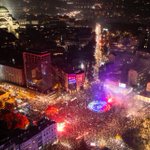
🇷🇸 THIS IS BELGRADE TONIGHT
Tens of thousands of Serbians packed Slavija Square with music, flares and fireworks after the student-led movement defeated Vučić’s ruling coalition in a historic parliamentary election.
The movement grew out of nearly two years of anti-government protests after the deadly Novi Sad station collapse.
With almost all votes counted, the student-backed list took 52.7% against 39.2% for Vučić’s alliance.
From street protests to control of parliament 🔥
Writer: Sol


freeblue_k retweeted

Εντυπωσιακα νούμερα σε φοροκλοπες βλέπουμε τις τελευταίες ημέρες. 25 εκατ ο ένας 100 εκατ ο άλλος.
Τα τελευταία 7 χρόνια έχουν πέσει 70 δις από Ευρώπη στην χώρα και το αποτέλεσμα είναι
Τελευταίες θέσεις σε αγοραστική δύναμη, υποδομές , μέσο μισθό.
Αυτά τα χρήματα που είναι ;


freeblue_k retweeted

Η ελευθερία του λόγου βλάπει σοβαρά τα καθεστώτα! => 🇫🇷 "Τα μέσα κοινωνικής δικτύωσης βλάπτουν τις δημοκρατίες μας" δήλωσε ο Εμμανουέλ Μακρόν.
freeblue_k retweeted

#ΚΚΕ #Μητσοτακης
Οι Αριστεροί εκ του περισσού...🤣🤣🤣
"..#Βραζιλια :
Επανεκλογή του #Λούλα, αιχμές #Μπολσονάρο για τα αποτελέσματα
& ΝΕΟΣ ΓΥΡΟΣ σοσιαλδημοκρατικών ΑΥΤΑΠΑΤΩΝ⁉️..."
902.gr/eidisi/kosmos/431605/…

freeblue_k retweeted

Γιατί το ΟΧΙ δεν είπε φασίστας Μεταξάς. Η 17 χρονη Ηρώ Κωνσταντοπούλου, που δεν φοβήθηκε ούτε μια στιγμή απέναντι στην βαναυσότητα των Γερμανών. Δολοφονήθηκε με 17 σφαίρες στο σκοπευτήριο της Καισαριανής, σαν μια εκδίκηση της νεότητας της από τους κατακτητές.


freeblue_k retweeted

The Government™ has made an ad about the protests happening around the world, and it’s surprisingly honest and informative.🌍🌎🌏
freeblue_k retweeted

Everyone needs to know what actually happened in Serbia.
Instead of students just protest against their government, the students organized themselves into a student list and ran in elections against their government—and they have just won.
Dear Serbia, congratulations on your victory; you have just opened a new door in protesting. This is history

freeblue_k retweeted

14 YILLIK İKTİDAR DEVRİLDİ — Sırbistan’da öğrenciler 14 yıllık iktidarı sandıkta devirdiler.
— Aleksandar Vučić, seçim yenilgisini kabul etti.
freeblue_k retweeted

SOS για αυτά τα γατάκια! 🐾
Ψάχνω επειγόντως ασφαλή χώρο/φιλοξενίες. Βρίσκονται στο Ελληνικό σε σπίτι που η γυναίκα πού τα φρόντιζε φεύγει από κει ..Κινδυνεύουν άμεσα, χρειάζονται βοήθεια!(Επίσης πρέπει να πιαστούν με παγίδα )
Παρακαλώ κάντε RT να ακουστεί! 🙏 #straycats #athens
