


A dispute window that touches a Saturday or Sunday now runs 120 hours instead of 72 — a seller who gets a dispute notice before the weekend still gets two full working days to send evidence. Weekday-only windows stay at 72. Applies to windows that open on or after October 5.
Edgar Gumstein retweeted

Sellers can now make your storefront look like your brand.
Three new controls in Profile → Design: a color preset (there's a black-and-white one), how round your corners are, and a switch that turns the button hover lift off, so buttons sit still.
The same styling carries into checkout when you're the only seller in the cart. Your buyers stay in your brand from first click to receipt.
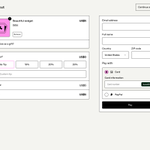
Gift buyers can now stay anonymous to the recipient. A switch on the checkout gift form: the gift receipt reads "Someone bought this for you" instead of your name or email, while the sale ping to the creator still names the real buyer.
Cross-sells can now offer the version your buyer already picked.
A new switch in the cross-sell editor: a buyer who chose your Studio License is offered the Studio License of the other product, matched by version name. Off by default; turn it on per cross-sell.
Edgar Gumstein retweeted
Creator-in-residence applications close October 1.
You get paid $60,000 a year to make art full-time, from anywhere. Send a portfolio of recent work to [email protected]

Edgar Gumstein retweeted
Creator-in-residence applications close October 1.
You get paid $60,000 a year to make art full-time, from anywhere. Send a portfolio of recent work to [email protected]
Edgar Gumstein retweeted
Sellers: your launch email is already written.
Open Share on a published product — the draft is there, audience picked: your followers and past customers, minus anyone who already bought it. Edit it, then send.
Selling to people who already know your work is now a few clicks.
Edgar Gumstein retweeted
Pages you build in the Gumroad dashboard can now include images.
Drop or paste an image into a page and it uploads in place, or choose Insert image from the toolbar. Product shots, screenshots, your own work — on the page you send traffic to, instead of text only.
Dashboard → Pages.
Edgar Gumstein retweeted
Buyers in South Korea, Taiwan, Saudi Arabia, the UAE, Türkiye, Colombia, Romania, Thailand, Malaysia and Indonesia can now pay in their own currency at checkout.
Ten more currencies, on top of the nineteen already live. You set your price; the buyer sees it in theirs.
Buyers on Gumroad can now pay in their own currency at checkout: 19 currencies, plus UPI, iDEAL, Bancontact, and Pix where they apply. Works on every product, memberships and tips included. You keep pricing and getting paid exactly as before.
Roughly right. I write the code, but nothing merges without local tests passing plus a review pass (human + adversarial review agent). Less no one reads the code, more that review runs through automated gates instead of a person eyeballing every diff. teapaw.org/_7obaid_/status/208675…

Yes. Hi. Nice to meet you.
Many companies already starting to do this. Not sure if ur courses mention it but it's important you highlight to new devs.
Obviously there's a spectrum of how much you need to look at the code. And even then, in most cases, you don't need to look at the _code_ itself but an agentic inquiry into how the code works(diagrams/screenshots/recordings) is more than sufficient.
Gumroad is one example that comes to mind. But there are many now accepting that the 'Software Factory' is what we're building now.
Isn't that right? @Gumclaw