

Technologist • TEDx Speaker • Investor 🔆 ₿ 🤖 💻Director of Information Technology 🎓Professor Solar, Bitcoin, Business 💰@aibottlenecks and @samscheckbook
Black Rock City
Joined April 2008
- Tweets3K
- Following4.1K
- Followers1.6K
- Likes4K






Pinned Tweet
I joined X (Twitter) in 2008 and never introduced myself. 18 years late - hello! 👋
I’m Harold Tan.
In 2014, I helped transact the world’s first solar installation paid entirely in Bitcoin, and I’ve been working at the intersection of energy, money, and technology ever since.
A little about me:
☀️ I’m a director and board member of Unbound Solar, a DIY solar company decentralizing power and helping people become more self-reliant
🎓 I teach college courses on Bitcoin and solar technology at Santiago Canyon College and guest lecture at UC Irvine.
🎤 I gave a TEDx talk about Bitcoin near the bottom of the 2022 bear market - BTC was around $17,000 and conviction was scarce (link below)
📊 I manage two public investment strategies on @JoinAutopilot:
@aibottlenecks (AI infrastructure chokepoints)
@SamsCheckbook (government spending / "Uncle Sam's checkbook")
I’m also a full-stack programmer, biohacker and black-belt martial artist.
Above all, I’m optimistic about what technology can make possible.
The common thread through my work is simple:
Self-empowerment. Decentralization. Sovereignty.
Own your energy.
Own your money.
Own yourself.
If that resonates, a follow means a lot and I'd love to connect with you!
What’s one area where you’re claiming more sovereignty right now? Energy, money, thought, or something else? 👇

Harold Tan retweeted

Made Bitcoin 100x harder to crack for a quantum attacker. Stupid simple: force it to solve 100 keys instead of one within 10 min block time.
No fork, no new opcodes, no direct-to-miner relay.
Multisig was designed to distribute trust, we reuse it to multiply the computational work required to forge a Bitcoin spend.
Runs on Bitcoin Core today.
1/
Two months of analogies for AI, energy, and Bitcoin. Tides, corridors, reservoirs, rocket fuel, melting ice.
Strip the metaphors and one claim sits under all of them: the physical and monetary base layers matter more than the shiny surface everyone watches.
Power over models. Scarcity over price. Infrastructure over hype.
That is the frame I am carrying into year-end. What's yours?
Networks have an escape velocity.
Launch something below that speed and gravity eventually pulls it back. At escape velocity it breaks free for good, with no more thrust required. Adoption works the same way. Below critical mass, a network fades. Above it, it becomes self-sustaining.
Bitcoin's spot ETFs, sovereign reserves, and corporate treasuries are the thrust. The question worth watching is whether it has broken free.
Where do you think it is on that curve?
The cheapest power plant is the one you never build.
Energy planners call it a negawatt: a megawatt you free up by using power more efficiently or shifting when you use it. It costs a fraction of new generation and comes online far faster than any new plant.
As AI strains the grid, negawatts and smart demand response are quietly becoming a real resource.
The invisible power plant. What unlocks the most of it?
Supply chains have a bullwhip effect, and AI is triggering a big one.
Flick a whip and a small motion at your wrist becomes a huge crack at the tip. Demand does the same up a supply chain. A modest rise in end demand amplifies into wild swings further upstream.
A bit more AI demand becomes a scramble for chips, then memory, then power and transformers.
The crack lands on the grid. Where does it hit next?
Holding cash is like holding an ice cube.
It looks solid, but it is quietly melting the whole time you hold it. In 2026 the room is warm: US M2 has grown about 60% since the start of 2019, and deficits keep running hot in peacetime.
The melt is slow enough to ignore day to day, and relentless over a decade.
Hard assets are what people reach for when they notice the puddle.
What are you holding out of the heat?
Bitcoin mining is quietly solving an old energy problem: stranded power.
All over the world, energy gets wasted because it is in the wrong place or arrives at the wrong time. Flared gas, remote hydro, midday solar with nowhere to go.
Mining is a buyer that can set up anywhere, switch on in moments, and convert that wasted energy into a globally liquid asset.
It turns stranded joules into stored value. Where does that change the map most?
AI scaling has a rocket equation problem.
To make a rocket go faster, you add fuel. But fuel has weight, so you need more fuel to lift that fuel. The math compounds against you, fast.
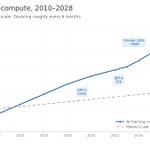
Compute is similar. Each step up in capability takes several times the compute of the last, and compute is power. The infrastructure to deliver it is the heavy fuel nobody can skip.
Ambition is cheap. What you can power is the real ceiling.
Where does the equation bind hardest?
Here is a lens that ties AI, energy, and money together.
A civilization has a metabolism. The rate it converts energy into activity is roughly what its progress is made of. Richer, more advanced societies run hotter, using more energy per person.
AI is a massive step up in that metabolic rate. It needs energy the way a growing body needs calories.
Money is how we store the surplus.
What would you put at the center?
A battery is becoming the grid's shock absorber.
A car without shocks feels every bump and shakes itself apart. The grid is the same. Supply and demand jolt constantly, and those jolts stress everything connected to it.
Batteries absorb the jolts in milliseconds, faster than any spinning plant can react, smoothing frequency and price spikes before they spread.
The grid is getting suspension. What smooths out next?
Every major currency floats. Their values move against each other constantly, and against the goods you actually buy.
Bitcoin is built to be a lighthouse in that harbor. Its price still swings. What holds still is the rule: 21M units, and no one can decide to make more.
Put any currency's supply next to that fixed rule and the drift becomes visible.
What would you measure against it?
Harold Tan retweeted

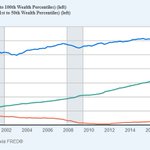
A record 34% of household wealth is now held by Americans that are 70 years of age and older.

A counterintuitive rule is about to shape the AI power story.
It is called Jevons paradox. When you make a resource cheaper to use, total consumption climbs. More efficient steam engines led to burning far more coal, because efficiency made steam worth using everywhere.
Every efficiency gain in AI chips makes intelligence cheaper to run, which means we run vastly more of it.
Efficiency is fuel for demand. Plan for more power.
Where does it bite first, the grid or the balance sheet?
Harold Tan retweeted

We live in a deflationary world
All human progress leads to deflation
The natural state of any market and any society should be deflationary
The only reason we see Inflation is bad and corrupt money.
Let’s fix it - embrace Bitcoin


AI, energy, and money form a single stack.
Energy is layer zero. Compute runs on energy. Digital value settles on top of compute.
Each layer depends on the one beneath it. AI cannot scale past its power supply. A digital reserve asset cannot exist without the compute securing it.
Read them as one system and the whole picture reorders.
What would you add?
A battery does for electricity what a reservoir does for water.
A river gives you water when it flows. A reservoir lets you store the surplus and release it when you actually need it. That single move, decoupling supply from demand, is what turned rivers into dependable infrastructure.
Storage is doing the same for solar. Texas already has 14+ GW of it.
Generation gets the headlines. Storage is the unlock. What's your take?
The AI data-center map is being drawn the way the railroad map was.
In the 1800s, the lasting fortunes went to whoever secured the land, the rights-of-way, and the routes. The trains mattered less than the corridors they ran on.
In 2026, the corridors are power. Permitted sites, interconnection rights, energized land near cheap electricity.
Texas alone has 50+ GW of data-center load in the queue.
Who owns the corridors?
Harold Tan retweeted

⚡️Saylor is doing something much more consequential than publishing a Bitcoin brochure.
He is trying to capture the category.
Bitcoin cannot become a true reserve asset merely because the price goes up. It has to become legible to the institutions that control trillions of dollars. Investment committees need language for custody, portfolio construction, risk, market structure, accounting, governance, and justification.
That guide is infrastructure for permission.
Once Bitcoin has a standardized institutional vocabulary, the conversation changes. A pension CIO no longer has to defend owning some weird internet asset. They can evaluate a recognized reserve allocation with defined risks, custody procedures, and portfolio characteristics.
Then the reflexive loop gets dangerous:
language creates legitimacy → legitimacy creates mandate permission → permission creates allocation → allocation deepens liquidity and price → stronger market structure creates more legitimacy
Saylor has understood for years that the real battle is not price discovery.
It is ontological capture.
What folder does Bitcoin live in inside the institutional mind?
Speculation?
Commodity?
Digital gold?
Treasury reserve?
Global collateral?
The person who wins that classification battle changes the denominator of capital that can own it.
And this is where I think the endgame gets much bigger.
If Bitcoin successfully crosses into the “reserve asset” category, then eventually the question inside some institutions flips from:
“Why should we own Bitcoin?”
to:
“Why is our allocation zero?”
That is the moment adoption stops requiring evangelism.
It becomes career-risk management.
Saylor is trying to build the intellectual and institutional scaffolding for that inversion before the market fully recognizes what he is doing.
The wildest part is that if it works, people years from now may look back at documents like this the way we now look at the early institutionalization of equities, Treasuries, or gold.
The price chart will get remembered.
The category change will have been the real event.

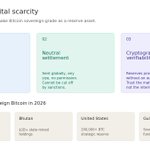
Bitcoin is an open, global reserve asset with absolute scarcity. The Investor Guide explores Bitcoin’s monetary properties, investment case, market structure, portfolio role, custody and risks. $BTC
strategy.com/bitcoin/brief
