

building genera and walking around mount tam.
Marin County
Joined October 2012
- Tweets113
- Following504
- Followers242
- Likes2.4K


James Honsa retweeted

Why I hate the description of entrepreneurship as pain and eating glass. That is BS.
“I hate that stuff. You are eating glass every day — why are you doing it then? I never understood that mindset of suffering pain and then there being this big reward at the end.
I enjoy every day I go to work. Of course there are hard times, hard conversations and hard things, but in the grand scheme of things, such is life.
I hope to work on this for 20, 30, 40, 50 years. I am having so much fun. I do not want to sell this company because I would just go and start Modal 2.” @bernhardsson
Love to hear your thoughts @jasonfried @levelsio @shl @awilkinson

The best question I ask every single person on 20VC is:
“What do you know now that you wish you had known 12 months ago?”
My answer: the demand for inference is infinite. It is truly so much larger than any of us comprehend.
It will be very hard for neo-cloud providers to move into this market effectively.
We will have 3-4 specialised inference providers worth $300-$500BN in this market.
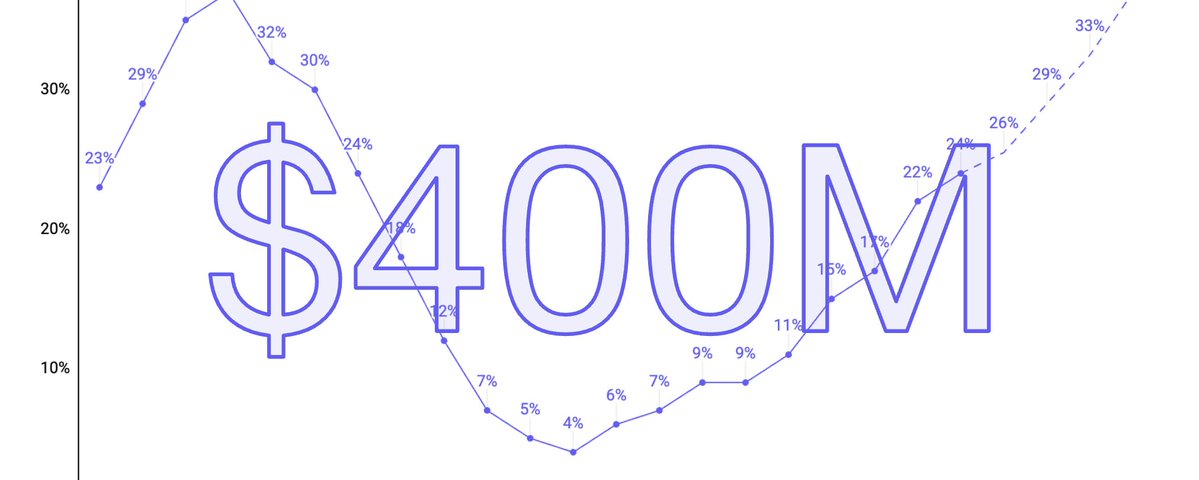
@modal is one of them. $1BN in ARR. $300M in sandbox revenue alone. WTF.
Erik @bernhardsson is also one of the coolest, most authentic people I have had the fortune of having on the show. Money on cos he is European! 😉
We sat down to shoot the s*** and my notes below.
1. Why I Hate the Description of Entrepreneurship as Pain and Eating Glass. That Is BS
Erik rejects the idea that building a company means suffering pain for a big reward at the end. He enjoys work every day, even the hard conversations, and hopes to work on Modal for 20 to 50 years. He has no wish to sell, saying he "would just go and start Modal 2."
2. Why the Days of 90% Software Margins Are Totally Gone
Almost no company today has the 90%-plus software margins common in Silicon Valley a decade ago. A dollar paid at the top of the stack flows through applications, models, infrastructure, cloud and NVIDIA, with each layer taking 20% to 30% gross margins. Erik sees Modal reaching 40% to 60% margins long term, but never software margins.
Are the days of 90% margins over or is this just the buildout phase of the new cycle meaning margin reduction @venkyganesan @AnjneyMidha
3. Why Inference Alone Will Become Commoditized, and You Have to Have a Suite of Products Around It
Selling inference alone is a commodity business with no switching costs and a race to the bottom. Erik argues it must come with post-training, sandboxes, agentic tooling, reinforcement learning, and low-latency and batch inference. Modal has spent five years building that infrastructure, which he calls very hard to copy.
Do you agree, inference will be commoditised and product breadth is the secret to retention @evishria @sarahcat21
4. Why We Will Have More Not Fewer Engineers in the Future
Every time programmers become more efficient, demand for software rises. Erik says the job was never translating English into code but understanding human requirements, and that work keeps moving up the stack, from assembly and punch cards to Python and now agents. He expects software engineers to be fine for the next 10 to 20 years.
What does no one see that everyone should see about the future of software engineering @matansf @pmarca @rabois
5. The Wildest Prediction on the Future of the Inference Market
The inference market has grown 10x to 100x bigger than Erik expected, and he predicts it will split into many specialized segments. He sees room for low-latency, high-latency, fine-tuning and post-training offerings, plus new hardware and technologies that need far fewer resources.
What is your wildest prediction on the future of the inference market @gavinsbaker @eladgil @romanchernin
6. The $15.75 Billion Company That Has Never Made a Pitch Deck
Modal has never made a pitch deck for any of its rounds. Erik gets to know investors well before raising and had spoken with Rich and Gonzalo at Accel for at least a year before the D round, so the deal came together very quickly.
(links in comments)


fired up to share what we're building @withgenera and announce our $10M raise led by @firstround

James Honsa retweeted

Genera helps AI application companies scale white-glove deployments. Excited that @firstround led their seed round!

There’s a generational land grab playing out in enterprise software right now, and deployments are the frontier. But right now nobody can hire enough FDEs.
It’s a brutal talent war. And even if you can hire them, your best people can only take on so many customers, so you’re forced to ration the high-touch deployment work for your most strategic accounts.
Enter @withgenera: founded by @willrpatterson and @jameshonsa. Genera helps AI application companies scale white-glove deployments – using a combo of agents, humans, and pricing based on outcomes (not hours). They act as an extension of your in-house team so you can run every deployment like it’s your most critical customer.
@fin_ai and @ironclad_inc are great examples. They’ve been using Genera and seen massive impact in scaling high-touch customer deployments (more in the video below on the impact at Fin).
Proud to have led their $10M seed round and worked with this team from the very beginning of their story. They’re launching today and hiring across the board. More below:
James Honsa retweeted

There’s a generational land grab playing out in enterprise software right now, and deployments are the frontier. But right now nobody can hire enough FDEs.
It’s a brutal talent war. And even if you can hire them, your best people can only take on so many customers, so you’re forced to ration the high-touch deployment work for your most strategic accounts.
Enter @withgenera: founded by @willrpatterson and @jameshonsa. Genera helps AI application companies scale white-glove deployments – using a combo of agents, humans, and pricing based on outcomes (not hours). They act as an extension of your in-house team so you can run every deployment like it’s your most critical customer.
@fin_ai and @ironclad_inc are great examples. They’ve been using Genera and seen massive impact in scaling high-touch customer deployments (more in the video below on the impact at Fin).
Proud to have led their $10M seed round and worked with this team from the very beginning of their story. They’re launching today and hiring across the board. More below:


James Honsa retweeted

SF was over if not for OpenAI and Anthropic!
Before that, it was over if not for Stripe, Uber, Airbnb, Twitter, Salesforce, Visa, Gap... and if you go back a bir further - Levi's, Bank of California, Spreckels Sugar, Wells Fargo, Union Iron Works, Southern Pacific :)
The city gets “saved” by the next boom every time. After the gold rush, there was silver, railroads, shipping, banks, sugar, utilities, Pacific trade, defense, semis, PCs, biotech, enterprise software, the internet, social, mobile, SaaS, fintech, crypto, and AI.
I think that's just how it goes in this town.

James Honsa retweeted

6 Thoughts About Forward-Deployed Engineering (FDE) and Customer Success (CS)
FDE has been all the rage in startups in the last year. Originally pioneered by Palantir, the concept has been reinterpreted - and some would say overloaded - for many categories of companies. This is all happening while startups are trying to understand the role of CS in the AI world.
Having launched Gainsight and run it for 13 years, we spent a lot of time thinking about these problems. We shared our learnings in 5 published books and iterated with customers in hundreds of events worldwide. As such, I now get a LOT of questions from AI founders about CS and FDE. Some are “I have a CS team but I want to make them FDEs” and others are “I have an FDE team but I want to scale with CS.”
And now that OpenAI, Anthropic and Google have all launched FDE initiatives, this idea is going mainstream (side note: I love the sibling rivalry between the labs!)
So here are 6 thoughts on these related ideas:
1. The Goal of CS is the Goal of FDE - Outcomes:
If you rewind back to our original book on Customer Success 10 years ago (!!) that sold 100K copies, we defined the concept as:
"Customer Success is when your customers achieve their desired outcome through their interactions with your company."
Now let's go to the definition of FDE in the OpenAI Deployment Company launch:
"[FDEs] help organizations move from identifying high-value AI opportunities to building production systems that deliver measurable results."
This is why I’ve always believed “CS > CSM,” meaning Customer Success was a strategy with many roles, including Customer Success Manager (CSM), Professional Services (PS), Training and Support.
2. The Commonality Is Vendor Ownership of the Outcome:
The old pre-SaaS model, before FDE and CSM, was that the customer owned if they got value or not. Since they paid for software upfront, the vendor had no incentive to do otherwise. The vendor offered paid Support and paid Professional Services. But if the customer never got the outcome they were looking for, it was on them. They owned the outcome risk.
3. The Token Model Made This More Important:
In the SaaS model, a lot of CS work was defense. They could talk about revenue growth, but so much was revenue protection and churn mitigation. Hence, CFOs felt the link between revenue and CS was tenuous - it entailed proving the counterfactual (“would they have churned without this investment?”)
Tokens and consumption changed everything. FDEs removed bottlenecks to consumption (e.g., finding the use cases and implementing them) Now, the land can be less complex. But the real growth comes from customers increasing token spend, leading to some firms having absurdly high Net Dollar Retention (eg 400%).
4. Tokens Justified More Investment in FDEs:
CSMs always aspired to be the ones driving business outcomes. But two things prevented this:
The lack of clarity on ROI of CSM led companies to stretch CSMs across too many accounts, preventing them from getting deep enough with any given client.
The lack of business case also meant companies couldn’t invest in the appropriate amount of technical resource to take the learnings from a CSM and turn them into deployment changes or product changes.
Now, FDEs are core revenue drivers so companies are hiring more of them with more technical and expensive profiles.
5. But You Still Need an Ongoing Relationship:
Historically, PS and CSM were separate because PS could be “project-aligned” (start/stop) and CSM could be “account-aligned” (perpetual). From an operations research perspective, this makes sense. Otherwise it’s very complex to manage people doing deployments and then getting overloaded with existing customers.
I’m seeing the more mature AI orgs with FDEs adding in CSMs for the ongoing management of value.
6. Forget the Titles; This is Vital:
Some people say “FDE is what we used to call PS and CSM.” Others say “FDE is a brand new idea.” With all terms in tech, both extremes are true. Thesis, antithesis, synthesis, as they say. But one thing I can say for sure, it’s never been more important to invest financial resources into the success of your clients of AI products. Because in a moatless world, this is the best chance we’ve got of building durable businesses.
James Honsa retweeted

If you read this and don’t understand why it’s happening it’s an opportunity to reset your understanding of how the real world works.
The real world will need a ton of help actually getting agents going in the enterprise. Companies have legacy tech stacks they need to modernize, data in tons of fragmented tools, knowledge that isn’t captured or digitized, and change management needed to actually utilize agents effectively. And they have to do all this while still running their business day-to-day, unlike startups.
This is why there is so much opportunity for companies (software or services) to actually deploy agents in specific domains and workflows. This remains a big opportunity for both existing services providers but also tons of new startups as well. Every new technology wave produces a new era of consulting firms that can deliver on that technology.
It’s also why the FDE model is going to be alive and well for a long time because companies will want to have their vendor actually help drive the change management and implementation for their new workflows.
The people aren’t going away. Far from it.

James Honsa retweeted

how did Allbirds pivot to AI compute hardware before the shoe company literally called ASICS




James Honsa retweeted

The forward deployed engineer has rebranded from a niche role at Palantir to the hottest job in tech. Does your startup need one?
On The Review, we spoke with founders and operators who’ve successfully built FDE teams to reveal the nuances that make this idiosyncratic role work, along with advice for hiring your own team.
Our panel includes:
-@jakeserval, who’s building out an FDE team at @getserval
-@jameshonsa, who built and scaled Ironclad’s version of FDE
-Tiffany Siu, First Round’s Head of Talent and former recruiter at Palantir
-Shilpa Balaji, who leads talent and ops at Promise and was previously an FDE and hiring lead at Palantir
Read the full guide here: review.firstround.com/so-you…

somewhere at docusign there is a pm failing to build the world's most obvious AI feature (place the cute lil boxes for me)
1
3
186


